

Introduction
Every Hifz teacher knows the feeling: a student you believe is ready for a competition stands before a judge and underperforms — not because their memorisation failed, but because their revision was less current than you thought, or their Tajweed had a pattern of Lahn Khafi you had stopped noticing, or two juz that seemed solid turned out to be weak under random-point testing.
The solution is not more intuition — it is better data. A systematic tracking system tells you, at any moment, exactly where each student’s Hifz stands across three dimensions: memorisation volume (how much has been committed to memory), revision currency (how recently each juz was recited in full), and Tajweed quality (the specific error patterns affecting competition readiness). With this data, competition decisions become straightforward rather than guesswork.
This guide covers the complete Hifz progress tracking system — what to track, how to track it, and how to use the data to make confident competition decisions.
The Three Dimensions of Hifz Tracking
A student’s Hifz readiness has three independent dimensions — and all three must be strong for competition readiness. A student can be weak on any one dimension while appearing strong on the others:
| Dimension | What It Measures | Why It Matters for Competition |
| Memorisation volume | How many juz (pages, verses) are in active memory | Determines which competition level the student can enter |
| Revision currency | How recently each memorised juz was recited fully | Determines whether memorised material is reliably retrievable under pressure |
| Tajweed quality | Specific error patterns affecting recitation correctness | Determines how much the student will lose to Tajweed deductions |
The classic failure mode is a student with strong memorisation volume and weak revision currency — they “have” 25 juz but the last 10 juz have not been properly revised in weeks. Under random-point testing, those 10 juz will produce hesitations, errors, and a score that does not reflect the student’s actual capacity.
Dimension 1 — Memorisation Volume
Memorisation volume tracking answers the question: how much of the Quran is currently in active, reliable memory?
What to track:
- Current juz count (how many juz are memorised to the teacher’s standard of approval)
- Date each juz was first approved (when it entered the active memorisation record)
- Current sabak position (which pages are being actively memorised today)
- Recent completion rate (how many pages per week is the student memorising)
The approved juz standard:
Not every juz that has been “gone through” is approved. Approved means: the student can recite the entire juz from beginning to end with no more than minor errors, before the teacher, without the Mushaf. Unapproved juz do not count for competition purposes.
Tracking format:
| Juz | Date First Approved | Current Status | Notes |
| 30 | 2024-09-15 | Active dhor | Strongest juz |
| 29 | 2024-11-20 | Active dhor | — |
| 28 | 2025-01-08 | Active dhor | — |
| … | … | … | … |
| 20 | Active sabak | In progress | Est. completion: 6 weeks |
Dimension 2 — Revision Currency (Dhor Log)
Revision currency tracking answers the question: how recently was each juz recited fully, and is the revision rotation keeping pace with the total memorised volume?
The dhor log is the most practically important tracking tool in Hifz management. It is also the most commonly neglected.
The dhor cycle:
Every approved juz should be recited fully before the teacher at regular intervals — ideally every 7-14 days for recently memorised juz; every 14-21 days for older juz. A juz that has not been fully recited in 30+ days is “cold” — it will underperform under random-point competition testing.
What to track:
- Date each juz was last recited fully before the teacher
- Which juz are currently in the active dhor rotation
- Which juz are “cold” (not recited in 21+ days)
- The student’s dhor rotation schedule (which juz are planned for which days)
Dhor log format:
| Juz | Last Full Recitation | Days Since | Status | Next Scheduled |
| 30 | 2026-04-28 | 3 | ✅ Current | 2026-05-05 |
| 29 | 2026-04-25 | 6 | ✅ Current | 2026-05-02 |
| 28 | 2026-04-18 | 13 | ✅ Current | 2026-04-30 |
| 27 | 2026-04-05 | 26 | ️ Cold | Prioritise |
| 26 | 2026-03-20 | 41 | 🔴 Very cold | Urgent |
The dhor rotation challenge:
As total memorised volume grows, maintaining currency across all juz becomes mathematically demanding. A student with 20 juz who must revise each one every 14 days needs to recite 1.4 juz per day in dhor alone — before any new memorisation (sabak). This is why tracking the dhor log is essential: teachers need to know when the rotation is falling behind before competition-relevant “cold” juz accumulate.
Dimension 3 — Tajweed Quality
Tajweed quality tracking answers the question: what specific error patterns affect this student’s recitation, and how do they affect competition scoring?
What to track:
- Lahn Jali status: any remaining Lahn Jali errors (must be zero for competition)
- Lahn Khafi patterns: which specific rules does the student consistently violate?
- Most recent external assessment date and findings
- Specific correction work in progress
Tajweed quality tracking format:
| Rule Category | Student Status | Severity | Correction Status |
| Makharij al-Huruf | ✅ Correct | — | — |
| Ghunnah (Idgham, Ikhfa, Iqlab) | ️ Insufficient ghunnah in Ikhfa | Lahn Khafi | In correction — 6 weeks |
| Madd (elongation counts) | ✅ Correct | — | — |
| Qalqalah | ️ Weak qalqalah on dal | Lahn Khafi | In correction — 3 weeks |
| Emphatic letters (tafkhim) | ✅ Correct | — | — |
| Waqf application | ️ Occasional Waqf at prohibited points | Lahn Khafi | Monitoring |
| Lahn Jali | ✅ None identified | — | — |
The external assessment date:
Track when the student last had an external Tajweed assessment. If no external assessment has occurred in the past 6 months, the Tajweed quality column is based on teacher assessment only — which carries the risk of familiarity bias.
The Weekly Tracking Routine
Tracking is only useful if it is maintained consistently. Build tracking into the weekly teaching routine:
Daily (teacher):
- Record sabak progress: how many lines/pages completed today
- Note any significant errors in dhor recitation (not every minor error — only patterns)
Weekly (teacher):
- Update dhor log: mark which juz were recited this week
- Identify any juz becoming cold (14+ days without full recitation)
- Note Tajweed patterns observed during the week’s sessions
Monthly (teacher + principal review):
- Full progress review for each Hifz student
- Identify students falling behind dhor rotation targets
- Review Tajweed quality trend (improving? stable? new patterns emerging?)
- Update competition readiness assessment
Termly (external):
- External Tajweed assessment for competition-bound students
- Update Tajweed quality record with external assessor’s findings
- Adjust competition timeline based on external findings
The Competition Readiness Assessment
The competition readiness assessment integrates all three tracking dimensions into a single decision framework: is this student ready for which competition?
Competition readiness matrix:
| Criterion | Minimum Standard | Strong Standard | Elite Standard |
| Juz count | Meets category minimum | Category minimum + 2 buffer juz | Full 30 juz; category minimum + 5 |
| Dhor currency | All juz recited within 21 days | All juz within 14 days | All juz within 10 days |
| Lahn Jali | Zero | Zero | Zero |
| Lahn Khafi | Minor patterns; not systematic | Occasional only; no systematic patterns | Near-zero across extended recitation |
| Mock competition performance | Completed 1 mock; satisfactory | 2+ mocks; good performance under pressure | 3+ mocks; consistent performance |
| External assessment | 1 external assessment; passed | Recent (within 3 months); passed | Recent; explicitly ready for target competition level |
Reading the matrix:
A student meeting “minimum standard” across all criteria is ready for the relevant competition but may not be competitive for top placings. A student at “strong standard” is a realistic contender. A student at “elite standard” across all criteria is a serious competition candidate.
When NOT to enter a student:
Do not enter a student if any of the following are true:
- Any remaining Lahn Jali in the competition’s tested juz
- More than 3 juz are cold (not recited within 21 days)
- No external assessment has been done
- The student has not completed at least one mock competition session
Paper vs Digital Tracking Systems
Paper tracking (exercise books, registers):
The traditional method. Each student has a register; sabak progress, dhor dates, and teacher notes are recorded by hand. Pros: no technology required; flexible; familiar. Cons: searching and reporting is slow; data for multiple students is hard to aggregate; cold juz are easy to miss in a paper log.
Spreadsheet tracking (Excel, Google Sheets):
A significant improvement over paper. Conditional formatting can highlight cold juz in red; formulas can calculate days since last revision automatically. Pros: searchable; can aggregate across students. Cons: requires manual data entry; not mobile-friendly; no student or parent access.
Purpose-built Hifz management software:
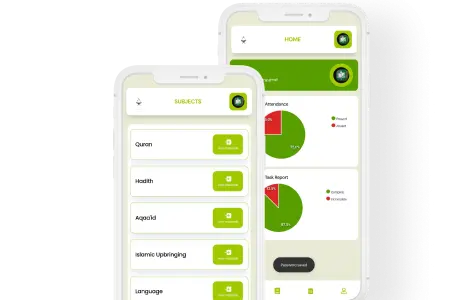
The most effective tracking method for schools with 10+ Hifz students. Purpose-built platforms track sabak, dhor dates, Tajweed assessment records, and competition history in one place, with automatic alerts for cold juz, parent-facing progress reports, and data aggregation across the full cohort.
The key capabilities a tracking system must have:
- Per-student juz memorisation record with approval dates
- Dhor log with automatic calculation of days since last recitation
- Cold juz alert (configurable threshold — 14 days, 21 days)
- Tajweed quality notes per student
- Competition readiness summary view
Using Tracking Data to Make Competition Decisions
With systematic tracking data, competition decisions shift from intuition to evidence:
Selecting which students to enter:
Pull competition readiness reports for all Hifz students 3 months before the competition deadline. Students meeting “minimum standard” across all criteria are candidates. Students meeting “strong standard” or above are priority entrants.
Selecting which competition level to enter:
The juz count column tells you which competition level is appropriate. Buffer juz above the minimum ensure the student is not right at the edge of their capacity — random-point testing can probe any juz, so students need genuine confidence across their entire memorised range.
Identifying preparation gaps:
The tracking data shows you exactly where preparation work is needed 3-6 months before competition. If a student’s dhor log shows 5 cold juz, that is a specific correctable problem — 5 weeks of prioritised dhor rotation will fix it. If the Tajweed record shows systematic Ikhfa ghunnah deficiency, that is a specific correctable problem — targeted practice over 6-8 weeks will address it.
Post-competition analysis:
After the competition, compare the pre-competition tracking data with the competition result. Did the student perform as the data predicted? If they performed below the tracking data’s prediction — why? (Stress? Specific juz that were less current than recorded? External assessment that was too generous?) If they performed above — why? (Momentum? Specific strengths not captured in the data?) These insights improve next year’s tracking accuracy.
Tracking Across Multiple Students
For Islamic schools with 10-30 active Hifz students, individual tracking becomes a data management challenge. The weekly teacher routine must be sustainable for the cohort, not just for individual students.
The cohort dashboard:
A good tracking system provides a cohort-level view: all 20 students at a glance, showing which have cold juz, which are approaching competition readiness, which are behind on their memorisation targets.
Prioritising teacher attention:
Tracking data allows teachers to prioritise attention on students most in need — the student with 7 cold juz needs more urgent intervention than the student with 1. Without systematic tracking, teacher attention defaults to the loudest student or the most recent interaction.
Communication with parents:
Tracking data enables meaningful parent communication: not “Aisha is doing well” but “Aisha has memorised 18 juz; her dhor currency is strong across 15 of those juz; we are working on 3 juz that need more frequent revision; her Tajweed is at competition standard except for Ikhfa ghunnah which is in active correction.” This level of specificity builds parental confidence and engagement.
Conclusion
Systematic Hifz tracking transforms competition preparation from intuition-dependent to evidence-based. When you know exactly how many juz a student has memorised, when each was last fully recited, and what specific Tajweed patterns need correction, you can make confident competition decisions — and you can see problems coming months before the competition date, when there is still time to fix them.
The tracking system does not need to be complex. The three-dimension framework — memorisation volume, revision currency, Tajweed quality — captures everything that matters for competition readiness. The discipline is consistent, timely recording: daily sabak progress, weekly dhor logs, termly external assessment.
Related Articles
- ⚙️ How Islamic Schools Prepare Students for Quran Competitions
- ⚙️ How to Run a Quran Competition at Your Islamic School
- 📚 How Quran Competitions Are Judged: Tajweed, Maqamat, Scoring
- 📚 Lahn Jali and Lahn Khafi: The Two Types of Recitation Errors
- 🏆 International Quran Competitions: The Complete Guide
- 📅 Quran Competition Calendar 2026: Every Major Event




 Arabic
  English
  Malay
Malay  Urdu
Urdu