

Introduction
Malaysia has one of the most structured Islamic education systems in the Muslim world. With over 8,000 Sekolah Agama Rakyat (community Islamic schools), a national KAFA programme reaching hundreds of thousands of students, hundreds of Pondok schools embedded in the traditional Malay Islamic heritage, and a growing network of integrated Islamic day schools, Malaysia’s Islamic education sector is both extensive and institutionally diverse.
Despite Malaysia’s high levels of digitalisation and technology adoption — the country ranks among Southeast Asia’s most digitally advanced — the management of most Islamic educational institutions remains paper-based. WhatsApp groups coordinate parent communication. Excel spreadsheets track student records. Paper registers capture Quran progress.
The gap between Malaysia’s digital sophistication and the management tools used by its Islamic schools is one of the most striking content opportunities in the region. This guide addresses it directly: what management software for Malaysian Islamic schools must do, how the Malaysian context differs from South Asian and Middle Eastern markets, and what to evaluate when choosing a platform.
Malaysia’s Islamic Education Landscape in 2026
Malaysia’s Islamic education operates at two levels — a government-managed system and a community-managed system — with significant overlap and interaction between them.
The government system:
The Kementerian Pendidikan Malaysia (KPM — Ministry of Education Malaysia) and the Jabatan Kemajuan Islam Malaysia (JAKIM) together govern formal Islamic education. KAFA (Kelas Agama Fardhu Ain) is the government’s primary Islamic education programme, delivered through 8,000+ Sekolah Agama Rakyat and mosque-based classes, serving over 500,000 students with a standardised national curriculum.
Sekolah Agama Negeri (state religious schools) are directly managed by state religious departments (JAIS, JAIPK, JAINNS, etc.) and form a separate, more academically advanced track.
The community system:
Community-funded Islamic schools — Sekolah Agama Rakyat (SAR) — form the backbone of grassroots Islamic education. There are over 8,000 SAR nationally, most operating as afternoon or evening schools, funded by community mosques, surau (small mosques), and parent contributions.
Pondok schools represent Malaysia’s oldest Islamic education tradition — residential institutions rooted in the rural Malay Islamic heritage, primarily in Kelantan, Terengganu, Kedah, and Perlis. Pondok schools teach traditional Islamic sciences (kitab, fiqh, Arabic) and have produced many of Malaysia’s senior Islamic scholars.
| Institution Type | Governing Body | Approx. Number | Students |
| KAFA / Sekolah Agama Rakyat | KPM + State Religious Depts | 8,000+ | 500,000+ |
| Sekolah Agama Negeri | State Religious Depts (JAIS etc.) | 1,200+ | 250,000+ |
| Pondok schools | Independent / Majlis Agama | 300–500 | 30,000+ |
| Private Islamic day schools | Independent / JAKIM registered | 200+ | 80,000+ |
| Tahfiz/Hifz schools | Independent / State Dept | 1,000+ | 80,000+ |
Source: KPM statistics 2024; JAKIM; Ilmify Malaysia research, 2026
The Four Main Institution Types: SAR, KAFA, Pondok, and Private Islamic Schools
1. Sekolah Agama Rakyat (SAR) — Community Islamic Schools
The SAR is the Malaysian equivalent of the Indian maktab or the UK supplementary Islamic school. Students attend after mainstream school (typically 2–5pm) for Islamic education: Quran recitation, Islamic studies, Arabic, Jawi script, and Aqeedah. Most SARs operate from surau or mosque premises.
Management needs: Student enrolment, attendance, Quran recitation progress, UPSR/PT3 exam coordination (for SARs that link to KAFA examinations), fee management, parent communication.
2. KAFA (Kelas Agama Fardhu Ain)
KAFA is the standardised government Islamic education programme delivered through SARs. KAFA follows a structured 6-year curriculum (Tahun 1–6) aligned with primary school years. KAFA teachers (guru KAFA) are trained and assigned by the state religious department. KAFA examinations are administered nationally.
Management needs: KAFA curriculum level tracking, KAFA examination registration and results management, government reporting requirements, SISPEK (Sistem Pengurusan Sekolah Kebangsaan) compliance.
3. Pondok Schools
The Pondok tradition is Malaysia’s classical Islamic education institution — residential schools where students live with and study under ustaz/ustazah, following a kitab-based curriculum in traditional Islamic sciences. Most Pondok operate independently of the national education system.
Management needs: Residential management, traditional curriculum tracking (kitab levels), Arabic proficiency tracking, Hifz programme management, minimal fee management (many Pondok are free or near-free).
4. Tahfiz Schools (Hifz Schools)
Malaysia has seen remarkable growth in dedicated Tahfiz schools — full-time or part-time institutions focused entirely on Quran memorisation. The number of Tahfiz schools has grown from approximately 200 in 2010 to over 1,000 in 2026. This rapid growth has created significant management infrastructure needs.
Management needs: Three-stream Hifz tracking, Tahfiz examination management, residential management (many are full-boarding), parent progress communication, JAKIM Tahfiz certification tracking.
Why Generic Malaysian School Software Does Not Serve Islamic Institutions
Malaysia has good general school management software — platforms like ePrestasi, Frog VLE (formerly used by KPM), and various Malaysian edtech solutions serve mainstream schools well. None of them serve Islamic institutions adequately.
Four failure modes:
1. No Hifz or Quran tracking. Malaysian school software is designed for KBSR/KSSR subjects — Bahasa Melayu, English, Mathematics, Science, and so on. Tahfiz progress tracking (Sabak, Muraja’ah, Manzil) is entirely absent.
2. No KAFA/SAR curriculum alignment. KAFA’s 6-year Tahun 1–6 structure, with its specific subjects (Tilawah al-Quran, Aqidah, Ibadah, Jawi, Sirah) and KAFA examination system, is not supported by generic school platforms.
3. No Pondok management features. The kitab-based curriculum, the residential tradition, and the community-funded model of Pondok schools require management approaches that generic platforms cannot accommodate.
4. No Jawi script support. Jawi (Arabic script for Bahasa Melayu) is taught in all SARs and is a distinctive feature of Malaysian Islamic education. A platform that only supports Romanised Bahasa Melayu or English cannot fully serve Malaysian Islamic schools.
The 7 Requirements for Malaysian Islamic School Software
1. Three-stream Hifz/Tahfiz tracking — For Malaysia’s 1,000+ Tahfiz schools: Sabak (new memorisation), Muraja’ah qareeba (recent revision), Muraja’ah (long-term rotation). Malaysian Tahfiz schools use a mix of Arabic and Malay terminology.
2. KAFA curriculum tracking — Tahun 1–6 level progression, KAFA subject tracking (Tilawah, Aqidah, Ibadah, Jawi, Sirah, Adab), KAFA examination management, and SISPEK-compatible record-keeping.
3. Bahasa Malaysia interface — Full Bahasa Malaysia administrative interface. While Malaysian urban professionals may use English for work, the majority of SAR and Pondok administrators work primarily in Bahasa Malaysia.
4. Jawi script support — For institutions where Jawi is a teaching and administrative language. Jawi subjects need to be tracked in Jawi script, and parent-facing content in Jawi-medium institutions should be available in Jawi.
5. JAKIM Tahfiz certification tracking — Malaysia’s JAKIM (Jabatan Kemajuan Islam Malaysia) oversees Tahfiz certification nationally. Institutions registered with JAKIM have specific record-keeping and reporting requirements for Tahfiz completions.
6. Fee management for mixed Malaysian models — SARs charge modest fees (RM50–RM200/month typically); some receive government subsidy; Pondok schools may be free; Tahfiz schools vary. The financial module must handle this diversity plus Malaysian payment methods (bank transfer, DuitNow, Maybank2u).
7. WhatsApp-native notifications — Malaysia has among the highest WhatsApp penetration in Southeast Asia. Parent communication via WhatsApp is the expected channel for Malaysian Muslim families.
Hifz and Quran Tracking in Malaysian Institutions
Malaysia’s Tahfiz sector has grown dramatically and is now one of the most organised in Southeast Asia. The Malaysian government has invested significantly in Tahfiz infrastructure — the national Tahfiz schools under the Ministry of Education receive full government funding.
Malaysian Tahfiz methodology:
Malaysian Tahfiz schools follow a methodology influenced by both traditional Arab (GCC) and South Asian Hifz traditions, with some distinctively Malaysian adaptations. The three-stream model is standard:
| Stream | Malaysian Term | Arabic Term | South Asian Term |
| New memorisation | Hafazan baru / Sabak | Hifz jadid | Sabak |
| Recent revision | Ulang kaji terkini | Muraja’ah qareeba | Sabak Para |
| Long-term revision | Muraja’ah / Pusingan | Muraja’ah | Dhor / Manzil |
| Sight recitation | Bacaan nazar | Tilawa / Nazar | Nazra |
| Full memorisation | Hafaz / Khatam Quran | Khatm | Khatam |
Malaysian institutions use a mix of Bahasa Melayu terms and Arabic terms, often within the same conversation. A management system serving Malaysia should support both terminologies.
The Tahfiz examination system:
Malaysia has a formal national Tahfiz examination system — Peperiksaan Tahfiz Al-Quran Kebangsaan (PTAQK) for students who have completed full Hifz, administered by JAKIM and relevant state Islamic departments. Tracking PTAQK examination readiness, registration, and results is a specific management need for Malaysian Tahfiz schools.
KAFA Tilawah tracking:
For SAR and KAFA institutions (the majority of Malaysian Islamic schools by student numbers), Tilawah al-Quran — Quran recitation proficiency, assessed according to specific Tajweed standards at each KAFA level — is the primary Quran academic metric. The KAFA Tilawah assessment framework has specific criteria at each Tahun level that management software should be able to track.
SISPEK, KAFA, and Regulatory Compliance
Malaysian Islamic schools face a layered regulatory environment involving multiple government bodies:
KPM (Kementerian Pendidikan Malaysia): Governs KAFA through its Bahagian Pendidikan Islam (BPI — Islamic Education Division). All KAFA teachers are registered with BPI; KAFA curricula are set by BPI; KAFA examinations are coordinated through BPI.
JAKIM (Jabatan Kemajuan Islam Malaysia): Provides national Islamic education policy guidance and certifies Tahfiz completions through the national Tahfiz certification system.
State Religious Departments (JAIS, JAIPK, etc.): Each state has its own religious department that governs SARs, Sekolah Agama Negeri, and Pondok schools within its jurisdiction. State-specific requirements add complexity for institutions operating across state lines or for management software covering multiple states.
SISPEK (Sistem Pengurusan Sekolah Kebangsaan): The government’s national school management system, used primarily by mainstream government schools. KAFA institutions affiliated with the government system may have some SISPEK reporting requirements.
What management software should handle for regulatory compliance:
- KAFA student records in KPM-compatible format for annual reporting
- Guru KAFA attendance and qualification records
- Tahfiz completion records for JAKIM certification submission
- State religious department reporting requirements (varies by state)
- SISPEK data export for government-affiliated institutions
Bahasa Malaysia Interface: Essential for Malaysian Institutions
Bahasa Malaysia (BM) is the administrative and instructional language for the majority of Malaysian Islamic schools. While urban professionals and international school educators may work in English, the teachers, administrators, and parents of SARs, Pondok, and community Tahfiz schools work primarily in BM.
Bahasa Malaysia interface requirements:
- Full BM administrative interface — menus, forms, reports, and navigation in BM
- BM parent-facing portal and notifications
- BM report generation (progress reports, attendance reports, fee statements)
- Support for Jawi script in relevant contexts (Jawi subject tracking, Jawi-medium parent communications)
The Jawi distinction:
Jawi is the Arabic-script writing system for Bahasa Malaysia. It is taught in all SARs as a formal subject and is used by older-generation Malaysian Muslims in everyday correspondence. A Tahfiz school or Pondok serving a traditional community may have some teachers and parents who prefer Jawi-script communications. Full Jawi support (encoding, rendering, input) is technically complex but important for serving traditional Malaysian Islamic education communities.
Fee Management in the Malaysian Context
Fee structures in Malaysian Islamic schools:
SAR fees are modest — typically RM50–RM200/month, reflecting the community-service orientation of these institutions. Many SARs receive government KAFA subsidy that partially offsets costs. Tahfiz schools vary widely: some receive full government funding; some charge RM300–RM600/month as private institutions; some are free based on community endowment.
Malaysian payment methods:
| Payment Method | Malaysian Adoption | Notes |
| Bank transfer (Interbank GIRO) | Universal | Standard for institutional payments |
| DuitNow (QR / transfer) | 80%+ | Dominant digital payment system |
| Maybank2u | 70%+ | Largest bank’s online platform |
| CIMB Clicks | 50%+ | Second bank |
| eWallets (Touch ‘n Go, GrabPay) | 60%+ urban | Growing for school fees |
| Cash | Universal | Still common for SARs |
DuitNow integration is particularly important — Malaysia’s national real-time payment system (operated by Payments Network Malaysia — PayNet) allows instant transfers between any Malaysian bank. DuitNow QR codes at the point of fee payment allow parents to pay instantly without the school needing a separate payment terminal.
Parent Communication in the Malaysian Muslim Community
Malaysian Muslim parents are among the most digitally engaged in Southeast Asia. WhatsApp groups are universally used for school communication, including Islamic schools. Parents who receive communications from their children’s mainstream schools via KPM’s SchoolMe app increasingly expect similar digital engagement from their SARs and Tahfiz schools.
Communication language: BM for most SARs and Pondok; mix of BM and English for urban private Islamic schools; Arabic for some Tahfiz programmes.
The KAFA parent engagement challenge: KAFA parents often do not attend the school (which runs without formal parent pickup) and may not know their child’s current Tilawah level or examination results unless actively communicated to. A parent portal with automated progress notifications significantly improves KAFA parent engagement — which in turn improves student outcomes.
How Ilmify Serves Malaysian Islamic Schools
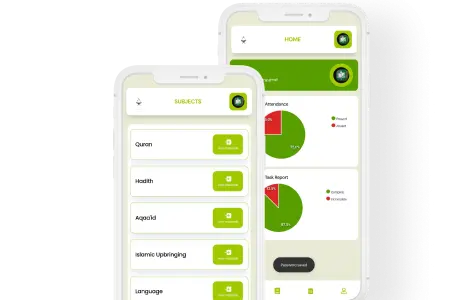
Ilmify’s features for Malaysian institutions address the specific requirements identified in this guide:
- Tahfiz/Hifz three-stream tracking with Malaysian terminology (Hafazan baru, Muraja’ah, Pusingan/Manzil) configurable in BM
- KAFA curriculum tracking — Tahun 1–6 level progression with KAFA subject set (Tilawah, Aqidah, Ibadah, Jawi, Sirah)
- Bahasa Malaysia interface — Full BM administrative interface with BM parent portal and notifications
- JAKIM Tahfiz certification support — Records management for PTAQK examination registration and completion tracking
- DuitNow and Malaysian bank transfer — Fee payment recording for Malaysian payment methods
- WhatsApp-native notifications — BM parent notifications via WhatsApp for attendance, Hifz progress, and fee reminders
- State religious department reporting — Configurable reporting formats for state-specific requirements
Feature Comparison Table
| Feature | Ilmify | Generic Malaysian School Software | Western Islamic Platforms |
| Tahfiz three-stream tracking | ✅ | ❌ | ❌ |
| KAFA curriculum tracking | ✅ | ❌ | ❌ |
| Bahasa Malaysia interface | ✅ | ✅ | ❌ |
| Jawi script support | ✅ | ️ Limited | ❌ |
| JAKIM Tahfiz certification | ✅ | ❌ | ❌ |
| DuitNow payment recording | ✅ | ✅ | ❌ |
| WhatsApp-native notifications | ✅ | ️ | ❌ |
| SISPEK-compatible records | ✅ | ✅ | ❌ |
| Pondok residential management | ✅ | ❌ | ❌ |
| Tarbiyah assessment | ✅ | ❌ | ❌ |
| Student management | ✅ | ✅ | ✅ |
| Attendance tracking | ✅ | ✅ | ✅ |
| Fee management | ✅ | ✅ | ✅ |
Source: Platform documentation; Ilmify Malaysia research, April 2026
Conclusion
Malaysia’s Islamic education sector — with its 8,000+ Sekolah Agama Rakyat, its government KAFA programme, its 1,000+ Tahfiz schools, and its centuries-old Pondok tradition — deserves management software that speaks its language, understands its regulatory context, and supports its unique educational traditions.
Generic Malaysian school software serves the mainstream education system well. It has never served Islamic institutions. Western Islamic school platforms serve Western contexts. They have never served Malaysia.
Ilmify brings purpose-built Islamic school management to the Malaysian market — with Bahasa Malaysia interface, KAFA curriculum support, Tahfiz three-stream tracking, JAKIM certification management, and DuitNow payment integration.
👉 See Ilmify for Malaysian Islamic Schools — BM Interface, KAFA Support, Tahfiz Tracking →
Related Articles
You might also find these helpful:
- ⚙️ Best Madrasa Management Software in 2026: The Complete Comparison Guide
- 📚 How to Track Hifz Progress Digitally: A Step-by-Step Guide
- 📚 Sabak, Sabak Para, and Dhor: The Three Stages of Hifz Revision Explained
- ✅ How to Choose Islamic School Management Software: The Complete Buyer’s Guide
- 📚 What Is Tarbiyah and How Do You Track It in a School Setting?
- 💰 The Real Cost of Managing Your Islamic School on Paper in 2026
- 📚 How to Generate a Quran Progress Report That Parents Actually Find Useful
- ⚙️ Madrasa Management Software for Bangladesh: What Aliya and Qawmi Institutions Need




 Arabic
  English
  Malay
Malay  Urdu
Urdu