

Introduction
Managing a Sekolah Agama — whether a community-run Sekolah Agama Rakyat (SAR), a state-affiliated Sekolah Rendah Agama (SRA), or a standalone Islamic educational centre — is a role that carries both religious weight and serious institutional responsibility. You are responsible for the Islamic education of children during the most formative years of their lives, and you are doing it within a regulatory environment that is more structured and demanding than many administrators appreciate.
This guide is written for those who carry this responsibility: principals, administrators, committee members, and teachers who want to run their Sekolah Agama with the competence, transparency, and institutional soundness that the role demands.
Understanding the Regulatory Landscape
Malaysia’s Islamic educational institutions operate within a layered regulatory framework that every administrator must understand.
Federal Level — JAKIM: The Department of Islamic Development Malaysia (JAKIM) sets the overarching policy and curriculum standards for Islamic education in Malaysia, including the KAFA 2.0 curriculum and the UPKK assessment. JAKIM operates the SIMPENI (Sistem Maklumat Pendidikan Islam) data system, which all registered Islamic educational institutions are required to report to. JAKIM also coordinates the training of KAFA teachers through state-level curricuculum enhancement courses (Kursus Penataran Kurikulum).
State Level — Jabatan Agama Islam Negeri / Majlis Agama Islam Negeri: Each state’s Islamic religious authority has its own jurisdiction over Islamic educational institutions within the state. The Sekolah Agama Rakyat (SAR) — community-run Islamic primary schools — are registered with and supervised by the State Islamic Religious Authority. State authorities appoint KAFA supervisors (Penyelia KAFA) who oversee the quality of KAFA implementation within their district.
School Level: The principal and committee of the Sekolah Agama are responsible for day-to-day management — teacher management, student registration, curriculum delivery, financial management, and regulatory reporting.
Understanding which body has authority over which aspect of your institution’s operations is essential for navigating the regulatory requirements correctly. A SAR administrator who does not understand the distinction between state and federal jurisdiction may find themselves reporting to the wrong authority or missing critical compliance deadlines.
Student Registration and Records
Student records are the institutional foundation on which everything else rests. Every enrolled student should have a formal record containing:
- Full name as per IC (MyKid/IC) with correct spelling
- IC number or MyKid number
- Date of birth
- Home address
- Contact details for both parents or guardians (mobile numbers and email)
- Name and relationship of alternative emergency contact
- Date of enrolment
- Year level at enrolment
- Any health or learning needs relevant to classroom management
For KAFA classes specifically, the student’s national school (Sekolah Kebangsaan) and class should also be recorded, as KAFA is typically affiliated with a specific national school.
This data must be kept current. Parents who change phone numbers should update the school immediately. Students who transfer should be formally exited from the register with their last Quranic progression stage documented — this documentation should follow the student to their new institution.
SIMPENI Reporting: Registered institutions are required to submit and maintain accurate student data in SIMPENI. The JAKIM workshops on SIMPENI data management — such as the April 2024 workshop held at Hotel Putra Brasmana, Perlis — are specifically designed to help state coordinators and institutional administrators manage this reporting accurately. Institutions that fall behind on SIMPENI reporting create complications at the state and federal level when aggregated data is used for policy planning.
Curriculum Management: Teaching the KAFA 2.0 Syllabus
The KAFA 2.0 curriculum, introduced from 2024, is the current standard for Sekolah Agama and KAFA programmes across Malaysia. Administrators are responsible for ensuring:
Teachers Know the Current Curriculum: Guru KAFA must be kept current with the KAFA 2.0 syllabus. JAKIM and state Islamic authorities conduct regular Kursus Penataran Kurikulum — curriculum training courses — for this purpose. All Guru KAFA at your institution should attend these courses as a condition of their appointment. The 2023 Kota Bharu curriculum training, for example, reached seventy KAFA teachers specifically to introduce the KAFA 2.0 framework and the new Rancangan Pengajaran Harian (RPH — Daily Teaching Plan) methodology.
Year Planner and Lesson Plans: Every teacher should have an annual teaching plan (Rancangan Pengajaran Tahunan) and should be preparing individual Daily Teaching Plans (Rancangan Pengajaran Harian). These planning documents ensure that the curriculum is being covered systematically rather than at the teacher’s discretion. Administrators should review lesson plans regularly.
Assessment Alignment: Assessments should be aligned with the KAFA 2.0 curriculum and the new UPKK format. Past paper format guidance from JAKIM should be incorporated into classroom assessment design.
Teacher Management: Recruitment, Support, and Retention
The quality of your teachers is the most important determinant of your institution’s educational quality. Everything else — the curriculum, the facilities, the management systems — is secondary to the human beings who stand in front of the classroom.
Recruitment: Guru KAFA must hold the minimum qualifications required by JAKIM and the State Islamic Authority. At minimum, the teacher of Quranic recitation must themselves be able to recite correctly with Tajweed. Teachers of Islamic studies subjects should hold relevant Islamic education qualifications. Do not compromise on qualifications for the sake of convenience — an underqualified teacher teaching incorrect Tajweed to fifty students for a full year does damage that takes years to correct.
Professional Development: Ensure every teacher attends relevant training: JAKIM’s curriculum training courses, state-level pedagogical workshops, and any teacher development programmes offered by the State Islamic Authority. Professional development is not optional — it is the mechanism through which teaching quality is maintained and improved over time.
Remuneration: Pay teachers on time and fairly. Late payment or below-market remuneration is the most common cause of teacher attrition in community Islamic schools. Calculate the actual per-student cost of delivering the programme, set fees accordingly, and protect the teacher salary budget line.
Performance Management: Conduct regular classroom observations and provide constructive feedback. A culture of continuous improvement in teaching quality cannot develop without structured feedback. Document your observations — this creates a record that protects both the teacher and the institution.
Financial Management: Transparency and Accountability
Financial mismanagement — or even the appearance of it — is one of the most damaging things that can happen to a community Islamic institution. The trust of parents and donors depends on clear, honest, documented financial management.
Fee Structure: Set your fees based on the actual cost of running the institution. Calculate teacher salaries, rental or mosque contribution, teaching materials (kitabs, stationery, printing), assessment fees, and any other regular costs. Add a small reserve margin. Divide by student headcount. This is your minimum viable fee.
Receipts: Issue a numbered receipt for every payment, without exception. This single practice eliminates the majority of fee disputes before they begin. A receipt is a simple document, but it is the most powerful tool of financial transparency available to a community Islamic institution.
Written Financial Records: Every income and expenditure transaction should be recorded. Monthly accounts should be prepared by the Treasurer and presented to the committee. The committee cannot make good financial decisions without accurate, current financial information.
Audit or Review: An annual financial review — even an informal internal review by a committee member who is independent of day-to-day financial management — provides the accountability check that prevents small errors from becoming large problems.
Donations and Wakaf: Many Sekolah Agama receive donations (derma), Zakat contributions, or Wakaf allocations in addition to student fees. These funds carry their own accountability obligations — donors and Zakat-paying families have the right to know their contributions are being used correctly. Maintain separate records for donated funds and report to donors as appropriate.
Parent Communication: Beyond the WhatsApp Group
Every Sekolah Agama in Malaysia has a parent WhatsApp group. Many have several. These groups are genuinely useful for general announcements — school holiday dates, session cancellations, upcoming examinations. They are inadequate and increasingly problematic for individual student communication.
The specific concerns with WhatsApp as the primary parent communication channel for a Sekolah Agama in 2026 are:
Privacy: When individual student information — Quranic progression, fees in arrears, behavioural concerns — is discussed in a group visible to all parents, the student’s privacy is compromised. Malaysian data protection law (PDPA — Personal Data Protection Act) applies to private institutions collecting and processing personal data, including information about children.
Communication Equity: Parents who are not active on WhatsApp — elderly grandparent guardians, parents without smartphones, parents who have muted the group — do not receive information equally with those who are active.
Teacher Boundaries: When the Guru KAFA’s personal phone number is shared with every parent in the school, the boundary between professional and personal communication collapses. Teachers receive messages at all hours. The right response is institutional communication channels, not personal ones.
The solution is individual, structured, private parent communication — each family receiving their own view of their child’s progress, attendance, and fee status without accessing information about any other family. This is what a purpose-built Islamic school management platform provides.
Managing SIMPENI and Regulatory Reporting
For registered Sekolah Agama, compliance with SIMPENI reporting is a non-negotiable institutional obligation. JAKIM uses SIMPENI data to plan, coordinate, and evaluate Islamic education across Malaysia — inaccurate or absent data from your institution affects policy decisions that impact the entire Islamic education system.
Practical SIMPENI management requires:
Keeping Student Data Current: Every enrolment, transfer, and exit must be updated in SIMPENI promptly. An institution that submits its annual SIMPENI update by pulling a year’s worth of accumulated changes from a paper register in one sitting is doing the minimum — and is likely doing it inaccurately.
Coordination with State Supervisors: Your Penyelia KAFA (KAFA Supervisor) is the state-level link between your institution and the State Islamic Authority’s data management. Maintain a good relationship with your Penyelia — they are a resource as well as a reporting requirement.
Workshop Participation: JAKIM’s regular SIMPENI data management workshops are designed to help administrators update and maintain their data correctly. Participation in these workshops is strongly recommended for any institution experiencing difficulties with SIMPENI compliance.
Choosing and Implementing a School Management System
The Sekolah Agama of 2026 needs digital management infrastructure. The question is not whether to go digital — most institutions are already partly digital through WhatsApp, spreadsheets, or individual teacher apps. The question is whether the tools in use are fit for purpose.
The specific requirements of a Sekolah Agama management system in Malaysia are:
Bahasa Malaysia Interface: Teachers and administrators who work primarily in Bahasa Malaysia need a system that operates naturally in their working language. An English-only interface will not achieve adoption in Sekolah Agama contexts.
Quranic Progression Tracking: The system must track each student’s Quranic stage — whether in the Qa’ida or Nazirah phase — and allow teachers to record progress after each individual recitation session. For KAFA contexts, this means tracking which Juz and page of Nazirah the student is reading. For Tahfiz contexts, it means the three-stream Sabak/Sabaq Para/Dhor model.
Attendance with Immediate Parent Notification: Every session must be attended by a roll call, and absent students’ parents must be notified immediately — not left to discover the absence through the WhatsApp group or at the end of the month.
Fee Management with Receipts: Full fee management — recording payments, generating receipts, tracking outstanding balances, producing monthly summaries — integrated into the same system as the student records and attendance.
SIMPENI-Compatible Data Export: The ability to export student data in a format compatible with SIMPENI submission reduces the administrative overhead of regulatory reporting significantly.
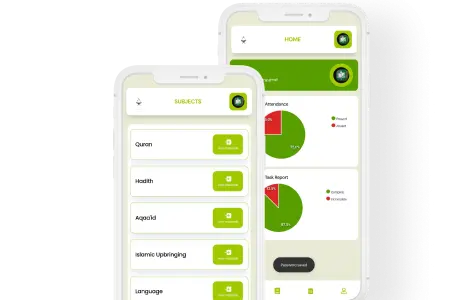
Ilmify provides all of these capabilities in a platform designed specifically for Islamic educational institutions — with Bahasa Malaysia support, mobile-first design, and pricing appropriate for community Sekolah Agama in Malaysia.




 Arabic
  English
  Malay
Malay  Urdu
Urdu