
Introduction
Between the traditional Kuttab — where a child learns to recite the Qur’an — and the Darul Uloom or university-level Islamic college where scholars are trained, there is a crucial middle tier of Islamic education: the Ma’had Islami (المعهد الإسلامي — Islamic Institute).
The Ma’had Islami occupies a unique and important position in North Africa’s Islamic educational landscape. It is beyond the elementary level of the Kuttab — students are past the basics of Qur’anic recitation. But it is not yet the advanced seminary — students have not yet specialised to the depth of the Darul Uloom or Al-Azhar’s higher institutes. The Ma’had is the institution that takes a student who can read and recite the Qur’an and produces one who understands Islamic law, Arabic language, Hadith methodology, and Islamic history at an intermediate to advanced level.
Across North Africa, Ma’ahid Islamiyya (plural) operate in a bewildering variety of forms — government institutes, mosque-affiliated institutions, private academies, Hifz-focused institutes, and comprehensive Islamic education centres. What unites them is their position in the intermediate-to-advanced Islamic education space and the specific management challenges that come with it.
This guide addresses those challenges: what managing a Ma’had Islami requires, what the specific operational complexities are, and what digital tools the North African Ma’had needs in 2026.
What Is a Ma’had Islami?
A Ma’had Islami (Islamic Institute) is an intermediate or advanced Islamic educational institution that provides systematic instruction in the Islamic sciences beyond the elementary Qur’anic level. The term ma’had (from Arabic ahd — covenant, preparation) describes a place of preparation and formation — an institution designed to prepare students for advanced Islamic scholarship, religious leadership, or professional roles within the Muslim community.
In common North African usage, the Ma’had Islami typically refers to:
- An institution above the Kuttab/Msid level but below the university or Darul Uloom
- A structured curriculum covering multiple Islamic sciences (Fiqh, Aqeedah, Arabic, Hadith, Tafseer) systematically
- A formal academic programme with defined levels, examinations, and certificates
- An institution that may or may not include a Hifz component but goes beyond Qur’an recitation in its educational scope
The Ma’had should not be confused with:
- The Kuttab or Msid (elementary Qur’anic school — below Ma’had level)
- The Jami’a Islamiyya (Islamic university — above Ma’had level)
- The Ma’had al-Azhar specifically (Al-Azhar’s own network of institutes in Egypt — a specific category with particular registration and curriculum requirements)
Types of Ma’ahid Islamiyya in North Africa
Government Ma’ahid (Ministry of Religious Affairs / Awqaf)
In Egypt, Morocco, Algeria, and Tunisia, the state religious authorities operate networks of Islamic institutes directly. These provide structured Islamic education, often up to secondary-equivalent level, and produce graduates who may serve as imams, preachers, religious teachers, or administrators. Government Ma’ahid follow ministry-mandated curricula and their certificates are state-recognised.
Egypt: Al-Azhar’s network of Ma’ahid (Al-Azhar Institutes) operates in every governorate — among the most extensive networks of Islamic educational institutions in the world. Al-Azhar Ma’ahid provide education from primary through secondary level within Al-Azhar’s parallel system.
Morocco: The Ministry of Habous and Islamic Affairs operates Ma’ahid through its Dirasat Islamiyya (Islamic Studies) network, as well as through the network of Dar al-Hadith al-Hassaniyya and Durus al-Hassan programmes.
Algeria: The Ministry of Religious Affairs and Waqf oversees a network of institutes providing religious education at multiple levels.
Private Ma’ahid
Independent Islamic institutes, typically operated by scholars, associations, or community organisations. These may be more curriculum-innovative but face greater administrative independence — no ministry support, no guaranteed certificate recognition, and full institutional governance responsibility.
Mosque-Affiliated Ma’ahid
Large mosques — particularly those with significant endowments — sometimes operate comprehensive Islamic institutes that go beyond basic Qur’anic education to provide multi-year programmes in Islamic sciences. Cairo’s great mosques, Fez’s Qarawiyyin complex, and Tunis’s historic mosque-universities have historically operated in this way.
Hifz-Focused Ma’ahid
Institutions whose primary programme is intensive Qur’an memorisation, but which also provide supporting Islamic sciences education. These are common across North Africa and occupy an important niche — they are more than a Kuttab (they offer structured Islamic Studies alongside Hifz) but less than a comprehensive Ma’had (Hifz remains the central activity).
The Ma’had Islami Curriculum
A comprehensive Ma’had Islami curriculum at intermediate level typically covers:
Core Islamic Sciences
Ulum al-Qur’an (Qur’anic Sciences):
- Hifz programme (for Ma’ahid including memorisation)
- Tajweed at an advanced level — including the different qira’at (recitation modes) at the most advanced level
- Tafseer — Qur’anic exegesis, from introductory to comprehensive (selected Tafseer texts such as Ibn Katheer, Al-Jalalayn)
- Ulum al-Qur’an (sciences of the Qur’an) — asbab al-nuzul, nasikh wa mansukh, i’jaz
Hadith and Hadith Sciences:
- Memorisation of core Hadith collections (Arba’een, Riyadh as-Saliheen, Bulugh al-Maram)
- Mustalah al-Hadith (Hadith terminology and methodology)
- Study of major Hadith books (Sahihayn, Sunan)
Fiqh (Islamic Jurisprudence):
- Comprehensive Fiqh at all levels — Taharah, Salah, Zakah, Sawm, Hajj, Nikah, commercial transactions
- Study of a primary Fiqh text in the school’s madhab (Hanbali, Maliki, Shafi’i, Hanafi)
- Usul al-Fiqh (principles of jurisprudence) at advanced levels
Aqeedah (Islamic Theology):
- Systematic study of Islamic belief — from introductory texts to advanced works of Aqeedah
- Comparative study of Islamic theological schools at advanced levels
Seerah and Islamic History:
- Comprehensive Seerah (biography of the Prophet ﷺ)
- History of the Companions and early Islamic period
- History of Islamic scholarship and the major schools of thought
Arabic Language
The distinctive feature of the Ma’had vs the Kuttab — systematic, advanced Arabic language instruction:
- Nahw (grammar): from foundation through advanced classical texts (Ajrumiyyah, Alfiyyah of Ibn Malik)
- Sarf (morphology): systematic study of Arabic root patterns
- Balagha (rhetoric): for advanced students
- Arabic literature: classical texts, poetry, prose
General Islamic Education
- Islamic economics (Fiqh al-mu’amalat) — commercial transactions, finance
- Adab (Islamic manners and etiquette)
- Dawah methodology
Student Profiles: Who Attends a Ma’had?
Students at a Ma’had Islami typically fall into several groups:
Post-Kuttab students (ages 12–18): Young people who have completed their basic Qur’anic education and want to pursue Islamic sciences more formally — often alongside state secondary school or as an alternative to it.
Post-secondary students (ages 18–25): University-age students pursuing Islamic sciences either as a primary qualification or alongside secular degrees.
Hifz graduates continuing their education: Students who have completed Qur’an memorisation and are now deepening their Islamic knowledge to complement their Hifz.
Imams and mosque staff seeking formal credentials: Religious practitioners seeking a structured qualification to support or formalise their existing practice.
Adult learners: Professionals who want to deepen their Islamic knowledge outside a full-time study programme — evening and weekend institutes serve this population specifically.
The diversity of this student population creates management complexity that a children’s Kuttab does not face — different ages, different background levels, different programme tracks, and different expectations for assessment and certification.
Governance Models for North African Ma’ahid
Government-Operated
Ministry-operated Ma’ahid are governed through the ministry’s own administrative structure — the principal is a government employee accountable to the regional or national ministry, not to a community committee. Administration follows government procedures.
Key management consideration: Government Ma’ahid have less management flexibility but more institutional support — teacher salaries are state-funded, curriculum is provided, and certification is automatically recognised.
Privately Operated
Independent Ma’ahid require full institutional governance:
Board of Trustees or Management Committee: A formal governance body including Islamic scholars, community representatives, and professionals. Responsible for strategic direction, financial oversight, and appointment of the principal.
Principal / Director (Mudir): Operational head responsible for curriculum implementation, teacher management, student welfare, and day-to-day administration.
Academic Council: For larger Ma’ahid, a body of senior scholars advising on curriculum, assessment standards, and the institution’s academic direction.
Finance Committee: Overseeing fee collection, payroll, and financial accountability.
Mosque-Affiliated
The mosque’s own governance structure (typically a board of trustees or wakf committee) oversees the institute. The institute principal reports to the mosque leadership.
The Ma’had’s Relationship with Al-Azhar and State Institutions
Across North Africa, the relationship with state Islamic institutions shapes the Ma’had’s operations significantly:
In Egypt: Al-Azhar’s certification is the gold standard for Islamic educational credentials. A Ma’had that is affiliated with or follows Al-Azhar’s curriculum produces graduates whose certificates are widely recognised. Private Ma’ahid that do not seek Al-Azhar affiliation must develop their own certification credibility.
In Morocco: The Ministry of Habous and Islamic Affairs provides curriculum guidance and some recognition for qualifying Islamic institutes. The Council of Ulama (Majlis al-Ulama) at national and regional levels provides scholarly oversight of Islamic educational standards.
In Algeria: The Ministry of Religious Affairs and Waqf registers and provides some curriculum frameworks for Islamic institutes. Independent Ma’ahid must register with the ministry to issue recognised certificates.
Practical consideration: For any private Ma’had seeking to issue certificates that are externally recognised — by employers, by further education institutions, by community — formal affiliation with the relevant state Islamic educational authority is strongly advisable.
The Unique Administrative Challenges of a Ma’had Islami
Ma’ahid face all the challenges of simpler Islamic schools — plus several specific to their level and complexity:
Multi-level, multi-subject tracking. A Ma’had tracks student progress across 8–12 subjects, each at different levels, for students at different stages of a multi-year programme. This is substantially more complex than tracking Hifz position and attendance at a children’s Kuttab.
Formal examination management. End-of-year examinations, oral assessments before scholars, and certificate-granting processes require formal documentation — examination records, grade histories, certificate issuance logs.
Fee management for diverse programmes. Different students may be enrolled in different programme tracks (full-time vs. part-time; Hifz-focused vs. comprehensive Islamic sciences), with different fee structures. A single consolidated fee record that tracks multiple programme fees per student is essential.
Alumni and certification records. A Ma’had’s reputation is built partly on its graduates. Maintaining records of graduates — who completed what programme, in what year, with what assessment results — is important for institutional credibility and for answering the inevitable requests from graduates who need their certificates verified years later.
International students and diverse demographics. North African Ma’ahid — particularly those with reputations for quality — attract students from West Africa, East Africa, Europe, and the broader Arab world. Managing students with diverse legal statuses, different home country requirements, and different language backgrounds adds administrative complexity.
Staff Management in a Ma’had Context
A Ma’had Islami typically employs:
- Qur’an teachers (Huffaz): For Hifz programmes — must be qualified Huffaz, ideally with ijaza (chain of transmission) in Qur’anic recitation
- Islamic sciences teachers (Ulama): Graduates of Al-Azhar, Darul Ulooms, or equivalent institutions — specialising in Fiqh, Hadith, Aqeedah, Seerah
- Arabic language teachers: Formally qualified in Arabic linguistics and grammar
- Administrative staff: For larger institutions — a dedicated administrator handling student records, fee management, and communication
- Examination/certification officer: Responsible for formal assessment processes
All staff must have their qualifications verified and documented. For North African Ma’ahid, the relevant qualification frameworks are those of the national Islamic educational authority (Al-Azhar in Egypt, Ministry of Habous in Morocco, etc.).
Fee Structures and Financial Management
Fee Structures Appropriate for Ma’had Institutions
North African Ma’ahid operate on a wide range of fee structures:
Government Ma’ahid: Free or nominal fees — costs borne by the state.
Private full-time Ma’ahid: Monthly tuition fees ranging from the equivalent of USD 50–300/month depending on country, location, and institutional reputation.
Part-time and evening Ma’ahid: Lower fees — per-course or per-term payments for working adults pursuing Islamic education alongside other commitments.
Scholarship and sponsored students: Many Ma’ahid receive funding from Gulf charitable organisations (Qatar Charity, Saudi cultural organisations, UAE Islamic institutions) that sponsor students’ fees — requiring grant reporting and sponsored student tracking.
Financial Management Requirements
- Programme-specific fee tracking (different students on different tracks at different fee levels)
- Scholarship/sponsorship tracking — which students are sponsored, by whom, for how long
- Salary management for multiple specialised teaching staff
- Income from examinations and certificate issuance
- Grant reporting for any externally funded activities
Student Records: The Ma’had’s Specific Needs
Beyond the standard student record (personal details, emergency contacts, enrolment date), Ma’had student records must include:
Academic history:
- Previous Islamic educational institutions attended and certificates held
- Arabic language proficiency level at entry
- Hifz status at entry (Hafiz, partial Hifz, Nazirah complete, or none)
- Assessment results for each subject by term/year
Programme track:
- Full-time or part-time
- Primary programme (Hifz-focused, comprehensive Islamic sciences, Arabic-focused)
- Expected graduation year and certificate level
Financial history:
- Complete fee payment record
- Scholarship/sponsorship details if applicable
- Examination fee payment records
Certification records:
- Certificates awarded: level, date, examiner(s)
- Ijaza granted (for Hifz): chain of transmission, date
- Graduation record
Hifz Tracking in Ma’had Institutions
For Ma’ahid that include a Hifz programme, proper three-stream Hifz tracking is as essential as in any dedicated Hifz school — but exists alongside tracking across multiple other subjects.
Sabak (new memorisation): Current position, daily portion, quality of that day’s recitation.
Sabaq Para (recent revision): The portion recently completed, being consolidated. Quality trend over recent sessions.
Dhor (old revision): All completed memorisation on a rotation cycle. Last review date per Juz. Overdue Dhor flagged automatically.
In a Ma’had context, the Hifz teacher’s session records must integrate with the overall student academic record — so that the principal can see a student’s Hifz progress alongside their Fiqh, Arabic, and Hadith performance in a single dashboard view.
Parent and Student Communication at Ma’had Level
At Ma’had level — where students are often adolescents or adults — communication dynamics differ from a children’s Kuttab:
For younger students (12–18): Parent communication remains primary — progress reports, attendance, fee reminders go to parents. Student access to their own record is appropriate but not the primary communication channel.
For adult students (18+): The student is the primary communication recipient — progress, attendance, fee records, and assessment results go to the student directly. Parent communication is not appropriate for adult students without their consent.
For sponsored students: The sponsoring organisation may require progress reports — the institute needs a way to generate sponsored-student progress reports for specific grant-reporting requirements.
How Ilmify Supports North African Ma’ahid Islamiyya
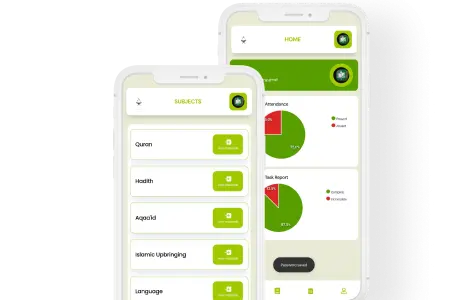
Ilmify’s platform is configurable for the complexity of Ma’had-level Islamic education — multi-subject tracking, multi-programme fee management, and three-stream Hifz tracking within a broader student academic record.
Arabic interface: Full Arabic-language interface for Ma’had operators, teachers, and parents/students in North Africa.
Multi-subject academic tracking: Configure the Ma’had’s full curriculum — Fiqh, Hadith, Aqeedah, Tafseer, Arabic, Seerah — with assessment recording by subject, by class level, and by term. End-of-term reports generated automatically from existing data.
Three-stream Hifz tracking integrated: For Ma’ahid with Hifz programmes, Sabak/Sabaq Para/Dhor tracking is integrated into the student’s overall academic record — not a separate system.
Multi-programme fee management: Track different fee rates for different programme tracks. Record sponsorship and scholarship arrangements. Generate fee reports by programme, by student, and consolidated for the institution.
Formal examination records: Record assessment results by subject, by examiner, and by term. Maintain a permanent examination history for each student.
Certificate issuance log: Record when certificates and ijazaat are issued, to whom, at what level, and by which examiner — the alumni and certification record the institution needs.
Adult student communication: Configure communication recipients by student type — parent-first for younger students, student-direct for adult learners.
Offline mode: Record sessions, attendance, and assessments without internet — for Ma’ahid in areas with unreliable connectivity.
💡 Built for the complexity of intermediate and advanced Islamic education — not adapted from a children’s school appMulti-subject tracking. Hifz integrated. Examination records. Arabic interface. Offline capable.See Ilmify for North African Ma’ahid Islamiyya →
Conclusion
The Ma’had Islami occupies a vital position in North Africa’s Islamic educational ecosystem — the institution that takes a student who can read the Qur’an and produces one who understands its sciences. Managing this institution well requires tools that match its complexity: multi-subject tracking, three-stream Hifz integration, examination record management, and fee systems that handle diverse programme structures.
Ilmify is built to provide exactly this infrastructure — in Arabic, offline-capable, and designed for the real operational context of Islamic institutions in North Africa.
Explore Ilmify for your North African Ma’had Islami →
Related articles:




 Arabic
  English
  Malay
Malay  Urdu
Urdu