
Introduction
If you search for “Islamic school management software” today, you will find a handful of platforms — most built for English-speaking markets, most designed for Western Islamic schools operating in regulated environments with reliable internet and desktop computers, most with no understanding of the Kuttab, the Zawiya, the Ma’had Islami, or the specific operational realities of Islamic education across Egypt, Morocco, Algeria, Tunisia, Libya, and Sudan.
The result is a mismatch. A platform built for a UK supplementary school or a Canadian Islamic academy looks attractive in a product video — but when an Egyptian faqih tries to use it on his phone in a mosque with no WiFi to record 22 students each at a different Surah, the mismatch becomes immediately apparent.
This guide identifies what Islamic school management software for North Africa actually needs to do — and evaluates whether what is currently available comes close to meeting those needs.
The North African Islamic School Software Gap
North Africa’s Islamic educational institutions — collectively comprising tens of thousands of Katatib, Zawiyas, Ma’ahid, and Qur’anic schools across six countries — represent one of the most significant Islamic educational ecosystems on earth.
They are also, in 2026, almost entirely unserved by purpose-built management software.
The reasons are interconnected:
Language: Most available Islamic school management software is English-only or English-primary. North African Islamic school operators work in Arabic. A software platform without a genuine, complete Arabic interface is not a viable tool for a Moroccan faqih or an Egyptian Ma’had administrator.
Connectivity assumptions: Most available software assumes reliable internet. North African Islamic schools — particularly outside major urban centres — operate in environments where connectivity is intermittent, power outages are common, and mobile data plans are limited. Software requiring constant internet cannot be used consistently.
Islamic educational specificity: General school management software — designed for mainstream schools — does not understand Hifz. It has no concept of Sabak, Sabaq Para, or Dhor. It cannot track the three simultaneous revision streams that every Hifz student manages. This is not a minor gap — it is the absence of the most important tracking function in Islamic education.
Price: Software priced for Western educational markets is not affordable for community-funded Katatib operating on waqf income and parent contributions in Egyptian pounds, Moroccan dirhams, or Algerian dinars.
The result: a vast Islamic educational ecosystem managing itself with notebooks, personal phone contacts, WhatsApp groups, and memory — not because the administrators are unaware that better tools exist, but because no tool has been built for their specific context.
The Seven Non-Negotiable Requirements
Any Islamic school management platform that claims to serve North African institutions must meet all seven of these requirements. A platform that meets six of seven is not adequate — the missing requirement will be the one that breaks adoption.
Requirement 1: Complete Arabic Interface
Not just Arabic data entry — a full Arabic interface in which every menu, every button, every field label, every notification is in Arabic, in right-to-left layout. Teachers who teach in Arabic, parents who communicate in Arabic, and fuqaha who have spent their lives in Arabic-medium scholarship will not adopt a platform whose interface feels foreign.
This rules out the majority of currently available Islamic school management platforms. Most offer Arabic data entry but English navigation — which is not the same thing.
Requirement 2: Offline Recording Mode
The recording of attendance and Hifz progress must work with zero internet connection. The data must be stored locally on the device, with automatic synchronisation when any connection becomes available. There must be no data loss during internet outages, and the teacher should never need to think about connectivity before recording a session.
This rules out all cloud-only platforms — those that require a live internet connection to save any data.
Requirement 3: Three-Stream Hifz Tracking
Sabak (new memorisation), Sabaq Para (recent consolidation), and Dhor (old revision cycle) — tracked separately per student, per session. A platform that records only “current Surah position” is not suitable for serious Hifz programme management. This is the core educational tracking function; it cannot be approximated or omitted.
Requirement 4: Mobile-First Interface
The primary recording device is an Android or iOS smartphone — not a desktop computer or laptop. The teacher session recording interface must be designed for touchscreen use, legible on a 5–6 inch screen, and operable with one hand if necessary. A platform whose primary interface is a desktop browser is not a mobile-first platform.
Requirement 5: Individual Parent Portal in Arabic
Each parent must have their own individual access to their child’s data — not shared group access, not a general school notice board. The parent portal must be available in Arabic. It must show Hifz position, attendance, and fee status at minimum. Sharing student-specific information through WhatsApp groups is not an acceptable substitute.
Requirement 6: Affordable North African Pricing
Pricing must reflect North African economic realities. A platform priced at USD 200/month is unaffordable for a 40-student Kuttab operating on community contributions in Egyptian pounds or Moroccan dirhams. Pricing should be structured per institution or per student, with North Africa-appropriate local currency pricing.
Requirement 7: Simple Enough for a Solo Faqih
The system must be manageable by a single teacher without dedicated administrative support. If the platform requires a trained administrator to operate, it will not be used in the vast majority of North African Islamic schools where the faqih or mu’allim is the administrator, the teacher, and the principal simultaneously.
What Most Islamic School Software Gets Wrong for North Africa
Generic school management platforms (ClassDojo, Classloom, iSAMS, Arbor): Built for mainstream Western schools. No Islamic educational concepts (no Hifz tracking, no Tajweed quality recording, no concept of Sabak/Dhor). English-language interface. Designed for desktop use. Not offline-capable. Irrelevant for North African Islamic schools.
UK/US Islamic school platforms: Some platforms have been built for Western Islamic schools — UK maktabs, American Islamic academies. These typically have better Islamic educational understanding but are still English-language primary, priced for Western markets, and designed for the regulated Western safeguarding environment rather than North African operational contexts.
Arabic school administration software: Some Arabic-language school management platforms exist in the Gulf and Arab world — built for government schools or private academies in Saudi Arabia, UAE, or Egypt’s government school system. These have Arabic interfaces but are designed for mainstream schooling (subjects like mathematics, science, national curriculum), not for Hifz tracking, Tajweed quality recording, or the specific records of Qur’anic education.
Spreadsheet-based approaches: Many North African Islamic schools use shared Google Sheets or Excel files. These provide basic data storage but require constant manual maintenance, have no parent communication capability, no automatic notifications, no offline mode, and no purpose-built Hifz tracking logic.
Evaluating the Available Options
In 2026, the platforms with any legitimate claim to serving North African Islamic schools are:
Ilmify
Arabic interface: Full — complete Arabic interface, right-to-left, all screens.
Offline mode: Yes — full offline recording with automatic sync.
Three-stream Hifz tracking: Yes — Sabak, Sabaq Para, Dhor per student per session.
Mobile-first: Yes — designed primarily for smartphone recording.
Individual Arabic parent portal: Yes — full Arabic parent portal with individual access.
North Africa pricing: Available — contact Ilmify team for regional pricing.
Solo faqih usable: Yes — designed for single-operator institutions.
North Africa-specific content: Yes — this guide and the broader Ilmify content library.
Assessment: Meets all seven non-negotiable requirements.
Generic Islamic School Platforms (various UK/US focused platforms)
Arabic interface: Partial at best — Arabic data entry; English navigation.
Offline mode: No — cloud-only.
Three-stream Hifz tracking: No — at best a “current position” field.
Mobile-first: No — primarily desktop browsers.
Individual Arabic parent portal: Partial — English parent portal.
North Africa pricing: No — Western market pricing.
Solo faqih usable: Borderline.
Assessment: Meets 1–2 of seven requirements. Not suitable for North African Islamic schools.
Arabic Government School Software (Gulf/Egyptian platforms)
Arabic interface: Yes.
Offline mode: No.
Three-stream Hifz tracking: No.
Mobile-first: No.
Individual Arabic parent portal: Partial.
North Africa pricing: Variable.
Solo faqih usable: No — designed for institutions with administrative staff.
Assessment: Arabic interface is the only matching requirement. Not suitable for Qur’anic school management.
WhatsApp + Spreadsheet (current standard)
Arabic interface: WhatsApp yes; spreadsheet partial.
Offline mode: WhatsApp yes; spreadsheet no.
Three-stream Hifz tracking: No.
Mobile-first: WhatsApp yes; spreadsheet no.
Individual parent portal: No — group sharing only.
North Africa pricing: Free (but massive hidden cost in administrator time).
Solo faqih usable: Yes.
Assessment: Free but fundamentally inadequate. No Hifz tracking. No institutional record integrity. Data protection liability.
The Case for Ilmify: How It Addresses North African Requirements
Ilmify is the only platform that meets all seven non-negotiable requirements for North African Islamic school management. Here is how it addresses each:
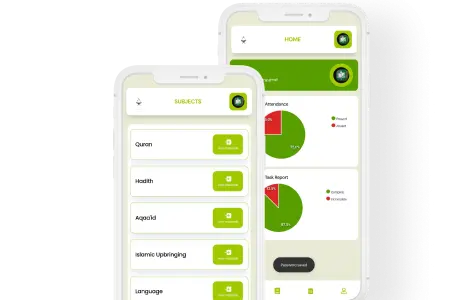
Complete Arabic interface: Ilmify’s Arabic interface was built from the ground up for Arabic-script right-to-left use — not translated from English. Every screen used by teachers, principals, and parents is in Arabic.
Offline recording: Ilmify’s offline mode stores all session data locally on the device. Recording works during power outages, in mosques with no WiFi, and in areas with no mobile signal. Sync happens automatically whenever any connection becomes available — no manual intervention.
Three-stream Hifz tracking: After each session, the teacher records Sabak (Surah, verse, quality rating), Sabaq Para (quality rating for the recent consolidation period), and Dhor status (last review date, quality if tested). This takes under 2 minutes for a student. Over time, these per-session records build into a complete, permanent Hifz health profile for each student.
Mobile-first: Ilmify’s primary interface is the smartphone app — designed for touchscreen use, legible on standard smartphone screens, operable quickly in the five minutes between the last student leaving and the faqih locking the mosque room.
Individual Arabic parent portal: Each parent has their own login. They see their child’s current Hifz position (Surah and verse), Sabaq Para quality trend, Dhor cycle health, attendance record, and fee balance — all in Arabic.
North Africa pricing: Contact the Ilmify team for current North Africa pricing by country. Pricing is structured to be accessible for community-funded institutions operating in local currencies.
Solo faqih usable: A single faqih with no administrative assistant can set up and operate Ilmify fully. Onboarding takes one day; ongoing operation takes 2–5 minutes per session for recording, with all reports and parent notifications generated automatically.
Features That Matter vs Features That Don’t
When evaluating Islamic school software, North African administrators are sometimes attracted to features that look impressive but are not practically relevant — and miss features that are essential.
Features That Actually Matter for North African Islamic Schools
| Feature | Why It Matters |
| Offline recording | Sessions happen with or without internet; records must too |
| Arabic interface | Operators work in Arabic; English interfaces create friction |
| Three-stream Hifz tracking | The core educational tracking function |
| Individual parent portal | GDPR/data law compliance; parent expectation |
| Automatic absence notifications | Reduces teacher communication burden |
| Dhor overdue alerts | Prevents Hifz deterioration from going undetected |
| Fee management with receipts | Institutional accountability |
| Data export | You own your data; portability matters |
Features That Sound Impressive But Are Low Priority for Most Katatib
| Feature | Why It’s Lower Priority |
| AI-generated lesson plans | Kuttab curriculum is established; AI lessons are irrelevant |
| Video conferencing integration | In-person institution; online delivery is not the model |
| Complex timetabling engine | Kuttab timetable is simple and fixed |
| Parent-teacher messaging hub | Individual notifications are more important than two-way messaging |
| Integration with external exam boards | Not relevant for Kuttab certificates |
| Student portfolio with multimedia | Appropriate for mainstream schools; not for Hifz tracking |
Implementation: Getting a North African Islamic School onto Software
The typical implementation timeline for a North African Islamic school adopting Ilmify:
Day 1 (Setup): Account creation, class structure configuration, subject areas defined. 1–2 hours.
Days 2–4 (Data entry): Student data entry — name, class, parent contacts, current Qur’anic position. 3–5 minutes per student. A 30-student Kuttab: approximately 2–3 hours total.
Day 5 (Teacher onboarding): One session recording walkthrough with each teacher. Under 15 minutes per teacher to learn the recording interface.
Week 2 (Go live): Teachers record every session. Principal monitors compliance. Parent invitations sent.
Week 4 (Full operation): Paper backup retired. All sessions recorded digitally. Parent portal active. Fee management running.
Total time from decision to full operation: 3–4 weeks of concurrent activity.
Total Cost of Ownership: What It Really Costs
The relevant cost comparison is not “Ilmify subscription vs free WhatsApp” — it is “Ilmify subscription vs the real cost of the current approach.”
The Hidden Cost of the WhatsApp + Notebook Approach
Principal time reconciling fee records: 3–5 hours per month manually tracking who has paid, chasing arrears, and preparing the committee report.
Teacher time answering parent progress queries: 20–40 minutes per week per teacher responding to “where is my child in the Qur’an?” and “was he present last week?” questions via WhatsApp.
Cost of records lost when teachers leave: Immeasurable — years of Hifz progress tracking, rebuilt from scratch each time a teacher changes.
Cost of undetected Hifz deterioration: Students whose Dhor is silently decaying while Sabak advances — discovered only at end-of-year assessment when recovery is expensive.
Data protection liability: The cost of a data protection enforcement action or community trust damage from inappropriate WhatsApp data sharing.
Add these up and the “free” WhatsApp + notebook approach has a very real cost — in administrator time, in educational quality, and in institutional risk.
Ilmify’s Cost
Subscription-based, structured for North African market realities. Contact the Ilmify team for current Egypt, Morocco, Algeria, Tunisia, and Sudan pricing. The Ilmify team works with institutions to find pricing that is sustainable given their funding model.
The ROI of Proper Management Software
When North African Islamic schools properly implement Ilmify, the measurable outcomes are:
Time savings: 3–8 hours per week of administrator and teacher time recovered from manual record-keeping, parent query answering, and fee reconciliation.
Hifz quality improvement: Students whose Dhor cycle deterioration is flagged and addressed early maintain their memorisation better. Schools using systematic three-stream tracking typically see measurable improvement in student Hifz health within one term.
Parent satisfaction: Parents with access to a real-time Arabic parent portal make fewer routine enquiries, have higher satisfaction with the institution, and re-enrol their children at higher rates.
Institutional continuity: When a teacher changes, their records stay. The replacement teacher starts with a complete picture of every student’s Hifz position, revision health, and attendance history — not from zero.
Fee collection improvement: Automated fee reminders via individual parent notification, combined with clear outstanding balance visibility, consistently improve fee collection rates by 15–25% in institutions moving from informal to digital fee management.
Conclusion
The Islamic educational tradition of North Africa — centuries-deep, culturally rich, and still actively serving millions of students — deserves management infrastructure commensurate with its importance. In 2026, that infrastructure exists: a platform with a full Arabic interface, offline capability for variable-connectivity environments, three-stream Hifz tracking that understands the actual educational process, and pricing built for community-funded institutions.
That platform is Ilmify. And for North African Islamic schools ready to move from notebooks and WhatsApp to institutional-quality management, the path is shorter and simpler than it appears.
See Ilmify for North African Islamic Schools →
Related articles:
- What Is a Kuttab? Traditional Qur’an Schools in North Africa →
- Zawiya Schools: Between Sufi Tradition and Modern Administration →
- How to Digitise Madrasa Records in North Africa →
- Best Islamic School Management Apps for Africa in 2026 →
- Why Offline Mode Is Non-Negotiable for Islamic School Software in Africa →