

Introduction
Every year, thousands of Hafiz and Qari from more than 130 countries compete on stages ranging from a grand mosque in Makkah to a televised programme in Doha broadcast across the Muslim world during Ramadan. International Quran competitions are not simply academic contests. They are the most visible public celebration of the Quran’s living oral tradition — a 1,400-year chain of memorisation and recitation that runs unbroken from the Prophet Muhammad ﷺ to the student preparing in a madrasa in Bangladesh, a mosque in Atlanta, or a Tahfiz school in Kuala Lumpur today.
This guide covers every major international Quran competition — from the world’s largest prize pools to the diaspora events that serve Muslim communities in the West. Whether you are a student looking to compete, a teacher preparing a student, a school principal deciding which events to enter, or a parent who wants to understand this world, everything you need is here.
The Two Types of Quran Competition
Before entering any competition, it is essential to understand which type you are entering — because the preparation, judging criteria, and skills required are fundamentally different.
Hifz competitions (Hafazan) test memorisation. Judges prompt the competitor with a verse or portion of text, and the competitor must continue reciting from memory without error. Accuracy is paramount. The key variables are: how many Juz (of 30) the competitor has memorised, how accurately they reproduce the text, and how well they apply Tajweed rules. Hifz competitions range from Juz Amma (the final 30th part) all the way to the complete 30-Juz Quran.
Tilawah/Qira’ah competitions (Recitation) test the beauty and accuracy of recitation by sight or memory. Judges evaluate Tajweed precision, Maqamat (melodic modes), vocal quality, and aesthetic presentation. These competitions require a different kind of preparation — a singer’s ear, a scholar’s precision, and years of study with a master reciter.
Many major competitions offer both categories. The Malaysia MTHQA is the best-known example of a competition that has developed both Hafazan and Tilawah Mujawwad as distinct, prestigious tracks.
The table below summarises what each type tests and which major competitions run each.
| Feature | Hifz (Memorisation) | Tilawah (Recitation) | Combined |
| Primary test | Exact recall of text | Tajweed + vocal beauty | Both |
| Judging focus | Accuracy, Tajweed | Maqamat, Makharij | All criteria |
| Best example competitions | King Abdulaziz (Saudi), DIHQA (Dubai), Imam Shatibi (USA) | Katara Prize (Qatar), Iran International | MTHQA (Malaysia) |
| Preparation time | Years of full Hifz | Years of recitation study | Dual track |
| Age limit (typical) | 13–30 (varies) | 18–50 (varies by event) | Varies |
The Big Five: The World’s Most Prestigious Events
Five competitions define the global apex of Quranic excellence. Each is distinct in its focus, governance, and what winning means for a competitor’s career and recognition.
| Competition | Country | Organiser | Annual Prize Pool | Participants (approx.) | Season |
| King Abdulaziz International Quran Competition | Saudi Arabia | Ministry of Islamic Affairs | SAR 4 million (~$1.07M) | 179 from 128 countries (2025) | August (Dhul Hijjah) |
| Dubai International Holy Quran Award (DIHQA) | UAE | IACAD Dubai | AED 12M+ (~$3.3M) | 2,107 from 91 countries (since 1997) | Ramadan |
| Malaysia International Al-Quran Recital Assembly (MTHQA) | Malaysia | JAKIM | RM 90,000+ | 72 from 50 countries (2025) | August–October |
| Katara Prize for Quran Recitation | Qatar | Katara Cultural Village | QAR 1.5 million | 611 from 46 countries (9th edition, 2026) | Ramadan (televised) |
| Iran International Quran Competition (Mashhad) | Iran | Iranian Ministry of Culture | Varies | International + domestic | Annual |
King Abdulaziz International Quran Competition is the most prestigious Hifz-focused international competition in the world, held at the Grand Mosque in Makkah. Winning here — particularly Branch 1 (complete Quran + Seven Modes of recitation) — is considered the highest individual honour in the global Hifz world. The competition has been running since 1399 AH (1979) and in its 45th edition (2025) attracted contestants from a record 128 countries.
Dubai International Holy Quran Award underwent a historic transformation in its 28th edition (2026), introducing a dedicated female category for the first time and raising the top prize to $1 million for both the male and female winners — the highest prize in the history of Quran competitions. The competition focuses on the most beautiful recitation rather than pure memorisation testing, and the award ceremony at the Umm Suqeim Majlis is one of the most watched Islamic events in the Gulf.
Malaysia’s MTHQA is the world’s oldest continuously running international Quran competition, founded in 1961 by Tunku Abdul Rahman and organised annually by JAKIM. In its 65th edition (2025) it drew participants from 50 countries and remains the most iconic competition in Southeast Asia. Its dual-track structure — Tilawah Mujawwad and Hafazan — and its televised broadcast on RTM TV1 give it a unique popular reach.
The Katara Prize is distinct in that it is run entirely as a television programme broadcast on Qatar TV during Ramadan — 25 episodes reaching audiences across the Arab and Muslim world. The 9th edition (2026) drew participants from 46 foreign countries and 17 Arab countries, with the judging panel split between Tajweed experts and vocal aesthetics specialists. The winner receives a full Quran audio recording produced at Katara’s studios.
Regional Heavyweights
Beyond the Big Five, significant national and regional competitions serve as both stepping stones to international events and prestigious destinations in their own right.
Saudi Arabia runs the annual King Abdulaziz competition (above) plus numerous regional and Hifz school competitions through the Ministry of Islamic Affairs network.
Malaysia hosts the MTHQA (above) and a rich national competition ecosystem including the Itqan National Competition (18th edition 2026, registration via Telegram) and state-level Musabaqah events that feed into MTHQA qualification.
Indonesia operates through the Musabaqah Tilawatil Quran (MTQ) system — a massive national competition infrastructure with provincial rounds feeding a national final, with winners eligible for international representation.
Iran runs the International Quran Competition in Mashhad annually. Known for its emphasis on vocal beauty and Maqamat, it draws participants from across the Muslim world and reflects a different judging philosophy to Saudi and Gulf competitions — a topic explored in detail in Why Different Countries Judge Competitions Differently.
Libya hosts the Libya International Holy Quran Competition, an event followed closely through the Libyan Quran Channel.
Turkey organises national Quran competitions through the Diyanet (Presidency of Religious Affairs) system; winners can represent Turkey at international events.
Nigeria and West Africa run national competitions through Islamic Education Trust and affiliated bodies; Nigeria has multiple Islamiyya school competition networks.
Diaspora and Community Competitions (UK, USA, Canada)
For Muslim communities in the West, a rich ecosystem of competitions serves both as community events and pathways to international stages.
United States
- Imam Al-Shatibi Quran Competition (Minneapolis, MN): July 4–11, 2026. North America’s premier Hifz competition, now in its 12th year. Over 3,500 students from 25+ states and provinces have competed. 4 divisions, 12 categories from Juz Amma to full 30-Juz. Full guide →
- Atlanta Quran Competition: September–November 2026. Levels 1–7. Levels 1–6 Georgia residents only; Level 7 open nationally. Registration atlqc.org.
- ICNA-MAS Annual Convention: Baltimore, May 2026. 6 Hifz + 2 Non-Hifz categories; top winner receives Umrah ticket.
Canada
- Toronto International Quran Competition (TIQC): annual; draws international division participants nominated by governments
- MAC (Muslim Arbitration Council) Noble Quran Memorisation Contest: Mississauga, summer 2026
United Kingdom
- Habib ul Quran International Global Hifz Competition: Batley, June 2026; international participants welcome (visa guidance available)
- MAB Great Quran Competition: online heats + UK final
- Madinah College Annual Quran Competition: London, Ramadan 1447/March 2026
Online Quran Competitions
The COVID-19 period saw a permanent expansion of online competition formats. Several established competitions now run hybrid or fully online events.
Studio Arabiya International Quran Competition (16th edition, 2026): fully online; two rounds; video submission for Round 1; live online for Round 2; participants from dozens of countries; open to non-students; $5 entry fee. Suitable for students unable to travel for in-person events.
Online competitions generally test the same criteria as in-person events (memorisation accuracy, Tajweed) but cannot assess live performance under pressure — a key difference from major in-person competitions. They serve well as preparation stepping stones.
The Global Competition Calendar
Competition seasons cluster around three Islamic calendar anchors:
Ramadan (approximately February–March in 2026–2027): DIHQA final ceremony; Katara Prize broadcast; many community mosque competitions in the West (ICNA-MAS Convention overlaps this period)
Hajj season / Dhul Hijjah (approximately August): King Abdulaziz International Competition, held at Masjid al-Haram; Malaysia MTHQA typically in this window
Post-school year (June–September): Imam Shatibi (July); Atlanta (September); Habib ul Quran UK (June); most diaspora community competitions
How Competitions Are Judged (Overview)
All Quran competitions assess some combination of three core criteria:
Memorisation accuracy: in Hifz events, the competitor must continue reciting from any prompted point without error. Judges use a random-draw system (a card with a verse reference, or the judge reciting the beginning of a verse). Errors are classified as Lahn Jali (major — changes meaning; maximum deductions) or Lahn Khafi (minor — pronunciation irregularity; smaller deductions).
Tajweed precision: every competition assesses the correct application of recitation rules — Makharij (letter articulation points), Sifaat (letter characteristics), rules of Noon and Meem, elongations (Madd), and pauses (Waqf).
Vocal quality and Maqamat: in recitation (Tilawah) competitions, judges additionally assess the beauty and artistry of the voice, including use of classical Arabic melodic modes (Maqamat). This criterion carries heavy weight at Katara and the Iran International competition, and lighter weight at the King Abdulaziz competition.
How National Competitions Feed Into International Ones
Most major international competitions do not accept direct applications from individuals. Instead, they accept nominations from national bodies:
King Abdulaziz: applications through national Ministries of Islamic Affairs or equivalent state religious bodies. Most countries send one or two representatives per branch per gender.
MTHQA Malaysia: applications through JAKIM’s online portal; screening via national Islamic organisations; one male and one female per country per category.
DIHQA Dubai: uniquely, the 28th edition opened direct personal registration alongside institutional nomination, significantly expanding access.
Katara: open international application (online); screening committee selects 100 from all submissions; no national body intermediary required.
Imam Shatibi (USA): open to all residents of USA/Canada in the relevant categories; no government nomination required.
This means that for most high-level international competitions, a student’s pathway runs: local mosque/school competition → regional or national competition → national selection → international competition. Documenting a student’s Hifz progress consistently — using a system like Ilmify’s Hifz tracking module — is essential when submitting evidence for national selection.
Conclusion
International Quran competitions are a global institution — a living expression of the Muslim community’s commitment to preserving and honouring the Book of Allah across generations. From the Grand Mosque in Makkah to a community centre in Atlanta, the same rigorous standard applies: accuracy, Tajweed, and the beauty of a voice dedicating itself to the recitation of the Quran.
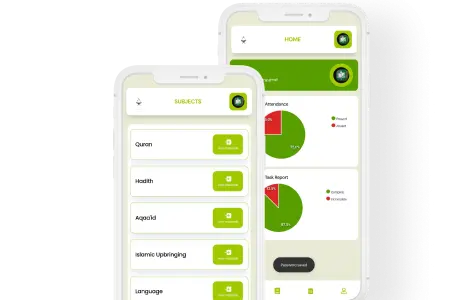
For Islamic schools and Hifz centres preparing students for competition, consistent progress tracking is the foundation. Ilmify’s Hifz tracking module documents every student’s Sabak, Sabak Para, and Dhor — giving teachers and administrators the data they need to know when a student is genuinely ready to compete at the next level.
👉 See How Ilmify Tracks Hifz Progress for Competition Readiness →
Related Articles
You might also find these helpful:
⚙️ How Islamic Schools Prepare Students for Quran Competitions
🏆 King Abdulaziz International Quran Competition: The World’s Most Prestigious Hifz Prize
🏆 Dubai International Holy Quran Award (DIHQA): The World’s Highest-Prize Competition
🏆 Katara Prize for Quran Recitation, Qatar: A Complete Guide
🏆 MTHQA Malaysia: 65 Years of the World’s Most Iconic Competition
📚 How Quran Competitions Are Judged: Tajweed, Maqamat, and Scoring Explained
✅ Quran Competition Calendar 2026: Every Major Event and Registration Deadline
✅ How to Win a Quran Competition: A Complete Preparation Guide




 Arabic
  English
  Malay
Malay  Urdu
Urdu