
Introduction
The Aliya madrasa system is Bangladesh’s government-recognised Islamic education track — a network of approximately 9,000 institutions serving around 1.4 million students across the country. Aliya madrasas follow a curriculum designed and administered by the Bangladesh Madrasa Education Board (BMEB), which integrates Islamic subjects with the secular content required for government-recognised qualifications.
The Aliya system is one of the most distinctive features of Bangladesh’s education landscape — a government-integrated Islamic education track that runs parallel to the general school system and produces graduates who can pursue both Islamic careers and mainstream government employment. Understanding its five levels — from Ibtedayi through Kamil — and how the system works is essential for anyone engaging with Islamic education in Bangladesh.
What Is the Aliya Madrasa System?
Aliya (عالیہ) means elevated or high — historically referring to government-associated madrasas distinguished from the privately governed Qawmi stream. The Aliya system traces its roots to the Calcutta Madrasa established under British colonial rule in 1780, and was developed further through the Pakistani period before taking its current form in independent Bangladesh.
| Feature | Details |
| Governance | Bangladesh Madrasa Education Board (BMEB) |
| Curriculum | Integrated — Islamic + secular subjects |
| Levels | 5 — Ibtedayi, Dakhil, Alim, Fazil, Kamil |
| Examinations | BMEB annual examinations (equivalent to national education boards) |
| Qualifications | Government-recognised at each level |
| Funding | Government grants + student fees |
| Institutions | ~9,000 |
| Students | ~1.4 million |
The Bangladesh Madrasa Education Board (BMEB)
The Bangladesh Madrasa Education Board is the government body responsible for the entire Aliya system. Its functions:
- Designing and periodically updating the Aliya curriculum
- Setting examination syllabi and conducting annual public examinations
- Issuing certificates and degrees to passing students
- Registering and overseeing affiliated Aliya madrasas
- Setting teacher qualification standards
- Approving madrasa establishment and managing government grants
BMEB operates under the Ministry of Education and is the Aliya system’s equivalent of the general education boards (like the Dhaka Education Board) that govern mainstream secondary and higher secondary education.
The Five Levels of Aliya Education
The Aliya system has five progressive levels, broadly parallel to the general school system:
| Level | Equivalent To | Duration | Certificate |
| Ibtedayi | Primary (Class 1–5) | 5 years | Ibtedayi certificate |
| Dakhil | Secondary (SSC equivalent) | 5 years (Class 6–10) | Dakhil certificate |
| Alim | Higher secondary (HSC equivalent) | 2 years | Alim certificate |
| Fazil | Bachelor’s degree equivalent | 2 years (formerly 3) | Fazil degree |
| Kamil | Master’s degree equivalent | 2 years | Kamil degree |
Ibtedayi (Class 1–5)
The foundation level — equivalent to primary school. Subjects include Quran recitation, basic fiqh and aqeedah, Bengali, Maths, English (introduced progressively), and Islamic studies. Students who complete Ibtedayi receive a certificate and progress to Dakhil.
Dakhil (Class 6–10)
The most populous level of the Aliya system — Bangladesh’s Islamic secondary education. Subjects include Quran and Tajweed, Hadith, Fiqh, Aqeedah, Arabic, Bengali, English, Maths, Science, and Social Studies. The Dakhil examination is broadly equivalent to the SSC (Secondary School Certificate) examination in the general stream.
Dakhil graduates can pursue Alim within the madrasa stream or, with suitable results, apply to transfer to the general stream for higher secondary education.
Alim (2 years post-Dakhil)
Higher secondary equivalent. Islamic subjects deepen: Tafsir, advanced Hadith, Usul al-Fiqh, Arabic literature. General subjects continue at HSC level. The Alim certificate is equivalent to the HSC (Higher Secondary Certificate).
Fazil (2 years post-Alim)
Bachelor’s degree equivalent. Now administered by Islamic Arabic University (IAU) Bangladesh rather than BMEB directly. Specialisation begins — students focus on specific Islamic sciences. Fazil is a genuine university-level qualification.
Kamil (2 years post-Fazil)
Master’s degree equivalent. The highest formal qualification in the Aliya system. Kamil graduates have completed the full formal Islamic and academic curriculum and are qualified for government service, university teaching, and senior Islamic scholarship roles.
Curriculum: Islamic and Secular Integration
The defining feature of Aliya education is its integrated curriculum — substantive Islamic content alongside government-specified secular subjects.
| Subject Category | Examples |
| Quran Sciences | Recitation, Tajweed, Tafsir, Hifz (in Hafizia departments) |
| Hadith | Study of Hadith collections, Hadith sciences |
| Fiqh | Hanafi jurisprudence; Usul al-Fiqh at higher levels |
| Aqeedah | Islamic theology in the Maturidi tradition |
| Arabic | Language, grammar, literature |
| Bengali | Language and literature (government requirement) |
| English | Language (government requirement) |
| Mathematics | Government curriculum |
| Science | Biology, Chemistry, Physics at Dakhil level |
| Social Studies | Bangladesh history, geography, civics |
The secular subjects are not token additions — they are substantial components examined by BMEB alongside Islamic subjects. This is what makes Aliya graduates employable in the general economy and eligible for government service.
Examinations and Qualifications
BMEB conducts annual public examinations for Ibtedayi, Dakhil, and Alim levels — these are large-scale national examinations parallel to the SSC and HSC examinations of the general stream. Islamic Arabic University (IAU) manages examinations for Fazil and Kamil.
| Level | Examining Body | Equivalent National Exam |
| Ibtedayi | BMEB | Primary completion |
| Dakhil | BMEB | SSC |
| Alim | BMEB | HSC |
| Fazil | Islamic Arabic University (IAU) | Bachelor’s degree |
| Kamil | Islamic Arabic University (IAU) | Master’s degree |
Results are published publicly and Aliya graduates receive certificates with the same formal standing as their general education equivalents.
Graduate Pathways
Aliya graduates have several pathways available:
Islamic careers: Imam positions at mosques, madrasa teaching, Islamic affairs government roles, Islamic foundation work.
Government service: Alim graduates (HSC equivalent) can sit for government service examinations. Kamil graduates can apply for senior government positions. The BCS (Bangladesh Civil Service) examination is open to Kamil holders.
Further education: Alim graduates can apply to public universities. Kamil graduates can apply for PhD programmes. The cross-stream pathway is more open than in the Qawmi system.
Private sector: Aliya graduates with strong English and general subjects have entered the private sector, though this remains less common than for general stream graduates.
Funding and Government Support
The Aliya system receives government funding that makes it meaningfully different from the entirely privately-funded Qawmi stream:
- Government monthly pay orders (MPO) for registered madrasa teachers — a significant subsidy that covers teacher salaries in registered institutions
- Government grants for infrastructure
- BMEB examination infrastructure provided by government
- Textbooks at subsidised or free rates
This government subsidy makes the Aliya system financially more stable than the Qawmi sector, though many Aliya madrasas also receive community donations and charge modest fees.
Aliya vs Qawmi: Key Differences
| Feature | Aliya | Qawmi |
| Government recognition | Full — curriculum, exams, qualifications | Dawra-e-Hadith recognised as MA since 2018 |
| Curriculum | Integrated Islamic + secular | Classical Dars-e-Nizami only |
| Funding | Government grants + fees | Private — donations and Zakat |
| Governance | BMEB (government) | BEFAQ and other Qawmi boards |
| Graduate employment | Government service + Islamic careers | Primarily Islamic careers |
| Academic tradition | More modernised | Classical — Deobandi-tradition |
| Political perception | Government-aligned | Independent; sometimes critical of government |
Challenges Facing the Aliya System
Quality variation. The ~9,000 Aliya madrasas vary enormously in quality — from well-resourced urban institutions to very small rural madrasas with minimal facilities and poorly qualified teachers.
Teacher qualification. Attracting and retaining well-qualified teachers — particularly for secular subjects — is difficult when government MPO salary levels are modest.
Curriculum relevance. Periodic debates about whether the Aliya curriculum adequately prepares graduates for either Islamic scholarship or secular employment — it is argued to do both partially rather than either fully.
Digital administration. Aliya madrasas are expected to interact with BMEB’s increasingly digital systems for examination registration and result management, but many institutions have minimal digital capability.
Competition from Qawmi. The 2018 recognition of the Qawmi Dawra-e-Hadith as MA-equivalent reduced one of the Aliya system’s key advantages — government-recognised qualification — and may affect future enrolment patterns.
Frequently Asked Questions
Q: Is a Dakhil certificate equivalent to SSC for university admission?
Yes — the Dakhil certificate is officially equivalent to the SSC (Secondary School Certificate) for the purposes of further education admission. Dakhil holders can apply to HSC programmes in the general stream, though in practice many continue in the Aliya stream to Alim.
Q: Can Aliya madrasa graduates join the Bangladesh military or police?
Yes — Aliya qualifications are recognised for application to military, police, and other government services at equivalent levels to general stream qualifications. Kamil is treated as MA-equivalent for senior positions.
Q: How does the Aliya system handle Hifz (Quran memorisation)?
Many Aliya madrasas have a Hafizia department running alongside the main academic programme. Students in the Hafizia track memorise the Quran while continuing their Aliya studies. Not all Aliya madrasas offer Hifz; it is a separate track within the institution where offered.
Q: What is Islamic Arabic University (IAU) Bangladesh?
Islamic Arabic University was established to govern the Fazil and Kamil levels of the Aliya system — the degree-level programmes that require university-level administration. It functions as the awarding body for Aliya’s two highest levels and ensures their equivalence to general university degrees.
Q: Are there coeducational Aliya madrasas?
Many Aliya madrasas are single-sex. The government has promoted female enrolment in the Aliya system, and female students make up a substantial proportion of Aliya enrolment — particularly at Ibtedayi and Dakhil levels. Separate female Aliya madrasas are common; some institutions have separate male and female sections.
Conclusion
The Aliya madrasa system is Bangladesh’s most distinctive contribution to Islamic education governance — a government-integrated track that combines substantive Islamic learning with recognised secular qualifications, producing graduates who can serve in mosques, madrasas, and government offices alike. Its five levels from Ibtedayi to Kamil provide a complete educational pathway from primary through postgraduate study. Its challenges — quality variation, teacher recruitment, digital readiness — are real but addressable.
For Aliya madrasa administrators navigating BMEB’s increasingly digital examination and reporting systems while managing day-to-day operations, purpose-built tools provide a practical solution.
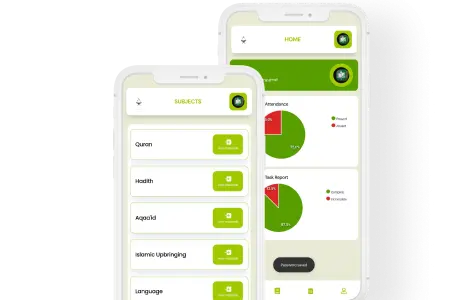
Ilmify supports Aliya madrasas in Bangladesh — student management, Hifz tracking, attendance, fee management, and parent communication in one mobile-first platform built for the Islamic education context. Explore Ilmify →




 Arabic
  English
  Malay
Malay  Urdu
Urdu