
Introduction
Beneath Bangladesh’s formal madrasa systems — the government-run Aliya track and the independently governed Qawmi sector — lies an enormous, largely informal sector of mosque-based maktabs and Quran education programmes that reaches more Bangladeshi Muslim children than either formal system. Almost every mosque in Bangladesh, from the largest urban congregational mosque to the smallest village prayer hall, provides some form of Islamic education for local children.
This is Bangladesh’s most universal form of Islamic education — the sector that ensures almost every Muslim child in the country has some contact with the Quran, basic Islamic practice, and the foundations of Islamic identity. Understanding how it works, who teaches, what is taught, and what the management challenges are is essential for anyone working in Bangladesh’s Islamic education landscape.
The Scale of Mosque Islamic Education in Bangladesh
Bangladesh has approximately 300,000 mosques — one of the highest mosque-to-population ratios in the Muslim world. The vast majority run some form of Islamic education for children:
| Indicator | Estimate |
| Mosques in Bangladesh | ~300,000 |
| Mosques with active maktab/Quran class | Majority — estimated 200,000+ |
| Children attending mosque maktabs | Tens of millions |
| Imams serving as maktab teachers | Hundreds of thousands |
This sector is largely invisible in official statistics because it is informal — not registered with government education bodies, not affiliated with BMEB or BEFAQ, not producing government-recognised qualifications. But in terms of reach, it is Bangladesh’s most extensive Islamic education sector.
What Happens in a Bangladesh Mosque Maktab
The typical Bangladesh mosque maktab operates as follows:
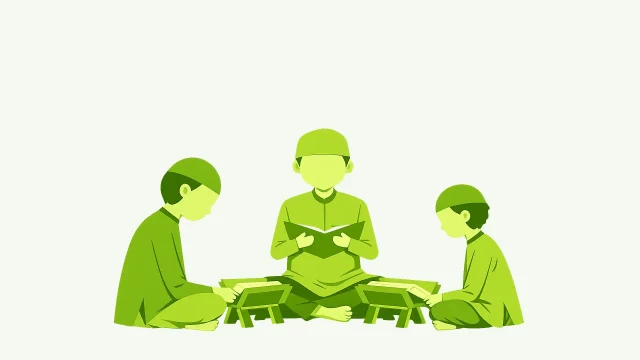
Timing: Usually before Fajr (early morning) or in the late afternoon/early evening — when children are not in secular school. Sessions typically last 45–90 minutes.
Location: The mosque hall or an attached room. Children sit in rows on the floor or on mats.
Teacher: The mosque imam, sometimes assisted by a senior student or a second teacher for larger groups.
Students: Local children aged 5–12, typically from families whose mosque this is. Attendance is community-based — children whose families use this mosque attend this maktab.
Content: See curriculum section below.
Format: The teacher leads recitation; students recite after the teacher and individually to the teacher for correction. The format is traditional — oral transmission with the teacher as the authoritative corrector.
Curriculum: From Qaida to Basic Islamic Practice
The Bangladesh mosque maktab curriculum is not standardised — it varies by teacher, community, and institutional affiliation. A typical programme covers:
| Stage | Content | Duration |
| Qaida | Arabic alphabet; harakat; basic reading | 3–6 months |
| Nazra | Quran reading — from Al-Fatiha through to Juz Amma and beyond | 1–3 years |
| Basic memorisation | Al-Fatiha; last 10–15 surahs; selected duas | Throughout |
| Islamic practice | Correct wudu; namaz; basic duas for daily life | Throughout |
| Basic aqeedah | Kalima; who is Allah; who is the Prophet ﷺ | Throughout |
Many maktabs progress students only as far as their stay with the imam’s teaching allows — completion of Juz Amma (the 30th Juz, containing the shorter surahs) is a common milestone. Full Nazra completion (reading the entire Quran) is achieved by some students; those who wish to continue to Hifz typically transfer to a dedicated Hafizia institution.
The Teacher: Bangladesh’s Mosque Imam
The mosque imam is the primary Islamic educator in the mosque maktab. In Bangladesh, the imam’s role is defined by three functions: leading the five daily prayers, performing Islamic ceremonies (marriages, funerals, Eid prayers), and teaching the children of the community.
| Feature | Bangladesh Imam Profile |
| Qualification | Typically Aliya Alim or Dakhil; some Qawmi graduates |
| Government recognition | Imams at registered mosques may receive government Imam allowance |
| Maktab teaching as part of role | Standard expectation in most communities |
| Teaching training | Usually none beyond their own Islamic education |
| Class size | Typically 10–50 students |
| Payment for teaching | Included in imam salary; sometimes separate small fee from families |
The quality of maktab education is directly tied to the quality of the imam. Well-qualified imams provide structured, progressive Quran education; less qualified imams may provide only basic Qaida reading and selected memorisation. There is no standardised quality assurance for this sector.
Student Profile and Attendance Patterns
| Feature | Details |
| Age range | 4–12 years primarily; some teenagers and adults |
| Attendance | Typically daily (6 days/week) during the school term |
| Duration of attendance | 1–5 years typical |
| Parallel schooling | Most students also attend government or private secular school |
| Dropout | Significant — children often stop attending maktab when secular school demands increase |
Attendance patterns in Bangladesh mosque maktabs are generally strong in primary school years and decline as secular school examinations approach. The SSC examination (Class 10) is a common point at which children stop maktab attendance — the same pattern seen in India and Pakistan.
Fees and Funding
| Fee model | Description | Prevalence |
| No fee | Imam teaches as part of mosque role; no separate charge | Common in smaller mosques |
| Small monthly fee | Families pay 50–200 BDT/month for the maktab | Common in urban and semi-urban areas |
| Donation-based | Community makes collective donations to support imam’s maktab work | Variable |
| Combined with imam salary | Mosque committee pays imam a salary covering prayer leadership and maktab teaching | Common |
The financial sustainability of mosque maktabs is closely tied to the mosque committee’s management and the community’s willingness to adequately compensate the imam. Underpaid imams who are economically pressured often cannot dedicate adequate time and energy to maktab teaching.
Relationship with Formal Madrasa Systems
The mosque maktab sector relates to the formal Aliya and Qawmi systems as a feeder and foundation:
Feeder to Hafizia: Children who demonstrate Quran aptitude in the mosque maktab are often encouraged to continue to dedicated Hafizia madrasas for full Hifz.
Feeder to Aliya/Qawmi: Children who complete basic Quran education may be enrolled in Aliya Ibtedayi or Qawmi primary level for formal Islamic education.
Foundation for all Muslims: Most children who attend mosque maktabs do not continue to formal madrasas — they go on to secular schooling and careers. For these children, the mosque maktab provides their entire Islamic education foundation.
Board-affiliated maktabs: Some mosque maktabs affiliate with national organisations — Deeniyat, Qawmi boards, or other bodies — to access curriculum frameworks, textbooks, and examinations. Many remain entirely independent.
Administrative Challenges
The mosque maktab sector has minimal administrative infrastructure:
No student records: Most mosque maktabs maintain no permanent student records. The imam knows who attends; there is no register that survives the imam’s departure.
No progress tracking: Quran progress (which Juz, Tajweed level) is tracked in the imam’s memory or a personal notebook. Parents receive verbal updates.
No fee records: Where fees are charged, collection and recording is informal — cash collected at the mosque with minimal documentation.
No parent communication system: Communication with parents happens through the mosque community network — personal conversation, announcement after Friday prayers, or WhatsApp messages from the imam’s personal phone.
No reporting: There is no reporting structure — the mosque committee typically receives only a general impression of how the maktab is going, not systematic data.
Digital Tools for Bangladesh Maktabs
Bangladesh’s high mobile phone penetration and widespread WhatsApp use mean that basic digital tools are achievable even for small mosque maktabs:
What’s possible today:
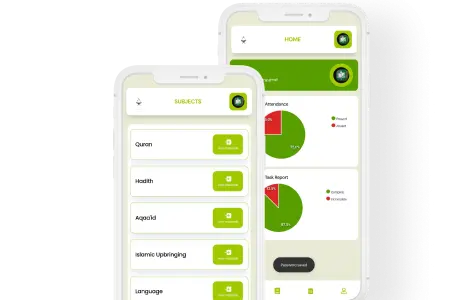
- Simple student enrolment register on a smartphone
- Quran progress recording (Juz reached, Tajweed level)
- Attendance with parent notification for absences
- Fee collection tracking
- WhatsApp-integrated parent updates
What Bangladesh mosque maktabs actually need:
- A tool simple enough for an imam with basic smartphone literacy
- Bengali-language interface
- Runs on a low-cost Android phone
- Does not require reliable internet at all times
- Affordable — under 500 BDT/month for a small maktab
Purpose-built maktab software designed for this context can make a genuine difference to the administrative quality of even small mosque maktabs — without requiring the imam to become a digital professional.
Frequently Asked Questions
Q: Is mosque maktab attendance in Bangladesh declining?
Attendance remains widespread — almost universal for primary school-age children in Muslim communities. The challenge is retention through secondary school years, when secular exam pressure increases. Overall, mosque maktab attendance in Bangladesh is high by South Asian and global standards.
Q: Do Bangladesh mosque imams receive government salary support?
The government operates an Imam allowance scheme for imams at registered mosques. The amounts are modest and coverage is not universal, but it represents a form of government recognition of the imam’s community role. Maktab teaching is generally included in the imam’s expected duties where this allowance is received.
Q: What is the difference between a mosque maktab in Bangladesh and in India?
The basic model is similar — evening Quran classes at the mosque, taught by the imam, for local children. Key differences: Bangladesh has a higher mosque density and higher maktab attendance rates than most Indian states; Bangladesh maktabs are predominantly Bengali-medium while Indian maktabs vary by region; and Bangladesh has no equivalent of India’s large board networks (Deeniyat, Samastha) at the mosque maktab level.
Q: Can children get a formal qualification from a mosque maktab?
Generally not — mosque maktabs are informal and do not issue formal qualifications. Some maktabs affiliated with Qawmi boards or other organisations can register students for board examinations, but most mosque maktabs operate entirely outside the formal qualification framework.
Q: How does the mosque maktab handle Ramadan?
Ramadan is typically the most intensive period for mosque Islamic education — with additional Quran recitation sessions, Tarawih prayer participation for older students, and community Islamic education events. Many maktabs run special Ramadan programmes or intensified schedules during the holy month.
Conclusion
Bangladesh’s mosque maktab sector is the country’s most universal Islamic education infrastructure — reaching tens of millions of children through a network of mosque-based Quran classes that operates largely outside formal registration and governance systems. Its quality is uneven, its administration informal, and its records minimal — but its reach is unmatched. For the average Bangladeshi Muslim child, the mosque maktab provides their foundational Islamic education.
For the imams who teach and the mosque committees who support them, simple digital tools can significantly improve the quality and accountability of this vital sector.
Ilmify is designed for Bangladesh mosque maktabs — simple enough for an imam with basic smartphone literacy, affordable for community-funded institutions, and capable of transforming the administrative quality of even the smallest maktab. Explore Ilmify →




 Arabic
  English
  Malay
Malay  Urdu
Urdu