

Introduction
Bangladesh is one of the world’s most Muslim-majority nations — approximately 90% of its 170 million people identify as Muslim, making it the third-largest Muslim-majority country by population. Islamic education in Bangladesh is correspondingly vast, diverse, and deeply embedded in social life. From mosque-based Quran classes for toddlers to full-time residential seminaries producing Islamic scholars, the sector touches virtually every Muslim family in the country.
What makes Bangladesh distinctive in the South Asian Islamic education landscape is the coexistence of two entirely parallel and largely separate madrasa systems — the state-recognised Aliya system and the privately governed Qawmi system — alongside a massive network of Hafizia madrasas dedicated to Quran memorisation and countless local maktabs and mosque schools. Understanding this landscape is the starting point for anyone working in or with Bangladesh’s Islamic education sector.
Islam and the Muslim Community in Bangladesh
| Feature | Details |
| Muslim population | ~153 million — approximately 90% of total |
| Madhab | Predominantly Hanafi |
| Tradition | Predominantly Deobandi; significant Barelvi and Sunni Sufi presence |
| Language | Bengali (Bangla) — primary; Arabic for religious learning |
| Regional variation | Broadly uniform — less regional theological diversity than India |
Bangladesh’s Muslim community is relatively homogeneous in madhab (Hanafi) and language (Bengali), which means the Islamic education landscape has less regional fragmentation than India. The primary division is institutional — Aliya vs Qawmi — rather than theological or geographic.
The Deobandi tradition is dominant in Bangladesh’s madrasa sector, particularly in the Qawmi stream. Barelvi and traditional Sunni-Sufi traditions also have significant presence, particularly in the Feni, Chittagong, and Sylhet regions.
The Two Pillars: Aliya and Qawmi
Bangladesh’s madrasa sector is structured around two entirely separate systems that operate in parallel:
| Feature | Aliya Madrasa | Qawmi Madrasa |
| Governance | Government — Bangladesh Madrasa Education Board (BMEB) | Private — BEFAQ and other Qawmi boards |
| Curriculum | Government-designed — integrates secular subjects | Classical Dars-e-Nizami — no secular subjects |
| Qualification | Government-recognised degrees (Dakhil to Kamil) | BEFAQ Dawra-e-Hadith — recognised as MA equivalent since 2018 |
| Funding | Government grants + fees | Entirely private — donations, Zakat |
| Scale | ~9,000 institutions | ~15,000+ institutions (estimates vary widely) |
| Student count | ~1.4 million | ~1.4 million (estimates vary) |
| Graduate employment | Government service, teaching, general employment | Primarily Islamic teaching and scholarship |
These two systems have coexisted since Bangladesh’s independence, representing different visions of what Islamic education should achieve — state-integrated modernisation (Aliya) vs independent Islamic scholarship in the classical tradition (Qawmi).
The Hafizia Madrasa System
Separate from both Aliya and Qawmi streams, Bangladesh has a substantial network of Hafizia madrasas — institutions dedicated primarily to Quran memorisation (Hifz). These may be:
- Attached to existing Aliya or Qawmi madrasas as a Hifz department
- Standalone Hafizia institutes with residential students
- Mosque-based Hifz programmes running alongside Quran teaching
Bangladesh has a particularly strong Hifz culture — the country produces a very large number of Hafiz/Hafiza annually, and the Hafiz title carries significant social prestige. Hafizia madrasas use the same Sabak–Sabak Para–Dhor–Manzil tracking system used across South Asia. See Hafizia Madrasa in Bangladesh for full detail.
Mosque-Based Maktabs and Quran Education
Alongside the formal madrasa systems, Bangladesh has an enormous network of informal mosque-based Quran education:
- Almost every mosque in Bangladesh runs some form of Quran class for local children
- These range from informal sessions with the local imam to structured maktabs with enrolled students and a progressive curriculum
- The primary focus is Nazra (Quran reading), basic Islamic practice, and short memorisation
- Most are unfunded beyond community support — the imam teaches as part of his community role
This informal sector reaches more children than either the Aliya or Qawmi formal systems — almost every Muslim child in Bangladesh has some contact with mosque-based Quran education. See Maktab and Mosque-Based Quran Education in Bangladesh.
Women’s Islamic Education
Women’s Islamic education in Bangladesh is well-developed:
- Both Aliya and Qawmi streams have significant female enrolment — particularly at lower levels
- Dedicated women’s Qawmi madrasas (Mahila madrasas) operate across the country
- Female Hifz programmes are widespread — Bangladesh has a large female Hafiza population
- The Alimah qualification (female Alim) is offered through both streams
Women’s Islamic education in Bangladesh is treated in full in Women’s Islamic Education in Bangladesh.
Government Policy and Madrasa Governance
Bangladesh’s government has a more engaged relationship with the madrasa sector than is typical in South Asia:
Aliya system: Fully integrated into the government education framework. The Bangladesh Madrasa Education Board (BMEB) sets curriculum, conducts examinations, and recognises qualifications from Ibtedayi (primary) through Kamil (postgraduate).
Qawmi system: Historically entirely independent. In 2018, a landmark government decision recognised the BEFAQ Dawra-e-Hadith qualification as equivalent to a Master’s degree in Arabic and Islamic studies — a significant step toward formal recognition without imposing government curriculum control.
Maktab sector: Largely ungoverned at the national level. Individual district and upazila education offices have varying levels of engagement with mosque-based Quran education.
Digital Islamic Education in Bangladesh
Bangladesh has a growing digital Islamic education presence:
- The Islamic Online Madrasa Bangladesh (IOM) has become one of the country’s largest online Islamic education providers. See Islamic Online Madrasa Bangladesh.
- YouTube and Facebook-based Islamic content in Bengali is widely consumed
- WhatsApp and Facebook groups are the primary communication channels for madrasa administration
- Purpose-built madrasa management software is in early adoption
Bangladesh’s high smartphone penetration and widespread mobile data access make digital tools increasingly viable for the madrasa sector.
Key Statistics
| Metric | Estimate |
| Aliya madrasas | ~9,000 |
| Qawmi madrasas | ~15,000+ |
| Hafizia madrasas | ~10,000+ |
| Mosque maktabs | Tens of thousands |
| Total madrasa students | 3–4 million (all streams) |
| Hafiz/Hafiza produced annually | Among the highest per capita globally |
| Female madrasa students | Significant — Aliya system 40%+ female |
Frequently Asked Questions
Q: What is the difference between Aliya and Qawmi madrasas in Bangladesh?
Aliya madrasas are government-recognised institutions following a curriculum that includes secular subjects alongside Islamic education, producing government-accredited qualifications. Qawmi madrasas are privately governed, follow the classical Dars-e-Nizami curriculum without secular subjects, and issue qualifications through independent Qawmi boards (primarily BEFAQ). The two systems are entirely parallel and largely separate.
Q: Are Bangladesh madrasa qualifications recognised for government employment?
Aliya Kamil degrees are fully recognised for government service at equivalent levels. The Qawmi Dawra-e-Hadith was recognised as MA-equivalent in 2018 — a landmark change that opened university-level opportunities to Qawmi graduates for the first time.
Q: How widespread is Hifz education in Bangladesh?
Very widespread. Bangladesh is among the world’s highest producers of Hafiz/Hafiza per capita. Hifz education operates through standalone Hafizia madrasas, Hifz departments within Aliya and Qawmi institutions, and mosque-based Hifz classes.
Q: What language is used in Bangladesh’s madrasas?
Bengali (Bangla) is the primary medium of instruction for most content in Aliya madrasas. Qawmi madrasas use a mix of Bengali and Arabic/Urdu depending on the institution and subject — classical texts are studied in Arabic, with Bengali explanation. Urdu is used less in Bangladesh than in Pakistan, though it remains present in Qawmi institutions.
Q: Is Bangladesh’s Islamic education sector growing or contracting?
Growing — enrolment in both Aliya and Qawmi streams has expanded significantly over recent decades, driven by population growth, community demand for Islamic education, and (in the Aliya stream) government investment. The 2018 recognition of the Qawmi Dawra qualification has further legitimised and likely accelerated Qawmi enrolment.
Conclusion
Bangladesh’s Islamic education sector is one of South Asia’s most extensive — two parallel formal madrasa systems serving millions of students, a vast informal mosque maktab network reaching virtually every Muslim family, and a strong Hifz culture producing Hafiz and Hafiza in large numbers. Understanding the Aliya/Qawmi distinction, the Hafizia system, and the mosque maktab landscape is the foundation for any serious engagement with Islamic education in Bangladesh.
For administrators managing institutions in this landscape — whether Aliya, Qawmi, Hafizia, or maktab — the administrative challenges of student management, Hifz tracking, fees, and parent communication are the same regardless of stream. Purpose-built digital tools address these systematically.
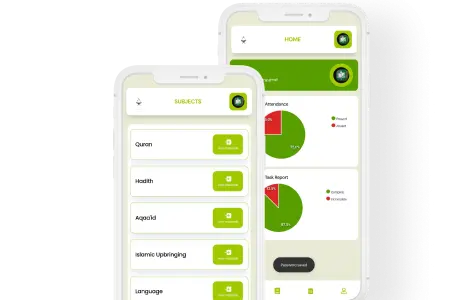
Ilmify supports Bangladesh madrasas and maktabs across all streams — with Hifz tracking (Sabak, Sabak Para, Dhor, Manzil), student management, fee collection, and parent communication in one mobile-first platform. Explore Ilmify →




 Arabic
  English
  Malay
Malay  Urdu
Urdu