
Introduction
Bangladesh has one of the world’s highest concentrations of Hafiz ul Quran per capita. Quran memorisation is deeply embedded in the country’s Muslim culture — the Hafiz title carries enormous social prestige, families invest significant resources in their children’s Hifz education, and the country produces tens of thousands of new Hafiz and Hafiza every year.
Hafizia madrasas — institutions dedicated primarily to Quran memorisation — are a distinct and important sector within Bangladesh’s Islamic education landscape, separate from (though often connected to) the Aliya and Qawmi madrasa streams. This article explains how Hafizia madrasas work, what their Hifz curriculum looks like, and the management challenges they face.
Hifz Culture in Bangladesh
| Feature | Details |
| Hafiz population | Among the highest per capita globally |
| Societal prestige | Hafiz/Hafiza title carries deep family and community honour |
| Family investment | Many families prioritise Hifz even at economic sacrifice |
| Completion ceremonies | Ameen ceremony on Quran completion is a major community event |
| Post-Hifz pathways | Many Hafiz continue to Alima or Qawmi education; many become Quran teachers |
| Female Hifz | Very widespread — Bangladesh has a large female Hafiza population |
The cultural weight of Hifz in Bangladesh is hard to overstate. For many families, having a child who becomes Hafiz is a life achievement — a source of religious merit (thawab) and community standing. This drives strong demand for Hafizia education across all socioeconomic groups.
Types of Hafizia Institutions
Bangladesh’s Hifz education is delivered through several institutional models:
| Type | Description | Scale |
| Standalone Hafizia madrasa | Institution dedicated entirely to Hifz | Thousands nationally |
| Hafizia department within Aliya madrasa | Attached Hifz track in an Aliya institution | Common |
| Hafifia department within Qawmi madrasa | Attached Hifz track in a Qawmi institution | Very common |
| Mosque-based Hifz class | Hifz taught alongside Nazra in a mosque | Widespread in urban areas |
| Home-based Hifz teaching | Individual teacher taking students at home | Significant informal sector |
The standalone Hafizia madrasa — a residential institution where students live, eat, and study Quran full-time — is the most intensive and prestigious model. These institutions typically take students from age 7–10 and aim for completion within 2–4 years of full-time study.
The Hifz Curriculum in Bangladesh
Hafizia madrasas in Bangladesh have a focused curriculum centred on three elements:
1. Quran Memorisation (Hifz)
The core activity — systematic memorisation of all 30 Juz of the Quran. Students work through the Quran in sequence (or, in some traditions, beginning with shorter surahs before moving to the full sequential memorisation), receiving new portions from their teacher daily.
2. Tajweed (Rules of Recitation)
Memorisation without correct Tajweed is not accepted. Students are trained in the rules of Tajweed — the precise pronunciation, elongation, and articulation rules governing Quranic recitation — and must demonstrate correct Tajweed in all recitation.
3. Islamic Basics
Most Hafizia madrasas teach basic Islamic practice alongside Hifz — correct wudu, namaz, basic duas, and fundamental aqeedah. This is not a full academic curriculum but ensures students have basic Islamic formation alongside their Quran work.
Some standalone Hafizia madrasas also teach basic Bengali literacy and numeracy — recognising that many students will need these skills after completing Hifz.
The Four-Stage Tracking System
Bangladesh’s Hafizia madrasas use the same four-stage progress system used across South Asia:
| Stage | Bengali/Urdu Term | Meaning | Frequency |
| New lesson | Sabak | New portion being memorised today | Daily |
| Recent reinforcement | Sabak Para | Recently memorised — recited daily to consolidate | Daily |
| Older revision | Dhor | Older memorised portions — periodic revision | Rotating schedule |
| Large revision | Manzil | Full memorised Quran in 7 portions — weekly | Weekly |
How this works in a Bangladesh Hafizia madrasa:
A typical student session begins with the Sabak — the new portion they memorised since the previous session, recited to the teacher for correction and approval. This is followed by the Sabak Para recitation — the most recently memorised Juz (typically the last 1–3 Juz), recited to reinforce consolidation. Then the student recites their assigned Dhor portion — their rotation through older memorised material. Once sufficient Quran is memorised, the weekly Manzil revision is added.
The teacher records everything — which Sabak was given and accepted, which portions are in Sabak Para, the Dhor schedule and results, and the Manzil progress. In most Bangladeshi Hafizia madrasas, this is done in a physical notebook. The limitations of paper-based tracking are discussed below.
For full detail on this system, see How Indian Maktabs Track Quran Progress: Sabak, Sabak Para, Dhor, Manzil and Hifz Terminology Across South Asia.
Daily Schedule in a Bangladesh Hafizia Madrasa
A residential Hafizia madrasa in Bangladesh typically follows this schedule:
| Time | Activity |
| Fajr (pre-dawn) | Wake; Fajr prayer; early revision (Sabak Para or Dhor) |
| Morning | Main Hifz session — Sabak and Sabak Para with teacher |
| Mid-morning | Islamic studies; Tajweed practice |
| Dhur prayer | Break; lunch |
| Afternoon | Revision — Dhor and preparation of next Sabak |
| Asr prayer | Break |
| Late afternoon | Group revision; teacher review sessions |
| Maghrib prayer | Break |
| Evening | Manzil revision; preparation for next day’s Sabak |
| Isha prayer | Night prayer |
| After Isha | Final revision; sleep |
This intensive schedule — typically 8–10 hours of Quran work per day — is what makes full Hifz completion possible in 2–4 years.
Teacher (Hafiz Sahib) Role and Training
The Hifz teacher — typically addressed as Hafiz Sahib or Ustaz — plays an indispensable and highly skilled role. An effective Hifz teacher must:
- Have strong personal Hifz — they must be able to catch every error, however subtle
- Know Tajweed comprehensively and teach it precisely
- Manage the individual progress of 10–30 students simultaneously, each at a different point
- Motivate students through the mentally demanding memorisation process
- Manage the Sabak–Sabak Para–Dhor–Manzil schedule for each student
- Communicate clearly with parents about progress and challenges
There is no formal certification process for Hifz teachers in Bangladesh — qualification is primarily demonstrated by personal Hifz completion and experience. Many Hifz teachers learned their craft by being taught in the same system they now teach.
Student Profile and Admission
| Feature | Details |
| Typical entry age | 6–10 years |
| Entry requirement | Basic Arabic literacy (Qaida completion); basic Islamic practice |
| Residential or day | Both; residential (boarding) is common for full-time Hafizia |
| Duration | 2–5 years for completion depending on hours per day and aptitude |
| Female students | Significant — many Hafizia madrasas have female sections or separate institutions |
| Cost | Often free in residential Hafizia — particularly Qawmi-tradition institutions |
Many residential Hafizia madrasas, particularly those in the Qawmi tradition, provide free board and education — funded by community Zakat and donations. This makes Hifz education accessible to families across the income spectrum.
Administrative Management Challenges
Hafizia madrasas face specific administrative challenges that generic school software cannot address:
Multi-student Hifz tracking. Tracking 30 students each at a different Sabak, with different Sabak Para extents, different Dhor schedules, and different Manzil progress — all simultaneously — is a complex management task. Paper notebooks work for a single experienced teacher but break down when teachers are absent, change, or when administrators need to see overall progress.
No parent visibility. Parents typically receive verbal progress updates when they visit or via phone. There is no structured system for regular written progress communication — parents of residential students particularly have limited visibility into their child’s daily progress.
Progress stalling detection. Students sometimes stall — a Sabak that hasn’t advanced in several days, a weak portion that keeps requiring repetition. Paper systems do not easily surface these patterns; a teacher may not notice a pattern that a simple digital alert would catch.
Completion tracking. Recording when each Juz was completed, when full Quran was first memorised, and when the student passed their final examination (imtihan) requires careful record-keeping that paper systems often handle inconsistently.
Reporting to management. The mosque committee or managing trust that oversees a Hafizia madrasa typically receives only verbal reports from the Hafiz Sahib. Good digital records enable proper governance reporting.
FAQ
Q: How long does Hifz take in a Bangladesh Hafizia madrasa?
For a dedicated full-time residential student aged 7–10, completion in 2–3 years is common. Older students or part-time students may take 4–5 years. The pace depends entirely on daily hours dedicated and the student’s aptitude.
Q: What is the Ameen ceremony?
The Ameen is the celebration held when a student completes their Hifz — reciting the final portion of the Quran before their teacher, family, and community. It is a major community event in Bangladesh, typically involving a gathering at the madrasa or mosque, recitation before the congregation, and celebration. The Ameen marks the student’s formal recognition as Hafiz or Hafiza.
Q: Do Hafizia madrasas also teach regular academic subjects?
Most standalone Hafizia madrasas focus primarily on Hifz, with basic Islamic studies and sometimes basic literacy/numeracy. They do not offer the full Aliya or Qawmi academic curriculum. Students who want both Hifz and a formal Islamic education qualification typically need to complete Hifz first and then enrol in an Aliya or Qawmi madrasa, or attend an institution that offers both programmes simultaneously.
Q: What happens to Hafiz graduates?
Many become Quran teachers — in mosques, maktabs, or home-based classes. Some continue to Aliya or Qawmi education to become Alim. Some enter the online Quran teaching market (teaching diaspora students). Some enter other occupations — the Hafiz title does not require a religious career.
Q: Are female Hafizia madrasas common in Bangladesh?
Yes — female Hifz education is widespread in Bangladesh. Many Hafizia madrasas have separate female sections; standalone women’s Hafizia madrasas also operate. Bangladesh has a very large female Hafiza population.
Conclusion
Bangladesh’s Hafizia madrasa system — delivering full Quran memorisation to tens of thousands of students annually — is one of the country’s most culturally significant educational institutions. The Sabak–Sabak Para–Dhor–Manzil tracking system is the operational backbone of every Hafizia madrasa, and managing it well for each individual student is the central administrative challenge. Paper notebooks have served this system for generations, but purpose-built digital tools can do it better — with more visibility for parents, better oversight for administrators, and less burden on teachers.
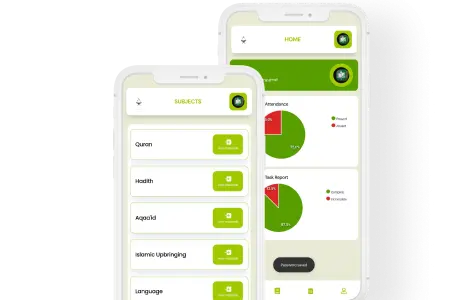
Ilmify is built for the Hafizia madrasa context — with native Sabak, Sabak Para, Dhor, and Manzil tracking per student, parent-facing daily updates, and administrator dashboards that make the whole institution’s Hifz progress visible. Explore Ilmify →




 Arabic
  English
  Malay
Malay  Urdu
Urdu