Introduction
The internet has made Islamic knowledge more accessible than at any point in history. Much of the best content is free. Knowing what to use, and where free learning reaches its limits, can save you both time and money.
What You Can Genuinely Learn for Free
A motivated self-learner can acquire substantial Islamic knowledge without spending a penny. Here is what the free landscape genuinely provides:
SeekersGuidance. One of the most credible free Islamic learning platforms online. Founded by scholars trained at traditional institutions, SeekersGuidance offers structured courses in fiqh, aqeedah, seerah, and Arabic. Many courses are free, with optional donations. The quality is high, the scholars are credentialed, and the curriculum is genuinely structured rather than ad hoc.
Yaqeen Institute. Not a course platform per se, but a research institution that publishes papers, videos, and infographics on Islamic topics at a rigorous academic level. Excellent for understanding contemporary Islamic questions with scholarly depth.
Bayyinah TV (partially free). Nouman Ali Khan’s institute offers some free content, with the deep Quranic Arabic curriculum behind a subscription. Their free YouTube content includes substantial introductory material.
YouTube scholars. Scholars like Omar Suleiman (Yaqeen, Qalam), Sheikh Hamza Yusuf (Zaytuna), Mufti Menk, and others have published thousands of hours of Islamic content. This is useful for inspiration, basic concepts, and topical learning — but it is not a substitute for structured curriculum.
Quran apps. Apps like Quran Companion, Tarteel AI, and Learn Quran Tajwid offer free tools for Quran reading and memorization practice. Very useful as supplements.
The Limitations of Free Learning
Free content is better than ever. But it has structural limitations that become clear once you try to build a serious Islamic education from it.
No accountability. A free course you can start and stop at will, without anyone checking your progress, has a very high abandonment rate. Most people who sign up for free courses never complete them. Paid platforms create a psychological commitment that free platforms don’t.
No teacher. Watching a video of someone explain tajweed is not the same as having a teacher listen to you recite and correct your errors. Listening and repeating are not the same as being heard and corrected. For Quran recitation, this distinction is critical.
Variable quality. The best free content is excellent. But distinguishing excellent from mediocre requires background knowledge that beginners don’t have. A confident YouTube presenter with incorrect theological positions can mislead a beginner who doesn’t yet have the framework to evaluate claims.
No progression tracking. Free platforms rarely tell you where you are, what you’ve mastered, and what you should do next. You have to manage your own curriculum — which most people are not well equipped to do, particularly in a field as structured as Islamic knowledge.
When Free Is Enough
Free learning works well for:
- Supplementary learning alongside a structured paid course
- Building motivation and inspiration before committing to structured study
- Learning about specific topics (the history of a particular scholar, a single fiqh question)
- Brushing up on knowledge you once had but have let fade
When It Isn’t Enough
Free platforms are insufficient for:
- Learning to recite the Quran correctly (requires a teacher who hears you)
- Quran memorization (requires supervised testing)
- Fiqh knowledge you will practice and rely on (requires a qualified teacher to answer questions)
- Any serious Islamic study you want to be confident about
The Case for Paid Structured Learning
Paid platforms at their best provide: a qualified teacher, a structured curriculum, accountability, progress tracking, and a community of fellow learners. They charge because providing these things — particularly qualified teachers — costs money.
The investment for serious Islamic education online typically ranges from $20 to $100 per month depending on the platform and frequency of sessions. Over a year, that is $240 to $1,200 — far less than almost any other professional education or skill development course.
Ilmify’s Free Tier vs Premium — An Honest Breakdown
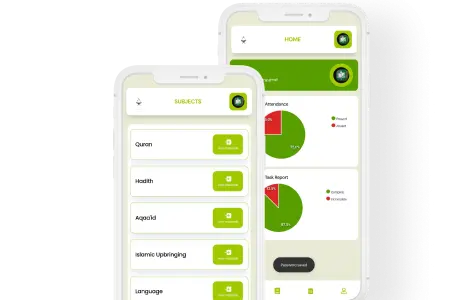
Ilmify offers a free tier that includes access to introductory course materials, recorded lessons, and community forums. It is genuinely useful for exploration and for learners who are not yet ready to commit to scheduled lessons.
The premium tier adds: live one-on-one sessions with qualified teachers, full curriculum access, progress tracking, lesson recordings, and scheduling flexibility.
If you are serious about learning to recite or read the Quran — or about building structured Islamic knowledge — the premium tier is worth it. The free tier will not get you there on its own, and we’d rather be honest about that than overpromise.
[Start with a free lesson on Ilmify →]