
Introduction
Most American maktabs teach Quran recitation and some version of Islamic Studies. What separates the best from the rest is not whether they teach these subjects — it is whether they teach them in a structured, progressive, comprehensive way that builds genuine knowledge over years.
MESBA’s 8-area curriculum framework is the answer to the question: what does comprehensive maktab education actually look like? Not a collection of disconnected lessons about different Islamic topics, but a structured system of 8 subject areas, each with defined content, progression levels, and learning outcomes — that together give Muslim children the complete Islamic education foundation they need.
This article breaks down each of the 8 areas in detail: what it covers, why it matters, and what students can realistically achieve through it.
Why Curriculum Structure Matters in a Maktab
A maktab without a written curriculum is entirely dependent on the knowledge and judgment of individual teachers. When the teacher changes — which happens frequently in America’s volunteer-dependent maktab sector — the next teacher has no roadmap. Students repeat topics. Gaps accumulate. Some subjects (Quran recitation) get all the time; others (Islamic history, ethics) get squeezed out entirely.
A structured curriculum solves this:
- Continuity: When a teacher leaves, the next teacher picks up from the same point
- Comprehensiveness: All 8 areas are covered systematically, not just the teacher’s strengths
- Progression: Students deepen knowledge each year rather than starting over
- Accountability: Committees can evaluate whether the curriculum is being delivered
MESBA’s 8-area framework is the most rigorously developed maktab curriculum standard in America. Understanding it helps maktab administrators see both what excellence looks like and what their current programme may be missing.
The 8 Areas at a Glance
| # | Area | Core Goal | Weekly Time (Recommended) |
| 1 | Quran | Quran reading fluency and memorisation | 45–60 min |
| 2 | Fiqh | Correct worship practice | 20–25 min |
| 3 | Aqeedah | Sound Islamic belief | 15–20 min |
| 4 | Seerah | Knowledge of the Prophet’s life ﷺ | 15–20 min |
| 5 | Ahadith | Prophetic guidance in daily life | 10–15 min |
| 6 | Tarikh | Islamic historical awareness | 10–15 min |
| 7 | Akhlaq | Islamic character and ethics | 10–15 min |
| 8 | Duas | Practical supplication for daily life | 10–15 min |
In a typical 2-hour weekday maktab session, Quran recitation occupies the largest single block. The Islamic Studies subjects (areas 2–8) are typically rotated through across the week’s sessions — not all taught in every session, but each covered multiple times per week across the schedule.
Area 1: Quran — Qaidah, Nazra, Tajweed, Hifz
The Quran component is the heart of every maktab. It is time-intensive, highly individualised (each student reads one-on-one with the teacher), and the area where the greatest variation in maktab quality is visible.
MESBA’s Quran progression:
Stage 1 — Qaidah (Arabic literacy):
Students who cannot read Arabic begin with the Qaidah — a structured Arabic alphabet and pronunciation primer. The Noorani Qaidah is the most widely used in MESBA-affiliated maktabs. Students progress through Arabic letter recognition, consonant-vowel combinations (harakaat), tanween, sukoon, shadda, and the rules of reading connected Arabic text.
Completion target: 3–6 months for a motivated 6–8-year-old student attending 3–4 sessions per week.
Stage 2 — Nazra (Quran recitation):
Once a student can read Arabic fluently (post-Qaidah), they begin reading the Quran directly — starting from Surah Al-Fatiha and progressing through the 30 Juz in order. The teacher listens to each student’s recitation, corrects Tajweed errors, and advances them when each portion is read accurately.
Completion target: Nazra (reading the complete Quran) typically takes 3–6 years for a student attending 3–4 sessions per week, depending on starting age, practice at home, and teacher quality.
Stage 3 — Tajweed (Rules of Recitation):
Tajweed rules — governing the precise pronunciation of letters, vowels, and rules of elongation, merging, and stopping — are taught alongside Nazra. MESBA’s curriculum integrates Tajweed instruction progressively: students learn the rules applicable to their current reading position rather than front-loading all Tajweed theory before reading.
Stage 4 — Hifz pathway:
For students who complete Nazra and whose families pursue memorisation, the MESBA curriculum includes a Hifz track framework — daily sabak (new memorisation), sabqi (recent revision), dhor (older revision) — that integrates with the maktab’s overall schedule.
Why Quran quality matters above all:
A student who completes 10 years of maktab attendance and cannot read Quran fluently has experienced a maktab failure. MESBA’s Quran progression is designed to ensure this outcome does not happen in affiliated maktabs: clear stages, defined targets, and regular teacher-student one-on-one recitation as the non-negotiable core.
Area 2: Fiqh — Practical Islamic Jurisprudence
Fiqh covers the practical rules of Islamic worship and daily life. MESBA’s Fiqh curriculum for maktab-age students focuses on what they need to practise Islam correctly in their daily lives:
Core Fiqh content by level:
Beginner (ages 5–8):
- The five pillars of Islam and why they matter
- Wudu (ablution) — step-by-step; what breaks it
- How to perform Salah — the five daily prayers, correctly
- Basic najasah (ritual impurity) and taharah (purification)
Intermediate (ages 9–12):
- Adhan and Iqamah — the calls to prayer
- Congregational prayer — following the imam; catching a raka’ah
- Ghusl (ritual bathing) — when required and how
- Fasting in Ramadan — rules for children and adolescents
- Zakat — concept and obligation at accessible level
Advanced (ages 12–15):
- More detailed Salah issues — qada (making up missed prayers), traveller’s prayer
- Basic Zakah calculation
- Hajj — the fifth pillar, its stages and significance
- Halal and haram in food, finance, social relations
MESBA’s Fiqh curriculum follows the Hanafi madhab — consistent with the South Asian and most broad Sunni American Muslim tradition. The curriculum focuses on that which is essential for correct practice rather than complex jurisprudential debates.
Area 3: Aqeedah — Islamic Belief
Aqeedah covers the fundamentals of Islamic belief — what a Muslim believes, why, and with what certainty. It is the theological foundation of Islamic identity.
Core Aqeedah content:
- The six pillars of Iman (faith): belief in Allah, His angels, His books, His messengers, the Last Day, and Divine Decree (Qadar)
- Tawheed — the oneness of Allah; the three categories (Rububiyyah, Uluhiyyah, Asma wa Sifat)
- The attributes of Allah — what we affirm and what we deny
- Prophecy and the Prophet Muhammad ﷺ as the final messenger
- The Last Day — resurrection, judgement, Jannah, Jahannam
- The nature of the Quran as the preserved word of Allah
MESBA’s Aqeedah curriculum is designed to give children firm, confident belief — not theological doubt — while building the conceptual vocabulary to understand and articulate their faith. In the American context, where Muslim children regularly encounter challenges to their faith from peers, media, and secular education, a grounded Aqeedah is not optional.
Area 4: Seerah — The Life of the Prophet ﷺ
Seerah — the biography of the Prophet Muhammad ﷺ — is one of the most engaging subjects in any Islamic curriculum. It is history, narrative, moral teaching, and the living example of Islam in action, all in one.
MESBA’s Seerah progression:
Beginner: Key stories — the birth of the Prophet ﷺ, his childhood, his first revelation, the early persecutions in Makkah, the Hijra to Madinah. Taught narratively, at a child’s comprehension level.
Intermediate: Chronological study of the Madinan period — the early battles (Badr, Uhud, Khandaq), the Treaty of Hudaybiyyah, the Conquest of Makkah, the Farewell Hajj and sermon.
Advanced: The social, political, and religious significance of the Seerah — what the Prophet’s example teaches about leadership, family, community, conflict resolution, mercy, and justice.
Seerah is the area where good teachers can make the biggest difference — narrating the Seerah with life, drama, and emotional resonance produces children who love the Prophet ﷺ and want to follow his example. Dry recitation of dates and names produces the opposite.
Area 5: Ahadith — Prophetic Traditions
The Ahadith component selects from the broad hadith corpus those narrations most directly applicable to the daily lives of children and young people — practical guidance for how to live as a Muslim.
Core Ahadith themes in MESBA’s curriculum:
- Treatment of parents — rights of parents; the prohibition of disobedience
- Honesty and truthfulness — the Muslim never lies
- Kindness and mercy — the Prophet’s ﷺ example of compassion
- Cleanliness — the hadith on taharah (purity) as half of faith
- Greetings and social etiquette — the Sunnah of greeting
- Eating and drinking — the Sunnah manners of eating; saying Bismillah
- Seeking knowledge — the obligation and virtue of learning
Ahadith are memorised (in Arabic where appropriate for the level) alongside their meaning and application. This dual memorisation and understanding approach produces children who can both quote the hadith and explain why it matters.
Area 6: Tarikh — Islamic History
Tarikh (Islamic history) contextualises Islam within time — showing students that their religion has a 1,400-year civilisational history, not just a set of rituals and beliefs.
MESBA’s Tarikh progression:
Beginner: The Companions of the Prophet ﷺ — key figures (Abu Bakr, Umar, Uthman, Ali, Khadijah, Aisha, Fatimah) and their significance.
Intermediate: The Khulafa ar-Rashideen — the four rightly-guided caliphs; their governance and legacy. Early Islamic expansion and the spread of Islam.
Advanced: The Umayyad and Abbasid caliphates. The Islamic Golden Age — contributions to science, medicine, mathematics, and philosophy. The Crusades and the Islamic response. The Ottoman Empire and its legacy.
Tarikh is often the first casualty when maktab time is short — it feels less immediately practical than Fiqh or Quran. MESBA’s curriculum insists on its inclusion because Islamic historical consciousness is foundational to Muslim identity: children who know nothing of Islamic civilisation struggle to feel pride in and ownership of their heritage.
Area 7: Akhlaq — Islamic Ethics and Character
Akhlaq — Islamic ethics and character — is what distinguishes a maktab from a rote learning centre. A maktab’s ultimate purpose is not just to transfer information but to form Muslims of good character.
Core Akhlaq themes:
- Respect for parents, teachers, and elders — the Islamic hierarchy of respect
- Honesty in all dealings — at school, at home, with friends
- Kindness to neighbours — who is a neighbour; what is owed
- Treatment of animals — the Islamic ethic of mercy toward animals
- Brotherhood and sisterhood — the bond between Muslims
- Justice and fairness — speaking truth even when difficult
- Dealing with non-Muslims — respect, fairness, and co-existence
Akhlaq is best taught not as abstract moral philosophy but through practical scenarios — what do you do when a classmate is being bullied? when a teacher doesn’t notice you’ve been given extra change? when your non-Muslim friend asks why you don’t eat lunch during Ramadan?
MESBA’s Akhlaq curriculum provides these scenarios, making character education concrete, applicable, and memorable.
Area 8: Duas — Daily Supplications
The Duas component gives students the vocabulary of Islamic supplication — the prayers and invocations for every significant daily activity, drawn from the Quran and authenticated Sunnah.
Core duas for maktab-age students:
Before and after eating: Bismillah; after eating dua
Entering and leaving home: The duas of entering and exiting
Sleeping and waking: Dua before sleeping; dua on waking
Entering and leaving the toilet: Protective duas
Entering and leaving the mosque: Masjid duas
Beginning any task: Bismillah and its application
Dua for travelling: Du’a for beginning a journey
Greeting others: As-salamu ‘alaykum and its response
Sneezing and yawning: Islamic manners
Dua for parents: Rabbir-hamhuma as in Quran
Each dua is memorised in Arabic with meaning. The goal is not classroom recitation — it is daily use. A student who genuinely uses the dua before eating at every meal has achieved more than a student who can recite it flawlessly in class but never uses it outside.
How the 8 Areas Work Together
The 8 areas are not 8 independent subjects — they are an integrated educational system:
Aqeedah provides the theological foundation (who Allah is, what Islam is). Seerah provides the living example (how the Prophet ﷺ embodied Islam). Fiqh provides the practical rules (how worship is performed). Ahadith provides daily guidance (how to behave in specific situations). Tarikh provides context (where this religion comes from). Akhlaq provides character formation (who we should be). Duas provide the daily vocabulary of connection to Allah. And Quran holds the entire system together as the primary source and foundation of all the others.
A maktab that teaches only Quran recitation — with no Islamic Studies — produces students who can read Arabic without understanding or context. A maktab that teaches Islamic Studies without rigorous Quran produces students who know facts but cannot recite. The 8-area framework insists on both, integrated.
Curriculum Progression Across Levels
MESBA’s curriculum is organised into multiple levels — typically 4–6 — that progress from foundational knowledge for beginners (ages 5–7) through comprehensive intermediate content (ages 8–11) to deeper, more contextual and analytical study at advanced levels (ages 12–15).
The level system ensures that a student who joins a MESBA maktab at age 6 and continues through age 14 is progressively deepening their knowledge in all 8 areas — not repeating the same beginner content year after year.
It also allows a student who joins late (age 10 with no prior Islamic education) to enter at an appropriate level without being bored (if placed with 6-year-old beginners) or lost (if placed with advanced students their age who have been in maktab for years).
Conclusion
MESBA’s 8-area curriculum is the most comprehensive structured maktab curriculum framework in America. It answers the question every serious maktab administrator should be asking: not “are we teaching Islamic Studies?” but “are we teaching all the Islamic education subjects a child needs, in a structured and progressive way, over the years they attend our maktab?”
The 8-area framework ensures the answer can be yes — for every child, in every MESBA-affiliated maktab, regardless of which individual teacher happens to be assigned to their class.
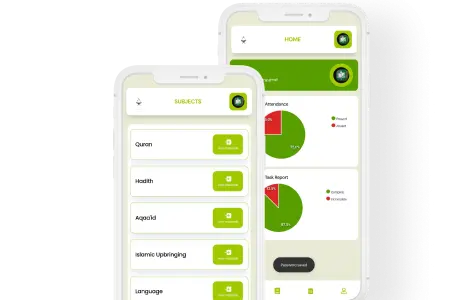
Building your maktab’s curriculum system on a solid foundation? ilmify.app lets you track student progress across all curriculum areas — recording Quran level, Islamic Studies progression, and specific learning milestones in a parent-visible digital system.




 Arabic
  English
  Malay
Malay  Urdu
Urdu