
Introduction
Mumbai and Hyderabad are home to two of India’s largest and most historically significant Muslim communities. Mumbai’s Muslim population of approximately 3.5 million is concentrated in areas including Dharavi, Bandra, Kurla, Govandi, and the Mohammed Ali Road corridor. Hyderabad’s Muslim community — the inheritors of the Nizami Deccan tradition — numbers over 3 million in the city and its districts, making it one of India’s most prominent centres of Islamic scholarship and education.
Both cities have dense networks of maktabs, madrasas, and Islamic schools serving their communities. Yet finding Islamic school management software for Mumbai or Hyderabad that fits these institutions — with their specific linguistic mix of Urdu, Marathi, Telugu, and regional dialects, their Deccan educational traditions, and their operational realities — remains difficult.
This guide covers the Islamic education landscape in Mumbai, Hyderabad, and the broader Maharashtra and Telangana regions, the specific software needs of institutions in these cities, and how to evaluate platforms that can genuinely serve them.
Islamic education in Mumbai, Hyderabad, and Maharashtra
Maharashtra and Telangana together have a Muslim population of approximately 13 million. The Islamic educational infrastructure serving these communities spans thousands of institutions — from small mosque maktabs to large integrated Islamic schools and residential Darul Ulooms.
| State | Muslim population | Estimated maktabs/madrasas | Primary education language |
| Maharashtra (incl. Mumbai) | 12.97 million | 8,000+ | Urdu + Marathi |
| Telangana (incl. Hyderabad) | 4.3 million | 3,000+ | Urdu + Telugu |
| Combined | 17.27 million | 11,000+ | Mixed |
Mumbai’s maktab and madrasa landscape
Mumbai’s Islamic educational institutions are concentrated in the city’s Muslim-majority areas and operate across a spectrum from small mosque maktabs to large residential institutions.
Mosque-based maktabs are the most numerous — hundreds of small institutions operating in the evenings and weekends, typically teaching Quran recitation and basic Islamic studies to children from the local Muslim community.
Darul Ulooms — several significant ones operate in the Mumbai metropolitan area, including institutions affiliated with the Deobandi tradition. These teach the full Dars-e-Nizami curriculum to residential students.
Integrated Islamic schools — full-time schools that combine the CBSE or SSC curriculum with Islamic studies and Quran education.
Niswan institutions — girls’ Islamic education in Mumbai operates through dedicated niswan madrasas and girls’ maktab streams within mosque institutions.
The dominant language of instruction in Mumbai’s Islamic institutions is Urdu, with Marathi as the surrounding regional language and English increasingly present as a medium in integrated schools.
Hyderabad and Telangana: the Deccan Islamic education tradition
Hyderabad’s Islamic educational tradition is shaped by its history as the capital of the Nizam’s state — a centuries-old centre of Islamic scholarship. This tradition continues in Hyderabad’s large number of residential madrasas, Quranic institutes, and community maktabs.
Jamia Nizamia and other historic institutions continue to train Islamic scholars using the classical Dars-e-Nizami curriculum. The city also has a large number of Salafi and reformist institutions alongside the traditional Deobandi and Barelwi networks.
The primary language of Islamic education in Hyderabad is Urdu — Hyderabad’s Muslim community is predominantly Urdu-speaking, more so than in many other Indian cities. Telugu is the surrounding regional language but is less commonly used within Islamic educational institutions than in secular schools.
Specific management challenges in Maharashtra and Telangana
| Challenge | Mumbai institutions | Hyderabad institutions |
| Primary instruction language | Urdu with Marathi context | Urdu with Telugu context |
| Parent communication language | Urdu (first choice), Marathi (some families) | Urdu (primary) |
| Fee collection method | Cash, UPI increasingly | Cash, UPI |
| Board affiliation | Various Deobandi, Barelwi, independent | Jamia Nizamia, Deobandi, Salafi |
| Residential / boarding proportion | Moderate | High (many Darul Ulooms) |
| Hifz programme prevalence | High | High |
| Student-teacher ratio | High (30–60:1) | High |
| Technology literacy (teachers) | Mixed | Mixed |
UPI payment integration is increasingly relevant for both Mumbai and Hyderabad institutions — more so than in other parts of India. Parents in urban Maharashtra and Telangana frequently use UPI (Paytm, PhonePe, Google Pay) for small payments and expect Islamic institutions to accept it alongside cash.
Language requirements: Urdu, Marathi, Telugu, and beyond
Unlike South India (where Tamil and Malayalam are the key languages), Mumbai and Hyderabad institutions primarily need Urdu as the interface and communication language, with regional language awareness for Marathi and Telugu communities.
| User | Language need | Priority |
| Teacher (Mumbai) | Urdu interface | High |
| Teacher (Hyderabad) | Urdu interface | High |
| Parent (Mumbai) | Urdu notifications | High |
| Parent (Hyderabad) | Urdu notifications | High |
| Administrator | English or Urdu | Medium |
| Student records | Arabic for Quran data | Medium |
Ilmify’s Urdu language support for parent communication and notifications is directly applicable to Mumbai and Hyderabad institutions — covering the primary parent communication need for both cities.
What Mumbai and Hyderabad institutions need from software
| Requirement | Why it matters |
| Urdu parent communication | Primary community language in both cities |
| Arabic Quran tracking | Hifz/Nazirah programmes in both cities |
| UPI payment recording | Urban Maharashtra/Telangana payment preference |
| Cash fee recording | Still primary for many institutions |
| Offline mode | Classroom connectivity variable |
| Residential management | High proportion of boarding madrasas in Hyderabad |
| Dars-e-Nizami curriculum tracking | Relevant for Hyderabad Darul Ulooms |
| Mobile-first teacher interface | Teachers use smartphones |
| Simple setup | No IT staff available |
Feature comparison for Deccan and Maharashtra institutions
| Feature | Generic school ERP | North India-focused | Ilmify |
| Urdu parent communication | ✗ | ✓ | ✓ |
| Hifz tracking (3-stream) | ✗ | ✓ | ✓ |
| Cash + UPI fee recording | ✗ | △ | ✓ |
| Residential / boarding module | ✗ | △ | ✓ |
| Offline functionality | ✗ | ✗ | ✓ |
| Mobile-first design | △ | △ | ✓ |
| Islamic calendar (Ramadan) | ✗ | △ | ✓ |
| Affordable community pricing | ✗ | △ | ✓ |
How Ilmify serves Mumbai and Hyderabad maktabs
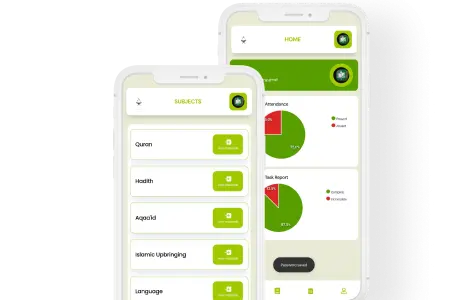
Urdu communication. Parent notifications, absence alerts, and Hifz progress reports are sent in Urdu — the primary parent communication language for both Mumbai and Hyderabad Muslim communities.
Three-stream Hifz tracking. Sabak, Sabaq Para, and Dhor are tracked natively for each student — essential for Hyderabad’s large number of Hifz programmes and Mumbai’s growing hifz academy sector.
Cash and UPI fee recording. Both cash payments and UPI transfers can be recorded in the fee module. Digital receipts can be generated for UPI payments.
Boarding management. For Hyderabad’s residential Darul Ulooms and Mumbai’s boarding institutions, Ilmify’s residential module covers dormitory attendance, Salah monitoring, and welfare records.
Mobile-first and offline. Teachers in Mumbai maktabs and Hyderabad madrasas can mark attendance and log Hifz progress on their smartphones, with or without internet connectivity.
Conclusion
Islamic institutions in Mumbai, Hyderabad, and across Maharashtra and Telangana need management software that works in Urdu, tracks Hifz natively, handles cash and UPI fee collection, and — for Hyderabad’s significant residential sector — includes boarding management. Generic school management platforms miss all of these requirements. Ilmify covers them.
Start managing your Mumbai or Hyderabad institution digitally → Try Ilmify free
Related articles
- Madrasa Software for Tamil Nadu, Chennai and Kerala →
- Madrasa Management Software for India →
- What Is a Maktab in India? →
- Best Maktab Management Software for India in 2026 →
- Hifz Tracking for Islamic Schools →
- System for Islamic Boarding Schools →
- Maktab Fee Collection in India →
- The 10 Biggest Challenges Running a Maktab in India →




 Arabic
  English
  Malay
Malay  Urdu
Urdu