

Introduction
Charlotte Mason was a nineteenth-century British educator who believed that children are born persons deserving of a rich, living education — not passive receptacles to be filled with facts. Her methods: living books over dry textbooks, nature study, narration, short focused lessons, handicrafts, and the cultivation of good habits. Muslim educators encountering Charlotte Mason’s philosophy often find it resonates deeply — not because Mason was Muslim (she was a committed Christian) but because the underlying convictions about children, learning, and character formation align in striking ways with Islamic educational values.
This guide explores why Charlotte Mason’s approach has found significant uptake among Muslim homeschooling families, which aspects translate most naturally into an Islamic context, and what resources are available for Muslim families pursuing this method.
What Is the Charlotte Mason Method?
Charlotte Mason (1842–1923) developed her educational philosophy through decades of working with children and training teachers at her House of Education in Ambleside, England. Her approach is built around several interconnected principles:
Children are persons. Education should treat children with dignity and develop the whole person — intellect, character, spirit, and body — not merely prepare them to pass exams.
Living books. Real books written by authors who are passionate about their subject are better teachers than dry textbooks written by committees. A living book on the history of ancient Egypt is one in which you feel the dust and hear the voices; a textbook presents dry facts.
Narration. Rather than testing comprehension through multiple-choice questions, children retell what they have learned in their own words. This practice deepens understanding, develops language, and builds memory more effectively than passive absorption.
Short lessons. Lessons for young children should be short (15–20 minutes) and varied — switching subjects frequently keeps attention engaged and prevents fatigue.
Nature study. Regular, unhurried observation of the natural world develops wonder, attention, and a foundational relationship with creation.
Atmosphere, discipline, life. Education is an atmosphere (the home environment), a discipline (cultivating good habits), and a life (feeding the mind with ideas worth thinking about).
Why Charlotte Mason Resonates with Muslim Families
Several aspects of Charlotte Mason’s philosophy align particularly well with Islamic educational priorities:
Character over performance. Mason’s insistence that education should form character and not merely produce exam results aligns with the Islamic emphasis on Tarbiyah — the formation of a person’s character and values as the primary purpose of education, not the accumulation of credentials.
Wonder at creation. Nature study — observing the natural world with attention and wonder — maps naturally onto the Quranic emphasis on Ayaat (signs of Allah) in creation. A Muslim Charlotte Mason family does nature study in the awareness that everything they observe is a sign of the Creator.
Living books and the Islamic literary tradition. The preference for whole books by passionate authors over fragmented textbooks resonates with the Islamic tradition’s respect for comprehensive scholarship. Families can choose living books that include Muslim authors, Muslim history, and Islamic themes — not just Western classics.
Short lessons and the young child. The developmentally appropriate approach to young children — short lessons, movement, nature, stories — aligns with how traditional maktabs approached very young learners before the era of structured testing.
Narration as a learning tool. The Quran itself is oral — meant to be recited, heard, and retold. Narration as a comprehension method feels natural in a tradition where oral transmission of knowledge is foundational.
Where Charlotte Mason Needs Islamic Adaptation
Charlotte Mason’s philosophy was developed within a Christian context, and some aspects require thoughtful Islamic adaptation:
Theological content: Mason’s curriculum materials reference Christian theology, the Bible, and Christian devotional practice. Muslim families using CM-aligned resources need to substitute or supplement with Islamic theological content — Islamic Studies from a structured publisher, Quran study, and Seerah in place of Bible study.
Literature selection: The “living books” tradition draws heavily on Western literary classics, many of which have little or no Muslim content. Muslim CM families typically curate their book lists deliberately — including books about or by Muslims, Seerah-based narratives, and Islamic history alongside the Western literary tradition.
Composer and artist study: Mason’s curriculum includes structured study of Western composers and artists. Muslim families may choose to engage with Islamic art traditions, calligraphy, and nasheeds (Islamic vocal music) alongside or instead of the standard Mason composer study.
Core Charlotte Mason Practices in an Islamic Homeschool
| CM Practice | What It Looks Like | Islamic Integration |
| Morning time | Family gathers to recite, sing, and discuss | Quran recitation, Fajr dua, hadith of the day |
| Nature study | Regular outdoor observation and nature journals | Creation as Ayaat; naming plants and animals with thanks |
| Living books | Whole books read aloud together | Include Muslim authors, Seerah biographies, Islamic history books |
| Narration | Child retells the day’s reading | Applies to Islamic Studies content as well as secular |
| Handicrafts | Manual skills alongside intellectual work | Calligraphy as a valued Islamic art form |
| Short lessons | 15–20 minute focused sessions | Prevents fatigue; allows more subjects per day |
| Nature journaling | Sketching and writing about observations | Gratitude and reflection on creation |
| Composer/artist study | Weekly study of a specific artist or composer | Islamic calligraphy, geometric art, Quranic recitation traditions |
Source: Charlotte Mason principles adapted for Islamic context; ilmify editorial research, April 2026.
Living Books for Muslim Charlotte Mason Homeschoolers
Building a Muslim living book library requires deliberate curation. Categories to include:
Seerah and Islamic history: Narrative biographies of the Prophet ﷺ written for children at different ages; stories of the Companions; books on Islamic civilisation and its contributions to science, art, and architecture. The Islamic Schools League of America maintains a curated K–12 reading list.
Muslim authors and characters: Chapter books and novels by Muslim authors or featuring Muslim protagonists — these normalise Muslim identity within literary fiction rather than confining Islam to the Islamic Studies textbook.
Nature and science from an Islamic lens: Books about the natural world that invite wonder; 1001 Inventions on Muslim contributions to science; biographies of Muslim scientists from the classical era.
Western classics with teacher mediation: Many Western classics contain values, theology, and cultural assumptions that need teacher commentary in a Muslim home. Families choose how much to include, exclude, or supplement.
Key Providers and Resources
| Provider | What They Offer | CM Relevance |
| Our Muslim Homeschool | Charlotte Mason–inspired resources and community for Muslim families | Primary CM Muslim resource hub |
| Swords & Butterflies | Islamic English Language Arts; Charlotte Mason + Classical blend | Literature and writing curriculum |
| Sakinah Circle | Nature-focused, service-oriented programme; historical depth | Strong CM alignment |
| Allamah Education | Integrated unit studies ages 4–12 | Thematic integration compatible with CM |
| Islamic Schools League of America | Curated K–12 reading list | Living book selection reference |
| TJ Homeschooling | DIY lesson plans; long-running community resource | General Muslim homeschool resource |
| Muslim Learning Garden | Nature study projects; Islamic crafts | Nature study component |
| Fitrah Forest School Co-op | Nature-based forest school with Islamic themes | Nature study; community learning |
Source: Provider websites; ilmify research, April 2026.
For a full review of Swords & Butterflies, see Swords & Butterflies Review: Islamic English Language Arts.
Building a Charlotte Mason Islamic Timetable
A Charlotte Mason Islamic timetable for a primary-age child (ages 6–10) might look like this:
| Time | Subject | Notes |
| 7:00–7:30 | Fajr + Morning Quran | Family Quran recitation; dua practice |
| 8:00–8:20 | Morning Time | Quran verse discussion; hadith; morning gathering |
| 8:20–8:40 | Maths | Short, focused lesson; manipulatives for young children |
| 8:40–9:00 | English / Phonics | Living books reading; narration |
| 9:00–9:15 | Break | |
| 9:15–9:35 | Islamic Studies | Structured publisher series (IQRA/Safar/Goodword) |
| 9:35–9:55 | Quran / Tajweed | Systematic Qaida or Tajweed progression |
| 9:55–10:15 | History or Science | Living book reading aloud; narration |
| 10:15–10:45 | Nature study or handicrafts | Outdoor observation or calligraphy/craft |
| 10:45 | Free time / outdoor play |
Source: ilmify editorial framework drawing on Charlotte Mason scheduling principles, April 2026.
This is illustrative — families adjust for their children’s ages, energy patterns, and local requirements. The principle is: short varied lessons, Quran and Islamic Studies in the morning when attention is freshest, and nature/craft as a grounding counterweight to desk work.
Charlotte Mason vs. Structured Publisher Approach
| Dimension | Charlotte Mason Approach | Structured Publisher Approach |
| Flexibility | High — parent curates | Low — publisher determines scope |
| Teacher preparation | Higher — parent selects books, plans lessons | Lower — teacher guides provided |
| Living quality of materials | High — whole books, real authors | Variable — some publishers very dry |
| Islamic Studies coverage | Needs structured supplement | Fully covered by publisher series |
| Character development | Central to method | Present but less systematic |
| Assessment | Narration, portfolios, observation | Workbooks, tests, structured grades |
| Cost | Variable — library use reduces cost | Predictable — per-book pricing |
| Community support | Large CM Muslim community online | Less specifically homeschool-oriented |
Source: ilmify editorial comparison, April 2026.
Many Muslim homeschooling families use a hybrid: Charlotte Mason methodology for the general academic subjects (living books, narration, nature study) combined with a structured publisher series for Islamic Studies (IQRA, Safar, An-Nasihah) and a specialist programme for Quran. This captures the engagement and wonder of the CM approach without leaving the Islamic curriculum to chance.
Conclusion
Charlotte Mason homeschooling has found a natural home among Muslim families because the underlying convictions — about children, about character, about wonder — resonate deeply with Islamic educational values. The method requires thoughtful Islamic adaptation rather than wholesale adoption, but for families willing to invest in that adaptation, it produces an education that is both academically rich and Islamically coherent.
The resources now available to Muslim Charlotte Mason families — through Our Muslim Homeschool, Swords & Butterflies, Sakinah Circle, and the broader Muslim homeschooling community — have made it genuinely practical to pursue this approach without having to invent everything from scratch.
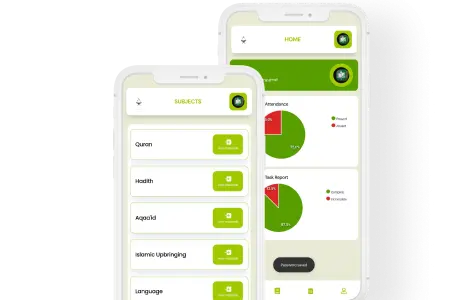
👉 ilmify.app helps homeschooling families and co-ops track Islamic Studies and Quran progress →
Related Articles
- 📚 Islamic Homeschool Curriculum: The Complete 2026 Guide for Muslim Families
- 🏫 Swords & Butterflies Review: Islamic English Language Arts (Charlotte Mason + Classical)
- 🏫 Allamah Education Review: Islamically Integrated Unit Studies for Ages 4–12
- 📚 How to Build Your Own Islamic Homeschool Curriculum: A Step-by-Step Guide
- 📚 Free Islamic Homeschool Printables and Resources: The Best Sources in 2026
- 🏫 Taqwa Curriculum Review: Project-Based Islamic Homeschooling for PreK–Year 2
- 📚 Muslim Homeschooling Co-ops: How to Set Up and Manage a Group
- 📚 Islamic Curriculum for Schools and Homeschools: The Complete 2026 Guide




 Arabic
  English
  Malay
Malay  Urdu
Urdu