

Introduction
The Middle East — specifically the Gulf Cooperation Council (GCC) states and Egypt — is the heartland of Islamic scholarship and Quran education. It is the region where Islam was revealed, where the Quran was first transmitted, where the most authoritative chains of Quranic recitation are maintained, and where the world’s most prestigious Islamic universities operate. Islamic education across the Middle East shares a common methodology — Talaqqi, Muraja’ah, Ijazah — and a common goal: producing students who can recite, memorise, and eventually certify others in the Quran with unbroken chains of authority. This overview maps the landscape across all seven countries.
The Middle East as the Centre of Islamic Scholarship
| Feature | Significance |
| Arabia — birthplace of Islam | The Quran was revealed in Arabic in the Hijaz; the Prophet ﷺ taught in Makkah and Madinah |
| Haramayn (Makkah & Madinah) | The two holiest sites — Dar al-Quran tradition has its deepest roots here |
| Al-Azhar Cairo | 1,000+ year institution — the world’s most authoritative centre of Sunni Islamic scholarship |
| Jami’at al-Islamiyyah Madinah | Trains Islamic scholars from 160+ countries; short Sanad chains to the Prophet ﷺ |
| Egypt’s Qira’at tradition | The most comprehensive living tradition of all ten canonical Qira’at |
| Gulf Awqaf funding | GCC countries’ Awqaf endowments fund Islamic education infrastructure globally |
No region combines the spiritual authority, institutional depth, and financial resources for Islamic education that the Middle East provides.
Common Features Across All Seven Countries
Despite national differences, all seven countries share core features:
| Feature | Detail |
| Talaqqi as the foundation | All authentic Quran education is based on direct oral transmission from teacher to student |
| Hifz (Quran memorisation) as central goal | Full memorisation of the Quran is the highest achievement in Quran education across all seven |
| Muraja’ah as ongoing practice | Systematic revision is not optional — it is the ongoing responsibility of every Hafiz |
| Ijazah as formal certification | The credential that authorises a student to teach and transmit — chain-based |
| Tajweed as integrated requirement | Recitation quality (Makharij, Sifat, rules) is non-negotiable at every level |
| Arabic as the language of instruction | Islamic education is Arabic-medium across all seven — though teachers may use local languages for explanation |
| Dar al-Quran as the dedicated institution | The dedicated Quran memorisation centre exists in all seven countries |
| State governance | All seven countries have state bodies overseeing Islamic education |
Country-by-Country Overview
| Country | Key Features | Flagship Institution | Distinctive Feature |
| Saudi Arabia | Haramayn authority; short Sanad chains; Hanbali madhab | Jami’at al-Islamiyyah Madinah | Custodian of the two holiest sites; global Islamic authority |
| UAE | Modern regulation; IACAD; Al Qasimia University | Majma’ al-Quran Sharjah; Al Qasimia | Most diverse expat Muslim community in GCC |
| Qatar | Well-funded; Ministry of Awqaf; Ijazah focus | Qatar Foundation; Ministry of Awqaf Dar al-Quran | Among the highest per-capita Islamic education investment in GCC |
| Oman | Traditional; Ibadi influence; mosque-based | Ministry of Awqaf; local Dar al-Quran | Unique Ibadi tradition — distinct from Sunni GCC neighbours |
| Egypt | Al-Azhar authority; Qira’at depth; Kuttab tradition | Al-Azhar University; Kulliyyah al-Quran | Most authoritative Ijazah chains; only country with full ten Qira’at widely taught |
| Bahrain | Regulated; mixed Sunni-Shi’a; Supreme Council | Supreme Council for Islamic Affairs | Mixed sectarian demographic; internationally connected |
| Kuwait | Well-funded Awqaf; competition culture | Ministry of Awqaf Dar al-Quran | Strongest Quran competition culture in GCC; generous Awqaf endowment |
The Shared Terminology of Middle Eastern Quran Education
| Term | Arabic | Meaning | Used In |
| Hifz | حفظ | Full Quran memorisation | All 7 |
| Tahfiz | تحفيظ | Structured Hifz programme | All 7 |
| Muraja’ah | مراجعة | Systematic revision | All 7 |
| Tajweed | تجويد | Rules of Quranic recitation | All 7 |
| Talaqqi | تلقي | Direct oral transmission, teacher to student | All 7 |
| Ijazah | إجازة | Certification to recite/teach | All 7 |
| Sanad | سند | Chain of transmission to Prophet ﷺ | Saudi Arabia, Egypt primarily |
| Qira’at | قراءات | Canonical recitation modes | All — specialised in Saudi Arabia and Egypt |
| Dar al-Quran | دار القرآن | Dedicated Quran memorisation centre | All 7 |
| Halaqah | حلقة | Study circle | All 7 |
| Kuttab | كُتَّاب | Traditional children’s Quran school | Saudi Arabia, Egypt |
How Middle East Differs from South Asian Islamic Education
| Feature | Middle East | South Asia |
| Hifz terminology | Hifz + Muraja’ah | Sabak + Sabak Para/Sabqi + Dhor + Manzil |
| Certification | Ijazah with Sanad chain | Hifz certificate — institutional, not chain-based |
| Madhab | Hanbali (Saudi), Shafi’i (Gulf/Egypt) | Primarily Hanafi |
| Qira’at | Multiple modes actively taught | Almost exclusively Hafs ‘an ‘Asim |
| Language of instruction | Arabic | Urdu, Bengali, Tamil, Dhivehi |
| State governance | Strong — Awqaf/Ministry direct operation | Mixed — boards, Wifaq, BMEB, private |
| Software language need | Arabic (RTL) interface essential | Urdu, Bengali, Tamil interfaces needed |
| Key software feature | Ijazah workflow + Muraja’ah scheduling | Sabak/Dhor/Manzil tracking |
This distinction is critical for any Islamic education software provider: a product built for South Asian institutions (tracking Sabak and Dhor) cannot serve Middle Eastern institutions (tracking Muraja’ah and Ijazah workflows) without significant adaptation.
State vs Community Governance: A Regional Comparison
| Country | State Role | Community Role |
| Saudi Arabia | Very strong — Ministry of Education + Ministry of Islamic Affairs | Limited independent community role |
| UAE | Strong — IACAD in Dubai; Awqaf elsewhere | Significant expat community Islamic education |
| Qatar | Strong — Ministry of Awqaf directly operates | Limited |
| Oman | Moderate — Ministry of Awqaf supervises | Mosque community tradition strong |
| Egypt | Strong — Al-Azhar Authority; Ministry of Awqaf | Private scholars and private Dar al-Quran significant |
| Bahrain | Strong — Supreme Council + Ministry | Mixed community (Sunni/Shi’a) institutions |
| Kuwait | Strong — Ministry of Awqaf directly operates | Competition culture supported by community |
All seven countries are characterised by strong state involvement in Islamic education — in contrast to South Asia, where private boards, Wifaq networks, and independent institutions dominate.
Quran Competitions: A Gulf-Wide Culture
Quran memorisation competitions are a distinguishing feature of Islamic education culture across the Middle East:
| Level | Description |
| School-level | Internal competitions within individual schools |
| National | Annual national championships — Ministry of Awqaf or Ministry of Education organised |
| Regional/GCC | Cross-Gulf competitions — student representatives from each GCC state |
| International | Dubai International Holy Quran Award; other international competitions |
| Age categories | Children, youth, adult — and in Egypt/Saudi, Qira’at-specific competitions |
Kuwait has the most developed competition culture within the GCC. Dubai’s International Holy Quran Award is the most prestigious international Quran competition globally.
Higher Islamic Education Across the Region
| Institution | Country | Level | Specialisation |
| Jami’at al-Islamiyyah | Saudi Arabia | Undergraduate + Graduate | Hadith, Islamic law, Quran sciences — short Sanad chains |
| Imam Muhammad ibn Saud | Saudi Arabia | Full university | Islamic law, Arabic, Da’wah |
| Umm al-Qura | Saudi Arabia | Full university | Islamic sciences, Arabic |
| Al-Azhar University | Egypt | Full university (1,000+ years) | All Islamic sciences; most authoritative Qira’at |
| Al Qasimia University | UAE | Islamic university | Quran sciences; first UAE Quran degree |
| Kuwait University (Shari’ah) | Kuwait | Faculty within national university | Islamic law, Quran, Hadith |
| Qatar Foundation institutions | Qatar | Graduate level | Modern Islamic studies |
Digital Transformation in Middle Eastern Islamic Education
Middle Eastern Islamic education institutions are at different stages of digital adoption:
| Country | Digital Readiness | Specific Needs |
| Saudi Arabia | High — Vision 2030 digital drive | Arabic Hifz tracking; Ijazah workflow; large-scale centre management |
| UAE | Very high — among world’s most connected | Arabic interface; IACAD-compatible; multilingual for expat community |
| Qatar | High | Arabic; Ijazah workflow; Ministry reporting |
| Kuwait | High | Arabic; Muraja’ah scheduling; competition tracking |
| Bahrain | High | Arabic; Awqaf compliance; Ijazah workflow |
| Oman | Moderate | Arabic; mosque-based management; simpler feature set |
| Egypt | Moderate | Arabic (essential); Ijazah workflow; large-scale Al-Azhar network management |
Key Statistics
| Statistic | Figure |
| Countries covered | 7 — Saudi Arabia, UAE, Qatar, Oman, Egypt, Bahrain, Kuwait |
| Combined Muslim population | ~250+ million (Egypt alone ~100 million) |
| Al-Azhar Institutes in Egypt | ~10,000+ |
| Jami’at al-Islamiyyah international students | 160+ countries represented |
| Canonical Qira’at | 7 + 3 additional = 10 — all maintained in Egypt |
| GCC combined population | ~55 million |
Frequently asked questions
Q: Which country has the best Islamic education in the Middle East?
This depends entirely on what “best” means. For shortest Sanad chains and Hadith sciences: Jami’at al-Islamiyyah Madinah. For Qira’at and Ijazah authority: Al-Azhar Egypt. For modern academic Islamic university: Al Qasimia UAE. For community Hifz access: Kuwait’s funded network. Each country leads in different aspects.
Q: Is Egyptian Arabic or Gulf Arabic used in Quran education?
Classical Arabic (Fus-ha) is used for Quran education throughout — the Quran is recited and taught in the classical register, not in any dialect. Regional Arabic dialects are used for instruction and explanation but not for the Quran itself.
Q: Can a student get Ijazah in all ten Qira’at anywhere in the Middle East?
Egypt is the only country where Ijazah in all ten Qira’at is regularly accessible — through the Kulliyyah al-Quran at Al-Azhar and qualified private scholars. Saudi Arabia offers this in Madinah and Makkah scholarly circles, but Egypt is the most accessible.
Q: Why is Muraja’ah the right term for Middle Eastern revision — not Dhor or Manzil?
These are different traditions. Muraja’ah is the Arabic term for systematic revision used across the Arab world and GCC. Dhor and Manzil are terms from the South Asian (primarily Urdu-influenced) Hifz tradition. Both serve the same function — revision of previously memorised Quran — but the terminology, scheduling method, and documentation differ.
Q: Is there a single unified Islamic education authority for the Middle East?
No — each country has its own national governance framework. Regional cooperation exists through the OIC (Organisation of Islamic Cooperation) and GCC-level coordination, but education remains nationally governed.
Conclusion
The Middle East is not a monolithic Islamic education landscape — it is seven distinct national systems sharing common foundations. What they share: Talaqqi methodology, Muraja’ah culture, Ijazah aspirations, Arabic language, and state Islamic governance frameworks. What differs: the specific institutions, the competitive culture, the balance of Sunni traditions, and the depth of Qira’at availability. For any institution, family, or software provider seeking to serve this region, understanding both the shared foundations and the national distinctions is the starting point.
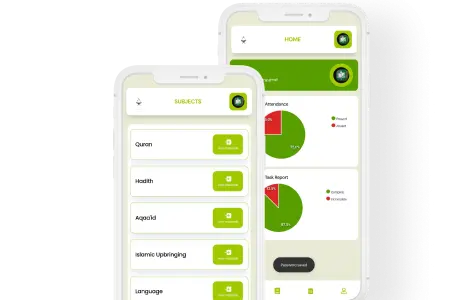
Ilmify is designed for Islamic education institutions across the Middle East — Arabic-interface Hifz tracking, Muraja’ah management, Ijazah workflow, and country-specific features for GCC and Egyptian institutions. Explore Ilmify →




 Arabic
  English
  Malay
Malay  Urdu
Urdu