A Word You’ve Heard but Never Fully Explored
If you grew up in a Muslim household in South Asia, East Africa, the UK, or Southeast Asia, the word maktab carries weight. It might conjure Saturday mornings, a wooden bench, the smell of old paper, and a teacher alternating between patience and strictness.
For millions of Muslims, maktab education was the first place they encountered the Quran. For many, it was the only formal Islamic education they ever received. Interest in maktabs has surged 49% year-over-year as Muslim communities globally reassess how they transmit Islamic knowledge to the next generation.
This guide answers the foundational questions: what a maktab actually is, how it differs from islamic schools, madrasas, and darul uloom institutions, what its strengths and weaknesses are, and what parents should look for when choosing one for their children.
Definition: What Is a Maktab?
The word maktab (مَكْتَب) means “a place of writing” in Arabic — from the root k-t-b, the same root as kitab (book). In its educational context, a maktab is a community-based institution for basic Islamic learning, typically serving children between ages 5 and 15.
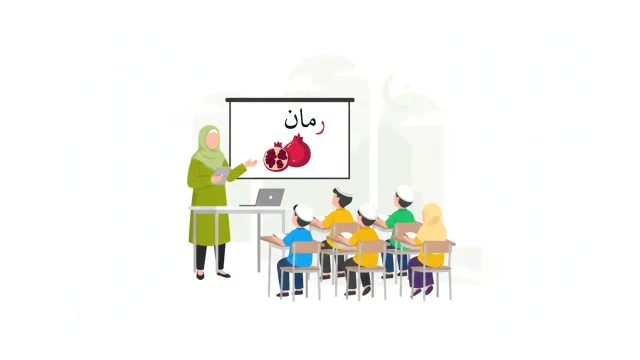
A maktab is not a full-time school. It typically operates in afternoons, evenings, or on weekends — outside of state school hours. It is usually attached to a mosque or runs from a community hall. The teacher — called a maulvi, ustadh, or qari — is a person with Islamic training, often a hafiz of the Quran.
Core mission: To teach Muslim children to read the Quran in Arabic, learn basic Islamic practice, and develop a foundational Islamic identity.
Historical Roots: From Early Islam to Today
The maktab as an institution is ancient. In the early centuries of Islam, maktabs existed throughout the Muslim world as the primary vehicle for basic literacy and religious instruction. Children would learn the Quran, Arabic writing, and basic arithmetic. Before universities and formal madrasas, there was the maktab.
Ibn Khaldun, the 14th-century historian, wrote about the maktab system in detail in his Muqaddimah, describing it as the cornerstone of Islamic civic education.
| Era | Role of the Maktab |
| Early Islamic civilization | Primary education hub — Quran, Arabic, arithmetic |
| Medieval Islamic cities | Embedded in every neighborhood; state-supported |
| Colonial period (18th–19th c.) | Survived informally, outside colonial educational control |
| Post-independence Muslim states | Partially replaced by state schools; continued in diaspora |
| Today | Millions of children across South Asia, Africa, SE Asia, and the West |
As the Muslim world was colonized and restructured, the maktab survived partly because it operated informally, outside state control. Today it remains the primary vehicle for basic Islamic education for millions of Muslim children globally.
What Children Learn at a Maktab
The curriculum of a maktab is remarkably consistent across cultures and countries:
| Subject | Content | Method |
| Quran recitation (tilawah) | Arabic letters, short vowels, basic tajweed | Phonics primers (Iqra’, Qa’idah Baghdadiyyah) |
| Surah memorization | Juz Amma, Al-Fatiha, Al-Kursi, four Quls | Oral repetition and testing |
| Aqeedah basics | Six pillars of iman, names of Allah, angels | Repetition with simple explanation |
| Fiqh basics | Wudu, salah method and timings, basic halal/haram | Demonstration and practice |
| Daily duas | Before eating, sleeping, entering bathroom, dua for parents | Rote memorization |
| Arabic alphabet | Reading Arabic script accurately | Phonics-based instruction |
In more established maktabs that run for several years, children may also cover basic Arabic grammar, seerah (prophetic biography), and community language texts (Urdu, Somali, etc.).
Maktab vs Madrasa vs Darul Uloom
These three terms are often used interchangeably but describe meaningfully different institutions:
| Institution | Type | Duration | Students | Curriculum Level |
| Maktab | Part-time, community | A few hours/week, several years | Ages 5–15 | Basic Quran, identity, practice |
| Madrasa | Full-time or residential | 3–8 years | Post-primary to secondary | Comprehensive Islamic sciences |
| Darul Uloom | Residential seminary | 6–8 years | Post-secondary | Full scholarly curriculum (Dars-e-Nizami) |
The simplest framing: the maktab is primary school, the madrasa is secondary school, and the darul uloom is the Islamic university. A student who completes all three has received an education equivalent to a full traditional Islamic scholarship training.
Where Maktabs Exist Today
| Region | Scale | Notes |
| Pakistan | 5M+ children estimated | Attached to neighborhood mosques throughout the country |
| United Kingdom | ~250,000 children | Evening and weekend classes at mosques across England, Wales, Scotland |
| Bangladesh, India | Tens of millions | Integral part of Muslim community infrastructure |
| East Africa | Widespread | Kenya, Tanzania, Uganda — brought by Arab traders, sustained through generations |
| Southeast Asia | Widely present | Malaysia and Indonesia have formal madrasah systems with maktab-level entry |
| North America & Australia | Growing | Weekend Islamic schools and mosque-based programs function as maktabs for diaspora |
Criticism and Reform of Maktab Education
The maktab is not without critics — and some of the most serious criticism comes from within Muslim communities:
| Criticism | Description | Reform Response |
| Rote learning without comprehension | Children recite without understanding meaning | Integrate meaning explanation alongside recitation |
| Outdated pedagogy | Lecture and repetition only; no active learning | Age-appropriate, play-based methods for young learners |
| Safeguarding concerns | Historical issues with discipline; regulatory gaps | Mandatory child protection policies now required in UK and elsewhere |
| Quality variance | Enormous difference between excellent and inadequate maktabs | Teacher training and certification programs |
| Disconnect from modern life | Curriculum doesn’t address contemporary questions | Contemporary fiqh and life skills integration |
Reform-minded educators are pushing for trained and salaried teachers, age-appropriate pedagogies, comprehension alongside recitation, and curricula that connect maktab education to children’s lived experiences.
What Parents Should Look For
When choosing a maktab for your child, these factors matter most:
| Factor | What to Ask |
| Teacher qualifications | Is the teacher a hafiz? Any formal teaching training? DBS/background checked? |
| Safeguarding | Is there a written child protection policy? Named safeguarding lead? |
| Class size | Ideal: 8–12 children. 40+ is unmanageable for quality instruction |
| Curriculum structure | Clear levels? How long does a typical student take per level? |
| Communication | Do parents receive progress updates? Is there a complaints channel? |
| Teaching approach | Visit a class. Is it calm, encouraging, and structured? |
| Language of instruction | Does the teacher explain meaning in the child’s first language? |
Never enroll a child in a maktab without visiting first. The on-the-ground reality will tell you more than any website or word-of-mouth recommendation.
Can Online Platforms Replicate the Maktab?
Not entirely — and they shouldn’t try to.
The maktab’s greatest strength is its community dimension. Children learn alongside peers. They see Islamic learning as a social, communal act. The mosque setting reinforces the link between knowledge and worship. These dimensions are genuinely not replicable online.
What online platforms do well is provide structured, high-quality instruction that many physical maktabs struggle to offer:
For families without a good local maktab, or for children needing supplementary instruction, online is not a replacement — it is an extension.
How Ilmify Bridges Traditional and Modern Learning
Ilmify’s foundational curriculum is built on the same goals as the best maktabs: Quran recitation with tajweed, foundational maktab education subjects, and a connected Islamic identity.
What we add: structured progression with clear level assessments, teachers trained in modern pedagogy alongside classical scholarship, parent dashboards for progress tracking, and — critically — comprehension taught alongside recitation.
We believe a child who understands the meaning of what they recite will have a deeper, more durable relationship with the Quran than one who recites beautifully without comprehension.
[Explore Ilmify’s curriculum for children and adults →]
Frequently Asked Question
Q: What age should a child start maktab education?
Most maktabs accept children from age 5 or 6 — typically when they begin formal schooling. Starting at this age allows children to develop Islamic literacy alongside general literacy. Earlier exposure (3–5 years) through home environment and simple dua memorization is beneficial, but formal maktab-style instruction typically begins at school age.
Q: How is a maktab different from an Islamic school?
A maktab is part-time, focused on Quran and basic Islamic practice. An Islamic school is a full-time day school that integrates Islamic education into a complete academic curriculum (maths, science, English, etc.). Many children attend both — a mainstream or Islamic school during the day and a maktab in the evenings or on weekends.
Q: Are maktab teachers qualified educators?
This varies enormously. Some maktabs employ formally trained teachers with Islamic qualifications (ijaza, hifz) and early years education credentials. Many rely on volunteers with religious knowledge but no formal teaching training. This is one of the most significant quality control issues in the sector.
Q: Do maktabs charge fees?
Most community-based maktabs charge nominal fees — often £10–£30/month in the UK — or rely on donations. Some are free. Private Islamic centers may charge more. The low cost is both a strength (accessibility) and a weakness (limits teacher salaries and resources).
Q: Can my child learn the same things online as at a maktab?
Yes for the instructional content (Quran, tajweed, Islamic basics). No for the community dimension. Online platforms like Ilmify provide high-quality one-on-one instruction that often exceeds what an underfunded maktab delivers. They cannot replicate the peer community and mosque environment.
Conclusion
The maktab is one of the most enduring institutions in Muslim history — fourteen centuries of Quran transmission, basic Islamic practice, and identity formation for new generations.
It has real weaknesses. It needs reform in many places. But its core function remains valuable and largely irreplaceable. Understanding what a maktab is and does helps us think clearly about how maktab education should evolve — not abandoning tradition, not frozen in it, but building purposefully forward from it.
[Explore Ilmify’s curriculum for children and adults →]
Related Articles
- What Does Darul Uloom Teach? Inside Traditional Islamic Seminary Education
- Islamic Preschool vs Mainstream Preschool — What Muslim Parents Should Know
- Top 10 Islamic Online Courses to Deepen Your Knowledge in 2025
- Islamic Education Online — How Modern Learners Are Rediscovering the Deen
- Alim Course Online — Everything You Need to Know Before Enrolling
- How to Start Learning the Quran Online as an Adult Beginner
- Muslim Youth and Islamic Education — Bridging the Gap in the Digital Age
- Free Islamic Courses Online — What’s Available and What’s Worth It