

Introduction
Every day, across 17,000 Indonesian islands, millions of children finish their mainstream school day and then walk — to a mosque, a community hall, or a neighbour’s front porch — to continue their education. Not the kind that appears on a school report. The kind their parents consider most fundamental: learning to read the Quran, memorise the daily prayers, and understand what it means to be Muslim.
The institution where this happens is the TPQ — Taman Pendidikan Al-Quran, literally “Quran Education Garden.” There are an estimated 200,000 of them in Indonesia. They are the largest single layer of Islamic education in the world’s largest Muslim-majority country, and yet they are almost entirely absent from discussions of global Islamic education policy, reform, or management.
This article explains what a TPQ is, how it works, how it is governed, what the Iqra method is, and what running one in 2026 actually requires.
What Is a TPQ?
TPQ stands for Taman Pendidikan Al-Quran (تَعْلِيمُ الْقُرآن — Quran Education Garden). It is a community-based Islamic school for children, typically operating outside the formal national education system, focused on Quran recitation literacy, basic Quranic memorisation, and foundational Islamic practice.
Key characteristics:
- Community-based: Usually run by a mosque, an Islamic organisation, or community volunteers — not by the state
- Supplementary: Operates alongside (not instead of) mainstream schooling
- Child-focused: Primary audience is children aged 4–12, though some TPQ also serve older students
- Short sessions: Typically 1–2 hours per day, 5–6 days per week, in afternoons or evenings
- Curriculum focus: Al-Quran literacy (Iqra method), memorisation of short Surahs and daily prayers, basic Fiqh and Islamic conduct
The TPQ is the Indonesian institutional equivalent of the maktab in South Asia, the Kuttab in the Arab world, and the supplementary Islamic school in the UK and North America — adapted to the Indonesian language, educational culture, and community structure.
TPQ vs TPA — Is There a Difference?
The terms TPQ and TPA are used interchangeably in Indonesian practice, with regional and generational variation:
| Term | Full Name | Usage |
| TPQ | Taman Pendidikan Al-Quran | More common in formal/official contexts; used by Kemenag |
| TPA | Taman Pendidikan Al-Quran (same abbreviation interpreted differently) | More common in daily community speech in some regions |
| Pengajian Anak | Children’s Quran Study | Older informal term; still used in some rural areas |
| Madrasah Diniyah Awaliyah | Beginning Religious Madrasa | Formal Kemenag classification for similar institutions |
For practical purposes, TPQ and TPA describe the same institution — a community Quran school for children. This article uses TPQ throughout.
The TPQ in Indonesian Muslim Life — Cultural Significance
The TPQ is not merely an educational institution — it is a social and spiritual anchor of Indonesian Muslim community life. Its significance extends well beyond what it teaches.
For children: The TPQ is typically a child’s first formal encounter with Islamic learning, Arabic letters, and the Quran. The experience shapes their relationship with the text, with Islamic community, and with adult Muslim identity for the rest of their lives. Indonesian adults who attended TPQ consistently describe it as formative.
For parents: Enrolling a child in TPQ is one of the first specifically religious acts Muslim parents perform for their children — and one of the most visible expressions of religious identity in the community. A child who does not attend TPQ is understood to have missed something essential.
For the mosque: The TPQ is typically the most active daily programme in a mosque besides the five daily prayers. It is often the primary mechanism through which the mosque engages the next generation of Muslims.
For teachers: TPQ teachers — predominantly women in many communities — are respected figures whose contribution to Islamic community formation is widely recognised even though it is rarely formally compensated.
How a TPQ Session Works
A typical TPQ session follows a consistent structure, though it varies by institution and teacher: code Codedownloadcontent_copyexpand_less
TYPICAL TPQ SESSION — 90 MINUTES

Opening (10 min)
• Children arrive, sit in rows or groups
• Opening dua together (Doa sebelum belajar — prayer before study)
• Asmaul Husna recitation (the 99 Names of Allah)
• Brief teacher greeting and session overview

Individual Iqra Recitation (40–50 min)
• Teacher calls each child individually to recite from their Iqra book
• Teacher listens, corrects pronunciation, advances or repeats the page
• While one child recites, others practice writing or review their current page
• This is the core Talaqqi moment — direct oral transmission, one-to-one

Group Memorisation / Recitation (15–20 min)
• Short Surah memorisation (all students together)
• Daily prayer recitation (Sholat, Wudhu recitations)
• Review of previously memorised Surahs

Islamic Studies / Practice (10–15 min)
• Teacher explains a brief Islamic topic relevant to the age group
  (e.g. cleanliness, honesty, manners with parents, how to perform Wudhu)
• Story from Prophets' lives (Kisah Para Nabi)

Closing (5 min)
• Closing dua together (Doa sesudah belajar — prayer after study)
• Announcements (upcoming exams, events)
• Children dismissed

TEACHER RECORDS AFTER SESSION:
• Which Iqra page each child reached
• Any corrections needed
• Students who need extra attention
The Iqra Method — Indonesia’s Quran Literacy System
The Iqra method is the dominant Quran literacy curriculum in Indonesia and one of the most influential Arabic literacy teaching innovations in the modern Islamic world. It was developed in Yogyakarta by As’ad Humam (1933–1996) and his colleagues at the AMM (Angkatan Muda Masjid dan Mushalla — Youth Movement of Mosques) in 1988.
The Iqra books:
| Book | Level | Content |
| Iqra 1 | Beginner | Individual letters (Alif through Ya’); simple syllables |
| Iqra 2 | Early | Letter joining; basic vowels (Fathah, Kasrah, Dammah) |
| Iqra 3 | Elementary | Tanween; Sukoon; longer syllables |
| Iqra 4 | Developing | Madd letters; Syaddah; more complex combinations |
| Iqra 5 | Intermediate | Applied reading of Quranic words; Lam Syamsiyah/Qamariyah |
| Iqra 6 | Completing | Fluid reading of Quranic text; basic Waqf awareness |
Why the Iqra method succeeded:
The Iqra method’s impact on Indonesian Quran literacy is difficult to overstate. Before Iqra, Quran literacy instruction in Indonesia relied on older methods — the Baghdadiyah method (letter-by-letter spelling) — which were slow, rote-heavy, and ill-suited to the Indonesian educational context. Iqra’s innovations:
- Direct sound-to-letter approach: Students learn letter sounds, not letter names
- Progressive reading without spelling: Students read syllables directly without first spelling them out
- Simple, accessible layout: Each page introduces one concept; low-cost printing; widely reproducible
- Teacher can be non-specialist: Unlike traditional methods that required a scholar-teacher, Iqra can be taught by a trained volunteer
The Iqra method spread rapidly from Yogyakarta across Indonesia and then to Malaysia, Brunei, and Indonesian diaspora communities. It is the most widely used Quran literacy method in Southeast Asia.
After Iqra:
Completion of Iqra 6 marks the beginning of Quran reading from the actual Mushaf. Students who complete all 6 books can read the Quran with basic accuracy and begin:
- Reading full Surahs in sequence (Al-Baqarah through An-Nas, or Juz’ Amma first)
- Hifz (memorisation) of short Surahs
- Tajweed study (systematic pronunciation rules)
The TPQ Curriculum — Beyond Iqra
While Iqra recitation is the core of TPQ, the complete curriculum covers:
| Subject | Content | Notes |
| Al-Quran literacy (Iqra) | Progressive Quran reading through Iqra 1–6 | Core — every session |
| Quran recitation (Bacaan) | Reading from Mushaf after Iqra completion | Post-Iqra |
| Hifz Juz’ Amma | Memorisation of short Surahs | Usually systematic from Al-Nas working backwards |
| Daily prayers and Wudhu | Correct recitation and procedure for the 5 daily prayers | Foundational practical obligation |
| Asmaul Husna | The 99 Names of Allah — daily recitation | Typically opened every session |
| Doa Harian | Daily supplications (eating, sleeping, entering/leaving home, etc.) | Memorised systematically |
| Fiqh Ibadah (basic) | Purity, prayer basics, fasting introduction | Age-appropriate |
| Akhlak (character) | Islamic conduct, manners, relationships | Stories and discussion |
| Kisah Para Nabi | Stories of the Prophets | Narrative learning |
Kemenag has published curriculum guidelines for TPQ — the Kurikulum Madrasah Diniyah Awaliyah — which provides a recommended framework. However, in practice, individual TPQ curriculum implementation varies enormously based on the teacher’s training and the community’s priorities.
TPQ Teachers — Who They Are and How They Are Trained
The Indonesian TPQ teaching workforce is one of the most remarkable — and least resourced — in global Islamic education:
Who they are:
- Predominantly women — female ustadzah make up the majority of TPQ teachers nationally
- Often local community members with religious education backgrounds (Pesantren graduates, Madrasah Aliyah graduates)
- Many are volunteers or receive very modest honoraria (often under IDR 500,000 / ~$30 USD per month)
- Some are professional teachers who volunteer TPQ time outside their official school hours
How they are trained:
- PGTPQ programme: Pendidikan Guru Taman Pendidikan Al-Quran — a one or two-year teacher training programme for TPQ teachers, offered by various Islamic education institutions
- Kemenag training programmes: The Ministry of Religious Affairs periodically offers teacher training for TPQ educators
- Pesantren-based training: Many TPQ teachers receive their training through the Pesantren network — studying at a Pesantren and then returning to their community to teach
- Informal transmission: A significant number of TPQ teachers simply learned from their own TPQ teacher and replicated that model
The persistent underfunding of TPQ teacher training and compensation is the single biggest systemic weakness in Indonesian Quran literacy education.
TPQ Governance and Registration
Formal registration:
TPQ can register with Kemenag (Ministry of Religious Affairs) as a Madrasah Diniyah Awaliyah — the formal institutional category for elementary Islamic education outside the national school system. Registered institutions receive:
- A registered institution number (NSM — Nomor Statistik Madrasah)
- Eligibility for government operational assistance (BOP — Biaya Operasional Pendidikan)
- Access to Kemenag teacher training programmes
- Some legal protection and recognition
The informal majority:
Despite these incentives, the majority of TPQ in Indonesia are believed to operate without formal registration. Barriers include: lack of awareness of registration processes, administrative burden, and the perception that registration brings oversight without proportionate benefit. This means the official data on TPQ significantly undercounts the actual number.
Organisational networks:
Several Islamic organisations maintain networks of TPQ:
- Badan Koordinasi Taman Pendidikan Al-Quran (BADKO TPQ) — the national TPQ coordination body
- NU (Nahdlatul Ulama) — through its LP Ma’arif and education wings
- Muhammadiyah — through its education bodies
TPQ vs the South Asian Maktab — Comparison
| Feature | TPQ (Indonesia) | Maktab (South Asia) |
| Quran literacy method | Iqra method (phonics-based) | Qaidah (Noorani Qaidah or similar) |
| Language of instruction | Bahasa Indonesia + Arabic | Urdu/Local language + Arabic |
| Session timing | After school (early afternoon) | Evening (post-Asr/Maghrib) |
| Hifz component | Juz’ Amma focus; Hifz less central | Hifz often a primary goal |
| Governance | Community/NU/Muhammadiyah; some Kemenag | Mosque committee; regional boards |
| Teacher gender | Predominantly female | Mixed; male dominant in some contexts |
| Teacher training | PGTPQ programme; Pesantren background | Ijazah from Dar ul-Uloom; informal |
| Digital management | Very limited; mostly informal | Also limited but growing |
| Typical size | 15–50 students | 10–60 students |
Both institutions serve the same essential function — transmitting Quran literacy and basic Islamic practice to the next generation — through community-funded, supplementary, teacher-led daily sessions. Their parallel evolution in different cultural contexts has produced similar challenges: teacher undervaluation, administrative informality, and the tension between community ownership and institutional resilience.
Running a TPQ in 2026 — The Management Challenges
The management challenges facing a TPQ administrator in Indonesia are structurally similar to those facing a maktab administrator anywhere:
No systematic student records. Iqra progress is tracked informally — teachers remember which page each child is on, but this institutional memory disappears when a teacher leaves. Digital tracking would solve this entirely.
Attendance informality. Most TPQ do not maintain systematic attendance records. This creates problems for safeguarding, for identifying students at risk of dropping out, and for communicating with parents about their child’s engagement.
Fee collection disputes. TPQ often charge small monthly fees (IDR 20,000–50,000 / $1–3 USD), collected in cash without receipts. Disputes are common and trust is fragile.
Parent communication opacity. Parents receive no systematic progress updates. They assume their child is progressing, but have no way to know which Iqra level they are on, which Surahs have been memorised, or what the teacher has been working on.
Teacher retention. Volunteer and low-paid teachers leave frequently. When they go, their institutional knowledge — which students are at which level, which students have special needs, what has been taught — goes with them.
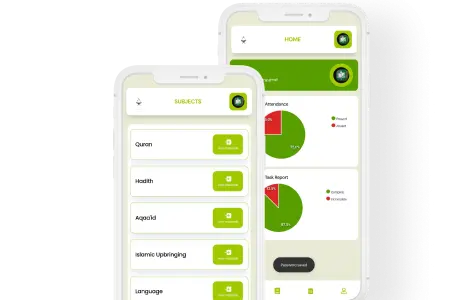
Software designed for Islamic schools addresses every one of these challenges. Ilmify’s Iqra progress tracking (equivalent to Sabak/Nazra tracking in maktabs), attendance records, digital fee receipts, and individual parent portals give TPQ administrators the institutional infrastructure they currently lack — without requiring expensive IT infrastructure.
👉 Indonesian TPQ deserve the same management tools as Islamic schools anywhere. Ilmify works for any institution teaching Quran to children.Explore Ilmify → ilmify.app
Conclusion
The TPQ is the front line of Quran literacy in the world’s largest Muslim-majority country — and it operates, in most cases, with no administrative infrastructure whatsoever. The millions of Indonesian children learning Al-Fatiha in neighbourhood TPQ deserve institutions that are as systematic and well-managed as their mainstream schools. The teachers who give their evenings to this work deserve tools that make their job easier and their effort last beyond their own tenure. The families who trust these institutions with their children’s Islamic foundation deserve transparency and progress updates. None of this requires enormous investment. It requires the right tools — and the willingness to invest in institutional infrastructure as a form of service to the next generation.
👉 TPQ administrators in Indonesia: Ilmify gives your school what it needs. Explore Ilmify → ilmify.app
Related Articles:
- 🇮🇩 Islamic Education in Indonesia: Pesantren, Madrasah, and TPQ Explained
- 🏫 What Is a Pesantren? Indonesia’s Traditional Islamic Boarding School System
- 📚 The Difference Between Hifz, Nazra, and Qaidah: A Parent’s Guide
- 🏗️ How to Start a Maktab: A Step-by-Step Guide for Mosque Committees
- 📊 How to Set Up a Digital Hifz Tracking System from Scratch




 Arabic
  English
  Malay
Malay  Urdu
Urdu