
Introduction
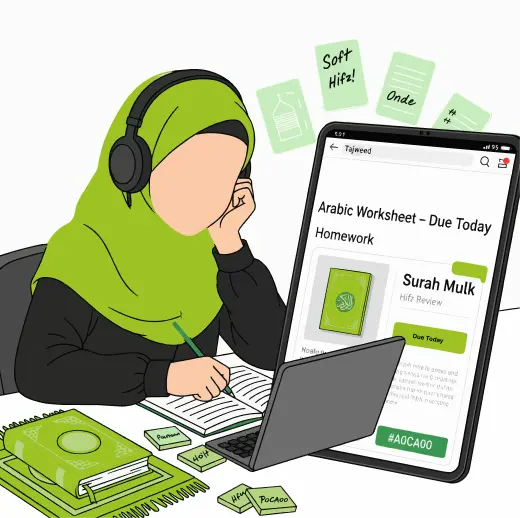
Women’s Islamic education in Canada has undergone a quiet transformation over the past two decades. Where once Islamic educational provision for girls and women was limited — girls sharing maktab spaces with boys, women largely excluded from advanced Islamic Studies, and no dedicated provision for women seeking scholarly Islamic knowledge — the sector in 2026 is significantly more developed.
Full-time Islamic schools accommodate girls at every level. Dedicated Hifz programmes for girls are available across Canada’s major cities. Several institutions now offer Alimah programmes — structured multi-year Islamic scholarship programmes — specifically for women. And online Islamic education has extended access to women in smaller communities, women with family responsibilities, and women who previously had no option but to travel abroad for serious Islamic learning.
This guide surveys what is available, what has improved, and where significant gaps remain.
The Growth of Women’s Islamic Education in Canada
The growth in women’s Islamic education in Canada reflects several converging trends:
Second-generation demand:
The daughters of the immigrant generation that built Canadian Islamic institutions are now adults themselves — often more educated, more professionally established, and more assertive about their Islamic learning needs than their parents’ generation. This cohort has driven demand for Islamic education that is intellectually serious, delivered in English, and compatible with professional and family life.
Community maturation:
As Canadian Muslim communities have matured institutionally, they have invested in women’s Islamic education that was deferred in earlier, resource-constrained decades when building mosques and basic maktabs consumed all available capacity.
Online access:
Online Islamic education — accelerated by the COVID-19 pandemic — has been disproportionately valuable for women, for whom geographic constraints, family responsibilities, and social norms around evening travel may limit access to in-person programmes. Online platforms have opened access to Islamic learning that was not previously available.
Girls in Full-Time Islamic Schools
Canada’s full-time Islamic day schools are predominantly co-educational — admitting boys and girls, typically with some degree of separation in classrooms at secondary level. MAC schools, the largest Islamic school network in Canada, admit girls throughout their schools.
What girls receive in full-time Islamic schools:
The same Islamic curriculum as boys — daily Quran, Islamic Studies, Arabic — plus the full provincial academic curriculum. Full-time Islamic schools provide the most immersive Islamic educational environment available, and girls in these schools develop Islamic knowledge and identity that part-time maktab provision cannot match.
Girls-only Islamic schools:
Some Canadian Islamic communities have established or aspire to girls-only secondary schools — providing an environment where adolescent girls can learn without the social dynamics of co-education and where Islamic values around gender can be fully implemented. These remain rare; the Muslim community’s population base in most Canadian cities is not large enough to sustain fully separate schools at all levels.
Girls in Maktabs and Weekend Schools
Most Canadian maktabs serve both boys and girls — typically in separate classes or separate spaces within the same programme. The after-school maktab is as important for girls’ Islamic education as for boys’, providing the Quran and Islamic Studies foundation that most Canadian Muslim girls receive.
Gender considerations in maktabs:
Quality maktabs ensure that girls have equally qualified teachers, equal curriculum access, and equal parental communication as boys. In practice, some maktabs have historically provided boys’ Hifz provision without equivalent girls’ Hifz — a gap the sector has been actively closing.
Islamic Studies content for girls:
The Islamic Studies curriculum in maktabs should address content specifically relevant to Muslim women — the fiqh of purification, prayer, fasting, and family matters from a female perspective; the lives of the female Companions and role models in Islamic history; the rights and responsibilities of Muslim women. Not all maktab curricula cover these areas with sufficient depth.
Girls’ Hifz Programmes in Canada
Girls’ Hifz has grown significantly in Canadian Muslim communities. Where once Hifz was seen as primarily a male achievement in many South Asian Canadian families, the current generation of Muslim parents actively seeks Hifz for daughters as well as sons.
Provision:
Most Canadian Hifz centres and Hifz-stream Islamic schools accept girls — either in co-ed programmes with physical separation or in dedicated girls’ sessions. MAC schools’ Hifz provisions are typically co-ed at the primary level and separated by gender at secondary.
Female Hifz teachers (Hafizat):
The availability of female Hifz teachers — women who have themselves completed Hifz and are qualified to teach girls — has grown substantially in Canadian Muslim communities. This is a development of the past 10–15 years; a generation ago, qualified female Hifz teachers were very rare in Canada. Today, most major Islamic centres can access a Hafiza teacher.
Alimah Programmes: Advanced Islamic Studies for Women
Alimah programmes — multi-year structured Islamic scholarship programmes for women, leading to qualification as a female Islamic scholar (Alimah) — represent the most significant development in women’s Islamic higher education in Canada over the past decade.
What an Alimah programme involves:
Typically 4–6 years of structured study covering: Quran (recitation and memorisation), Tajweed, Hadith studies, Fiqh (Islamic law — typically Hanafi), Aqeedah, Tafseer (Quran exegesis), Arabic language, and Islamic history. Graduates are qualified to teach Islamic Studies, lead women’s Islamic education, and provide Islamic guidance on matters of Fiqh.
Canadian Alimah programmes:
Several Canadian Islamic institutions now offer Alimah programmes — typically at institutions connected to the Hanafi/Deobandi tradition, reflecting the South Asian Muslim community that has historically invested most heavily in Islamic scholarship in Canada. These programmes are typically delivered in person, part-time (evenings and weekends) or as intensive weekend-and-summer programmes to accommodate women’s professional and family responsibilities.
Who attends:
Alimah programmes attract a diverse student body — young women fresh from school, professionals in their 20s and 30s, mothers returning to Islamic studies after raising children. The common thread is a desire for serious, structured Islamic knowledge that goes beyond the maktab level.
The gap:
Alimah programme provision remains concentrated in major cities (primarily GTA and Edmonton). Women in smaller Canadian cities and towns with significant Muslim populations often have no local Alimah programme access — online provision is beginning to fill this gap but has not fully addressed it.
Adult Women’s Islamic Education
Beyond formal Alimah programmes, Canadian mosques and Islamic centres offer a range of adult Islamic education provision for women:
Women’s Quran circles (halaqat):
Regular study circles led by an Alimah or qualified teacher — covering Quran recitation, Tajweed, Tafseer, and Islamic jurisprudence. These are the most widely available form of adult women’s Islamic education in Canada, accessible at most major mosques.
Weekend workshops and seminars:
Intensive one-day or weekend programmes delivered by visiting scholars — covering specific topics in fiqh, seerah, or Islamic spirituality. These complement regular education but do not substitute for structured programmes.
Sisters’ circles:
Informal peer-learning communities where women study together — reading Islamic texts, discussing fiqh questions, studying Arabic. These are valuable community building as well as educational provision.
Online Islamic Education for Women
Online Islamic education has been disproportionately valuable for Canadian Muslim women, for several reasons:
Geographic access:
Women in smaller Canadian cities — Saskatoon, London, Halifax — who have no local Alimah programme can access structured Islamic education online. The geography that previously excluded them from serious Islamic learning has been overcome.
Schedule flexibility:
Women balancing professional careers, young children, and family responsibilities often cannot attend fixed-schedule in-person programmes. Online courses — particularly asynchronous recorded content — provide learning on a schedule compatible with complex lives.
Privacy and comfort:
Some women prefer to learn in their home environment, particularly for topics involving fiqh matters specific to women.
Quality concerns:
Online Islamic education quality varies enormously. The most reputable online Alimah programmes are delivered by qualified scholars with systematic curricula; others are informal and inconsistent. Women evaluating online Islamic education should check the qualifications of teachers, the structure of the curriculum, and whether the programme provides formal assessment and certification.
Challenges and Gaps
Female Islamic scholarship pipeline:
The supply of qualified female Islamic scholars in Canada — Alimah graduates who can teach in schools and maktabs, lead women’s circles, and provide fiqh guidance to women — remains below demand. The Alimah programmes now operating will address this over the next 10–15 years, but the gap is real today.
Secondary school completion:
Some Muslim families in Canada have historically been less consistent about girls’ secondary Islamic education than primary — maktab attendance declining for girls in the teenage years due to social pressures and competing activities. Retaining teenage girls in Islamic education through to adulthood is a challenge the sector is actively working on.
Integration with professional life:
Many Canadian Muslim women want Islamic education that integrates with professional and civic engagement — not Islamic education that is positioned as separate from or in tension with professional life. Programmes that frame Islamic scholarship as complementary to professional excellence attract broader participation than those perceived as insular.
Conclusion
Women’s Islamic education in Canada in 2026 is the strongest it has ever been — with full access to schools and maktabs, growing Hifz provision, emerging Alimah programmes, and expanding online access. The generation of Canadian Muslim women who will lead mosques, schools, and Islamic organisations in the 2030s and 2040s is being formed now, in these programmes.
The gaps that remain — the female scholarship pipeline, the Alimah programme desert outside major cities, the teenage retention challenge — are solvable with sustained community investment. The trajectory is clearly positive.
Running Islamic education programmes for girls or women in Canada? ilmify.app provides the student management, Quran tracking, and parent communication infrastructure for every type of Islamic educational institution.





 Arabic
  English
  Malay
Malay  Urdu
Urdu