

Introduction
In any other Indian state, a single Islamic education body overseeing more than one million students, publishing over 140 textbooks in six languages across 14 class levels, and running a centralised examination system for thousands of affiliated madrasas would be considered extraordinary. In Kerala, this is simply Samastha.
Samastha Kerala Islam Matha Vidyabhyasa Board — more commonly known as the Samastha madrasa board or SKIMVB — is the dominant Islamic education authority for Sunni Muslims in Kerala. It is one of the most systematically developed Islamic education systems in India, and understanding it is essential for anyone working in Islamic education in Kerala or studying the Kerala Muslim community.
What Is Samastha Kerala?
“Samastha Kerala” refers to the broader Samastha Kerala Jamiyyathul Ulama — the All Kerala Scholars’ Association, founded in 1926. It is one of the oldest and largest Muslim scholarly organisations in India, representing the traditional Sunni (Shafi’i) tradition in Kerala.
Within the Samastha umbrella, the Samastha Kerala Islam Matha Vidyabhyasa Board (SKIMVB) is the body specifically responsible for Islamic education. Vidyabhyasa is Malayalam for “education” or “study.” The full name translates roughly as All Kerala Islamic Religious Education Board.
Key distinction — three related but separate bodies:
| Body | Role |
| Samastha Kerala Jamiyyathul Ulama | The scholars’ organisation — religious, social, political voice |
| SKIMVB | The education board — runs the madrasa system |
| SKSVB | A separate Samastha-affiliated education body (post-2000 split) |
When people in Kerala say “Samastha madrasa” or “Samastha board,” they are typically referring to SKIMVB.
Origins and History
The 1926 Foundation
Samastha Kerala Jamiyyathul Ulama was founded in 1926 at Calicut (Kozhikode) by traditional Sunni scholars. The organisation was founded primarily to:
- Defend traditional Sunni Islamic practice against reformist and Wahhabi-influenced challenges
- Preserve the authority of the traditional scholarly class (ulama) in Kerala Muslim society
- Organise and standardise Islamic education across Kerala
This founding context shapes everything: Samastha has always been a traditionalist body defending classical Sunni scholarship and practice — and this shapes its curriculum, its approach to Islamic education, and its relationship with other Islamic movements in Kerala.
Development of the Education Board
Through the twentieth century, the organisation developed an increasingly systematic approach to Islamic education. The madrasa network expanded, curricula were standardised, and textbooks were developed in Malayalam — making Islamic education accessible to Keralite students who did not read Arabic or Urdu. By the late twentieth century, SKIMVB had become the dominant Islamic education body for Sunni Muslims across all of Kerala.
The Split and SKSVB
In the early 2000s, a significant dispute within Samastha — centred on the Kanthapuram faction — led to the formation of the Samastha Kerala Sunni Vidyabhyasa Board (SKSVB). Both bodies continue to operate as separate organisations. For a detailed explanation, see SKIMVB vs SKSVB: Understanding Kerala’s Two Samastha Bodies.
How SKIMVB Is Organised
Central Board
SKIMVB operates from headquarters in Kerala. The central board is responsible for:
- Curriculum development and review
- Textbook authoring, editing, and publication
- Setting examination syllabi and question papers
- Issuing marksheets and certificates
- Accrediting and de-accrediting affiliated madrasas
- Teacher training programmes
District and Regional Committees
Below the central board, SKIMVB operates through district committees across Kerala’s 14 districts. These bodies coordinate affiliated madrasas locally, manage examination logistics, and act as the point of contact for individual madrasas.
Affiliated Madrasas
At the base are thousands of community-run institutions — typically operated by mosque committees, Islamic trusts, or community organisations. They teach the SKIMVB curriculum, register students for annual examinations, and are responsible for their own staffing, finances, and day-to-day administration. SKIMVB provides the curriculum and examination framework; affiliated institutions provide the operational infrastructure.
The Scale of the Samastha Madrasa System
| Metric | Figure |
| Enrolled students | 1 million+ |
| Affiliated madrasas | Thousands across all 14 Kerala districts |
| Official textbooks | 140+ |
| Languages of instruction | 6 (Malayalam, Arabic, Tamil, Kannada, English, Urdu) |
| Class levels | 14 |
| Annual examination | Yes — centralised, state-wide |
| Geographic reach | Kerala + Tamil Nadu + Karnataka communities |
No other single Islamic education body in India approaches this degree of curricular depth and linguistic reach.
What a Samastha Madrasa Looks Like in Practice
Part-Time, Evening Model
Like Deeniyat maktabs in North India, Samastha madrasas are primarily part-time institutions — running in evenings or on weekends, serving children who attend regular schools during the day. (Kerala uses the term madrasa rather than maktab, reflecting the Shafi’i Arabic-learning tradition of South India.)
Malayalam Medium
Unlike North Indian maktabs where Urdu is the language of instruction, Samastha madrasas teach primarily in Malayalam. Textbooks are written in Malayalam with Arabic integrated for Quranic subjects and Islamic terminology — genuinely accessible to the vast majority of Keralite Muslim children.
Shafi’i Fiqh
All Samastha curriculum content reflects the Shafi’i school of jurisprudence — the traditional madhab of Kerala’s Muslim community. What students learn in the madrasa matches what they practice at home and in their local mosque, eliminating the confusion experienced in some other states where maktab curriculum (Hanafi) differs from local community practice.
Community Prestige
Samastha madrasa attendance is deeply embedded in Kerala Muslim culture. Enrolling a child in the local Samastha madrasa is considered as natural as enrolling them in the government primary school. Annual examination performance is a matter of family and community pride.
The Samastha Examination System
The SKIMVB annual examination is one of the most widely sat examinations in Kerala’s Muslim community:
| Feature | Detail |
| Frequency | Annual — end of each academic year |
| Question papers | Centralised — set by SKIMVB for consistency |
| Format | Written (cognitive subjects) + oral/practical (Quran, namaz) |
| Marking | Centralised by SKIMVB-appointed examiners |
| Certification | Annual marksheets + level completion certificates |
| Advanced levels | State-level competitive merit examinations |
Managing this for over one million students annually is a major logistical achievement. SKIMVB certificates carry significant community recognition — completing the full Samastha programme signals a serious grounding in Islamic sciences within the Kerala Sunni tradition.
What Makes Samastha Distinctive
| Feature | Samastha (SKIMVB) | Most Other Indian Maktab Boards |
| Curriculum levels | 14 | 6–8 |
| Textbooks | 140+ | 20–50 |
| Languages | 6 | 1–2 |
| Madhab alignment | Shafi’i (matches local practice) | Often Hanafi in Shafi’i communities |
| Female enrollment | High — comparable to male enrollment | Variable |
| Community integration | Deep — embedded in mosque and social life | Variable |
| Advanced scholarship | Extensive (Levels 10–14) | Very limited |
Linguistic reach beyond Kerala is another distinctive: the Tamil and Kannada curriculum materials make Samastha relevant to Muslim communities in Tamil Nadu and Karnataka as well.
Samastha and the Broader Kerala Landscape
SKIMVB is dominant but not alone. Kerala’s Islamic education landscape includes:
- SKSVB — the second Samastha body after the early-2000s split
- Wisdom Islamic Organisation — independent Sunni; strong in central/south Kerala
- Kerala Nadvathul Mujahideen (KNM) — Islahi/Salafi tradition
- JIH-affiliated institutions — integrated education model
- Idara-e-Deeniyat affiliated maktabs — primarily for North Indian heritage communities
For a comprehensive overview of all these bodies, see Kerala’s Multiple Islamic Education Boards: Samastha, Wisdom, Deeniyat and More.
Challenges Facing the Samastha System
Teacher supply. Finding enough qualified, motivated madrasa teachers for evening sessions remains difficult — pay is modest and competition for qualified graduates is high.
Curriculum modernisation. The Samastha curriculum is deeply respected but periodically faces calls for updating — both in content (contemporary issues) and pedagogy (interactive, child-centred methods).
Digital administration. Like virtually all Indian Islamic education bodies, SKIMVB and its affiliated madrasas have been slow to adopt digital tools. Most still use paper registers. See Madrasa Management Software for India for what is available.
Online competition. Some Kerala Muslim families are supplementing or replacing madrasa attendance with online platforms, particularly for older children with demanding school timetables.
Frequently Asked Questions
Q: What does SKIMVB stand for?
Samastha Kerala Islam Matha Vidyabhyasa Board. Vidyabhyasa is Malayalam for “education” or “study.” The full name means All Kerala Islamic Religious Education Board.
Q: Is Samastha a government body?
No. Samastha Kerala Jamiyyathul Ulama and SKIMVB are independent religious and educational organisations. SKIMVB certificates carry community recognition but no formal government accreditation.
Q: How many students attend Samastha-affiliated madrasas?
Over one million students are enrolled across thousands of SKIMVB-affiliated madrasas in Kerala and beyond. This makes it the largest single Islamic education body in South India.
Q: Does Samastha follow Hanafi or Shafi’i fiqh?
Shafi’i — consistently throughout all 14 curriculum levels. This aligns with the traditional madhab of the majority of Kerala’s Muslim community.
Q: Is Samastha only in Kerala?
SKIMVB’s affiliated madrasas are primarily in Kerala, but the availability of curriculum materials in Tamil, Kannada, and other languages means affiliated institutions also exist in Tamil Nadu and Karnataka communities.
Conclusion
Samastha Kerala Islam Matha Vidyabhyasa Board (SKIMVB) is the dominant Islamic education authority for Sunni Muslims in Kerala — a network of thousands of affiliated madrasas, over one million students, 140+ textbooks in six languages, and a 14-level curriculum from foundational Arabic literacy to advanced Islamic scholarship. Rooted in the traditional Sunni Shafi’i tradition, teaching in Malayalam, and deeply embedded in Kerala Muslim community life, it is the most systematically developed Islamic education system in India.
For administrators managing SKIMVB-affiliated madrasas, the operational challenges of tracking students through 14 levels, managing examinations, and maintaining records for thousands of students are real and growing.
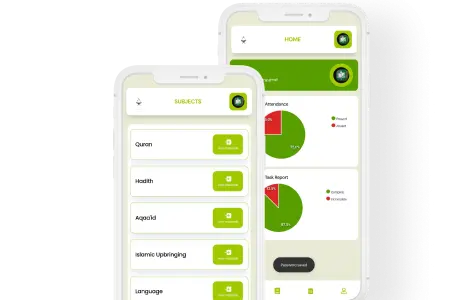
Ilmify supports the Samastha level structure and handles Malayalam-medium parent communication — purpose-built for the operational realities of South Indian Islamic education. Explore Ilmify →




 Arabic
  English
  Malay
Malay  Urdu
Urdu