

Introduction
Among India’s Islamic education boards, the Markazi Taleemi Board (MTB) occupies a distinctive position. It is neither a traditional Deobandi maktab network like Idara-e-Deeniyat, nor a classical Sunni madrasa board like Samastha Kerala. MTB is the national Islamic education body of Jamaat-e-Islami Hind (JIH) — and its curriculum, philosophy, and institutional model reflect JIH’s distinctive approach to what Islamic education should do and who it should produce.
MTB-affiliated maktabs and schools operate across India, from Kashmir to Kerala. Understanding what the Markazi Taleemi Board is, where it comes from, and how it differs from other major Indian Islamic education bodies is essential for anyone mapping the landscape of Islamic education in India — and for parents and administrators considering the MTB model for their community.
What Is the Markazi Taleemi Board?
The Markazi Taleemi Board — markazi means central or national in Urdu; taleemi means educational — is the central educational coordination body of Jamaat-e-Islami Hind. Its primary role is to:
- Develop and maintain a curriculum for JIH-affiliated Islamic education institutions
- Publish and distribute textbooks and teaching materials
- Train teachers for affiliated schools and maktabs
- Coordinate examinations and issue certificates for affiliated institutions
- Provide guidance and support to mosque committees, Islamic trusts, and educational organisations that affiliate their institutions with MTB
MTB operates primarily in the maktab sector — part-time evening and weekend Islamic education for children who attend regular schools during the day — but its influence extends into integrated full-time Islamic schools and community education programmes.
The JIH Background: Why MTB Exists
To understand MTB, you need to understand Jamaat-e-Islami Hind. JIH was founded in 1948 as the Indian continuation of Jamaat-e-Islami, the movement established by Mawdudi in 1941. Mawdudi’s central argument was that Islam is not merely a system of personal religious practice — it is a comprehensive way of life with implications for law, governance, economics, and society. The goal of Islamic education, in Mawdudi’s framework, is not just to produce pious individuals but to produce citizens who understand Islam as a total system and are equipped to live by it in every dimension of life.
This philosophical starting point shapes everything about JIH’s approach to education:
Integration over separation. Rather than running Islamic education as a separate evening activity disconnected from a child’s secular schooling, JIH has historically sought to integrate Islamic values and knowledge into the full educational experience.
Contemporary relevance. The MTB curriculum engages with contemporary issues — economics, science, civic life, social justice — from an Islamic perspective, rather than focusing exclusively on classical Islamic sciences.
Character formation. MTB education explicitly aims to form students with strong Islamic character and social responsibility, not just religious knowledge and ritual competence.
Intellectual engagement. The MTB model encourages questioning, understanding, and applying Islamic principles rather than memorisation and imitation alone.
How MTB Is Organised
Central Body
MTB operates from its central office, coordinating national curriculum, publications, and policy. The central body is responsible for:
- Curriculum design and periodic revision
- Textbook authoring, review, and publication
- National teacher training programmes
- Examination design and certificate issuance
- Support for state-level and regional MTB structures
State-Level Structures
MTB operates through state committees in the major states where JIH has a significant presence: Uttar Pradesh, Maharashtra, Karnataka, Kerala, Tamil Nadu, West Bengal, and others. State committees:
- Coordinate affiliated institutions in their area
- Run localised teacher training sessions
- Manage examination logistics
- Provide a point of contact for institutions considering affiliation
Affiliated Institutions
At the base of the structure are individual maktabs and Islamic schools affiliated with MTB. These institutions:
- Use the MTB curriculum and textbooks
- Register students for MTB examinations
- Participate in MTB teacher training programmes
- Receive MTB certificates for qualifying students
Affiliation terms are similar to other Indian Islamic education boards: MTB provides the curriculum framework; affiliated institutions provide operational management, staffing, and facilities.
Geographic Reach and Scale
| Region | Key States | Notes |
| North India | UP, Bihar, Jharkhand, Delhi | Strong JIH community presence |
| West India | Maharashtra, Gujarat | Urban Muslim communities |
| South India | Karnataka, Tamil Nadu, Telangana | Significant MTB presence |
| Kerala | Statewide | JIH-aligned institutions alongside Samastha |
| East India | West Bengal, Assam | Moderate presence |
| Northeast | Manipur, Assam | Smaller but growing |
MTB is genuinely national in its reach, though its scale in individual states varies with the strength of JIH’s community presence. It is not as numerically large as Idara-e-Deeniyat (which serves ~1.6 million students) but reaches a significant number of students across a wide geographic spread.
The MTB Educational Philosophy
The MTB curriculum and pedagogy rest on several distinctive philosophical commitments that set it apart from other Indian Islamic education bodies:
Tazkiyah (Character Purification)
MTB places strong emphasis on tazkiyah — the purification and development of character — as the primary goal of Islamic education. Students are not just taught what to believe and how to practise; they are guided through a process of character development that emphasises honesty, justice, responsibility, and compassion.
Tafaqquh fi’d-Din (Deep Understanding of Religion)
Rather than rote memorisation of religious content, MTB emphasises tafaqquh — deep understanding. Students are expected to understand why Islamic rulings exist, how Islamic principles apply to real situations, and how to reason from Islamic sources rather than simply repeat learned answers.
Integration of Deen and Duniya
MTB explicitly rejects the dichotomy between religious knowledge (deen) and worldly knowledge (duniya). The curriculum integrates Islamic values and perspectives into the study of subjects that students are also encountering in their secular schooling — science, history, social studies, and civic life.
Community Responsibility
MTB education emphasises the student’s responsibility not just to live as a good Muslim individually but to be an active contributor to the Muslim community and to broader society. This includes engagement with social justice, civic participation, and the welfare of non-Muslim neighbours.
What Makes MTB Different from Deeniyat and Samastha
| Feature | MTB | Deeniyat | Samastha (SKIMVB) |
| Parent organisation | Jamaat-e-Islami Hind | Independent (Deobandi roots) | Samastha Kerala Jamiyyathul Ulama |
| Madhab | Not strictly madhab-bound | Hanafi (Deobandi) | Shafi’i |
| Curriculum focus | Integrated — deen + contemporary | Classical Islamic sciences | Classical Islamic sciences (Shafi’i) |
| Pedagogy | Understanding-based; interactive | Tradition-based; memory-intensive | Tradition-based; structured examination |
| Geography | National | National (strongest in North India) | Kerala and South India |
| Target | Children in secular schools (+ integrated model) | Children in secular schools | Children in secular schools |
| Political alignment | JIH | Deobandi movement | Samastha scholars’ association |
| Civic emphasis | Strong | Minimal | Minimal |
MTB and the Integrated Education Model
One of the most distinctive features of JIH’s educational approach is the integrated school model — full-time schools that combine a strong secular curriculum (CBSE or state board) with a substantive Islamic education component, rather than keeping the two entirely separate.
MTB-affiliated integrated schools typically offer:
- A full government-aligned secular curriculum (CBSE, ICSE, or state board)
- Daily or regular Islamic education classes using the MTB curriculum
- An Islamic environment — prayer times observed during the school day, Islamic values embedded in the school culture
- A single school experience rather than a child attending secular school by day and maktab by evening
This model has significant appeal for urban, educated Muslim families who want their children to excel both academically and Islamically without the administrative burden of managing two separate educational commitments.
For more on the integrated school model in India, see Integrated Islamic Schools in India: CBSE, State Board, and Islamic Curriculum.
Challenges Facing MTB
Scale relative to need. MTB’s reach, while national, remains modest compared to the overall scale of Islamic education need among India’s Muslim population. Idara-e-Deeniyat serves roughly 1.6 million students; MTB serves a significantly smaller number.
Teacher training depth. The MTB pedagogical model — emphasising understanding over memorisation, integration over compartmentalisation — requires teachers with a broader formation than traditional maktab teachers. Finding and training teachers who can deliver the MTB curriculum as intended is an ongoing challenge.
Perception and community trust. In communities where the Deobandi or traditional Sunni (Samastha/Barelvi) approaches are dominant, MTB’s JIH affiliation and Mawdudi-influenced approach can create resistance. Some families choose Deeniyat or Samastha specifically to avoid the perceived political dimension of JIH-affiliated education.
Digital administration. Like other Indian Islamic education bodies, MTB-affiliated institutions largely manage their administration on paper and WhatsApp. The integrated school model particularly generates significant administrative data — academic progress, Islamic education progress, fees, parent communication — that paper systems handle poorly at scale.
Curriculum review. The MTB curriculum, though periodically revised, faces ongoing questions about how to stay relevant to the rapidly changing world that its students inhabit — balancing fidelity to Islamic principles with engagement with contemporary realities.
Frequently Asked Questions
Q: What does Markazi Taleemi Board mean?
Markazi means central or national in Urdu; taleemi means educational. Together: the National Education Board. It is the central educational body of Jamaat-e-Islami Hind.
Q: Is MTB only for Jamaat-e-Islami families?
No — MTB-affiliated maktabs and schools are open to all Muslim families regardless of their organisational affiliation. In practice, families who choose MTB institutions tend to be sympathetic to or aligned with JIH’s approach, but there is no formal exclusion of others.
Q: Which madhab does MTB follow?
MTB does not strictly follow a single madhab in the way that Deeniyat (Hanafi) or Samastha (Shafi’i) do. The curriculum teaches Islamic fiqh in a way that engages with the scholarly tradition without being rigidly madhab-specific, reflecting JIH’s broader approach to Islamic jurisprudence.
Q: How does MTB compare to Jamiat Deeni Talimi Board (DTB)?
Both MTB and Jamiat DTB run Islamic education programmes for children in secular schools, but they come from different organisational traditions and have different curricula. For a detailed comparison, see Jamiat DTB vs MTB: What’s the Difference?.
Q: Does MTB run full-time schools or only part-time maktabs?
Both. MTB supports part-time evening and weekend maktabs as well as full-time integrated schools that combine secular and Islamic education in a single institution.
Conclusion
The Markazi Taleemi Board is JIH’s national Islamic education body — running part-time maktabs and integrated full-time schools across India, with a curriculum that emphasises character formation, deep understanding of Islam, and the integration of religious and worldly knowledge. Its Mawdudi-influenced philosophical foundations set it apart from the Deobandi tradition of Deeniyat and the classical Sunni tradition of Samastha. For Muslim families who want their children to receive Islamic education that engages seriously with contemporary life, the MTB model represents a distinctive and increasingly popular option.
For MTB-affiliated institutions managing the administrative complexity of the integrated model — tracking both secular and Islamic education progress, managing fees, and communicating with parents — purpose-built tools make a real difference.
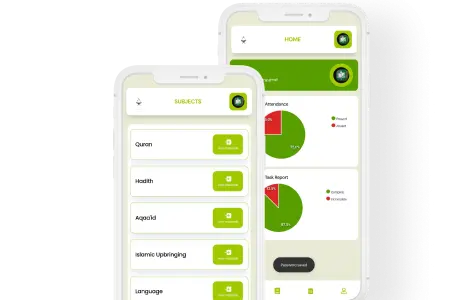
Ilmify supports MTB-affiliated maktabs and schools, handling student management, Quran progress tracking, fee management, and parent communication in one mobile-first platform built for the Indian Islamic education context. Explore Ilmify →




 Arabic
  English
  Malay
Malay  Urdu
Urdu