
Introduction
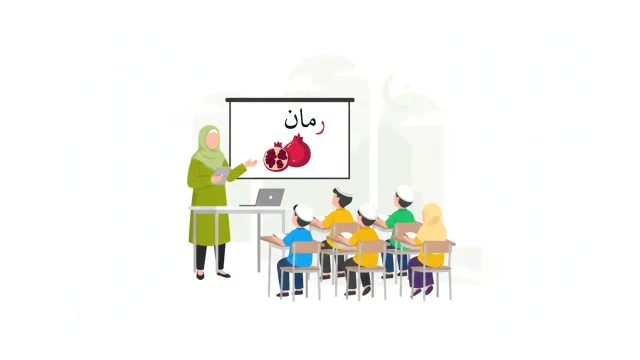
Walk through any neighbourhood in northern Nigeria, and you will hear the rhythmic recitation of the Qur’an drifting from a building nearby. Step closer, and you will find an Islamiyya school — children seated in rows, slates in hand or books open, learning Arabic, the Qur’an, and Islamic Studies alongside — or sometimes instead of — the national curriculum.
There are an estimated 30,000 to 45,000 registered Islamiyya schools across Nigeria. Add unregistered and informal institutions, and the number is far higher. They represent one of the most significant educational networks in sub-Saharan Africa — predating Nigeria’s formal state education system by centuries in some areas, and still the primary source of Islamic education for millions of Nigerian children.
Yet despite this scale, very little has been written about how to run an Islamiyya school well in the modern era — how to manage student records, track Qur’anic progress, collect fees, communicate with parents, and meet the administrative expectations of a community that is increasingly connected and discerning. This guide fills that gap.
What Is an Islamiyya School?
An Islamiyya school (also written Islamiya, Islamiyyah, or Islamiyya) is a formal Islamic educational institution in Nigeria that combines Islamic religious education with elements of secular or general academic education. The name derives from the Arabic word Islāmiyya (إسلامية), meaning “Islamic” — and in the Nigerian context, it has come to specifically denote a structured, school-style Islamic institution with defined classes, a curriculum, a school year, and (usually) qualified teachers.
The key characteristic that distinguishes an Islamiyya school from a traditional Tsangaya or informal Qur’anic circle is its formal, school-modelled structure: fixed class levels (often called Class 1, 2, 3… through primary and secondary levels), a defined curriculum (Arabic, Qur’an, Islamic Studies, sometimes Mathematics and English), a school timetable, and formal assessments.
What Students Learn in an Islamiyya School
The core Islamiyya curriculum typically includes:
Qur’anic Studies:
- Tahfeedh (Qur’an memorisation) — partial or full Hifz
- Tajweed (rules of Qur’an recitation)
- Tafseer (Qur’anic interpretation, at higher levels)
Arabic Language:
- Arabic grammar (Nahw and Sarf)
- Reading and writing Arabic
- Arabic conversation (at more advanced institutions)
Islamic Studies:
- Aqeedah (Islamic theology and belief)
- Fiqh (Islamic jurisprudence and practice)
- Seerah (life of the Prophet ﷺ)
- Islamic history
General Studies (at integrated Islamiyya schools):
- Mathematics, English, Basic Science
- Social Studies or Civic Education
- In some cases, aligned with the Nigerian national curriculum
The Origins and History of Islamiyya Schools in Nigeria
Islam arrived in what is now northern Nigeria through trade routes and scholarship networks that predated the Sokoto Caliphate by centuries. The Qur’anic educational tradition that came with it — the makaranta allo (slate school) and later the more structured makaranta Islāmiyya — has roots stretching back to the 14th and 15th centuries in the Hausa kingdoms of Kano, Katsina, and Daura.
The modern Islamiyya school as a structured, school-modelled institution emerged primarily in the colonial and post-colonial period, as Muslim communities in Nigeria sought to provide their children with religious education in a format that matched the structure of Western colonial schools — without abandoning Islamic content. The first formally structured Islamiyya schools appeared in northern Nigeria in the early 20th century, often established by Muslim scholars who had studied in Egypt, Sudan, or Mecca and returned with the ambition of building systematic Islamic education institutions.
After Nigerian independence in 1960, Islamiyya schools proliferated rapidly — driven by growing Muslim populations, increasing urban migration, and the desire to preserve Islamic identity and education in an increasingly Westernised national education landscape.
Today, Islamiyya schools span the range from small neighbourhood institutions with 30 students and two teachers to large, multi-branch institutions with hundreds of students across multiple sites — some now formally registered with state and federal education authorities.
Types of Islamiyya Schools in Nigeria
Not all Islamiyya schools are identical. In practice, Nigerian Islamic schools fall into several distinct types:
1. Pure Islamic Curriculum Islamiyya
The traditional model — Qur’an, Arabic, and Islamic Studies are the entire curriculum. Students typically attend in the mornings or evenings, with afternoons at government schools. The school does not follow the national curriculum and may not be registered with state education authorities.
Common in: Rural and semi-urban northern states (Kano, Kaduna, Sokoto, Zamfara, Jigawa)
2. Integrated / Combined Islamiyya
Combines the Islamic curriculum with the Nigerian national curriculum. Students receive Islamic education (Qur’an, Arabic, Islamic Studies) alongside national curriculum subjects (Mathematics, English, Basic Science). Graduates may sit both national examinations and Islamic assessments.
Common in: Urban centres, middle-class Muslim communities, areas where parents want both Islamic education and secular qualifications
3. Evening / After-School Islamiyya
Operates in the late afternoon and evening (typically 4pm–7pm) for children who attend government or private schools during the day. Focuses primarily on Qur’an memorisation and basic Islamic knowledge.
Most common across: All regions with significant Muslim populations, including southern Nigerian states
4. Full-Time Islamiyya (Day School Model)
Operates on a full school-day timetable (8am–2pm or similar). May be registered as a private school with the state Ministry of Education. Often the most organised, with formal class structures and qualified teachers.
Found in: Major cities and state capitals — Kano, Lagos, Kaduna, Abuja, Ibadan
5. Women’s Islamiyya (Makaranta Mata)
A women-only Islamiyya school, typically operating morning sessions for adult women and girls above primary-school age who did not receive formal Islamic education earlier. Particularly important in northern Nigerian communities.
Who Runs an Islamiyya School?
The governance of an Islamiyya school is typically one of three models:
Mosque committee governance: The most common arrangement. The school is managed by the committee of the local mosque, which appoints the principal, sets fees, and makes strategic decisions. The principal manages day-to-day operations.
Individual scholar / founder governance: The school was established by a specific Islamic scholar (Mallam or Sheikh) who remains its effective owner and manager. Common for smaller and medium-sized institutions.
Community association governance: The school is run by a Muslim community association (sometimes a women’s group or a neighbourhood Islamic association) that has established a formal governance committee. More common in urban, middle-class Muslim communities.
Government-recognised institutions: Some larger Islamiyya schools have registered with state Ministries of Education as private Islamic schools and have formal governance boards, audited accounts, and qualified staff on government payroll.
Islamiyya Schools vs Tsangaya: What Is the Difference?
The two most important distinctions to understand in Nigerian Islamic education are between the Islamiyya school and the Tsangaya:
| Feature | Islamiyya School | Tsangaya |
| Structure | Formal school model (classes, timetable) | Traditional boarding / residential model |
| Location | Building-based, community school | Mobile or fixed; often rural |
| Boarding | Usually day school | Usually residential |
| Curriculum focus | Qur’an + Islamic Studies + sometimes national curriculum | Intensive Qur’an memorisation (Hifz) |
| Student age | Mixed, primary and secondary | Often boys, wide age range |
| Duration | Multi-year structured programme | Until Hifz completion |
| Teacher title | Mallam / Teacher | Mallam, Sheikh |
| Government registration | Increasingly common | Rare |
| Urban / Rural | Both | Predominantly rural / semi-urban |
| Fees | Formal fee structure | Informal contribution / labour |
For a full exploration of this distinction: Tsangaya vs Islamiyya: Understanding Nigeria’s Two Qur’anic Education Traditions →
The Administrative Challenges of Running an Islamiyya School
Running an Islamiyya school in Nigeria in 2026 involves a set of administrative challenges that are specific to the context:
Challenge 1: Student Record-Keeping Without Dedicated Admin Staff
Most Nigerian Islamiyya schools do not have a dedicated administrator. The principal teaches and manages. Records are kept in notebooks. When a teacher leaves, the records go with them — or simply become inaccessible. A student’s three years of Qur’anic progress can disappear when the Mallam who tracked it moves to another school.
Challenge 2: Qur’an Progress Tracking at Scale
In a school with 150 students across multiple classes, each at a different point in their Hifz or Nazirah programme, tracking individual progress manually is an enormous task. Many Islamiyya schools rely entirely on teacher memory — which means progress tracking is only as reliable as the teacher’s presence.
Challenge 3: Fee Collection Without a Formal System
Fee collection in Nigerian Islamiyya schools is typically informal — cash payments, handwritten receipts or no receipts, no consolidated records. At term end, the administrator struggles to determine who has paid, who owes, and what the total income was. Reconciling this manually can take days.
Challenge 4: Parent Communication Across WhatsApp and Phone Calls
Most Nigerian Islamiyya schools manage parent communication through a combination of personal phone calls, WhatsApp groups, and word-of-mouth. Important announcements get missed. Individual progress queries require the teacher to be contacted personally. Privacy is frequently compromised — student details shared in large WhatsApp groups.
Challenge 5: Intermittent Power and Internet
In many parts of Nigeria, power supply is unreliable. Internet connectivity is available primarily via mobile data networks (4G/LTE in urban areas, 2G/3G in rural areas). Any management system that requires constant internet connectivity or a desktop computer will not work in this context.
Challenge 6: Multi-Class, Multi-Teacher Coordination Without a Shared System
A medium-sized Islamiyya school with 6 teachers, each managing their own class independently, produces 6 separate records systems — notebooks, WhatsApp chats, memory. When the principal needs to report to the mosque committee or respond to a parent query, assembling a coherent picture of the school’s performance requires gathering information from six different people.
What an Islamiyya School Needs from a Management System
Based on the challenges above, a management system for a Nigerian Islamiyya school must:
| Requirement | Why It Matters |
| Works offline | Unreliable NEPA/internet across Nigeria |
| Mobile-first | Mallams use phones, not laptops |
| Qur’an progress tracking (Hifz and Nazirah) | The core educational function |
| Three-stream Hifz tracking (Sabak, Sabaq Para, Dhor) | Full revision health, not just position |
| Attendance recording per session | The most basic admin function |
| Fee management with receipts | Replace informal cash-in-hand records |
| Parent communication (individual, not group) | GDPR-equivalent data hygiene |
| Multiple teacher access | Each teacher manages their own class |
| Simple setup — no IT team needed | Volunteer-run institutions |
| Affordable | Community-funded, minimal budget |
| Works in English (and ideally Hausa) | Teacher literacy context |
How Ilmify Supports Nigerian Islamiyya Schools
Ilmify is the only Islamic school management platform designed with the specific realities of institutions like Nigerian Islamiyya schools in mind — mobile-first, offline-capable, Hifz-tracking, and affordable.
Offline mode: Ilmify works without internet. Teachers record sessions and attendance on their phones — the data stores locally and syncs automatically when connected. No NEPA problems. No data cost anxiety while recording.
Full Hifz tracking: Ilmify tracks all three streams of Hifz progress — Sabak (new memorisation), Sabaq Para (recent revision), and Dhor (full revision cycle) — for every student, every session. Teachers record in under 2 minutes. The principal sees a live dashboard of every student’s progress.
Mobile-first recording: The teacher recording interface is designed for a smartphone. No laptop, no desktop, no data entry terminal. A Mallam can record a student’s Sabak and attendance standing in the corridor after class.
Fee management: Record every payment, issue digital receipts, view outstanding balances by student or class. No more term-end reconciliation nightmares.
Multi-teacher access: Each teacher has their own account and sees only their own class. The principal sees the full school. No data confusion, no shared logins.
Parent portal: Parents access their child’s progress through the Ilmify app — attendance, Hifz position, fee balance — individually, securely. Not in a WhatsApp group with 200 other parents.
Affordable pricing: Ilmify’s pricing is designed for community-funded institutions in Nigeria. Contact the Ilmify team for current Nigeria pricing, which is structured for institutions of all sizes.
💡 The first management platform built for Nigerian Islamic schoolsMobile-first. Works offline. Full Hifz tracking. Affordable.See Ilmify for Nigerian Islamiyya Schools →
Conclusion
The Islamiyya school is one of Nigeria’s most important educational institutions — serving millions of students, preserving a centuries-old tradition of Islamic learning, and operating in communities across every state. It deserves management infrastructure equal to its importance.
In 2026, that means a mobile-first, offline-capable, Hifz-tracking management system built for the realities of Nigerian Islamic education — not adapted from software designed for British state schools or American charter schools.
Ilmify is that system.
See how Ilmify supports Nigerian Islamiyya schools →
Related articles:





 Arabic
  English
  Malay
Malay  Urdu
Urdu