

Introduction
Branch one runs perfectly. You know every teacher by name. You know every family. You attend the graduation ceremony and feel the weight of what you have built — not just a business, but a community rooted in Islamic values.
Branch five is still manageable. Stretched, but manageable. You cannot be everywhere anymore, but your most trusted principal is handling day-to-day operations, and you stay close via WhatsApp.
Branch ten is where the cracks begin. You do not notice them at first — the chaos is hidden behind busy calendars, kind teachers, and parents who do not complain because they do not know what “better” looks like. But the cracks are there. And if you do not address them, they widen.
This is the story of almost every Islamic preschool franchise in Malaysia that has grown beyond single digits. It is not a story about bad people or poor intentions. It is a story about a perfectly common infrastructure gap — the gap between the systems required to run one school excellently and the systems required to run fifteen consistently.
This article names the chaos clearly, maps it back to its root causes, and explains exactly how purpose-built franchise management software addresses each failure point.
Why Growth Breaks What Worked Before
Running one Islamic preschool well requires education skills: curriculum knowledge, Islamic teaching ability, child development expertise, and community trust. These are the skills the founders of Malaysia’s best Islamic preschool brands built their first campuses on.
Scaling that one campus to ten, twenty, or fifty requires something different: operational infrastructure. Systems for consistent curriculum delivery. Systems for transparent financial management. Systems for parent communication that does not depend on which principal happens to be responsive that day.
The problem is that most Islamic preschool founders build their first branch with education skills — and then try to scale with those same education skills. They appoint trusted principals. They send WhatsApp reminders. They create shared Google Drive folders. They build group chats for every branch. They work harder and harder to compensate for the absence of systems.
For a while, this works. Then it doesn’t.
| Scale | Primary Challenge | What It Requires |
| 1 branch | Education quality | Teaching skill, Islamic knowledge, parent relationships |
| 2–5 branches | Coordination | Trust, communication, shared culture |
| 5–10 branches | Consistency | Processes, standards, accountability structures |
| 10–20+ branches | Visibility and control | Infrastructure: integrated software, data, reporting |
Source: ilmify franchise operations research, March 2026
The 5 Hidden Failure Modes
Failure Mode 1: Curriculum Drift
What it looks like: Six months after HQ released an updated hafazan syllabus — with newly sequenced surahs based on student feedback from the previous year — a parent who moves her child from your Shah Alam branch to your Seremban branch notices the programmes are different. The Seremban teacher is still running the old hafazan sequence because the update came through a group email that she missed while on maternity leave. Nobody at HQ knows. Nobody checks.
Why it happens: There is no centralised mechanism for pushing curriculum updates to all branches simultaneously and confirming receipt and implementation. Updates are distributed through informal channels — emails, WhatsApp groups, printed materials sent to principals — and implementation is entirely self-reported.
What parents experience: Inconsistency that undermines their trust in the brand they chose precisely for its consistency. A parent who paid for a premium Islamic franchise experience is discovering that “the brand” means something different at different locations.
Failure Mode 2: Fee Leakage and Financial Opacity
What it looks like: The HQ finance team reconciles the monthly fee collection data sent in by branch principals. Branch 7 is consistently 15% below expected revenue for its enrolment count. When asked, the principal explains that she offered a few families fee discounts because “they asked nicely and seemed to be struggling.” Three families at Branch 12 have been two months in arrears for the past quarter — the principal did not flag it because she “didn’t want to make things awkward.”
Why it happens: Fee invoicing, collection, and follow-up are managed separately at each branch with no central visibility. Every branch develops its own informal policies. The financial picture at HQ is always late, always incomplete, and always assembled from self-reports rather than real-time data.
What it costs: Across a fifteen-branch franchise, fee leakage of even 5–10% per branch represents a significant annual revenue shortfall — money that could be reinvested in teacher training, curriculum development, or subsidies for genuinely needy families, handled transparently with a policy, rather than lost to informal branch-level decisions.
Failure Mode 3: Parent Communication Fragmentation
What it looks like: A parent at Branch 3 receives updates via the class teacher’s personal WhatsApp. A parent at Branch 8 receives a printed newsletter monthly. A parent at Branch 11 has not heard from the school in three weeks because the class group chat went quiet. A parent who asks HQ about her child’s progress report is told to contact the branch — who then takes four days to respond.
Why it happens: There is no centralised, branded parent communication platform. Each branch has developed its own communication norms — some good, some poor — and there is no mechanism for HQ to ensure consistency or visibility.
What parents experience: An Islamic preschool brand that markets premium quality but delivers ad hoc communication that feels indistinguishable from an unbranded community class. The brand promise is not being kept at the most frequent parent touchpoint.
Failure Mode 4: Staff Training and Compliance Gaps
What it looks like: HQ releases a new Islamic Values Integration Training module in January — a critical update teaching teachers how to weave Islamic character development into non-Islamic subjects like mathematics and English. By March, 60% of teachers have completed it. The remaining 40% — mostly at branches that experienced teacher turnover in Q1 — have not. Nobody has a complete picture of the gap because completion is self-reported by principals.
Why it happens: There is no integrated staff management and training tracking system. Training completion records are scattered across emails, WhatsApp confirmation messages, and individual branch filing systems. HQ cannot generate a real-time view of which teachers have completed which training across the franchise.
What the Islamic risk is: The teachers who have not completed the Islamic Values Integration Training are teaching children Islamic preschool education without the full pedagogical framework HQ has developed. The gap is invisible to parents and to HQ alike.
Failure Mode 5: The Franchisor Blindspot
What it looks like: The founder wants to open two new branches next year. She is evaluating four possible locations. To make the decision, she needs data: which existing branches are growing, which are plateauing, where parent satisfaction is highest, where teacher retention is strongest. She asks her operations manager to compile the report. The report takes three weeks to assemble from branch-level spreadsheets and WhatsApp responses. By the time it arrives, it is already partially out of date, and the completeness of the data varies enormously by branch.
Why it happens: Strategic decision-making at the franchise level requires real-time, structured data across all branches. Without a central management system generating that data automatically, it must be assembled manually — slowly, incompletely, and with accuracy that depends on the diligence and honesty of each branch principal.
What it costs: Poor decisions — or decisions delayed by the time required to gather data — compound over years. The franchise does not grow as intelligently as it could, and the founder spends disproportionate time managing information rather than leading the organisation.
The Root Cause: Missing Infrastructure
All five failure modes share a single root cause: the franchise is trying to operate at scale using tools designed for a single institution.
A WhatsApp group is an excellent communication tool for one school with twenty families. It is an inadequate communication platform for a fifteen-branch franchise with 3,000 families.
A spreadsheet is an excellent fee tracking tool for one branch. It is an unreliable financial management system for a franchise processing RM 500,000 or more per month across fifteen locations.
A group email is an adequate curriculum update mechanism when you have three branches and personal relationships with every principal. It is an unreliable distribution system when you have twenty branches and turnover means half your principals this year did not exist last year.
The solution is not to work harder within these inadequate tools. The solution is to replace them with infrastructure designed for the scale you are operating at.
What the Fix Actually Looks Like
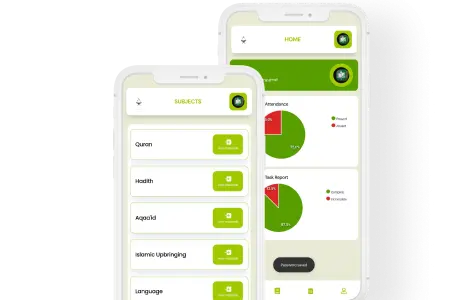
The fix is a centralised management platform that connects HQ, branch principals, teachers, and parents in a single integrated system. Not a collection of apps that partially talk to each other. A single platform where:
- Curriculum updates are pushed from HQ to all branches simultaneously, with confirmation tracking
- Fee invoicing is automated, payment status is visible in real time across all branches, and exceptions are flagged automatically
- Parent communication flows through a branded portal that is consistent across every branch
- Staff training completion is tracked centrally, with HQ visibility of gaps across the franchise
- Analytics dashboards give the founder and operations team a real-time picture of every branch
This is not a theoretical future state. This is what purpose-built Islamic preschool franchise management software delivers today.
| Failure Mode | System Fix |
| Curriculum drift | Centralised curriculum management — push updates with read receipts and implementation tracking |
| Fee leakage | Automated invoicing with real-time collection dashboard and arrears alerts |
| Parent communication fragmentation | Branded parent portal — consistent across all branches, managed from HQ |
| Staff training gaps | Integrated LMS with completion tracking per teacher per branch |
| Franchisor blindspot | Real-time analytics dashboard — enrolment, revenue, curriculum completion, satisfaction |
Source: ilmify platform documentation, March 2026
The Islamic Stakes: Why This Matters Beyond Operations
Operational chaos in an Islamic preschool franchise is not just a business problem. It is an Islamic trust problem.
When a parent chooses your brand, they are not just buying childcare. They are entrusting you with the most important years of their child’s Islamic formation. They are trusting that the Iqra’ programme your website describes is the one being delivered. They are trusting that the hafazan syllabus is being tracked. They are trusting that the teacher assigned to their child has the training and accountability to deliver what was promised.
When the systems to keep those promises do not exist, the promises themselves become hollow — not through malicious intent, but through infrastructure failure. And the child who does not complete Iqra’ at your franchise because curriculum drift meant inconsistent teaching, or who does not reach solat independence because teacher training gaps went unaddressed, pays the real cost.
Investing in the operational infrastructure to keep your Islamic promises is not a distraction from your mission. It is your mission.
Signs Your Franchise Has Outgrown Its Systems
Use the checklist below to assess whether your franchise is experiencing infrastructure strain.
| Sign | What It Indicates |
| You learn about branch problems from parent complaints rather than internal reporting | No proactive monitoring or visibility system |
| Monthly financial reports from branches are always late and in different formats | No centralised fee management |
| You cannot tell, right now, which teachers have completed which training modules | No integrated staff management system |
| Parent communication quality varies noticeably between branches | No centralised communication platform |
| A new branch principal takes 3+ months to fully understand how things are supposed to work | No documented, systemised onboarding process |
| You are making branch expansion decisions based on incomplete or delayed data | No real-time analytics |
| You spend more than 20% of your working week managing information requests from branches | Operating as a human information router rather than a strategic leader |
If three or more of these apply to your franchise, you have outgrown your systems.
How ilmify.app Addresses Each Failure Mode
ilmify.app is a purpose-built platform for Islamic preschool franchises in Malaysia. It addresses each of the five failure modes directly:
- Curriculum drift → Centralised curriculum delivery module: HQ pushes lesson plans and Islamic programme updates to all branches. Branch implementation is tracked and reported automatically.
- Fee leakage → Automated fee invoicing and digital payment collection. Real-time dashboard shows collection rates per branch. Arrears are flagged automatically to branch and HQ.
- Parent communication fragmentation → White-label branded parent portal — your brand, consistent across every branch. HQ can broadcast system-wide communications; branch teachers communicate class-level updates through the same platform.
- Staff training gaps → Integrated learning management system (LMS) for staff training. HQ publishes modules; completion tracking shows which teachers at which branches are current or overdue.
- Franchisor blindspot → Real-time analytics dashboard with enrolment data, revenue, curriculum completion, and branch performance visible to HQ leadership at any time.
As your Islamic preschool franchise scales, the gap between branches that work well and branches that drift widens — unless the systems that ensure consistency are built in. ilmify is that system.
👉 See How ilmify Works — Book a Demo →
Conclusion
The hidden chaos of scaling an Islamic preschool franchise is not a character flaw — it is a systems gap. Every founder who has built beyond five branches has encountered some version of curriculum drift, fee opacity, parent communication fragmentation, training gaps, or strategic blindspots. These are predictable failure modes, not unique misfortunes.
The answer is not to work harder, trust better, or hire more coordinators to manage the chaos manually. The answer is to build the infrastructure that makes consistent Islamic education delivery possible at scale — the systems that carry your mission from one branch to twenty without losing what made the first branch exceptional.
Your families deserve a franchise that keeps its Islamic promises at every campus, not just the ones you personally oversee.
👉 Book a Demo with ilmify — Purpose-Built for Islamic Preschool Franchises →
Related Articles
You might also find these helpful:
- ⚙️ Why Every Islamic Preschool Franchise Needs a Centralised Management System
- ⚙️ White-Label School Management Software: What It Is and Why Franchise Brands Choose It
- ⚙️ Parent Engagement Technology for Islamic Preschool Franchises in 2026
- 🏫 Best Islamic Preschool Franchises in Malaysia 2026 — Ranked & Compared
- 🏫 Brainy Bunch Review — Islamic Montessori Preschool Malaysia
- 🏫 Genius Aulad Review — Is the Genius-Balanced Methodology Worth It?
- 🏫 Bir Ali Sunnah Preschool Review — Tadika Rooted in Hadith
- 📚 Tadika vs Taska vs Kindergarten — The Complete Muslim Parent’s Guide




 Arabic
  English
  Malay
Malay  Urdu
Urdu