
Introduction
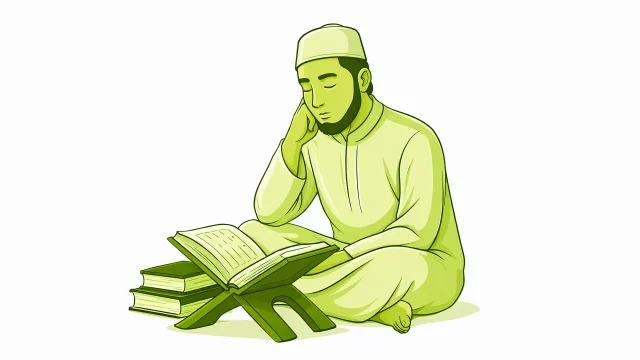
In Saudi Arabia, Tahfiz al-Quran — the structured memorisation of the complete Quran — is not simply an educational achievement but a spiritual calling, a family aspiration, and a cultural institution. Thousands of Saudi families invest years of their children’s time and the family’s logistical resources in the Tahfiz journey. Understanding how Tahfiz programmes in Saudi Arabia are structured — the daily schedule, the Muraja’ah system, the teacher-student relationship, and the pathway to Ijazah — is essential for anyone teaching, administering, or studying in this tradition.
What Is Tahfiz al-Quran in Saudi Arabia?
Tahfiz (تحفيظ) means “causing to memorise” — a structured programme for achieving Hifz (full Quran memorisation). In Saudi Arabia, Tahfiz programmes are offered:
| Format | Setting |
| Dar al-Quran (dedicated Tahfiz centre) | Standalone institution; purpose-built for Hifz |
| Mosque Tahfiz section | Attached to mosque; taught by imam or appointed Shaykh |
| Government school Tahfiz track | Within regular school; students follow Hifz alongside academic curriculum |
| Residential Tahfiz institute | Full-time boarding; intensive; for committed students |
| Private Shaykh | Individual teacher; home-based; personalised instruction |
Types of Tahfiz Programmes
| Type | Hours/day | Duration to completion | Residential |
| Intensive residential | 6–8 | 1.5–3 years | Yes |
| Full-time day | 4–6 | 2–4 years | No |
| Part-time (school + Tahfiz) | 2–3 | 3–6 years | No |
| Weekend/evening | 1–2 | 6–10 years | No |
The intensive residential model produces the fastest Hifz completions — students living at the Tahfiz institute with no competing demands can devote full days to memorisation and revision. The part-time model is most common — Saudi students attending government school while pursuing Tahfiz in afternoon and evening sessions.
The Daily Hifz Schedule
A standard Saudi Tahfiz programme daily schedule:
| Time | Activity | Purpose |
| Pre-Fajr | Personal Tahajjud recitation | Spiritual preparation; informal Muraja’ah |
| Fajr + after | Group recitation; Muraja’ah of recent portions | Reinforcement of fresh memory |
| Morning session | New Hifz — presenting to teacher | Core new memorisation |
| Post-Duha | Tajweed lesson; rules revision | Knowledge deepening |
| Dhuhr + after | Rest; personal Muraja’ah of older portions | Mental consolidation |
| Asr + after | Teacher Talaqqi sessions — individual recitation | Assessment; correction |
| Maghrib | Group Muraja’ah circle | Community revision |
| Isha + after | Review and assignment for next day | Preparation |
New Memorisation: Pace and Standards
Saudi Tahfiz teachers set individual daily new memorisation targets:
| Student type | Typical daily new target | Notes |
| Young child (7–10), beginner | 3–5 lines (half a page) | Building foundation; Tajweed precision prioritised |
| Motivated child (10–14) | Half a page to one page | Standard pace for full-time programmes |
| Advanced teenager | 1–2 pages | Intensive residential programmes |
| Adult with existing Quran background | Half a page to one page | Adjusted to working memory capacity |
The Saudi standard is quality over speed — a student who rushes through memorisation with Tajweed errors will be corrected and required to re-memorise correctly before advancing. Shuyukh in the Saudi tradition are known for rigour in this regard.
Muraja’ah: The Revision Discipline
Saudi Tahfiz programmes give Muraja’ah equal or greater weight than new memorisation:
| Muraja’ah Type | Frequency | What it covers |
| Recent Muraja’ah (last 7–10 days’ Hifz) | Daily | Reinforcing fresh memorisation before it settles |
| Rolling Muraja’ah (older Juz) | Daily | Rotating through all memorised Juz systematically |
| Teacher Muraja’ah assessment | Weekly or fortnightly | Shaykh listens to older portions — assessing quality |
| Full Quran Muraja’ah cycle | Monthly (advanced) | Complete rotation through all 30 Juz |
The guiding principle: for every page of new Hifz added, at least one full Juz of older Hifz should be in Muraja’ah. Maintaining this ratio requires disciplined scheduling — and systematic tracking per student.
Talaqqi: The Teacher-Student Session
The Talaqqi session is the defining interaction of Saudi Tahfiz education:
- Student presents their new memorisation to the Shaykh — from memory only
- Shaykh listens with full attention — tracking every word, every Tajweed application
- Correction is immediate — any error stopped and corrected before continuing
- Shaykh may demonstrate the correct recitation; student repeats
- Session ends with Shaykh’s assessment and next assignment
- For Muraja’ah Talaqqi — student recites older portions; Shaykh checks retention quality
A Saudi Shaykh may see 10–15 students per day for Talaqqi — each session 15–30 minutes. The quality of Talaqqi is the quality marker that distinguishes genuine Tahfiz from memorisation without oversight.
Residential vs Day Tahfiz Programmes
| Feature | Residential | Day programme |
| Daily Hifz hours | 6–8 | 2–4 |
| Typical completion time | 1.5–3 years | 3–6 years |
| Muraja’ah depth | Very strong — full day available | Good — but competing with school |
| Family contact | Weekly or monthly visits | Daily — lives at home |
| Best for | Committed students 12+; families willing to send away | Children in school; family-based Hifz |
| Cost | Room and board; some free (Ministry/charitable) | Lower — no boarding costs |
Progression Milestones
Saudi Tahfiz programmes recognise achievement milestones:
| Milestone | Typical celebration |
| Juz Amma completion (Juz 30) | First milestone; small family gathering |
| 5 Juz completion | Encouragement ceremony; often a small gift |
| 10 Juz completion | Meaningful milestone; family celebration |
| 15 Juz (half Quran) | Significant celebration; community recognition |
| Full Quran (30 Juz) | Khatm ceremony — major family and community event |
| Ijazah receipt | Highest milestone — scholarly certificate with Sanad |
From Completion to Ijazah
Completing Hifz is the beginning of the Ijazah journey:
- Post-completion Muraja’ah period — 6–12 months of intensive Muraja’ah to bring all 30 Juz to uniform excellence
- Tajweed verification — Shaykh confirms Tajweed quality is consistent throughout
- Assessment sessions — student recites the full Quran in sections to the Shaykh
- Shaykh’s determination — only when fully satisfied does the Shaykh agree to grant Ijazah
- Full Quran recitation to Shaykh — the formal Ijazah recitation — may take multiple sessions over weeks
- Ijazah certificate — issued with Sanad; student enters the chain of transmission
Frequently asked questions
Q: At what age should a child start Tahfiz in Saudi Arabia?
Many Saudi families begin with Quran recitation from age 5–6 (Kuttab/Halaqah). Formal Tahfiz — new memorisation with a Shaykh — typically begins at 7–8 when memory is strong and Arabic reading is established. Some families begin intensive residential Tahfiz at 10–12.
Q: Is it possible to complete Hifz while attending government school?
Yes — this is the most common route. Students attend school in the morning and Dar al-Quran in the afternoon/evening. Completion takes longer (4–6 years typically) but family life is maintained. Many successful Saudi Huffaz completed their Hifz this way.
Q: How does a Saudi Tahfiz teacher decide when a student is ready for Ijazah?
The Shaykh must be personally satisfied that the student can recite the full Quran from memory with correct Tajweed at any point without preparation. This means strong Muraja’ah across all 30 Juz, not just the portions most recently memorised. The Shaykh may test by opening the Mushaf at random and asking the student to recite from that point.
Q: Is Tajweed really that important — does memorisation not come first?
In the Saudi Tahfiz tradition, Tajweed is not optional — it is part of what makes Hifz valid. Memorising without correct Tajweed means memorising the wrong recitation. Saudi Shuyukh correct Tajweed errors during the memorisation process itself, not afterwards. A student cannot proceed to the next portion until the current portion is memorised correctly with Tajweed.
Q: How is progress tracked at Saudi Tahfiz centres?
Traditionally by teacher notebook — the Shaykh records each student’s daily progress, notes errors, and tracks Muraja’ah. Increasingly, administrators and teachers are seeking digital tools that provide per-student Hifz maps, Muraja’ah quality records, and parent-facing progress summaries.
Conclusion
Saudi Arabia’s Tahfiz al-Quran programmes — structured around daily Hifz with Tajweed, rigorous Muraja’ah, and individual Talaqqi sessions leading toward Ijazah — represent the world’s most developed culture of Quran memorisation. Administering these programmes — tracking each student’s progress through 30 Juz, monitoring Muraja’ah quality, documenting Talaqqi sessions, and managing the Ijazah pathway — is complex operational work that benefits enormously from purpose-built digital tools.
Ilmify supports Saudi Tahfiz administrators — with per-student Hifz tracking across all 30 Juz, Muraja’ah quality records, Talaqqi session documentation, and Ijazah pathway management built for Saudi standards. Explore Ilmify →





 Arabic
  English
  Malay
Malay  Urdu
Urdu