

Introduction
The Islamic world lost one of its greatest intellectual voices on the 19th of Ramadan 1447 — the night of March 8, 2026 — when Dr. Syed Muhammad Naquib al-Attas passed away at the age of 95. For educators running maktabs, madrasahs, and Islamic schools across the globe, his death is not merely a historical footnote. It is a moment to pause, reflect, and ask: are we running our institutions in a way that honours the vision of Islamic education he spent a lifetime articulating?
This article reflects on al-Attas’s towering contribution to the Islamisation of Knowledge Islamic education framework — and draws practical lessons for administrators, teachers, and founders of Islamic schools today. It also asks how modern tools can serve, rather than undermine, the tradition he so passionately defended.
Who Was Syed Muhammad Naquib Al-Attas?
Born on September 5, 1931, in Bogor, West Java, Dr. Syed Muhammad Naquib al-Attas was the eminent Malaysian Islamic philosopher and one of the most influential Muslim intellectuals of the modern era. He came from a distinguished lineage tracing back to the Prophet Muhammad ﷺ — a heritage that, far from being mere biographical detail, shaped the seriousness with which he approached Islamic scholarship.
His academic formation was exceptional. After the Royal Military Academy at Sandhurst, he earned a Master’s degree from McGill University in Canada and a doctorate from the University of London, where his dissertation on the mysticism of Hamzah Fansuri broke new ground in Southeast Asian Islamic studies. He would go on to found two major institutions: the Institute of Malay Language, Literature and Culture (IBKKM) in 1973, and — most significantly — the International Institute of Islamic Thought and Civilization (ISTAC) in Kuala Lumpur in 1987, which became a major global academic institution.
Among his most influential works are Islam and Secularism, Prolegomena to the Metaphysics of Islam, Islam and the Philosophy of Science, and The Intuition of Existence.
He received the prestigious King Faisal Award for Islamic Studies in 1990, an Honorary Doctorate from the University of Khartoum, and in 1999 was honoured with the title of Royal Professor — only the second Malaysian to receive that distinction.
👉 JAKIM and PUM: How Malaysia’s Ulama Bodies Shape Islamic Education Start with Ilmify from Malaysia → ilmify.app
👉 Islamic School Management Software in Malaysia: What KAFA & Tahfiz Schools Actually Need in 2026 Start with Ilmify from Malaysia → ilmify.app
The Islamisation of Knowledge — What It Actually Means
The phrase “Islamisation of Knowledge” is frequently cited but rarely understood with the precision al-Attas intended. It is not simply about adding Islamic content to a secular curriculum, or labelling a science textbook with Quranic verses. It is something far more fundamental.
Al-Attas developed an integrated approach that challenged the fragmentation of knowledge inherent in contemporary education. His argument was that the modern secular university had severed knowledge from its metaphysical roots — treating facts as neutral, values as private, and the divine as irrelevant. The result was an educational system that could produce technically skilled graduates but not complete human beings in the Islamic sense.
His alternative was not anti-science. He argued that science and Islamic thought were not in conflict but rather complementary, both rooted in principles of rationality and observation. The difference was in the framework — the underlying worldview that gave meaning to what was being studied, and why.
| Secular Education Framework | Al-Attas’s Islamised Framework |
| Knowledge is value-neutral | Knowledge is embedded in a moral and metaphysical order |
| Human reason is the ultimate arbiter | Reason operates within the boundaries of revelation |
| Education aims at productivity | Education aims at adab — right relationship with God, self, and creation |
| Disciplines are fragmented | All knowledge is unified under the Islamic worldview |
| Religion is a private matter | Tarbiyah (spiritual formation) is integral to learning |
This table is not a caricature of secular education — it is a distillation of al-Attas’s own analysis, drawn from decades of comparative philosophical work. For Islamic school administrators, it provides a powerful lens through which to evaluate their own institutions.
His Vision for Islamic Education Institutions
Al-Attas did not merely theorise. He built. ISTAC under his direction became a model of what an Islamic educational institution could look like when philosophy informed architecture, curriculum, and culture simultaneously. Under his vision, ISTAC developed a unique multilingual library containing over 140,000 volumes, including rare manuscripts and books he personally collected over a decade. The institute’s architecture, which al-Attas designed himself, embodied his educational philosophy.
This integration — where even the physical space reflected the institution’s intellectual mission — is a challenge to every Islamic school operating today. How much of what we do is shaped by genuine educational philosophy, and how much is simply borrowed from the surrounding secular culture?
His vision rested on three pillars that are directly applicable to any maktab, madrasah, or Islamic school:
- Adab before curriculum — right character, right relationship, and proper orientation toward knowledge must precede the transmission of content
- Integration over compartmentalisation — Quran, language, history, science, and ethics are not separate subjects but aspects of a single unified truth
- Institutions as civilisational projects — a school is not merely a service provider; it is a site of civilisational formation
What Al-Attas Would Say About Modern Islamic Schools
This is speculative, of course — but grounded in his published thought. Looking at the landscape of Islamic education in North America, South Asia, Southeast Asia, and beyond, one can identify patterns he consistently critiqued.
The copy-paste problem. Many Islamic schools are essentially secular schools with Islamic Studies added as an extra subject. The core curriculum — its structure, its assessment philosophy, its implicit values — is borrowed wholesale from the state system. Al-Attas would argue this is not Islamisation but mere addition. A maktab that teaches Quran for ninety minutes but otherwise operates identically to a government school has not integrated knowledge; it has timetabled religion.
The credentialism trap. Modern Islamic education often measures success in certificates, grades, and graduations. Al-Attas’s conception of adab — the proper ordering of the self in relation to knowledge and to God — cannot be captured in a grade. The best Islamic schools find ways to assess character alongside content.
The administrative neglect problem. This one al-Attas may not have emphasised, but it flows directly from his vision: an institution that is disorganised, administratively chaotic, and unable to track its own students’ progress cannot deliver on the promise of integrated Islamic education. The form of the institution must match its purpose.
Three Lessons Every Maktab and Madrasah Can Apply Today
Lesson 1: Clarify Your Educational Philosophy Before Choosing Your Curriculum
Al-Attas spent decades making the argument that what you teach cannot be separated from why you teach it and within what framework you teach it. Before adopting a new Quran curriculum, a new Tajweed syllabus, or a new student management system, ask: does this tool or resource reflect an integrated Islamic view of knowledge, or does it fragment it?
Lesson 2: Treat Student Progress as More Than Grades
The Quran education tradition has always understood this. The Sabak/Sabqi/Manzil structure of Hifz — where each student progresses through daily new portions (Sabak), recent revision (Sabqi), and older revision (Manzil/Dhor) — is a holistic tracking system that treats the student’s relationship with the Quran as cumulative and personal, not merely transactional. This is adab in practice: regular, disciplined, relational engagement with sacred knowledge.
| Hifz Progress Component | What It Tracks | Why It Matters |
| Sabak (New lesson) | Daily new memorisation | Measures advancement and capacity |
| Sabqi (Recent revision) | Last 7–10 days’ portions | Ensures short-term retention |
| Manzil / Dhor (Old revision) | Complete memorised corpus | Builds lasting relationship with the text |
| Teacher assessment | Quality, Tajweed, confidence | Captures what grades cannot |
| Streak and consistency | Daily attendance and effort | Reflects the adab of commitment |
Lesson 3: Build Institutions That Can Outlast Their Founders
Al-Attas built ISTAC. When he stepped down, his student and successor, Professor Wan Mohd Nor Wan Daud, now holds The Distinguished Syed Muhammad Naquib al-Attas Chair of Islamic Thought at Universiti Teknologi Malaysia, ensuring the continuity of his intellectual legacy.
Islamic schools too often depend entirely on one founding teacher or administrator. When that person leaves, the institution loses its memory, its records, and often its coherence. Institutional resilience requires documented systems, transferable records, and administrative infrastructure that is independent of any individual.
The Role of Technology in Preserving Islamic Educational Tradition
There is sometimes a suspicion in traditional Islamic educational circles that technology is inherently secularising — that introducing software into a maktab is a concession to modernity at the expense of tradition. Al-Attas’s framework offers a more nuanced response.
Technology is not neutral, but it is also not inherently antithetical to Islamic values. The question is not whether to use a given tool, but whether that tool serves the institution’s educational mission — or distorts it.
A digital Hifz tracker that allows a Ustadh to monitor every student’s Sabak, Sabqi, and Dhor progress, communicate with parents, and identify students who are falling behind — is this tool secularising? Or is it, in al-Attas’s terms, serving the tradition by giving administrators the capacity to fulfil their institutional responsibilities with greater fidelity?
The answer is the latter — provided the tool is chosen and used with deliberate intention, not merely adopted because it is convenient.
| Concern About Technology | Al-Attas-Informed Response |
| “Technology fragments attention” | Poor administration already fragments student experience — good systems restore coherence |
| “Software will replace teachers” | No management tool replaces the Ustadh-student relationship; it protects time for it |
| “Data collection is impersonal” | Tracking progress carefully is an act of care — the opposite of impersonal |
| “Modernity corrupts tradition” | Tools are means; the question is whether they serve the institution’s Islamic purpose |
How Ilmify Supports the Vision of Integrated Islamic Education
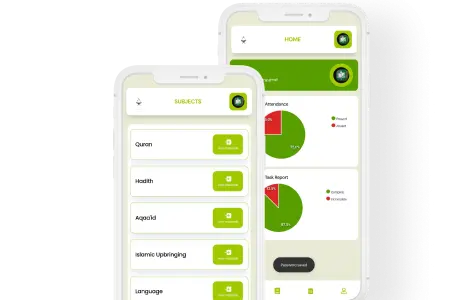
Ilmify was built specifically for Islamic schools, maktabs, and Quran institutions — and it reflects the conviction that good administration is not separate from good Islamic education. It is a precondition for it.
The platform’s Quran progress tracking system is built around the Sabak/Sabqi/Dhor framework — the same structure that traditional Hifz education has always used — making it the only school management platform that speaks the language of Islamic Quran education natively. Across Qaidah, Nazra, and Hifz levels, every student’s journey is tracked individually, with full visibility for teachers and parents.
Beyond Quran tracking, Ilmify handles attendance, fees, parent communication, and student records — giving administrators the institutional infrastructure to build schools that can outlast their founders and deliver on the promise of integrated Islamic education that al-Attas spent his lifetime articulating.
👉 If al-Attas’s vision means anything for your school, it starts with getting your own house in order.See how Ilmify helps Islamic schools, maktabs, and Quran centres run with the clarity and discipline their mission deserves.Explore Ilmify for your institution → ilmify.app
Conclusion
Syed Muhammad Naquib al-Attas leaves behind a body of thought that is more relevant to the daily operations of Islamic schools than it might initially appear. His insistence on integrated knowledge, institutional seriousness, and the primacy of adab is not abstract philosophy — it is a practical challenge to every maktab administrator, Quran teacher, and Islamic school founder alive today. The best way to honour his legacy is not to read about it, but to build institutions worthy of the tradition he so brilliantly defended.
👉 Ready to build an Islamic school that operates with the clarity and discipline its mission deserves? Start with Ilmify → ilmify.app
Related Articles:
- 📖 How to Track Hifz Progress Using Sabak, Sabqi, and Dhor — A Complete Guidehttps://ilmify.app/blog/hifz-progress-tracking-competition-readiness/
- 🏫 Maktab Management Software: What Every Islamic School Administrator Needs to Know
- 🌍 Islamic Education in North America: Building Institutions That Last
- 📊 Quran Progress Tracking for Islamic Schools — Why Spreadsheets Aren’t Enough




 Arabic
  English
  Malay
Malay  Urdu
Urdu