

Introduction
One of the most practically important questions in Islamic education is also one of the least discussed: when is a free curriculum good enough, and when does paying actually produce better outcomes? Community-funded institutions running on thin budgets often default to free resources out of necessity. Wealthier schools sometimes assume paid equals better. Both assumptions are wrong in different situations.
This guide gives an honest comparison of what free and paid Islamic curriculum options actually provide — and the decision criteria that should guide your choice.
The Free Islamic Curriculum Landscape
Free Islamic curriculum content falls into four types:
Structured free curricula: These are complete, organised programmes designed to be used as a spine. Quranic Tarbiyah offers a structured free curriculum covering Iman, Fiqh, Quran, Adab, and Sirah for all ages. Islamic Studies Resources (ISR) provides lesson plans, worksheets, and assessments across major subjects. These are genuinely usable as a primary curriculum, not just supplementary material.
Publisher-released PDFs: Several paid publishers make a subset of their materials freely available. Goodword Islamic Studies provides free PDFs of selected textbooks. These partial releases are valuable for sampling but are not a complete free option.
Community-produced resources: The Muslim homeschooling community has produced an enormous volume of free printables, worksheets, activity packs, and lesson plans over two decades. Sites like Ihsaan Home Academy, TJ Homeschooling (Talibiddeen Jr), Umm Assad Home School, and Salam Homeschooling offer thousands of pages of material at no cost.
App and platform content: Some digital platforms offer free tiers — Muslim Kids TV, Primary Ilm, and My Quran Journey all have free access options for basic content.
| Free Resource | Type | Best Use |
| Quranic Tarbiyah | Structured curriculum | Primary curriculum for homeschools or small maktabs |
| Islamic Studies Resources (ISR) | Lesson plans + worksheets | Teacher resource library; supplement to any publisher |
| Ihsaan Home Academy | Printables, multi-subject | Homeschool; supplementary resources |
| TJ Homeschooling | DIY lesson plans, printables | Veteran homeschool resource; flexible use |
| Goodword PDFs (select) | Publisher textbook excerpts | Sampling before purchase; supplementary use |
| Salam Homeschooling | Printables (Salafi methodology) | Families following Salafi orientation |
Source: Provider websites; ilmify research, April 2026.
The Paid Islamic Curriculum Landscape
Paid options range from inexpensive publisher textbooks to full accredited online school fees. The key paid categories are:
Publisher textbook series: IQRA International, Safar Publications, An-Nasihah, Dar-us-Salam, and Goodword (for print editions) all sell structured textbook series at per-book or per-grade prices. For most schools, the annual curriculum cost per student for a publisher series is modest — typically under £30–50 per year at the Islamic Studies level.
Structured homeschool programmes: Taqwa Curriculum (boxed, project-based, PreK–Year 2) and Allamah Education (Islamically integrated unit studies, ages 4–12) offer more structured paid programmes designed specifically for home delivery. These are more expensive per year than publisher textbooks but include more parent-support infrastructure.
Online schools: Accredited online schools (Sahlah Academy, Everyday Ibaadah Academy) charge full school fees. These are not curriculum products — they are complete educational services including teachers, assessments, and academic transcripts.
| Paid Option | Approximate Annual Cost | What Is Included |
| Safar Publications (one grade set) | £10–25 | Textbooks for one Islamic Studies year; Quran workbooks extra |
| IQRA International (one grade set) | $15–40 | Textbooks, workbooks, teacher guide for one year |
| Taqwa Curriculum (one year) | £60–120 | Boxed project-based curriculum for one year |
| Allamah Education | £40–80/year | Islamically integrated unit studies |
| Online school (Sahlah/EDIA) | $3,000–8,000+/year | Full school with teachers, assessments, transcripts |
Source: Provider websites; ilmify research, April 2026. All prices approximate and subject to change.
What Free Gives You — and What It Doesn’t
What free gives you:
- Access to high-quality, carefully produced Islamic content at no financial cost
- Flexibility to combine materials from multiple sources without licensing constraints
- A community — free resources are often supported by active parent/teacher communities that answer questions and share adaptations
What free typically does not give you:
- Coherent scope and sequence across all years: free resources are often strong at certain age levels and thin at others
- Teacher guides with lesson-by-lesson delivery support
- Consistent theological framing across all materials (community-produced resources vary significantly in approach)
- Customer support when something is unclear or a student is struggling
The practical implication: free curricula require more teacher time and expertise to implement well. A structured paid publisher series effectively does the lesson planning for the teacher; a free resource collection requires the teacher to do more planning work themselves.
What Paid Gives You — and What It Doesn’t
What paid gives you:
- Coherent scope and sequence across all year levels (from the same publisher)
- Teacher guides with detailed lesson plans, activities, and assessment tools
- Consistent theological framing from a single editorial team
- An identifiable publisher to contact with questions or concerns
- In the case of structured programmes like Taqwa or Allamah: parent-ready delivery without requiring the teacher to build from scratch
What paid does not guarantee:
- Better content than free: some free curricula are genuinely excellent and more carefully produced than some paid options
- Fit with your school’s context: a paid curriculum designed for North American Islamic schools may serve a UK maktab poorly regardless of its quality
- Accreditation: paying for a curriculum does not make it accredited (see Islamic Curriculum Accreditation: What It Means and Why It Matters)
Decision Criteria: When to Choose Free
Free curriculum is the right choice when:
- The institution has limited budget and strong teacher capacity. A qualified Islamic Studies teacher with ten years of experience can deliver excellent lessons from ISR worksheets and Quranic Tarbiyah materials. The curriculum’s value is multiplied by the teacher’s skill.
- You are supplementing a paid spine, not replacing it. ISR worksheets are excellent supplements to any publisher series — and free.
- You need materials at a specific age or level that paid publishers do not adequately cover. Free resources from the homeschooling community often address niche age groups and levels that publisher series skip.
- You are a Muslim homeschooling family with the time to curate materials carefully. The TJ Homeschooling, Ihsaan Home Academy, and Salam Homeschooling ecosystems support families who want to build their own programme thoughtfully.
Decision Criteria: When to Pay
Paying for a curriculum is the right choice when:
- Teacher planning time is limited. A paid publisher series with detailed lesson plans and teacher guides reduces the time teachers spend preparing. In an institution where teachers have limited preparation time, this is a genuine cost saving even though it requires an upfront purchase.
- You need scope-and-sequence consistency across multiple years. If your school has students from ages 5 to 18, a single publisher series ensures they build knowledge year-on-year without gaps or repetitions.
- You want a recognisable, community-trusted resource. When communicating with parents about the curriculum, “we use Safar Publications, which is used in hundreds of UK and global Islamic schools” is a meaningful assurance that informal resources cannot provide.
- Your institution serves multiple students across multiple classes. A consistent paid curriculum is easier to manage institutionally than a patchwork of free resources that varies by teacher.
The Hidden Cost That Both Free and Paid Ignore
The most significant cost in curriculum delivery — free or paid — is the cost of inconsistent implementation. A school that has purchased an excellent paid curriculum but has no system for tracking whether teachers are delivering it consistently, no way to identify students who have fallen behind, and no mechanism for reporting progress to parents has not converted its investment into outcomes.
This is true of free curricula too: a thoughtfully assembled free curriculum delivered inconsistently produces poor outcomes despite the quality of the underlying materials.
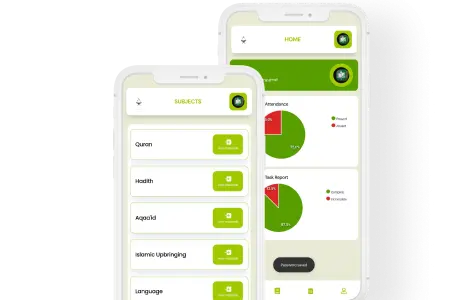
The management infrastructure for curriculum delivery — tracking, assessment, parent communication — is where schools lose the value of both free and paid curriculum choices. ilmify.app provides that infrastructure: progress tracking, parent reporting, and teacher management tools that work with any curriculum, free or paid. See How to Manage Islamic Curriculum Delivery Across Multiple Classes for a practical guide.
Conclusion
Free Islamic curriculum resources are better than they have ever been — and for many contexts, they are genuinely sufficient. The decision between free and paid should be made on the basis of teacher capacity, scope-and-sequence needs, and institutional context, not on the assumption that paid automatically means better.
Whatever you choose, the implementation matters as much as the resource. A well-managed free curriculum will outperform a poorly managed paid one every time.
👉 See how ilmify.app supports curriculum delivery for any Islamic school →
Related Articles
- 📚 Islamic Curriculum for Schools and Homeschools: The Complete 2026 Guide
- 📚 How to Choose an Islamic Curriculum: A Decision Framework
- 🏫 Best Islamic Curriculum Publishers in 2026
- 📚 Islamic Homeschool Curriculum: The Complete 2026 Guide
- 📚 Islamic Curriculum Accreditation: What It Means and Why It Matters
- 🕌 Best Quran and Islamic Studies Curriculum for Schools and Maktabs in 2026
- ⚙️ How to Manage Islamic Curriculum Delivery Across Multiple Classes
- ⚙️ Best Islamic School Management Software for Curriculum Tracking in 2026




 Arabic
  English
  Malay
Malay  Urdu
Urdu