

Introduction
Choosing a Hifz school for your child is one of the most consequential educational decisions you will make. Unlike mainstream schools where league tables, Ofsted reports, and word of mouth give you a reasonably clear picture, Islamic supplementary schools have very little publicly available information. The school down the road may be excellent, or it may be producing students whose Hifz deteriorates within months of completion. There is almost no way to know without asking the right questions.
This checklist gives you twenty specific questions to ask any maktab or Hifz school you are considering. Some are about qualifications. Some are about systems and process. Some are about safeguarding. All of them reveal something important about whether a school deserves your trust — and your child’s years.
How to Use This Checklist
Visit the school in person if possible. Speak directly with the principal or lead teacher — not just the administrator. A school that cannot arrange a 20–30 minute meeting for prospective parents is a school that does not value parent relationships.
Bring this list. Ask the questions. Write down the answers. Then compare against the guidance in the “Interpreting the Answers” section.
You are not interrogating the school — you are doing your due diligence as a parent. A well-run school will welcome your questions. It demonstrates exactly the kind of parental engagement they need.
Questions About Teacher Qualifications
1. Is the lead Quran teacher a Hafiz with Ijazah?
An Ijazah is a certified chain of Quranic transmission back to the Prophet ﷺ — the teacher’s recitation was personally assessed and verified by a qualified scholar. Hafiz without Ijazah means the teacher has memorised the Quran but may not have had their Tajweed formally verified. For a school teaching Hifz, Ijazah should be the standard.
2. Which Riwayah is Ijazah held in, and who granted it?
The answer should be specific: “Hafs ‘an Asim, granted by [named scholar].” If the teacher is vague about who granted their Ijazah or cannot name the institution, the Ijazah claim is questionable.
3. Have all teachers working with children completed a DBS check? (UK)
In the UK, an Enhanced DBS check with a children’s barred list check is a legal requirement. A school that cannot confirm all teachers have been checked is not operating safely. Ask when the checks were last completed.
4. What is the teacher-to-student ratio for individual recitation?
For genuine Talaqqi (direct oral teaching where the teacher hears each student recite and corrects them), the practical maximum is 8–12 students per teacher per session. Above 15–20 students per teacher, individual recitation time drops to a level where meaningful Tajweed correction is impossible.
5. What happens when a teacher leaves?
The answer reveals whether the school has institutional infrastructure or is dependent on individual teachers. A good answer: “We maintain digital records of every student’s progress so any incoming teacher has a complete picture from day one.” A concerning answer: “We’d find a replacement as quickly as possible.”
Questions About Curriculum and Hifz Standards
6. What Tajweed standard is required before a student is allowed to advance Sabak?
The answer reveals whether the school treats Tajweed as essential or optional. A rigorous school will say something like: “Students must recite their Sabak with correct Tajweed — including Madd, Ghunnah, and Noon/Meem rules — before we advance them.” A school that advances purely on memorisation regardless of Tajweed quality will produce Huffadh with entrenched errors.
7. How do you manage Muraja’ah — the revision of older material?
Ask specifically about Sabqi (recent revision) and Dhor/Manzil (older revision). A school with a structured Muraja’ah system will describe a weekly schedule, specific targets per student, and quality standards for older material. A school without a system will give a vague answer.
8. What is the typical pace of advancement — pages per week?
There is no single correct answer, but a school that says “as fast as possible” without mentioning quality constraints, and one that says “we advance only when the student is truly ready,” are describing fundamentally different programmes. Also: a claimed pace of more than 2–3 pages per day should prompt a question about Tajweed quality.
9. What happens if a student’s Hifz starts to deteriorate?
This reveals the school’s early warning and intervention systems. A good answer: “Our teachers log session quality and we contact parents within a week if we see signs of regression. We have a structured recovery protocol.” A concerning answer: “We would tell the parent if it became a problem.”
10. How many students have completed Hifz through your school in the last three years?
This question is about track record. A school that cannot answer, or that has very few completions relative to its student numbers, may have a retention or dropout problem. Ask also: how many students started Hifz in that period? The completion percentage is the useful figure.
Questions About Progress Tracking and Communication
11. How do you track each student’s Hifz progress?
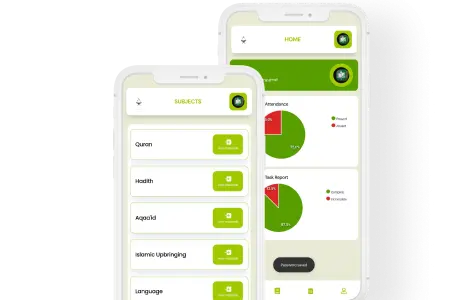
The answer reveals whether the school has institutional memory or relies on individual teacher memory. A strong answer: “We use a digital management system [e.g. Ilmify] where teachers log each session — Sabak position, Sabqi coverage, Dhor schedule, and quality notes. Parents can access this through a portal.” A weak answer: “The teacher keeps a register.”
12. How will I receive updates on my child’s progress?
Acceptable: weekly digital progress reports with specific Hifz position, revision coverage, and teacher notes. Less acceptable: occasional messages in a class WhatsApp group. Not acceptable: “You can ask at collection time.”
13. How are parents notified if my child is falling behind?
Early warning is critical — a school that waits until a student is significantly behind before contacting parents has lost weeks of recovery opportunity. Ask: “If my child misses two sessions or their Sabak quality drops, will you contact me proactively?”
14. Is there a parent-teacher meeting process?
A structured termly or annual meeting between parents and the teacher demonstrates that parent relationships are taken seriously. Informal hallway conversations are not an equivalent.
Questions About Safeguarding (UK and Beyond)
15. Does the school have a written safeguarding policy?
A written policy is a minimum requirement for any school working with children in the UK, and best practice everywhere. Ask to see it. If the school has never been asked for it before, that is itself information.
16. Who is the Designated Safeguarding Lead?
Every school working with children should have a named Designated Safeguarding Lead (DSL) — someone responsible for receiving and acting on safeguarding concerns. Ask their name and how to contact them.
17. What is the school’s policy on one-to-one sessions between teachers and students?
One-to-one Talaqqi is the gold standard for Hifz instruction — but it must be conducted with appropriate safeguarding (visible to others, in a shared space, or with a parent present). The school should have a clear policy.
Questions About Fees, Attendance, and Expectations
18. What are the fees, and what do they cover?
Fees should be clearly stated — monthly, termly, or annually, with a clear policy on what happens if a student misses sessions and whether fees are refunded. A school that is vague about fees or adjusts them informally is poorly administered.
19. What are the attendance expectations, and what is the absence policy?
Hifz requires consistent attendance. A school with no clear attendance expectation will develop inconsistent attenders whose Hifz deteriorates. Ask: “What happens if my child misses multiple sessions? Is there a catch-up mechanism?”
20. What do you expect from me as a parent?
A school with clear parent expectations — daily home revision, communication responsiveness, punctual drop-off and collection — is a school that understands the partnership model. A school that says “just bring them and we’ll handle it” is either naive about how Hifz works or is lowering the bar to avoid parent accountability.
Interpreting the Answers — What Good Looks Like
| Category | Signs of a Strong School | Signs of Concern |
| Teacher qualifications | Ijazah held, DBS confirmed, named teacher with clear chain | Vague about qualifications, DBS not mentioned |
| Curriculum/standards | Clear Tajweed standards before advancement; structured Muraja’ah | “Fast as possible” advancement; no revision system |
| Communication | Digital progress reports; proactive parent contact; structured meetings | Class WhatsApp group; parents must ask for updates |
| Safeguarding | Written policy, named DSL, visible one-to-one arrangements | No policy; unsure who DSL is |
| Practical | Clear fees; attendance expectations; parent responsibilities stated | Vague fees; no attendance policy; parent expectations unstated |
Conclusion
The twenty questions above are not a test designed to trip up Islamic schools. They are the minimum a thoughtful parent should know before entrusting their child’s relationship with the Quran to an institution. A school that can answer them clearly and confidently has earned your trust through transparency. One that cannot has given you important information — and the responsibility is yours to act on it.
💡 A maktab that uses Ilmify for digital progress tracking is a school where your questions about progress communication will be answered before you even ask them.
Related Articles:
- 👨🏫 How to Choose a Quran Teacher for Your Child: 7 Questions to Ask
- 🕐 At What Age Should a Child Start Hifz? Signs of Readiness
- 📖 How to Help Your Child Memorise the Quran at Home: A Complete Guide
- 📚 The Difference Between Hifz, Nazra, and Qaidah: A Parent’s Guide
- 🌅 Morning Maktab vs Evening Maktab: Which Is Better for Your Child?




 Arabic
  English
  Malay
Malay  Urdu
Urdu