

Why the North–South Divide Exists
India’s Muslim population of 200+ million is not a monolith. The Muslims of Uttar Pradesh, Bihar, and West Bengal have a different history, language, and relationship to Islamic scholarship than the Muslims of Kerala, Karnataka, and Tamil Nadu. These differences — rooted in trade routes, colonial history, migration patterns, and Sufi traditions — have produced distinct regional expressions of Islamic education that manifest clearly in the maktab.
Understanding this divide is not merely academic. For a maktab administrator, it determines which board to affiliate with, which curriculum to use, which language to teach in, and what time of day to schedule sessions. For a software developer or platform provider, it determines what features need to be built and how the interface needs to be localised.
Language and Medium of Instruction
North India:
Urdu is the dominant medium of instruction in North Indian maktabs. Arabic is the language of the Quran and is taught as a recitation language. Urdu serves as the medium for Islamic Studies, Duas, Hadith explanations, and teacher–student communication. Hindi-medium versions of some curricula exist (MTB publishes in Hindi), but Urdu remains dominant in community maktabs.
South India:
South Indian maktabs reflect the region’s linguistic diversity:
- Kerala: Malayalam is the primary medium. Samastha SKIMVB publishes 140+ books in Malayalam, Arabi-Malayalam (the traditional script combining Arabic letters with Malayalam sounds), Tamil, Kannada, and Urdu. Arabic is taught intensively as both a recitation and a classical language.
- Karnataka: Urdu-medium institutions exist in northern Karnataka (historically connected to Hyderabad’s Urdu culture), while coastal Karnataka (Beary community) uses Tulu and Kannada alongside Arabic. Bengaluru’s cosmopolitan maktabs increasingly use English alongside Urdu.
- Tamil Nadu: Tamil-medium maktabs serve the Tamil Muslim community, with Arabic for Quran instruction.
| Region | Primary Teaching Language |
| UP, Bihar, Delhi | Urdu |
| West Bengal, Assam | Urdu (community) / Bengali (some schools) |
| Gujarat | Urdu / Gujarati |
| Kerala | Malayalam / Arabi-Malayalam |
| Karnataka (North) | Urdu |
| Karnataka (Bengaluru, coastal) | Urdu / Kannada / English mix |
| Tamil Nadu | Tamil / Urdu |
Theological Tradition
North India:
The Deobandi tradition dominates North India’s maktab landscape. Idara-e-Deeniyat (Mumbai HQ), the Jamiat Deeni Talimi Board, and Noorani Makatib (Gujarat) are all Deobandi-affiliated. The Tablighi Jamaat — which operates out of Raiwind and Nizamuddin — provides an informal but pervasive network connecting maktabs to the broader Deobandi revivalist movement. In some urban areas, JIH/MTB’s civic-Islamic approach provides an alternative.
South India:
Kerala presents the most theologically diverse maktab landscape in India:
- The Barelvi/Sunni Sufi tradition (Samastha SKIMVB) dominates with 10,000+ madrasas
- The Ahl-i-Hadith/Salafi tradition (Wisdom Islamic Organisation) runs a significant parallel network
- The Deeniyat (Deobandi) network operates through Deeniyat Kerala (11,000 students)
- The JIH/MTB tradition has a presence through Jamaat-e-Islami Kerala units
Karnataka’s Bengaluru presents a similar multi-tradition landscape, with Salafi/Madani institutions (Daar Ut Tarbiyah) and Deobandi institutions operating alongside pragmatic-integrated models (Karnataka Madarsaplus/Shaheen Group).
Madhab (School of Jurisprudence)
This is one of the most practically significant differences:
North India: Overwhelmingly Hanafi. The Hanafi madhab’s rulings govern Salah (prayer posture, Rafa ul-Yadayn debates), Nikah, food, and countless daily matters. Most North Indian maktab Fiqh teaching follows Hanafi positions as default.
South India (Kerala): Predominantly Shafi’i. The Shafi’i madhab differs from Hanafi in numerous practical rulings — prayer postures, Wudu requirements, dietary rules, and more. Samastha’s curriculum teaches Shafi’i Fiqh. A North Indian Hanafi teacher imported into a Kerala maktab would need to adjust not just language but Fiqh content.
Ahl-i-Hadith (all regions): Rejects madhab affiliation — teaches directly from Quran and Hadith without adherence to a traditional legal school.
Scheduling: When Does the Maktab Run?
North India:
The dominant model is after-school/evening, typically:
- Post-Asr (3:30–5:30pm) or post-Maghrib (6:00–8:00pm)
- Sessions of 1–2 hours
- Children arrive after a full day at government/private school — fatigue is a genuine challenge
- Ramadan creates a major scheduling disruption as children fast and evening timings shift
South India (Kerala):
The dominant model is early morning, before school:
- Pre-Fajr or post-Fajr to 8:00am
- Children are fresh and alert
- Avoids post-school fatigue entirely
- Better alignment with the Hifz tradition (Fajr time is considered optimal for memorisation)
- Samastha’s entire institutional model is structured around this morning slot
Karnataka (Bengaluru):
Mixed — some maktabs follow the North Indian evening model, others follow the Kerala morning model. Urban working-family schedules create pressure on both.
Curriculum Structure and Boards
North India:
- Idara-e-Deeniyat: 7 levels, structured progression, free books, app-based setup
- DTB: 4-rung ladder (maktab → madrasa → jamia → Darul Uloom), state-level support
- Noorani Makatib: Free books (Nisab-e-Makatib series), Tablighi network distribution
- MTB: 90+ books, integrated with CBSE/state board schools, multilingual
South India:
- Samastha SKIMVB: 14 class levels, 140+ books, 6 languages, ISO certified, public exams, annual results
- Wisdom Education Board: Separate curriculum, Ahl-i-Hadith orientation
- Deeniyat Kerala: Deeniyat curriculum adapted for Kerala context
- Karnataka Madarsaplus: Deeniyat Plus + Hifz Plus + NIOS integration
The depth and structure of South Indian (particularly Kerala) maktab curricula are generally more developed than North Indian equivalents — a reflection of Kerala’s historically high literacy rates and organised Muslim community institutions.
Administration and Governance
North India:
Most maktabs in North India are informally administered — the imam teaches, the mosque committee collects fees (where any are charged), and records are kept in a paper register or not at all. Board affiliation is common but administrative support from boards is limited. Many maktabs are entirely self-organising.
South India (Kerala):
Samastha-affiliated madrasas in Kerala are significantly more organised. They have formal registration with the board, use standard textbooks, sit for public exams, receive certificates, and report results to the board. This creates a paper trail and accountability structure far beyond what North Indian maktabs typically have. However, the administrative burden is also higher — fee collection, registration, exam preparation, and results management all require dedicated attention.
Urban vs Rural Dynamics
Both North and South India face an urban–rural divide in maktab quality:
Urban maktabs: Better-resourced teachers, more likely to follow a board curriculum, more likely to have WhatsApp groups for parent communication, sometimes charging fees that enable investment in learning materials.
Rural maktabs: Often run by a single imam, using informal or no curriculum, with minimal parental engagement. DTB specifically targets rural underserved areas with its directly managed maktabs in North India. Samastha’s reach into rural Kerala is extensive — one reason its student count exceeds 1 million.
Side-by-Side Summary Table
| Dimension | North India | South India (Kerala) | South India (Karnataka) |
| Dominant theology | Deobandi | Barelvi/Sunni + Salafi | Deobandi + Salafi + Mixed |
| Madhab | Hanafi | Shafi’i (Samastha) | Mixed |
| Language | Urdu primary | Malayalam/Arabic | Urdu/Kannada/English |
| Timing | Evening (after school) | Morning (before school) | Mixed |
| Board | Deeniyat, DTB, MTB | Samastha SKIMVB | Daar Ut Tarbiyah, Madarsaplus |
| Exam system | Informal | Formal (public exams) | Varies |
| Admin structure | Informal | Structured | Mixed |
| Digital readiness | Moderate | Higher (portal, results) | Growing |
Conclusion
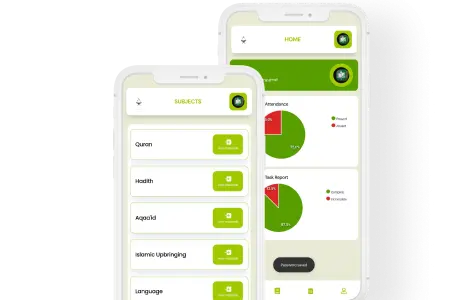
The North India–South India maktab divide is real, meaningful, and rooted in centuries of distinct Islamic history on the subcontinent. Language, madhab, theology, timing, and administrative culture all differ. Yet the fundamental challenge — teaching children Quran, Islamic practice, and moral values in a part-time setting — is identical. ilmify is built to serve maktabs across all these differences: supporting Urdu and Arabic RTL, Malayalam, Tamil, and Kannada interfaces, flexible scheduling models, and the same Sabak/Sabak Para/Dhor tracking that every tradition uses. Try ilmify free for your maktab.




 Arabic
  English
  Malay
Malay  Urdu
Urdu