
Introduction
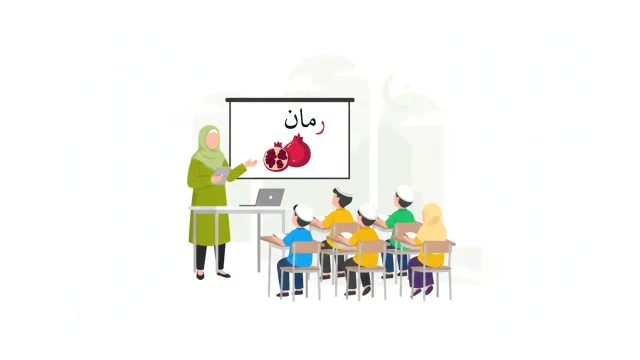
Australia’s Islamic education landscape is the most developed of any Muslim-minority country in the Southern Hemisphere. With over 40 full-time Islamic schools educating 40,000+ students, more than 100 mosques providing part-time Islamic education, and a national peak body (ISAA) advocating for Islamic schooling quality, Australia has built substantial educational infrastructure serving its 813,000-strong Muslim community.
This guide maps the full landscape — the full-time school system, the mosque maktab and weekend school network, the traditions that shape them, and the administrative realities of managing Islamic education in Australia in 2026.
Full-Time Islamic Schools: The Formal Sector
Australia’s full-time Islamic schools operate as independent private schools within the Australian education system, subject to state registration requirements and eligible for government funding — both state and federal — under the same framework as other religious schools.
Scale and Distribution
The Islamic Schools Association of Australia (ISAA) — the peak body for full-time Islamic schools — has member schools at more than 40 locations across Australia, educating over 40,000 students and employing over 5,000 staff. This makes Australian Islamic schooling by scale genuinely comparable to the Catholic parochial school system in its early decades — a community-funded, faith-based alternative to the state school system that has attracted substantial community investment and government funding support.
Distribution broadly follows the Muslim population:
- New South Wales (Sydney): The highest concentration, reflecting NSW’s 50% share of Australia’s Muslim population. Major schools include Malek Fahd Islamic School (selective, highly regarded academically), Australian Islamic College Sydney (AICS), Al-Faisal College, Arkana College, and others.
- Victoria (Melbourne): Al-Taqwa College (Truganina — one of the largest Islamic schools in Australia), Al-Siraat College (Epping, F-Year 12, established 2009), Islamic College of Melbourne, Minaret College, and others.
- Western Australia (Perth): Australian Islamic College (multiple campuses including the Langford campus), serving Perth’s significant Muslim community.
- Queensland: Islamic College of Brisbane (ICBQ) and others.
- South Australia: Australian Islamic College Adelaide campus (formerly Islamic College of SA).
- ACT: Islamic School of Canberra.
What Full-Time Islamic Schools Offer
Australian Islamic schools offer the full Australian national curriculum — NAPLAN, the Australian Curriculum, and state-based senior secondary qualifications — alongside Islamic education: Quran, Islamic Studies, and in many schools, Arabic language. The integration model varies significantly between schools:
The standalone parallel model: Islamic Studies is timetabled separately from all other subjects, treated as a discrete subject block in the weekly schedule. This is the most common model and the simplest to administer, but it can create a fragmented experience where Islamic learning feels separate from the rest of school life.
The integrated model: Islamic values, perspectives, and knowledge are woven through subject teaching — science classes address Islamic contributions to scientific knowledge, English classes use texts that engage Islamic themes, mathematics teaching references Islamic architecture and geometry. Al-Siraat College in Epping explicitly describes itself as “an Australian School in the Islamic Tradition” that “infuses the Islamic traditions and ethos into all areas of the College.”
The IQRA special character approach: Adopted by schools that develop their own unique Islamic curriculum framework integrating directly with the Australian Curriculum, producing something genuinely distinctive rather than simply adding an Islamic Studies class to a standard school.
Governance: The Critical Challenge
Research on Australian Islamic schools — including the significant body of academic work from the University of South Australia’s Centre for Islamic Thought and Education — consistently identifies governance as the sector’s most acute challenge.
A 2023 study on female Islamic school leaders in Australia and New Zealand included a frank account from a principal named “Aisha” who described the board of a school she inherited: “the kebab shop owner, the taxi driver, the baker, and the imam of the mosque” — all “great to have” as community members, but inadequate as the governance board of an institution with millions of dollars in turnover. Her observation: “We’re talking about schools that have millions of dollars of turnover. The baker and his management of finances aren’t going to cut it for these institutions anymore.” The board needed accountants, lawyers, and education professionals.
This is not an isolated account. AFIC’s documented difficulties with financial management across its school network in 2012–2016 — government audits, non-compliance notices, disputed fund transfers, and ultimately Malek Fahd School’s legal separation from AFIC — all reflect the same underlying challenge: Islamic schools founded by community passion and volunteer effort need to transition to professional institutional management as they grow.
ISAA directly addresses this through its governance services to member schools — providing guidance on board composition, governance frameworks, policy development, and the compliance requirements of operating a registered school receiving government funding.
The Mosque Maktab and Weekend School Network
For the majority of Australia’s Muslim children — those attending state schools, Catholic schools, or non-Islamic independent schools — Islamic education comes through mosque-based classes: the maktab or weekend school.
Scale and Structure
With over 100 mosques across Australia, each serving its local Muslim community with varying levels of educational provision, the mosque Islamic education network is vast but almost entirely undocumented at a national level. There is no Australian equivalent of Singapore’s aLIVE programme directory, no national database of mosque Islamic schools, and no consistent national curriculum framework.
What most mosque Islamic schools offer:
- Quran/Iqra classes: For younger children, learning to read Arabic through the Iqra method or Noorani Qaida, progressing to Nazirah (reading from the Quran). This is the core provision — the ability to read the Quran in Arabic is considered the foundational Islamic literacy that every Muslim child must acquire.
- Islamic Studies: Basic Fiqh (acts of worship), Aqeedah, Sirah, and Islamic manners — the curriculum content varying by tradition and by the knowledge of the available teachers.
- Arabic language: Some centres offer dedicated Arabic language teaching beyond Quranic Arabic; many do not.
- Hifdh (Quran memorisation): A smaller number of centres offer structured Hifdh programmes for students committed to complete Quran memorisation.
The Deobandi Maktab Tradition
A significant portion of Australia’s mosque Islamic schools — particularly those serving South Asian Muslim communities in Sydney and Melbourne — operate within the Deobandi maktab tradition, using the structured daily morning and evening class model, the Tasheel Series or equivalent South African-developed curriculum, and in many cases the same teaching culture that the Jamiatul Ulama KZN and similar bodies have propagated globally.
These maktabs typically run Monday to Friday (or weekdays during school term), in morning sessions (before school) and/or afternoon sessions (after school). Students are expected to commit to daily attendance. The curriculum covers Iqra/Quran reading, Hifdh for eligible students, and the full Diniyyat (Islamic studies) curriculum covering Fiqh, Hadith, Aqeedah, and Sirah through the structured Tasheel grade levels.
Weekend Islamic Schools
In Australian cities where the Muslim population is more dispersed and daily attendance maktabs are not viable, weekend Islamic schools — Saturday or Sunday morning sessions at mosques or Islamic centres — serve as the primary part-time Islamic education vehicle.
Weekend schools typically serve a mixed-age range, running two to four hours per session. They cover Quran recitation and basic Islamic Studies, though the shorter session length limits curriculum depth compared to daily maktabs. Weekend schools are particularly prevalent in cities outside Sydney and Melbourne, and in the outer suburban areas of those cities where the Muslim population density is lower.
The Assam Academy and Learn Quran Australia Models
Beyond the traditional mosque model, a growing number of specialised Islamic education centres have emerged in Australian cities — distinct from mosques, operating as standalone Islamic learning institutions. Some are primarily Quran reading schools (focusing on Tajweed and Nazirah); others offer a broader Islamic studies curriculum. The Learn Quran and Arabic Centre in Sydney has published research on the need for a contextually appropriate Australian Islamic studies curriculum, explicitly noting that two-thirds of Australian Muslims are Australian-born or converts who are often underrepresented in institutional Islamic life.
The State of Islamic Education Research in Australia
Australia has a more developed academic research environment around Islamic education than New Zealand. The University of South Australia’s Centre for Islamic Thought and Education has hosted multiple Annual Australian Islamic Schooling Conferences and produced research on Islamic Studies curriculum renewal, pedagogy, and assessment in Australian Islamic schools. Western Sydney University, Monash University, and the University of Sydney each have researchers engaged with Australian Islamic education.
This research base is a genuine asset. It means that Islamic school leaders in Australia have access to peer-reviewed analysis of their sector’s challenges — governance, curriculum, pedagogy, student experience, teacher quality — that is not available to their counterparts in New Zealand or many other countries. The research consistently identifies the same challenges: the governance quality gap, the need for contextually relevant Islamic Studies curriculum, the challenge of engaging Australian-born Muslim students, and the importance of qualified, well-supported Islamic Studies teachers.





 Arabic
  English
  Malay
Malay  Urdu
Urdu