

Introduction
Ask any South African madrasah treasurer what causes them the most stress, and fee management will be near the top of every answer. Not because the amounts are large — most South African madrasah fees are modest by any measure. But because managing them without a proper system is genuinely difficult: tracking who paid, when, and how much; reconciling EFT deposits against student names without a clear reference system; following up on arrears sensitively in communities where families may be facing real financial hardship; producing a clear financial picture for the committee when everything is in a notebook and a shared spreadsheet.
This guide provides a practical framework for fee management in South African Islamic schools — structures, collection methods, bursary policy, SARS compliance, and the digital tools that make financial management sustainable for volunteer-run institutions.
Setting a Fee Structure That Covers Real Costs
The most common financial failure in South African madrasahs is setting fees without calculating actual costs — setting fees at what feels reasonable rather than at what the institution’s expenses require. The result: chronic underfunding, teachers paid late, and the committee covering shortfalls from personal funds.
Cost Calculation Exercise
Before setting or reviewing fees, identify every real monthly cost:
| Cost Category | Example: 70-student afternoon madrasah, Durban |
| Teacher salaries (3 teachers × R4,500) | R13,500 |
| Premises / mosque contribution | R1,500 |
| Electricity and water | R600 |
| Materials (books, printing, stationery) | R800 |
| Administration (receipts, printing) | R300 |
| Phone/communication | R200 |
| Reserve fund (10% of above) | R1,690 |
| Total monthly expenditure | R18,590 |
| Breakeven per student (70 students) | R266 |
| Fee with 15% vacancy buffer | R306/month |
| Practical fee | R300/month |
The reserve fund — 10% of total costs — is not a luxury. It covers the months when three students leave unexpectedly, or a teacher needs urgent payment, or the projector breaks. Institutions without a reserve fund are one disruption away from a crisis.
Fee Structure Options
Monthly fees are the most common South African madrasah model — R150 to R800/month depending on institution type, location, and programme. Monthly collection provides steady cash flow but requires consistent monthly administration.
Termly fees (three terms per year) reduce the frequency of collection and smooth cash flow projections. Many South African madrasahs find this administratively simpler — three collection events per year rather than twelve.
Annual fees — less common, but appropriate for well-established institutions with a stable, financially predictable parent community. Simplest to administer; harder for some families.
Sibling discount: A well-established practice — first child pays full rate; second and subsequent children pay 75–90%. Document this policy and apply it consistently.
When to Review Fees
Review fees annually. The costs of running a madrasah — teacher salaries, electricity, materials — increase with inflation. A fee structure set in 2019 and never reviewed is undercharging by 40–50% in real terms. An annual review at the beginning of each academic year (after confirming the next year’s teacher salaries) is good governance practice.
Give parents 6–8 weeks’ notice of any fee increase, with an explanation of why costs have risen. Transparency builds community trust.
The Right Collection Methods for South African Madrasahs
South African parents pay in four ways. Accept all four:
1. EFT bank transfer (most common): Direct bank transfer to the madrasah’s dedicated account. Requires a unique per-student reference for reconciliation (see below). Confirm with a digital receipt.
2. SnapScan / Zapper / PayShap: QR code payment increasingly common, particularly in Cape Town and Johannesburg. The madrasah’s SnapScan QR code should be displayed at the premises and sent in digital communications. SnapScan transactions are automatically confirmed; match the confirmation to the student record.
3. Cash: Still significant in many communities, particularly in KZN and more rural areas. Issue a numbered duplicate receipt for every cash payment — no exceptions. Never accept cash without issuing a receipt.
4. Stop order: For committed long-term families, a stop order (automatic monthly bank debit) eliminates monthly collection effort entirely. Provide the madrasah’s banking details for stop order setup; confirm each month’s receipt against the stop order schedule.
What to avoid:
- Accepting fees into a personal account (even temporarily)
- Accepting payment without issuing a receipt (even for small amounts)
- Keeping cash collected at the premises overnight without a bank deposit
- Allowing significant cash balances to accumulate without regular banking
The EFT Reference Problem — and How to Solve It
The most common monthly frustration for South African madrasah treasurers: EFT payments arrive in the bank account with unhelpful or ambiguous references. “Fees.” “Madrasah.” “January.” “Smith.” Three different parents have all paid, but matching the deposits to the correct students takes an hour of investigation.
The solution: Enforce a unique reference format at enrolment.
At enrolment, give each family their unique payment reference — typically: SURNAME followed by first initial (e.g., MOOSA-F for Fatima Moosa, ESSOP-AH for Ahmed Hassan Essop). This reference goes on all communications, the fee statement, and the WhatsApp reminder.
Include this in your enrolment documentation: “Please use the reference [SURNAME-INITIAL] for all EFT payments to ensure your payment is correctly allocated. Example: MOOSA-F.”
With a consistent reference system, the monthly reconciliation exercise drops from an hour to minutes. The bank statement references map directly to student names.
Issuing Receipts: Why It Matters and How to Do It
A receipt is not optional. Every payment — cash, EFT, SnapScan, stop order — should generate a receipt issued to the parent. This is:
- A legal record of payment
- Protection for the parent if a dispute arises
- Protection for the treasurer from accusations of misappropriation
- A POPIA-compliant record of financial transactions
- Required documentation for any SARS submission
For cash payments: Numbered duplicate receipt books (available from any stationery supplier). Write the date, student name, amount, and what the payment covers (e.g., “Term 2 fees — January to March 2026”). Sign. Give the original to the parent; keep the carbon copy.
For EFT/digital payments: A digital receipt — a simple PDF or email confirmation — issued within 24 hours of the payment appearing in the account. In a digital fee management system like Ilmify, receipts are generated automatically when payments are recorded.
Receipt numbering: Number receipts sequentially — Receipt #001, #002, etc. This creates an audit trail. If Receipt #045 is missing from your receipt book, you know a payment was received that is not recorded.
Managing Outstanding Balances Without Damaging Relationships
Fee arrears are a reality in every South African madrasah — economic pressures mean some families genuinely cannot pay on time, some months. Managing arrears well requires balancing the institution’s financial sustainability with the community relationship and pastoral responsibility the madrasah holds.
A Progressive Response Framework
Month 1 overdue: Automatic reminder notification (via parent portal or gentle WhatsApp message). Tone: matter-of-fact, not accusatory. “This is a friendly reminder that [child’s name]’s fees for [month] are outstanding. Please contact us if you have any queries.”
Month 2 overdue: Personal contact — a phone call, not a message. The treasurer or principal calls the parent. The objective is to understand the situation: is this an oversight, a temporary cash flow issue, or a genuine financial hardship? The response differs accordingly.
Month 3 overdue: A meeting — brief, private, respectful. For genuine hardship, activate the bursary policy (see below). For oversight or non-priority, agree a payment plan and document it.
Non-payment as a pattern: For families who consistently pay late without engaging, the committee should discuss the situation — not as a punitive exercise, but to understand whether the fee level is genuinely unmanageable (in which case a bursary is appropriate) or whether payment is being deprioritised (in which case a firmer conversation is needed).
The line that must never be crossed: Do not remove a child from class for their parent’s failure to pay fees. The child has done nothing wrong. Excluding a child from Islamic education as a fee enforcement mechanism is both pastorally wrong and legally problematic under the Children’s Act.
Bursary and Fee Waiver Policy
Every South African madrasah should have a formal, written bursary policy. Without one, bursary decisions are made inconsistently, subject to personal relationships and perceived fairness, and create resentment when some families receive reductions that others do not.
What a bursary policy should cover:
- How to apply (a simple form or conversation with the principal/committee)
- What criteria determine eligibility (family income, number of children enrolled, demonstrated hardship)
- Who decides (a named committee subgroup — not the principal alone)
- What documentation is required (a brief income declaration is sufficient; nothing intrusive)
- What bursary amounts are available (full waiver, 50% reduction, sibling rate extension)
- How decisions are recorded (minute the decision; inform the family in writing)
- How often bursary status is reviewed (annually)
Having a documented process makes every bursary decision defensible and protects the institution from perceptions of favouritism. It also makes it easier to say yes — because the decision is a policy application, not a personal favour.
Financial Controls That Protect Your Madrasah
These controls are not bureaucratic obstacles — they are protections for the treasurer, the committee, and the institution’s integrity.
Separate madrasah bank account: Non-negotiable. No madrasah funds should flow through a personal account, even temporarily. A dedicated business or community account in the madrasah’s name (or the mosque NPC’s name, with a clear internal allocation) is essential.
Two-signatory requirement for payments above threshold: No single person should be able to authorise significant expenditure alone. A threshold of R500–R1,000 requiring two signatories (typically the principal and treasurer, or two committee members) is standard practice. This protects everyone involved.
Monthly bank reconciliation: The treasurer reconciles the bank statement against the fee records every month. Total deposits should equal total fees recorded as received. Any discrepancy triggers investigation before the end of the month.
Cash handling protocol: Cash collected at the premises should be counted by two people, recorded in the cash register/receipt book, and banked within 48 hours. No cash should remain on premises over a weekend.
Committee financial reporting: A monthly financial summary presented to the committee — total fees collected, total fees outstanding, total expenditure, and closing balance. Even a single page.
Reporting to the Committee
A monthly financial report for the committee should contain, at minimum:
Income summary:
- Total fees billed for the month (number of students × fee rate)
- Total fees collected this month (by payment method — EFT, cash, SnapScan)
- Total outstanding (who owes, for how many months)
- Any other income (donations, grants)
Expenditure summary:
- Teacher salaries (total paid)
- Premises costs
- Materials and supplies
- Any other expenditure
- Total expenditure
Balance:
- Opening bank balance (start of month)
- Plus: income received
- Minus: expenditure paid
- Closing bank balance (end of month)
This format — simple, one page — gives committee members the information they need to govern effectively without requiring financial expertise to interpret.
SARS Obligations for South African Islamic Schools
South African madrasahs with formal income have SARS obligations that are widely ignored in the community sector:
PBO registration: Any madrasah receiving charitable donations should register with SARS as a Public Benefit Organisation. PBO status provides income tax exemption and allows donors to claim Section 18A deductions. Application is through SARS eFiling.
PAYE registration: If you pay teachers a salary (not a stipend or honorarium — a regular, fixed monthly payment for services rendered), you are legally required to register as an employer with SARS, deduct PAYE and UIF from teacher salaries, and file monthly EMP201 returns.
This is the most common SARS non-compliance in South African Islamic institutions. Many madrasahs pay teachers monthly amounts that are legally employment income but do not operate PAYE, treating teachers as independent contractors. SARS increasingly scrutinises this classification, particularly for fixed monthly payments for regular services. If you pay teachers a regular monthly amount and control when, where, and how they teach, they are almost certainly employees — and PAYE applies.
VAT: Most madrasahs do not reach the VAT registration threshold (R1 million annual turnover). Educational services provided by non-profit organisations are VAT-exempt in any case. VAT registration is not required for most Islamic schools.
POPIA and Fee Data
Financial records — fee payment history, outstanding balances, bursary arrangements — are personal information under POPIA. They must be stored securely, accessed only by those with a legitimate need (the treasurer, the principal, and no one else without specific authorisation), and retained for the appropriate period.
The most important POPIA implication for fee management: a student’s fee balance or payment history must never be disclosed in a group setting (including a parent WhatsApp group) without the specific parent’s consent. “Fees for the following families are outstanding” posted in a group — even without amounts — discloses personal financial information to dozens of people without the relevant families’ consent. This is a POPIA violation.
Fee communications must be individual: the parent receives information about their own child’s fees through a private channel only.
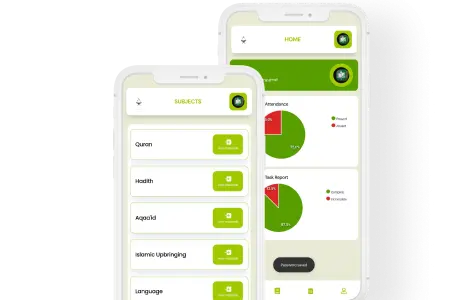
How Ilmify Supports South African Madrasah Fee Management
Ilmify’s fee management module is designed for the specific financial management needs of South African Islamic schools.
Payment recording: Record every payment — EFT, cash, SnapScan, stop order — with date, amount, payment method, and reference. The system maintains a complete payment history per student from enrolment.
Automatic receipt generation: When a payment is recorded, Ilmify generates a digital receipt instantly. The receipt is available in the parent portal and can be emailed or WhatsApped to the parent individually. No manual receipt writing for EFT or digital payments.
EFT reference management: Student profiles in Ilmify display the recommended payment reference for each student. The monthly fee statement sent through the portal includes the correct reference. Monthly reconciliation is dramatically simplified.
Outstanding balance dashboard: The principal and treasurer see a consolidated view of all outstanding balances — sorted by amount, by months outstanding, or by class. Follow-up is prioritised automatically without manual spreadsheet work.
Individual parent fee statements: Each parent accesses their own fee account through the parent portal — payments received, outstanding balance, upcoming due dates. No group disclosure; no individual manual statement production. POPIA-compliant by design.
Automatic fee reminders: Ilmify sends automatic fee reminder notifications to individual parents 7 days before payment due dates and when accounts become overdue. The treasurer’s follow-up workload drops significantly.
Financial reporting: Monthly income and expenditure summaries generated from payment records — ready for the committee meeting without manual compilation.
Bursary tracking: Bursary arrangements are recorded per student with notes on the decision, effective date, and review date. The reduced fee rate is applied automatically to that student’s account.
Fee management that matches the way South African madrasahs actually operate — EFT, SnapScan, cash — all in one systemSee Ilmify’s fee management for South African Islamic schools
Conclusion
Fee management done well is invisible — it runs smoothly in the background, teachers are paid on time, the committee receives clear monthly reports, and the institution is financially sustainable without the treasurer spending every weekend in spreadsheet reconciliation. Fee management done poorly drains time, damages relationships, and leaves the madrasah perpetually underfunded despite a willing parent community.
The difference between the two is having the right system: clear fee structures, consistent collection methods, proper receipting, documented bursary policy, appropriate financial controls, and a digital management platform that handles the recording and reporting without additional administrative burden.
Start managing your South African madrasah’s fees properly with Ilmify
Related articles:




 Arabic
  English
  Malay
Malay  Urdu
Urdu