

Introduction
What makes an Islamic school genuinely Islamic? Not the crescent on the building, the hijab of the teachers, or the Bismillah before each lesson — though all of these matter. What makes an Islamic school Islamic is the pedagogy: the way teaching happens, the relationship between teacher and student, the values embedded in every classroom interaction, and the goal that animates the whole enterprise.
Islamic pedagogy is the applied philosophy of education from an Islamic worldview. It is not a separate subject alongside mathematics and Islamic Studies — it is the lens through which every subject is taught, every classroom is managed, and every student is regarded.
This article explains Islamic pedagogy in practical terms for North American Islamic school teachers and administrators — what it means, how it is implemented, where most schools fall short, and what excellent Islamic school teaching looks like.
What Islamic Pedagogy Actually Means
Islamic pedagogy rests on a set of foundational beliefs about the student, the teacher, knowledge, and the purpose of education:
The student: Every child is a trust from Allah (amanah) entrusted to parents and teachers for tarbiyah — Islamic upbringing. The student is not a vessel to fill with content but a full human being in the process of becoming the Muslim Allah created them to be.
The teacher: The teacher is not a content delivery mechanism — they are a model (qudwah). The Prophet ﷺ taught primarily through example; the Islamic school teacher’s most powerful teaching is not what they say in lesson time but how they conduct themselves in the classroom, the corridor, and the school community.
Knowledge: In the Islamic worldview, all true knowledge — whether Quranic, scientific, mathematical, or historical — originates with Allah (al-‘Alim). Knowledge of the natural world is not secular knowledge that happens to be taught in a school that also does Islamic Studies. It is knowledge of Allah’s creation, governed by His laws, and studied with gratitude and wonder.
The purpose of education: Islamic education aims at the tarbiyah of the whole person — ‘aql (mind), qalb (heart), and jism (body) — developing Muslims who know, believe, and live Islam. Academic excellence is a means to this end, not the end itself.
Tarbiyah: The Goal Behind the Methods
Tarbiyah — the holistic Islamic nurturing and upbringing of a person — is the overarching goal that distinguishes Islamic education from religious instruction bolted onto secular schooling.
Tarbiyah means:
- Developing correct Islamic belief (aqeedah) that is confident and intellectually grounded
- Forming Islamic character (akhlaq) that is lived habitually, not just known academically
- Building Islamic practice (ibadah) that is regular, correct, and internally motivated
- Cultivating Islamic identity that is strong enough to withstand the challenges of Western secular society
Tarbiyah is not:
- Teaching Islamic Studies as a separate subject while treating the rest of the school day as neutral
- Enforcing Islamic rules (hijab, no music, halal food) without cultivating understanding and love
- Producing students who can recite Islamic facts without those facts shaping their values and behaviour
The Islamic school that achieves tarbiyah produces graduates who — when they leave the school building and encounter a world that does not share their values — are equipped to navigate it as Muslims, not destabilised by it.
The Teacher as Model
The most consistently cited principle in classical Islamic pedagogy is the role of the teacher as model. Al-Ghazali’s Ihya Ulum al-Din, Ibn Khaldun’s Muqaddimah, and Ibn Jama’ah’s Tadhkirat al-Sami all emphasise that students learn far more from the teacher’s character than from the teacher’s instruction.
What modelling looks like in practice:
- The teacher makes du’a before beginning a lesson — visibly, not perfunctorily
- The teacher receives a student’s incorrect answer with patience and encouragement, not frustration
- The teacher is honest about the limits of their knowledge (“I don’t know; let me find out”)
- The teacher treats every student — the bright and the struggling — with equal respect
- The teacher admits a mistake when they make one
- The teacher is clearly invested in each student’s growth, not just their performance
What undermines modelling:
- A teacher who says “be patient” but is visibly impatient
- A teacher who teaches honesty while publicly exaggerating student achievements
- A teacher whose conduct outside the classroom (corridor, staffroom) contradicts the Islamic values taught inside it
Islamic schools that prioritise teacher character alongside teacher qualification — hiring and retaining teachers of genuine Islamic character and investing in their tarbiyah as professionals — produce stronger outcomes than schools that focus only on academic credentials.
Integration: What It Is and What It Is Not
“Integration” is the most discussed and most misunderstood concept in Islamic school pedagogy. What does it actually mean?
What integration is not:
- Starting every lesson with Bismillah (this is sunnah practice, not integration)
- Adding an Islamic fact to an academic lesson (“and the Prophet ﷺ also mentioned bees”)
- Teaching Islamic Studies and mathematics in the same building
What integration is:
Integration means teaching every subject from within an Islamic understanding of reality — in which Allah is the Creator of all that exists, the Quran is the ultimate source of guidance, and all true knowledge is unified under Divine Wisdom.
Practical integration examples:
Science (Grade 6, Ecosystems):
Standard: teach food webs, nutrient cycles, biodiversity.
Integrated: frame the study of ecosystems within the concept of Allah’s design (sunnat Allah) — the extraordinary precision with which creation is balanced. Reference ayat about water (Al-Anbiya 21:30), plants (Ya-Sin 36:33), and the diversity of creation (Al-Baqara 2:164). Ask students: what does this level of design tell us about the Designer?
History (Grade 8, Civilisations):
Standard: teach ancient and medieval civilisations.
Integrated: include the Islamic Golden Age as a major civilisational period alongside Greek, Roman, and European histories. Teach Al-Khawarizmi, Ibn Sina, Al-Biruni, and Ibn Battuta as figures of world historical significance. Frame civilisational rise and fall within Quranic patterns (sunan al-umam).
English (Grade 5, Narrative Writing):
Standard: teach story structure, character development, descriptive language.
Integrated: use examples from Seerah narratives; encourage stories that reflect Islamic values; discuss how the Quran’s narrative technique — the use of the Yusuf story, for instance — employs literary craft in service of moral and spiritual truth.
Islamic Pedagogy in Academic Subjects
| Subject | Integration Principle | Example Application |
| Mathematics | Allah’s universe is ordered; precision in numbers reflects divine precision | Fibonacci sequence in nature; Arabic numerals’ Islamic origin |
| Science | Creation as ayat (signs) of Allah; study of creation as worship | Ecology as balance in creation; human biology as wonder at Allah’s design |
| History | Allah’s patterns in history (sunnat Allah); Islamic civilisation as world history | Include Islamic Golden Age; Umayyad/Abbasid empire alongside European medieval |
| English/Language Arts | Language as Allah’s gift; storytelling as moral formation | Seerah as narrative model; character values in literature selection |
| Social Studies | Communities, justice, and the Islamic understanding of society | Muslim communities in NA; Islamic principles of social justice |
| Arts | Beauty and creativity as expressions of Allah’s attributes | Geometric Islamic art; calligraphy; architecture |
Islamic Studies Pedagogy: Teaching What Matters Most
Islamic Studies pedagogy — how Islamic Studies is taught, not just what is taught — determines whether students actually learn and internalise Islam or merely accumulate facts about it.
Seerah: Story, not chronology:
The Seerah taught as a chronological list of battles and dates produces students who know names and years but are not moved. The Seerah taught as a living story — with vivid narration, emotional engagement, moral questions, and direct application to the student’s life — produces students who love the Prophet ﷺ and want to follow his example. A teacher who narrates Uhud with the weight it deserves — the chaos, the fear, the companions’ courage, the Prophet’s ﷺ response — gives students something that stays with them for life.
Fiqh: Reasoning, not rules:
Fiqh taught as a list of rules to memorise produces compliance without understanding. Fiqh taught with the reasons behind the rules — why Wudu is structured as it is, what the philosophy of Salah is, what the wisdom behind Zakat is — produces Muslims who understand their deen and can apply it with intelligence.
Aqeedah: Confidence, not defensiveness:
Aqeedah taught in the North American context must equip students to engage with the challenges to Islamic belief they will encounter in secular society — not with defensive anxiety but with confident understanding. Students who understand why they believe what they believe are far more resilient than those who only know that they believe it.
The Quran Classroom: Pedagogical Principles
Quran instruction has its own pedagogical tradition — the direct teacher-student transmission (talaqqi) that has transmitted the Quran accurately from the Prophet ﷺ to the present day.
Core principles of effective Quran teaching:
- Individual correction: The teacher listens to each student’s recitation individually and corrects errors immediately. Group recitation reinforces mistakes; individual instruction corrects them.
- Progression before speed: The student does not advance past a portion until they can recite it correctly. Speed of progress matters far less than accuracy. A student who races through the Quran with incorrect Tajweed has learned incorrect habits that are extremely difficult to correct later.
- Patient repetition: The correct Arabic pronunciation of letters students’ mouths are not shaped for requires patient, repeated modelling. The teacher must be able to model correctly and must model as many times as the student needs.
- Motivation through love: Students who are taught to love the Quran — who understand it is the word of Allah, who are praised and encouraged in their progress, who see their teachers’ love for it — progress more reliably than students who recite through fear or duty alone.
Common Pedagogical Failures in Islamic Schools
Rote memorisation without understanding:
Students who can recite surahs, dua, and hadith without knowing their meaning have memorised sounds, not knowledge. Every memorised text should be taught with its meaning and application.
Islamic Studies as the last priority:
In schools where academic pressure is high, Islamic Studies is often compressed, cancelled when a teacher is absent, or treated as less important than maths and English. Students receive the message that Islamic knowledge is optional.
Fear-based Islamic instruction:
Islamic education that emphasises punishment, shame, and fear over love, wonder, and aspiration produces students who associate Islam with negativity. The Quran and Sunnah present Islam primarily as mercy, guidance, and good news — Islamic pedagogy should reflect this.
The secular/Islamic split:
Teaching academic subjects with no Islamic frame and Islamic Studies as a separate block sends students the message that Islam is a compartment, not a worldview. The teacher who never mentions Allah in a science lesson and then shifts to Islamic mode for Islamic Studies has taught compartmentalisation.
Building a Culture of Islamic Learning
The most powerful Islamic pedagogy is not delivered in individual lessons — it is embedded in the school culture.
What Islamic school culture looks like at its best:
- Students greet teachers and each other with salaam as a norm, not a rule
- Prayer times are observed as natural transitions in the school day, not interruptions
- Students ask Islamic questions genuinely — not because it is required
- Teachers speak about their faith naturally in academic contexts
- The school community feels like a mini-ummah — a community of purpose and care
- Students have strong enough Islamic identity that they can articulate and defend it when challenged by peers or media outside school
This culture is built slowly, over years, through consistent modelling by teachers and leadership, thoughtful curriculum integration, and genuine community investment in tarbiyah as the school’s purpose.
Conclusion
Islamic pedagogy is what distinguishes an Islamic school from a secular school with a prayer room. It is the difference between teaching information about Islam and producing Muslims — people whose knowledge, character, and identity are genuinely shaped by their education.
The schools that achieve this invest in teacher quality and character, take integration seriously, build a culture of tarbiyah rather than just compliance, and recognise that the ultimate measure of their success is not academic results or Quran completion rates but the kind of Muslims their graduates become.
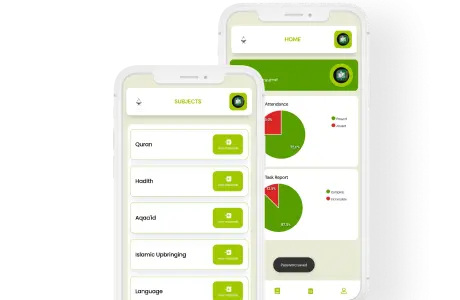
Supporting excellent Islamic education administration? ilmify.app handles the operational detail — student management, Quran progress, attendance, fees — so teachers and leaders can focus on what actually matters: tarbiyah.




 Arabic
 English
 Malay
 Urdu