

Introduction
Ontario is home to more Muslims than any other province in Canada — over 700,000 people, concentrated overwhelmingly in the Greater Toronto Area. Islamic education in Ontario has a long history, a dense institutional network, and some of the most developed Islamic schools in North America. It also has persistent challenges: waiting lists measured in years, teacher shortages, and a maktab sector that still runs largely on paper registers and WhatsApp groups.
This guide maps the full landscape of Islamic education in Ontario — from the basement maktab running two evenings a week to the accredited full-time school with a waiting list stretching to 2028.
Ontario’s Muslim Community: Canada’s Largest
Ontario is home to approximately 700,000–750,000 Muslims, representing nearly 40% of Canada’s total Muslim population. The GTA alone — Toronto, Mississauga, Brampton, Markham, Scarborough, North York, and surrounding areas — houses over 500,000 Muslims, making it one of the most significant Muslim population concentrations in North America outside of Detroit and New York.
The community is ethnically diverse and growing rapidly. South Asian Muslims (Pakistani, Indian, Bangladeshi) form the largest bloc, followed by Arab Muslims (Lebanese, Egyptian, Palestinian, Syrian), Somali Muslims, Afghan Muslims, and converts. This diversity plays out directly in Islamic education: there is no single dominant tradition, no shared curriculum, and a wide range of educational philosophies operating side by side across the region.
| Region | Estimated Muslim Population |
| Mississauga | ~150,000 |
| Brampton | ~120,000 |
| Toronto (core) | ~130,000 |
| Markham / Scarborough | ~80,000 |
| North York | ~60,000 |
| Ottawa | ~100,000 |
| Rest of Ontario | ~60,000 |
This concentration means that the GTA has the highest density of maktabs, Islamic schools, and Hifz programmes in Canada — and also the highest demand, regularly outpacing supply.
The Islamic Education Landscape in Ontario
Islamic education in Ontario spans four main institution types operating simultaneously:
| Type | Schedule | Student Age | Typical Fee | Governance |
| After-school maktab | Mon–Thu, 5:30–7:30 pm | 5–14 | 60–60–60– 100/month | Mosque committee |
| Weekend Islamic school | Sat or Sun, 9 am–1 pm | 5–16 | 40–40–40– 75/month | Mosque committee |
| Full-time Islamic school | Mon–Fri, full day | JK–Grade 12 | 6,000–6,000–6,000– 12,000/year | School board |
| Hifz programme | Intensive or part-time | 8–18 | Varies | Islamic scholar |
The after-school maktab is by far the most common model — virtually every mosque of any size in the GTA runs one. Full-time schools are the most in-demand but supply remains severely constrained. Hifz programmes are growing rapidly as families increasingly prioritise memorisation.
After-School Maktabs in the GTA: How They Work
The after-school maktab is the engine of Islamic education for the majority of Ontario Muslim children. The standard model runs Monday to Thursday, 5:30–7:30 pm, in the mosque or an attached classroom space. Children attend after their regular school day, covering Quran recitation, Islamic studies, Surah memorisation, and duas.
IPC Jame Masjid in Mississauga runs one of the GTA’s most structured after-school programmes: Monday to Thursday 5:30–7:30 pm, $75/month, covering Quran and Qaidah with Tajweed, Islamic Studies, and dua memorisation. Registration is handled through a dedicated online system (Mohid). IPC also layers a weekend madrasa (Saturday mornings) for families who cannot attend weekday sessions.
ACIC Maktab in North York (run by the Afghan Canadian Islamic Centre) adds a distinctive element: Farsi language instruction alongside Quran and Islamic Studies, reflecting its Afghan-Canadian community base. ACIC offers GTA-wide bus transportation — a practical solution to a real barrier for families without reliable transport to the mosque.
A typical two-hour GTA maktab session follows a recognisable pattern:
| Time | Activity |
| 5:30–5:40 | Arrival, attendance, opening du’a |
| 5:40–6:15 | Individual Quran recitation with teacher |
| 6:15–6:55 | Islamic Studies class lesson |
| 6:55–7:15 | Surah/dua memorisation |
| 7:15–7:30 | Homework assignment, closing du’a, dismissal |
Most GTA maktabs operate at or near capacity. Waiting lists at popular programmes are not uncommon, especially for the under-8 age group.
Full-Time Islamic Schools in Ontario
Ontario has the highest concentration of full-time Islamic schools in Canada. These are provincially registered private schools, operating under the Ontario Education Act as independent schools. They follow the Ontario curriculum for core academic subjects (mathematics, language arts, science, social studies) while delivering Islamic studies, Quran, and Arabic as integrated components of the school day.
The Muslim Association of Canada (MAC) operates the largest full-time Islamic school network in Ontario:
| School | Location | Grades | Notes |
| Abraar School | Ottawa | JK–Grade 8 | One of Ontario’s oldest Islamic schools |
| Al-Furqan Ottawa | Ottawa | JK–Grade 8 | MAC-affiliated |
| Al-Furqan Toronto | Toronto | JK–Grade 8 | MAC-affiliated |
| Olive Grove School (OGS) | Mississauga | JK–Grade 8 | 3+ year waiting list; Quran Academy attached |
| Maple Grove School (MGS) | Etobicoke | JK–Grade 8 | MAC-affiliated |
| Niagara Islamic School | Niagara Region | JK–Grade 8 | MAC-affiliated |
Beyond MAC, Ontario has numerous independent full-time Islamic schools including Islamic schools in Mississauga, Brampton, Scarborough, Thornhill, and Ottawa operated by mosque boards and community organisations.
Demand far exceeds supply. Olive Grove School — one of the GTA’s highest-rated Islamic schools — operates with a waiting list extending several years. Across the GTA, Islamic school capacity has not kept pace with the growth of the Muslim community, driving many families to the after-school maktab model by default rather than preference.
Full-time Islamic schools in Ontario are not funded by the province (unlike Catholic schools, which receive public funding). They operate entirely on tuition fees and donations, which keeps per-student costs in the
6,000–6,000–6,000–
12,000/year range — a significant barrier for many families.
Key Institutions: MAC, IPC, ACIC, and Others
Muslim Association of Canada (MAC) — the largest Islamic educational network in Ontario, with full-time schools, part-time schools, and Quran schools across the province. MAC also runs MAC eLearning and youth programmes, and operates multiple Islamic centres that house maktab programmes.
IPC Jame Masjid (Islamic Propagation Centre, Mississauga) — one of the GTA’s most comprehensive Islamic education programmes. Under one roof: after-school Madrasa (Mon–Thu, $75/month), Weekend Madrasa (Saturday), Hifz Academy, IPC Academy Elementary School, and a Montessori Kindergarten. Contact: Maulana Hanzlah (Hanzlah@IPCOntario.com).
ACIC Maktab (Afghan Canadian Islamic Centre, North York) — distinctive in offering Farsi language alongside Quran and Islamic Studies; provides GTA-wide bus transportation. Located at 22 Hobson Ave, North York. Contact: info@maktab.ca.
Al-Huda Schools (GTA) — MAC-affiliated part-time schools operating across multiple GTA locations including Kitchener-Waterloo, Windsor, and Montreal.
Raheeq Institute (Ottawa-adjacent) — a Quran-focused institute within the MAC network, with a specialised emphasis on Quran memorisation.
Al-Otrojah for Quran Studies (Ottawa) — a MAC-affiliated Quran school with dedicated focus on Quran education and Hifz preparation.
Hifz Programmes in Ontario
Hifz — the complete memorisation of the Quran — is increasingly a priority for Ontario Muslim families, reflecting growing community ambition for deep religious formation alongside secular academic excellence. Ontario has more dedicated Hifz programmes than any other Canadian province.
IPC Jame Masjid’s Hifz Academy is one of the GTA’s most prominent. It operates alongside the madrasa and elementary school programmes, allowing students to pursue Hifz while remaining grounded in regular academic subjects. MAC’s Olive Grove School Quran Academy (OGS Quran Academy) also provides a structured Quran memorisation pathway.
Ontario Hifz programmes face a consistent set of challenges:
- Qualified Qaris (Hifz teachers with Ijazah) are in short supply relative to demand
- Most students attend regular school simultaneously, limiting available Hifz hours
- There is no provincial or national Hifz tracking standard
- Progress tracking remains largely informal — teacher’s notebook, verbal parent updates
Families seeking full-time (boarding) Hifz programmes typically send children out of province or out of country — to dedicated Hifz schools in Mississauga, Hamilton, or increasingly to boarding programmes in the UK and South Africa.
Weekend and Sunday Schools
Many Ontario families cannot commit to weekday maktab attendance — competing demands from homework, extracurricular activities, and work schedules make the Monday–Thursday evening model difficult. Weekend Islamic schools offer an alternative.
MAC operates weekend/part-time Islamic schools across Ontario through its Al-Huda school network:
- Al-Huda KW School (Kitchener-Waterloo)
- Al-Furqan Part-Time School (Ottawa)
- Al-Rahma School (Ottawa)
- Al-Huda Windsor
These programmes typically run Saturday mornings or Sunday mornings for three to four hours, covering Quran recitation, Islamic studies, and memorisation. Contact hours are lower than weekday maktabs (3–4 hours/week vs 8 hours/week), which means slower academic progression — but for many families, it is the only feasible option.
IPC Mississauga’s Weekend Madrasa supplements its weekday programme — families who cannot attend on weekdays can enrol in the Saturday morning session, covering the same curriculum at a slower pace.
Governance, Funding, and the Ontario Regulatory Context
Full-time Islamic schools in Ontario must register with the Ontario Ministry of Education as independent schools under the Education Act. They are not eligible for provincial per-pupil funding (unlike Catholic schools), which means they operate entirely on tuition and donations. Some schools register with CISNA for accreditation, which adds a layer of quality assurance but requires significant documentation and governance infrastructure.
After-school maktabs and weekend schools are not regulated by the Ministry of Education. They operate as community programmes under the governance of their mosque board or parent organisation. There is no provincial curriculum requirement, no mandatory teacher qualification, and no inspection regime — governance quality varies enormously from institution to institution.
The Islamic Schools Association of Canada (ISAC), established in 2022, is working to create a collective voice for Ontario (and national) Islamic schools, providing networking, resources, and connections to CISNA accreditation. ISAC represents an important step toward a more formalised sector — but it is still early in its development.
Ontario’s Muslim community has no equivalent of the Catholic school board — there is no publicly funded Islamic school system. This is a recurring political discussion in Ontario, but no legislative change has occurred to date.
Challenges Specific to Ontario
Demand-supply gap: Islamic school capacity in the GTA falls significantly short of community demand. Waiting lists of 2–4 years at popular schools drive families toward alternatives (maktabs, homeschooling, online schools) that may not be their first preference.
Cost of full-time schooling: At
6,000–6,000–6,000–
12,000/year per child, full-time Islamic school is financially inaccessible for many GTA Muslim families, particularly newer immigrants. Fee subsidies exist at some schools but are rarely advertised.
Teacher recruitment: Ontario’s competitive labour market makes it difficult for Islamic schools to attract and retain qualified teachers at the salary levels they can afford. Part-time maktab teachers are often paid below minimum effective hourly rates once preparation time is included.
Islamophobia context: Rising Islamophobia in Canada — particularly after high-profile incidents including the London, Ontario truck attack of 2021 — has increased the urgency many families feel about Islamic education, driving demand further. But it has also made mosque visibility and new school construction more politically contentious in some municipalities.
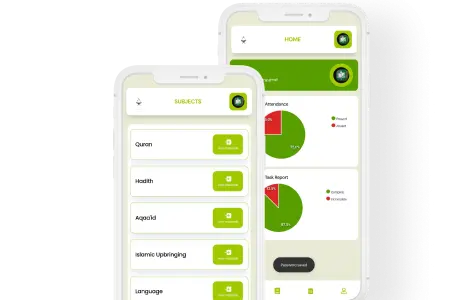
Administration and digitisation: Most GTA maktabs still run on paper registers, WhatsApp groups, and informal fee collection. The institutional capacity to upgrade to digital management systems exists — the platform to do so cost-effectively has, until recently, not been available in a form designed for Islamic education specifically.
Conclusion
Ontario is the centre of Islamic education in Canada — with the largest Muslim community, the greatest institutional density, and the most pressing unmet demand. From Mississauga’s IPC Madrasa to North York’s ACIC Maktab, from MAC’s network of full-time schools to hundreds of independent mosque maktabs, Ontario’s Islamic educational ecosystem is rich, diverse, and under sustained pressure to grow and professionalise.
For the institutions that form this ecosystem, digital administration is no longer optional — it is the infrastructure that allows them to serve their communities at the scale and quality those communities deserve.
Ready to modernise your Ontario maktab or Islamic school? Start free at ilmify.app — purpose-built for maktabs and Islamic schools in Ontario and across Canada.
Related Articles
- Islam and Islamic Education in Canada: A Complete Overview
- After-School Maktabs in Canada: The Backbone of Islamic Education for Muslim Children
- ACIC Maktab Toronto: The Afghan-Canadian Maktab Model and What Makes It Unique
- IPC Jame Masjid Mississauga: Madrasa, Hifz Academy, and Weekend Programs Explained
- Ommah Madrasah Ottawa: Arabic, Quran and After-School Programs in Canada’s Capital
- Islamic School Management Software for Canada: What Institutions Need




 Arabic
  English
  Malay
Malay  Urdu
Urdu