
Introduction
British Columbia’s Muslim community is smaller than Ontario’s or Quebec’s, but it is growing rapidly — and Metro Vancouver, where virtually all BC Muslims are concentrated, has developed a meaningful Islamic education ecosystem over the past three decades. Like Alberta, BC offers partial provincial funding for private religious schools, making full-time Islamic schooling more accessible than in Ontario. Unlike Alberta, the BC Muslim community lacks the same institutional scale of MAC’s Alberta network — and Vancouver’s high cost of living creates additional pressures on already-stretched Islamic education budgets.
This guide maps the Islamic education landscape in BC: who the key institutions are, how the funding model works, and what challenges the sector faces.
BC’s Muslim Community: Concentrated in Metro Vancouver
British Columbia is home to approximately 90,000–100,000 Muslims — roughly 5% of Canada’s total Muslim population. The vast majority live in Metro Vancouver, with smaller communities in Surrey, Burnaby, Abbotsford, Kelowna, and Victoria.
Metro Vancouver’s Muslim community is among the most ethnically diverse in Canada, reflecting BC’s immigration patterns: South Asian (Pakistani, Indian, Bangladeshi), Arab (Lebanese, Palestinian, Egyptian), Iranian, Somali, Southeast Asian (Malaysian, Indonesian), and converts. This diversity mirrors the national pattern but with a particularly strong South Asian presence in Surrey and a notable Iranian-background community in the city.
| City/Region | Approximate Muslim Population |
| Surrey | ~30,000 |
| Vancouver (city) | ~25,000 |
| Burnaby | ~10,000 |
| Abbotsford | ~8,000 |
| Richmond / Delta | ~7,000 |
| Other Metro Vancouver | ~15,000 |
Surrey has the highest Muslim population density in Metro Vancouver and consequently the highest concentration of Islamic education institutions.
The Islamic Education Landscape in BC
BC’s Islamic education operates across the familiar Canadian institutional types, though at lower institutional density than Ontario or Alberta:
| Type | Metro Vancouver | Notes |
| After-school maktab | Multiple mosque maktabs | Surrey and Burnaby heaviest concentration |
| Weekend Islamic school | Multiple mosques | Most common format in Vancouver proper |
| Full-time Islamic school | Several schools | Partially funded by provincial government |
| Hifz programme | Several centres | Growing demand |
| Online / home-based | Growing | High housing costs pushing some families toward flexible models |
BC’s Private School Funding Model
Like Alberta, British Columbia offers partial provincial funding for registered independent schools. BC’s system uses a grouping model:
| School Group | Provincial Funding | Requirements |
| Group 1 | 50% of per-student public funding | Must follow BC curriculum; teachers must be certified |
| Group 2 | 35% of per-student public funding | Follows BC curriculum with modifications |
| Group 3 | No provincial funding | Operates independently of BC curriculum requirements |
BC’s 50% funding rate for Group 1 schools is less than Alberta’s 70% — but still substantially better than Ontario or Quebec’s zero funding for non-Catholic private schools. Full-time Islamic schools that register as Group 1 schools can charge lower tuition fees than would otherwise be necessary to sustain operations.
The requirement for provincially certified teachers in Group 1 schools adds a qualification challenge: Islamic school staff must hold BC teacher certification, which requires completing a BC Faculty of Education teacher training programme. This is a real barrier for otherwise-qualified Islamic Studies teachers who have religious knowledge but lack provincial teacher certification.
MAC in British Columbia
The Muslim Association of Canada operates in BC through:
MAC Vancouver Centre — the primary MAC Islamic centre in Vancouver, offering Islamic education programming, community events, and religious services.
Albayan School Vancouver — a MAC part-time school in Vancouver offering weekend Islamic education. Albayan serves the Vancouver Muslim community with Quran, Islamic Studies, and Arabic instruction on a weekend schedule.
MAC’s BC presence is smaller than its Alberta or Ontario footprint — reflecting both the smaller BC Muslim population and the higher operational costs of running institutions in Metro Vancouver. MAC Vancouver operates primarily as a community centre and part-time school rather than offering the full range of full-time schooling and maktab options that MAC runs in the GTA.
Weekend Islamic Schools and Maktabs in Vancouver
The weekend Islamic school is particularly dominant in Metro Vancouver — more so than in the GTA or Alberta. Several factors drive this:
Vancouver’s geography and traffic: Metro Vancouver is large, sprawling, and traffic-congested. Getting children to a mosque on a weekday evening — through bridge or tunnel bottlenecks — can involve 45–90 minute commutes. The weekend model eliminates this weekday logistics challenge.
High cost of living: Vancouver is among the most expensive cities in Canada. Muslim families, many of whom are newer immigrants, often have both parents working full-time. The flexibility of a weekend programme fits more household schedules.
Community structure: Unlike the GTA where very large mosques (serving thousands of families) can sustain weekday maktabs with many class levels, Metro Vancouver’s mosque community is more dispersed — smaller individual mosque congregations make the four-evenings-per-week model harder to staff adequately.
Most Metro Vancouver mosque maktabs run Saturday or Sunday mornings for 3–4 hours, covering Quran recitation, Islamic Studies, and memorisation. Fees are in the
40–40–40–
70/month range.
Surrey — with the largest Muslim population concentration in BC — has the highest density of mosque maktabs, some of which run weekday after-school programmes similar to the GTA model.
Full-Time Islamic Schools in BC
BC has several full-time Islamic schools, concentrated in Surrey and Burnaby where the Muslim population density is highest. These schools operate as registered independent schools under the BC Independent School Act and can access provincial Group 1 or Group 2 funding.
Notable institutions include:
Al-Hidayah Islamic School (Surrey) — one of BC’s longer-established full-time Islamic schools, serving the Surrey Muslim community from early primary grades.
Muslim Community School and similar institutions — Metro Vancouver has multiple Islamic school options at the primary level; a complete full secondary (Grade 12) option remains limited — most BC Islamic schools serve up to Grade 7 or 8.
The gap between primary and secondary Islamic schooling in BC is notable. Few institutions offer Islamic schooling through Grade 12, meaning Muslim families who want their children in an Islamic environment through high school face limited options. This is an area of unmet demand that parallels the situation in Ontario and reflects the broader challenge of sustaining Islamic secondary schooling in a minority Muslim context.
Hifz Programmes in BC
Hifz programmes are available in Metro Vancouver through several mosques and dedicated Hifz circles in Surrey, Burnaby, and Vancouver. Demand has grown significantly in the past decade as the BC Muslim community has matured and families have placed increasing value on Quran memorisation.
BC Hifz programmes predominantly operate as part-time, non-boarding programmes — students attend Hifz sessions before or after regular school, pursuing memorisation alongside their academic studies. Fully boarding Hifz schools are rare in BC; families seeking intensive boarding Hifz programmes typically look to Ontario, the UK, or South Africa.
Raheeq Institute — a MAC-affiliated Quran programme that began in Edmonton — serves as a model that BC institutions have drawn inspiration from in developing their own Quran memorisation structures.
Challenges Specific to BC
Cost of living and staffing: Vancouver’s housing costs mean that hiring qualified Islamic school teachers — who could earn considerably more in other sectors — requires salaries that many Islamic schools struggle to offer. Teacher turnover is high, and recruitment from outside BC is constrained by Vancouver’s cost of living.
Group 1 certification requirement: The BC requirement for provincially certified teachers in funded Group 1 schools creates a structural challenge. Many excellent Islamic Studies teachers have Islamic knowledge but no BC teacher certification. Schools must either support teachers through certification programmes (time and cost) or hire certified teachers and supplement their Islamic knowledge through in-service training.
Geographic dispersal: Metro Vancouver’s sprawl means that no single mosque can serve the full Muslim community of the region. Islamic education institutions are consequently spread thinly across multiple municipalities, limiting the scale any single institution can achieve.
Smaller philanthropic base: BC’s Muslim community, while growing, has a smaller philanthropic base for Islamic education than the GTA. This limits the capital available for school buildings, equipment, and sustainability funds.
Conclusion
British Columbia’s Islamic education sector is smaller than Ontario’s or Alberta’s — but it is growing, and it has structural advantages that Ontario lacks: partial provincial funding and a community that is investing seriously in building institutional quality. The challenges of Vancouver’s cost of living, geographic dispersal, and teacher certification requirements are real — but they are solvable problems for communities with the will to address them.
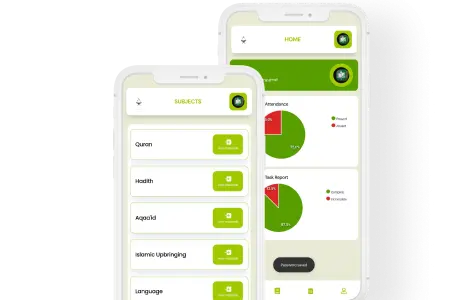
For the maktabs and Islamic schools of Metro Vancouver, digital administration tools are increasingly important: they allow institutions to operate at a higher standard with the limited staff and volunteer capacity available.
Ready to upgrade your BC maktab’s administration? Start free at ilmify.app — built for Islamic educational institutions across Canada.




 Arabic
  English
  Malay
Malay  Urdu
Urdu