

Introduction
Walk into any Islamic school administrator’s office and you will find one of two things: a shelf of textbooks that were chosen because someone recommended them years ago, or a stack of catalogues from providers that were never properly compared. The same is true for Muslim homeschooling families — most start with a search, find dozens of options with no clear framework for choosing between them, and either pick the most recognisable name or default to what their community uses.
This guide changes that. Whether you are running a full-time Islamic school, a mosque maktab, or a home education programme, the Islamic curriculum landscape in 2026 has more high-quality options than at any previous point in history — and more confusion. By the end of this guide, you will understand every major category of Islamic curriculum, know what questions to ask when evaluating any provider, and have a clear path toward choosing what fits your institution and your students.
What Is an Islamic Curriculum?
An Islamic curriculum is any structured programme of study that incorporates Islamic values, knowledge, or methodology as a core element — not merely as an add-on. In practice, this means one of three things:
Islamic Studies as a subject: The school or home uses a standard secular curriculum for core subjects (maths, English, science) and adds Islamic Studies as a dedicated class. Most maktabs, weekend schools, and many full-time Islamic schools operate this way.
Islamically integrated curriculum: Islamic values and references are woven throughout all subjects. Science classes reference creation; literature classes use stories from the Seerah; history classes connect world events to the Muslim world’s role in them. Providers like Allamah Education and The Tarbiyah Project are built around this model.
Full Islamic curriculum: All subjects — including core academics — are designed or reframed from an Islamic worldview. The Islamic Shakhsiyah Foundation and MFERD (India) represent this approach at the school level; many homeschooling families attempt it independently.
Understanding which model you need is the first decision every school or family must make before evaluating any specific provider.
The Scale of the Market
The table below gives a sense of how many providers now exist across the major categories:
| Category | Estimated Active Providers | Primary Market |
| Full K–12 curriculum publishers | 15–20 | Islamic schools, homeschoolers |
| Online Islamic schools | 10–15 | Families, diaspora communities |
| Homeschool-specific resources | 30+ | Muslim homeschooling families |
| Quran & Islamic Studies only | 20–30 | Maktabs, weekend schools, full-time schools |
| Integrated/STEM Islamic curriculum | 8–12 | Full-time Islamic schools |
| Digital apps and platforms | 10–15 | Supplementary use across all contexts |
Source: ilmify research, April 2026. Figures include English-language providers; Arabic-only providers not included.
The Seven Categories of Islamic Curriculum
Before reviewing specific providers, it helps to understand the seven distinct categories the market divides into. Every provider fits primarily into one of these, though some span multiple.
1. Full K–12 Islamic Curriculum Publishers
These are companies or organisations that have produced a complete, structured set of textbooks and lesson materials designed to cover the Islamic Studies component of a school’s curriculum across all grade levels. Examples include IQRA International (Grades K–12), Safar Publications (structured Qaida through Islamic Studies), Goodword Islamic Studies (Grades 1–10), and Dar-us-Salam Publications (Grades 1–12).
2. Online Islamic Schools and Academies
Full schools operating online that teach both Islamic Studies and core academic subjects. Some are accredited (Sahlah Academy and Everyday Ibaadah Academy hold Cognia accreditation), others are non-accredited but structured. These serve homeschooling families, diaspora communities, and families in areas without access to good full-time Islamic schools.
3. Homeschool-Specific Resources and Blogs
A large, decentralised ecosystem of curriculum resources, free printables, lesson plans, and methodology blogs created by Muslim homeschooling families for Muslim homeschooling families. Sites like Ihsaan Home Academy, TJ Homeschooling (Talibiddeen Jr), Salam Homeschooling, and Our Muslim Homeschool collectively serve hundreds of thousands of families — often at no cost.
4. Quran and Islamic Studies Specialist Providers
Organisations focused specifically on Quran education, Islamic Studies, or sacred sciences. These include Al-Kisa Foundation (Kisa Kids), SeekersGuidance’s youth curriculum, the Yaqeen Institute curriculum for high school, and Islamic Studies Resources (ISR) with its downloadable lesson plans and worksheets.
5. Integrated, STEM, and Liberal Arts Providers
Curriculum providers that embed Islamic perspective across secular subjects. 1001 Inventions (STEM and Muslim contributions to science), 5D Thinking (Islamic framework for the natural sciences), and Swords & Butterflies (Islamic English Language Arts) all serve schools seeking integration rather than simple addition.
6. Digital Platforms and Apps
Technology-first providers delivering curriculum content through apps and online platforms. These include Studio Arabiya, My Quran Journey, Muslim Kids TV, and Primary Ilm. Most serve as supplementary tools rather than replacements for structured programmes.
7. Special Programmes
Providers serving specific communities or needs: MUHSEN’s adaptive curriculum for students with special educational needs, Sakinah Circle’s nature-based Islamic learning, and the Islamic Curriculum Initiative’s Palestine and Masjid al-Aqsa content.
Full K–12 Islamic Curriculum Publishers
Full-year textbook publishers are the backbone of structured Islamic Studies programmes in most full-time Islamic schools and many maktabs. They provide scope, sequence, and consistency — the teacher knows what to teach this week, this term, and this year.
The key publishers, their geographic reach, and their primary grade coverage are summarised below:
| Publisher | Primary Market | Grade Range | Theological Orientation | Language |
| IQRA International | USA, North America | K–12 | Mainstream Sunni | English |
| Safar Publications | UK, global madrasahs | Qaida–Advanced | Mainstream Sunni | English, Urdu |
| Goodword Islamic Studies | South Asia, global | Grades 1–10 | Mainstream Sunni | English |
| Dar-us-Salam Publications | Saudi-influenced markets | Grades 1–12 | Mainstream Sunni (Salafi) | English, Arabic |
| An-Nasihah Publications | UK, Europe | All levels | Mainstream Sunni (Deobandi-adjacent) | English |
| MFERD | India | Grades 1–10 | Mainstream Sunni | English, Urdu |
| Rawdah Series (Moral Publishers) | India, South Asia | Grades 1–8 | Mainstream Sunni | English |
Source: Provider websites; ilmify research, April 2026.
For detailed reviews of each publisher, see the dedicated articles in Silo CP-B.
Online Islamic Schools and Academies
The past five years have seen a significant expansion in accredited and structured online Islamic schools. These serve families who want their children to receive both a recognised academic qualification and a strong Islamic education — without being limited by what is available locally.
| School | Accreditation | Grade Range | Primary Market | Fees |
| Sahlah Academy | Cognia | K–12 | USA, global | Paid |
| Everyday Ibaadah Academy | Cognia | K–12 | USA | Paid |
| Safar Academy | UK-registered | All levels | UK, global | Paid |
| Legacy International Online HS | — | Grades 6–12 | USA, global | Paid |
| Bayaan Academy | — | Primary–Secondary | Global | Paid |
| Studio Arabiya | — | All ages | Global | Paid |
Source: School websites; ilmify research, April 2026.
Accreditation matters primarily for US families who need their children’s courses to count toward college admissions transcripts. For families outside the US, the quality of the Islamic Studies content and teacher qualifications are often more important selection criteria. For a full comparison and individual school reviews, see Silo CP-C.
Islamic Homeschool Curriculum and Resources
Muslim homeschooling has grown substantially since 2020. The community now has access to more structured curriculum options than ever before — from the project-based boxed curriculum of Taqwa Curriculum (PreK–Year 2, UK-focused) to the comprehensive Islamically integrated unit studies of Allamah Education (ages 4–12) to the entirely free, community-produced resources of Ihsaan Home Academy and Salam Homeschooling.
| Resource Type | Examples | Cost | Best For |
| Full structured curriculum | Taqwa Curriculum, Allamah Education, Quranic Tarbiyah | Free–Paid | Families wanting year-by-year structure |
| Charlotte Mason–inspired | Our Muslim Homeschool, Swords & Butterflies | Free–Paid | Families preferring literature-led learning |
| Free printables and worksheets | Ihsaan Home Academy, TJ Homeschooling, Umm Assad | Free | Supplementary use or budget-conscious families |
| Salafi-methodology resources | Salam Homeschooling, Umm Maimoonah’s Journal | Free | Families following Salafi methodology |
| Co-operative / community | Sakinah Circle, Fitrah Forest School | Varies | Group learning and community settings |
Source: Provider websites; ilmify research, April 2026.
For detailed guides and individual reviews, see Silo CP-D.
Quran and Islamic Studies Curriculum
For maktabs, weekend Islamic schools, and full-time schools that want a specialist Quran programme rather than a general textbook series, the dedicated Quran and Islamic Studies providers offer more depth. Safar Publications’ Qaida and Tajweed sequence is widely used in UK madrasahs. Al-Kisa Foundation’s Kisa Kids programme is well-regarded in North America for children’s Islamic Studies. The Yaqeen Institute curriculum is designed specifically for high school students engaging with questions of faith and doubt.
These providers focus on Quran, Aqeedah, Seerah, Fiqh, and Hadith as subjects in their own right, rather than as components of a broader academic programme. For reviews and comparisons, see Silo CP-E.
Integrated, STEM, and Liberal Arts Islamic Curriculum
A smaller but growing category of providers helps Islamic schools embed Islamic perspective across all subjects — not just Islamic Studies class. This is the most ambitious form of Islamic curriculum and the hardest to implement consistently.
Key providers include The Tarbiyah Project (values-based integrated framework), 5D Thinking (Islamic framework for science), 1001 Inventions (Muslim contributions to STEM), and Swords & Butterflies (Islamic English Language Arts using Charlotte Mason and Classical methodology).
Full-time Islamic schools looking to offer something educationally distinctive — not just “a secular school with Islamic Studies added” — should explore these providers. For detailed coverage, see Silo CP-F.
Digital Platforms and Apps
Digital platforms are best understood as supplementary tools rather than complete curriculum replacements. A child using My Quran Journey or Muslim Kids TV is benefiting from excellent educational content — but a school or home programme still needs a structured spine to ensure scope and sequence are covered across the year.
The most effective use of digital tools is as enrichment alongside a structured curriculum, as homework support, or as a way to reach students who need additional reinforcement.
How to Match Curriculum to Your Institution Type
Different institution types have different curriculum needs. The table below gives a starting framework:
| Institution Type | What You Need | Recommended Starting Point |
| Full-time Islamic school (UK/USA) | K–12 structured series + integration framework | IQRA or Safar Publications as spine; Tarbiyah Project for integration |
| Maktab / weekend school | Structured Islamic Studies by age group; Quran programme | Safar Publications, An-Nasihah, Al-Kisa Foundation |
| Muslim homeschool family | Flexible, parent-led framework with Islamic content | Allamah Education, Quranic Tarbiyah, or free resources as base |
| Online Islamic school | Accredited academic content + Islamic Studies | Sahlah Academy or Everyday Ibaadah Academy |
| Madrasa (South Asia/Africa) | Board-affiliated curriculum or structured publisher series | Safar, MFERD (India), Goodword (South Asia) |
| Islamic co-op | Flexible, group-compatible resources | Taqwa Curriculum, Sakinah Circle, Charlotte Mason resources |
Source: ilmify editorial framework, April 2026.
For a detailed decision framework, see How to Choose an Islamic Curriculum.
From Curriculum Selection to Curriculum Management
Choosing a curriculum is only step one. Once selected, a curriculum needs to be:
- Delivered consistently across every class and every teacher
- Tracked so administrators know which students are on pace and which need support
- Assessed so parents receive meaningful progress reports
- Updated when new editions or supplementary materials arrive
This is where most Islamic schools fall short. A school might select Safar Publications or IQRA International as its curriculum — excellent choices — but then manage delivery through a combination of teacher notebooks, WhatsApp messages to parents, and year-end paper reports. The curriculum is sound; the management infrastructure is not.
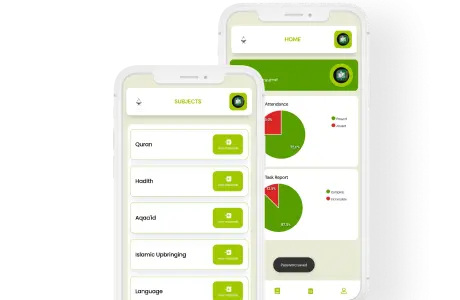
ilmify.app is built specifically to bridge this gap — providing Islamic schools with the management tools to deliver, track, and report on any structured curriculum. For a practical guide to curriculum delivery management, see How to Manage Islamic Curriculum Delivery Across Multiple Classes and Best Islamic School Management Software for Curriculum Tracking in 2026.
Conclusion
The Islamic curriculum landscape in 2026 is richer than it has ever been. Whether you need a full K–12 textbook series, an accredited online school, a free homeschool resource, or a specialist Quran programme, a high-quality option exists. The challenge is no longer access — it is navigating the market with a clear framework.
This guide is your starting point. Follow the silo links to explore specific categories in depth, and when you are ready to move from curriculum selection to curriculum management, explore how ilmify.app helps Islamic schools deliver, track, and report on any structured curriculum they choose.
👉 Discover how ilmify.app supports curriculum delivery in Islamic schools →
Related Articles
You might also find these helpful:
- 📚 Islamic Studies vs. Integrated Curriculum: What’s the Difference?
- 📚 How to Choose an Islamic Curriculum: A Decision Framework
- 🏫 Best Islamic Curriculum Publishers in 2026
- 🏫 Best Online Islamic Schools in 2026
- 📚 Islamic Homeschool Curriculum: The Complete 2026 Guide
- 📚 Best Quran and Islamic Studies Curriculum for Schools and Maktabs
- ⚙️ How to Manage Islamic Curriculum Delivery Across Multiple Classes
- ⚙️ Best Islamic School Management Software for Curriculum Tracking in 2026




 Arabic
 English
 Malay
 Urdu