

Introduction
The United Arab Emirates presents a distinctive model for Islamic education — a modern, internationally connected Muslim nation where the state takes Islamic education seriously through regulated, well-funded institutions, while simultaneously serving one of the world’s most diverse expatriate populations. Islamic education in the UAE is shaped by IACAD (Islamic Affairs and Charitable Activities Department) in Dubai, by Awqaf authorities across the emirates, by Sharjah’s exceptional investment in Quran institutions, and by the practical reality that the UAE’s Muslim population includes citizens, Arab expatriates, South Asian Muslims, Southeast Asian Muslims, and Muslim communities from almost every country on earth. Understanding the UAE’s Islamic education system means understanding this layered, regulated, and internationally diverse context.
Islam in the UAE: A Modern Muslim Nation
| Feature | Details |
| Population | ~9.9 million (2024 estimate) |
| UAE citizens | ~1.1 million (~11% of population) |
| Expatriates | ~8.8 million (~89%) — of whom the majority are Muslim |
| Muslim percentage | ~76% of total population |
| Madhab | Maliki dominant among UAE nationals; Shafi’i, Hanafi among South/Southeast Asian expats |
| Islamic tradition | Mainstream Sunni; tolerant, moderate tone — reinforced by state policy |
| Language | Arabic (official); English widely used; Urdu, Hindi, Tagalog, Bengali prevalent among expat community |
| State and Islam | Islam is the state religion; Islamic education is state-funded and regulated |
The UAE’s demographic reality — 89% expatriate, majority Muslim — makes its Islamic education system uniquely complex. Institutions serve Emirati citizens who speak Arabic, South Asian Muslims who may speak Urdu or Bengali, Arab expatriates from Egypt, Jordan, Syria, and other countries, and Muslim communities from Southeast Asia and Africa.
The Islamic Education Landscape
| System | Description | Governance |
| Government school Islamic curriculum | Mandatory Islamic studies for all Muslim students in government schools | Ministry of Education |
| IACAD Quran memorisation (Maktoum Centres) | Dubai’s primary Quran memorisation centre network — IACAD-registered | IACAD (Dubai) |
| Awqaf Quran centres | Quran memorisation and Islamic education centres across other emirates | General Authority of Islamic Affairs and Awqaf (other emirates) |
| Mosque-based Halaqat | Quran study circles in mosques — community-level | IACAD / Awqaf per emirate |
| Islamic Cultural Centres | Community Islamic education centres, often expatriate-focused | Various — mosque committees, Islamic organisations |
| Private Islamic schools | International Islamic schools; Arabic-medium Islamic schools | Ministry of Education private school division |
| Premium institutions | Holy Quran Academy (Sharjah); Al Qasimia University (Sharjah) | Emirate of Sharjah |
Governance: IACAD, Awqaf, and Ministry of Education
Islamic education in the UAE is governed by multiple authorities — one for each emirate, with federal coordination:
| Authority | Emirate | Role |
| IACAD — Islamic Affairs and Charitable Activities Department | Dubai | Registers and oversees all mosques, Quran centres, Islamic organisations in Dubai; runs Maktoum Quran memorisation programme |
| General Authority of Islamic Affairs and Awqaf | Abu Dhabi + other emirates | Oversees mosques and Islamic education in Abu Dhabi, Sharjah, Fujairah, Ajman, Ras al-Khaimah, Umm al-Quwain |
| Sharjah Islamic Affairs Department | Sharjah | Operates under Ruler of Sharjah’s direct interest in Quran education |
| Ministry of Education (federal) | All UAE | Islamic studies curriculum in government and private schools |
The emirate-level governance means that the Quran centre experience varies across Dubai, Abu Dhabi, Sharjah, and the other emirates — though national standards are maintained through federal oversight.
Quran Memorisation Centres: The IACAD and Maktoum System
The most prominent Quran memorisation infrastructure in Dubai is the Maktoum Quran Memorisation Centre system — operated under IACAD:
| Feature | Details |
| Full name | Mohammed bin Rashid Al Maktoum Quran Memorisation Centres |
| Operator | IACAD (Islamic Affairs and Charitable Activities Department, Dubai) |
| Purpose | Free Quran memorisation programmes for residents of Dubai |
| Eligibility | Muslim residents — citizens and expatriates |
| Registration | Via IACAD e-services portal |
| Curriculum | Systematic Hifz with Tajweed; structured progression; Ijazah pathway |
| Locations | Multiple centres across Dubai emirate |
| Language | Arabic medium; some accommodation for non-Arabic speakers |
The Maktoum Centres represent the UAE’s commitment to making quality Quran education accessible — free, regulated, and available to both citizens and the Muslim expatriate majority. See Quran Memorisation Centres in the UAE for full detail.
Premium Quran Institutions: Sharjah’s Leadership
The Emirate of Sharjah, under its ruler Sheikh Dr. Sultan bin Muhammad Al Qasimi, has made exceptional investments in Quran education institutions:
Holy Quran Academy (Sharjah) — مجمع القرآن الكريم بالشارقة:
- A comprehensive Quran complex combining museums (seven specialised museums of Quran manuscripts, history of Mushaf writing, Qira’at), academic programmes, and an international online Quran academy
- Houses the Museum of the Seven and Ten Qira’at — one of the most significant in the world
- Runs the Sharjah Global Electronic Quran Academy (مقرأة الشارقة الإلكترونية العالمية) — online Quran programmes for international students
- Physical address: Sharjah
Al Qasimia University — College of Holy Quran:
- The UAE’s first dedicated university College of Holy Quran — established 2017
- Awards Bachelor of Holy Quran Sciences degree
- Focus: Hifz, Tajweed, Qira’at, Quran sciences (Ulum al-Quran), Tafsir
- Programme specifically trains students in multiple Qira’at and prepares for Ijazah
See Holy Quran Academy Sharjah and Al Qasimia University College of Holy Quran for full detail.
Islamic Schools in the UAE
The UAE has a wide range of Islamic school options alongside government schools:
| Type | Description | Language | Who attends |
| Government Arabic schools | Full Islamic curriculum; Arabic medium | Arabic | Emirati and Arab students |
| Private Arabic Islamic schools | Independent schools; strong Islamic curriculum | Arabic | Arab families preferring Islamic environment |
| International Islamic schools | Islamic values in English-medium environment | English | English-speaking Muslim families; Western Muslims |
| Indian/Pakistani Islamic schools | Serving South Asian communities; Urdu medium available | English + Urdu/Hindi | South Asian Muslim expats |
| Islamic Cultural Centres | Community-based Islamic education; part-time | Arabic, English, Urdu | Mixed communities |
See Islamic Schools in the UAE for full detail.
Expat Islamic Education: A Unique UAE Feature
The UAE’s massive Muslim expatriate population — South Asians, Arabs, Southeast Asians, Africans — creates an Islamic education demand that is largely unmatched anywhere else in the world:
| Community | Islamic education pattern |
| Arab expatriates (Egyptian, Jordanian, Syrian, Lebanese) | Attend Arabic-medium mosque Halaqat and Quran centres; children in Arabic Islamic schools |
| South Asian Muslims (Pakistani, Indian, Bangladeshi) | Community mosques with Urdu/Bengali Quran classes; South Asian Islamic schools; IACAD centres |
| Southeast Asian Muslims (Indonesian, Malaysian, Filipino) | Community mosque programmes; some dedicated centres |
| Western Muslims | International Islamic schools; English-medium Quran classes; online Quran platforms |
The demand for English-medium, multilingual, and culturally appropriate Islamic education from the UAE’s Muslim expat community has driven a significant private market in Islamic education services. See Expat Islamic Education in the UAE for full detail.
The Ijazah Culture in the UAE
The UAE has a strong Ijazah culture, shaped by:
- IACAD-registered centres require teachers to hold Ijazah credentials
- Al Qasimia University’s College of Holy Quran includes Qira’at and Ijazah in its degree programmes
- Qualified Shuyukh from Egypt, Saudi Arabia, and other countries teach in UAE centres and grant Ijazah
- The Holy Quran Academy Sharjah hosts Quran events and programmes that include Ijazah-linked recitation
- Demand for Ijazah from the Muslim expatriate community — many come from traditions where Ijazah is highly valued
See Ijazah and Talaqqi in UAE Quran Centres for full detail.
Key Statistics
| Metric | Estimate |
| IACAD-registered mosques (Dubai) | 1,700+ |
| Maktoum Quran Memorisation Centres | Multiple locations across Dubai |
| Al Qasimia University students | Growing; UAE’s first Quran Sciences degree |
| Holy Quran Academy Sharjah | 7 specialised Quran museums; international online academy |
| Private Islamic schools | Dozens — Arabic and English medium |
| Dominant Madhab among UAE nationals | Maliki |
| Primary recitation mode | Hafs ‘an ‘Asim |
| Muslim population | ~7.5 million |
Frequently asked questions
Q: Is Islamic education compulsory in UAE government schools?
Yes — Islamic studies is a mandatory subject for all Muslim students in UAE government schools. Non-Muslim students in government schools are not required to take Islamic studies. The curriculum covers Quran, Tajweed basics, Islamic ethics, fiqh, aqeedah, and Seerah.
Q: Can expatriate Muslims enrol in IACAD Maktoum Quran Centres?
Yes — the Maktoum Quran Memorisation Centres are open to Muslim residents of Dubai, both citizens and expatriates. Registration is done through IACAD’s online portal. The centres provide free Quran memorisation education to all Muslim residents.
Q: How do Islamic education facilities in Dubai differ from Sharjah?
Dubai’s Islamic education is primarily managed by IACAD with a modern, regulatory framework — the Maktoum Centres are the flagship. Sharjah has made deeper investments in premium Quran institutions — the Holy Quran Academy and Al Qasimia University reflect the Ruler of Sharjah’s personal commitment to Quran sciences. Both emirates offer high-quality Quran education but with different emphases.
Q: Is there Islamic education available in English in the UAE?
Yes — particularly for the English-speaking Muslim expat community. International Islamic schools teach Islamic studies in English; some Quran centres offer English-medium instruction; online platforms based in the UAE offer English-medium Quran education; community mosques sometimes run English Quran classes.
Q: What is IACAD and why does it matter for Islamic education?
IACAD (Islamic Affairs and Charitable Activities Department) is Dubai’s official body for all Islamic affairs — it licenses and registers mosques, Quran centres, Islamic organisations, and charitable activities in Dubai. Any Islamic education institution operating in Dubai should be IACAD-registered; the registration provides legitimacy, regulatory compliance, and access to support.
Conclusion
The UAE’s Islamic education system — regulated by IACAD and Awqaf, anchored by the Maktoum Quran Centres, elevated by Sharjah’s exceptional Quran institutions, and serving one of the world’s most diverse Muslim populations — is a model of modern Islamic education governance. For administrators of Quran centres, Islamic schools, and community Islamic education programmes across Dubai, Abu Dhabi, Sharjah, and the other emirates, managing the complexity of multi-nationality student bodies, IACAD registration requirements, Hifz and Ijazah pathways, and parent communication across language communities requires purpose-built digital tools.
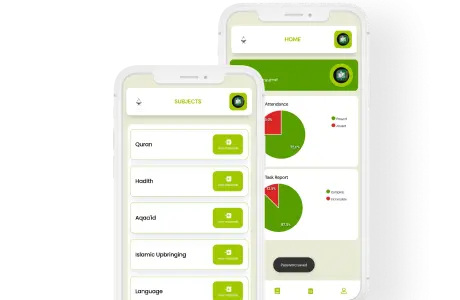
Ilmify supports UAE Islamic education institutions — IACAD-registered Quran centres, Islamic schools, and community programmes — with multilingual student management, Hifz and Muraja’ah tracking, and Ijazah pathway tools built for the UAE’s diverse Islamic education context. Explore Ilmify →




 Arabic
 English
 Malay
 Urdu