
Introduction
The UAE’s Quran education tradition is built on Talaqqi — direct oral recitation from student to teacher — as the irreducible foundation of authentic Quran transmission. Every serious Quran learner in the UAE, whether Emirati citizen or expatriate resident, receives their Quran education through this method. Ijazah — the formal certification that a student has recited the Quran correctly and is authorised to teach and transmit — is the goal that the most dedicated students work toward. Understanding how Talaqqi and Ijazah function within UAE Quran centres is essential for anyone seeking proper Quranic certification in the Emirates.
What Is Talaqqi and Why It Matters in the UAE
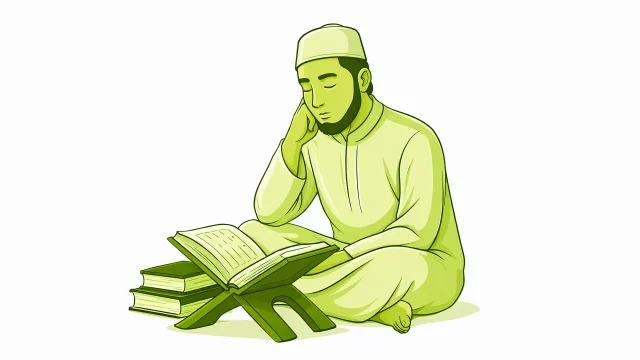
Talaqqi (تلقي — “receiving directly”) is the method by which the Quran is properly transmitted. It means: the student recites to the teacher, face to face, and the teacher listens, corrects, and certifies. It is not reading from a book, not watching a video, not listening to a recording — it is live, direct, oral transmission.
| Why Talaqqi Matters | Explanation |
| Authenticity of transmission | The Quran was revealed orally and transmitted orally — this chain has never been broken |
| Error detection | Only live recitation allows a teacher to hear and correct Makhraj, Sifat, and Tajweed errors in real time |
| Ijazah prerequisite | No traditional scholar will grant Ijazah based on anything other than Talaqqi |
| Connection to the Prophet ﷺ | The Sanad chain — the documented line of teachers — connects the student back to those who heard from the Prophet ﷺ directly |
In the UAE, Talaqqi is standard practice in all IACAD-regulated Quran centres, mosque Halaqat, and at Al Qasimia University.
Talaqqi in UAE Quran Centres: How It Works
In UAE Quran centres, Talaqqi sessions typically work as follows:
| Element | Detail |
| Session format | Student recites a portion (Hizb, Juz’, or specific Suwar) to the teacher — teacher listens, interrupts to correct |
| Frequency | Daily (for intensive Hifz students) or 2–3 times per week (standard programmes) |
| Session length | 15–45 minutes per student depending on programme intensity |
| Group vs individual | Both exist — individual Talaqqi is preferred for Hifz; group Halaqah for Tajweed instruction |
| Tracking | Teacher notes what was recited, quality of recitation, errors corrected |
| Progression | Student does not advance to new memorisation until previous portion is recited to the required standard |
In IACAD-licensed centres, teacher qualifications are verified — not every person who has memorised the Quran is licensed to teach in an IACAD centre. This quality control makes UAE Talaqqi more regulated than in many other contexts.
What Is Ijazah in the UAE Context?
Ijazah (إجازة — “permission/authorisation”) in the UAE Quran education context means:
| Type | Description |
| Ijazah al-Hifz | Certification that the student has completed full Quran memorisation to an acceptable Tajweed standard — and is authorised to teach |
| Ijazah al-Riwayah | Certification in a specific Riwayah (e.g., Hafs ‘an ‘Asim) — more formal, requiring a higher Tajweed standard and full recitation to the certifying Sheikh |
| Ijazah al-Qira’at | Certification in one or more of the canonical Qira’at — primarily available through Al Qasimia University or scholars with Qira’at credentials |
In UAE community Dar al-Quran and IACAD centres, the most common certification is Ijazah al-Hifz — confirming completed memorisation. Ijazah al-Riwayah with a full Sanad chain is available through qualified scholars attached to major centres or at Al Qasimia University level.
The Ijazah Pathway in UAE Institutions
| Stage | Requirement |
| 1. Hifz completion | Full memorisation of the Quran (30 Juz’) verified by the teacher |
| 2. Tajweed standard | Recitation meets the required Tajweed standard — Makharij, Sifat, and all applicable rules correct |
| 3. Muraja’ah demonstration | Student demonstrates ability to revise — not just to recite memorised content once, but to maintain it |
| 4. Teacher assessment | Teacher evaluates overall recitation quality — may test specific Surahs or Juz’ known to be challenging |
| 5. Ijazah grant | Teacher issues Ijazah certificate — typically handwritten or formally printed, with teacher name, student name, Riwayah, date |
| 6. Sanad chain | For full Ijazah al-Riwayah, the teacher’s own Sanad chain is referenced in the certificate |
The time from beginning Hifz to receiving Ijazah varies enormously — from 2–3 years for highly focused young students to 5–10 years for older starters or those with other commitments.
IACAD-Regulated Ijazah Standards
IACAD (the Islamic Affairs and Charitable Activities Department) sets standards for Quran education in Dubai — including for teachers who certify students:
| IACAD Standard | Detail |
| Teacher qualification | Teachers in IACAD-licensed centres must themselves hold verified Hifz and Tajweed qualifications |
| Teacher licensing | IACAD conducts assessment of teachers before licensing — not open to uncredentialled teachers |
| Curriculum compliance | Centres must follow approved Tajweed curriculum standards |
| Reporting | Licensed centres report student progress to IACAD |
This regulatory framework means that Ijazah from an IACAD-licensed centre teacher in Dubai is more structured and accountable than informal certifications from non-regulated contexts.
Al Qasimia University and Formal Ijazah
Al Qasimia University’s College of Holy Quran provides the most academically formal Ijazah pathway in the UAE:
| Feature | Detail |
| Academic context | Ijazah within a Bachelor’s degree framework |
| Qira’at Ijazah | Faculty scholars hold Ijazah in multiple Qira’at — can certify students in Qira’at beyond Hafs |
| Sanad documentation | Academic and scholarly documentation of Sanad chains |
| International recognition | Graduates with Al Qasimia Ijazah are qualified to teach across the Arab and Islamic world |
For students seeking the most formally documented and academically recognised Ijazah available in the UAE, Al Qasimia is the appropriate institution.
Sanad Chains in the UAE: How They Connect
UAE scholars’ Sanad chains typically pass through either:
| Chain Route | Description |
| Saudi/Hijaz tradition | Through Madinan scholars — often connected to the Haramayn scholarly tradition |
| Egyptian/Al-Azhar tradition | Through Egyptian scholars — particularly for Qira’at beyond Hafs |
| Levantine tradition | Through Syrian or Palestinian scholars — present in UAE scholarly community |
The UAE’s multinational scholarly community reflects its demographic reality — Emirati scholars, Egyptian scholars, Syrian scholars, and Pakistani scholars all contribute to the Quran education ecosystem, bringing different scholarly traditions and Sanad chains.
Online Talaqqi and Digital Ijazah in the UAE
Online Quran education — including online Talaqqi — is highly developed in the UAE:
| Type | Detail |
| UAE-based online platforms | Several UAE platforms offer online Quran learning with qualified teachers |
| International platforms | UAE residents access Egyptian, Saudi, and Pakistani online Quran academies |
| Ijazah online validity | Traditional scholars debate this — many accept video Talaqqi for Hifz review but prefer in-person for formal Ijazah |
| IACAD position | IACAD-regulated in-person programmes remain the primary standard for formal certification |
The Majma’ al-Quran al-Karim’s Maqra’a al-Sharjah al-‘Alamiyyah is the UAE’s most prestigious online Quran academy — offering international access to Quran instruction from Sharjah-based scholars.
Ijazah for Expatriates in the UAE
The UAE’s ~9 million expatriates include tens of millions of Muslims from South Asia, Southeast Asia, and the Arab world. For expatriate Muslims:
| Consideration | Detail |
| Access to IACAD centres | IACAD centres serve UAE residents regardless of nationality |
| Language | Many IACAD centres serve Arabic-speaking students; some serve Urdu/Bengali-speaking communities through cultural centres |
| Community centres | Expatriate Islamic cultural centres offer Quran education in community languages |
| South Asian tradition | South Asian expatriates may continue the Sabak/Dhor/Manzil tradition from home rather than adopting UAE Muraja’ah methods |
| Ijazah pathway | Full Ijazah al-Riwayah from an IACAD-licensed UAE scholar is accessible to expatriates who reach the required standard |
Key Statistics
| Statistic | Figure |
| IACAD-licensed Quran centres in Dubai | Dozens across all districts |
| UAE Muslim expatriate population | ~7–8 million |
| Al Qasimia College of Holy Quran founded | 2017 |
| Standard Hifz programme duration in UAE | 2–5 years for focused students |
Frequently asked questions
Q: Can I receive a valid Ijazah in the UAE?
Yes — UAE scholars in IACAD-licensed centres and at Al Qasimia University hold their own Ijazah with documented Sanad chains and can certify qualifying students.
Q: Is Talaqqi only for children in the UAE?
No — Talaqqi is the method for all ages. Many UAE Quran centres have adult programmes, and the Majma’ al-Quran online academy serves adults globally.
Q: Which Riwayah is used for Ijazah in UAE Quran centres?
The vast majority of UAE Quran centres certify in Hafs ‘an ‘Asim — the globally dominant Riwayah. For other Qira’at, Al Qasimia University is the primary UAE option.
Q: How do I find an IACAD-licensed Quran centre in Dubai?
Visit iacad.gov.ae — the IACAD e-services portal lists licensed Quran memorisation centres and provides registration services.
Q: Does online Ijazah count in the UAE?
For formal IACAD purposes, in-person programmes remain the standard. For personal scholarly recognition, the validity of online Ijazah depends on the scholar granting it and the standard of recitation demonstrated.
Conclusion
Talaqqi and Ijazah in the UAE are not informal or merely traditional — they operate within a well-regulated, institutionally supported framework overseen by IACAD in Dubai and emirate Awqaf authorities elsewhere. For the dedicated student — whether Emirati citizen or one of the UAE’s millions of Muslim expatriates — the pathway from Talaqqi sessions in an IACAD-licensed centre to a documented Ijazah with Sanad chain is accessible and clearly structured. The UAE’s investment in Quran scholarship, through institutions like Al Qasimia University and the Majma’ al-Quran complex, ensures that this pathway will only deepen in the years ahead.
Ilmify supports UAE Quran centres with Arabic-interface Hifz tracking, Muraja’ah scheduling, Talaqqi session recording, and Ijazah workflow management — designed for IACAD-regulated and Awqaf-affiliated institutions. Explore Ilmify →





 Arabic
  English
  Malay
Malay  Urdu
Urdu