

Introduction
Most Indian maktabs communicate with parents in one of two ways: through the teacher at pick-up time (“your child is doing well, inshallah”) or through a WhatsApp message when something has gone wrong. Very few issue formal written maktab progress reports — and yet the parents of children in these maktabs often have no clear picture of where their child is in the Quran, how they are progressing through the curriculum, or what they need to work on at home.
A well-written maktab progress report changes this. It gives parents concrete, specific information about their child’s Islamic education journey, builds their confidence in the institution, and creates a foundation for the partnership between home and maktab that significantly improves student outcomes.
This article explains what a maktab progress report should contain, how to write it clearly, and provides a complete ready-to-use template in both English and Urdu.
Why Progress Reports Matter for Maktabs
| Benefit | How It Helps |
| Parent engagement | Parents who understand their child’s progress are more likely to support attendance and home practice |
| Institutional credibility | A maktab that issues formal progress reports signals professionalism and seriousness |
| Teacher accountability | Preparing a report requires the teacher to have thought carefully about each student |
| Student motivation | Children who know their parents will see a report are often more motivated |
| Community trust | Donors and mosque committee members gain confidence in a maktab that tracks and reports progress clearly |
What Parents Actually Want to Know
Before designing a progress report, understand what parents are asking — often implicitly — when they enrol their child:
- Where is my child in the Quran? Specifically: what surah are they currently reading or memorising? Have they completed Nazra?
- Are they reading correctly? Is their Tajweed acceptable, or are there problems?
- Are they keeping up with what they’ve learned? Specifically for Hifz students: is the Sabak Para solid? Is the Dhor working?
- Are they attending regularly? What is their attendance rate?
- Is my child behaving well and engaging with the lessons?
- What can I do at home to help?
A progress report that answers these questions specifically — not in generalities — is genuinely useful to parents. “Doing well, alhamdulillah” answers none of them. “Completed Juz Amma, currently at Surah Al-Baqarah ayah 45; Tajweed is generally good but needs attention on Ghunna” answers the most important one precisely.
The Five Core Sections of a Maktab Progress Report
A complete maktab progress report has five sections:
- Quran Progress — the most important section; specific position and quality
- Islamic Studies Progress — fiqh, aqeedah, duas, and curriculum level progress
- Attendance — the attendance rate for the reporting period
- Character and Conduct — how the child is engaging with the maktab
- Teacher’s Notes and Next Steps — specific guidance for the parent
Section 1: Quran Progress
This is the most important section of any maktab progress report. Be specific.
For Nazra Students
| Field | Example Entry |
| Current position | Surah Al-Baqarah, ayah 142 |
| Juz completed | Juz 1 complete; currently in Juz 2 |
| Tajweed quality | Good overall; Ikhfa requires attention |
| Recitation speed | Appropriate — not rushing |
| Home practice | Recommend daily 10-minute review of Juz Amma |
For Hifz Students
| Field | Example Entry |
| Total memorised | 8 paras (Juz 1–8) |
| Current Sabak | Surah Al-A’raf, ayah 54–65 |
| Sabak Para strength | Solid — Juz 7–8 reciting well |
| Dhor quality | Good — minor errors in Surah Al-An’am |
| Manzil performance | Completing weekly Manzil on schedule |
| Areas of concern | Surah Al-Maidah — some ayahs need reinforcement |
For Qaida / Beginner Students
| Field | Example Entry |
| Qaida stage | Completed lesson 12 (joining with harakat) |
| Letter recognition | All letters recognised correctly |
| Pronunciation | Working on distinguishing ع from ا |
| Expected Quran start | Should begin reading from Quran next month |
Section 2: Islamic Studies Progress
Report progress through the curriculum level (Deeniyat, Samastha, or other board):
| Field | Example Entry |
| Current level | Deeniyat Level 3 (Soam) |
| Subjects covered this term | Namaz in full; Ramadan fiqh; early Seerah |
| Examination status | Registered for annual Deeniyat examination |
| Duas memorised | All Level 3 duas — reciting correctly |
| Areas needing attention | Wudu steps — some sequence errors remaining |
Section 3: Attendance
Simple and specific:
| Field | Example Entry |
| Sessions this term | 48 |
| Sessions attended | 44 |
| Attendance rate | 92% |
| Absences | 4 (2 notified; 2 unnotified) |
| Comment | Excellent attendance; please notify when absent in advance |
Section 4: Character and Conduct
This section should be positive and encouraging by default — problems should have been addressed with the parent directly, not surfaced first in a written report:
| Field | Example Entry |
| Engagement in lessons | Active and attentive; asks good questions |
| Behaviour and adab | Respectful to teacher and classmates; good Islamic manners |
| Effort and consistency | Works hard; completes any home practice set |
| Special note | Has shown kindness to younger students — praiseworthy character |
Section 5: Teacher’s Notes and Next Steps
The most personal section — written specifically for this child and family:
Example:
“Zaid has had an excellent term, alhamdulillah. His Quran reading has improved noticeably and he is now approaching the completion of Juz 2. The main area for development is Tajweed — specifically his Ghunna on Meem and Noon. I would recommend asking him to recite 5–10 ayahs for you each evening, and to correct him gently when you hear Ghunna errors. We will focus on this in class over the coming weeks. May Allah bless Zaid with love of the Quran and make it a source of light for him and your family. Ameen.”
Ready-to-Use Maktab Progress Report Template
[MAKTAB NAME]
Student Progress Report — [Term/Year]
Student Name: _______________________
Level / Class: _______________________
Teacher: _______________________
Reporting Period: _______________________
1. QURAN PROGRESS
Type of study: ☐ Qaida ☐ Nazra ☐ Hifz
Current Position:
| Current Surah / Ayah | |
| Paras Completed (if Hifz) | |
| Sabak Para Status | |
| Dhor / Revision Quality | |
| Tajweed Quality | ☐ Excellent ☐ Good ☐ Needs Work |
Notes on Quran:
2. ISLAMIC STUDIES
Current Level: _______________________
| Subject | Progress | Comments |
| Fiqh (Worship) | ☐ Strong ☐ Good ☐ Developing | |
| Aqeedah | ☐ Strong ☐ Good ☐ Developing | |
| Duas | ☐ All memorised ☐ Partially ☐ In progress | |
| Seerah / History | ☐ Strong ☐ Good ☐ Developing |
Annual Examination: ☐ Registered ☐ Not yet registered
3. ATTENDANCE
| Total Sessions | |
| Sessions Attended | |
| Attendance Rate | % |
| Comment |
4. CHARACTER AND CONDUCT
| Attentiveness in Class | ☐ Excellent ☐ Good ☐ Needs Improvement |
| Adab and Behaviour | ☐ Excellent ☐ Good ☐ Needs Improvement |
| Effort | ☐ Excellent ☐ Good ☐ Needs Improvement |
5. TEACHER’S NOTES AND RECOMMENDATIONS
Recommended home practice:
Teacher’s Signature: _______________________
Date: _______________________
“And We have certainly made the Quran easy for remembrance, so is there any who will remember?” (54:17)
Urdu Version of the Template
A simplified Urdu-language version for maktabs where parents prefer Urdu:
[مکتب کا نام]
طالب علم کی ترقی کی رپورٹ — [مدت]
طالب علم کا نام: _______________________
درجہ: _______________________
استاذ: _______________________
قرآن کی ترقی:
| موجودہ سبق (سورۃ / آیت) | |
| سبق پارہ کی حالت | |
| دور کی کیفیت | |
| تجوید | ☐ بہتر ☐ ٹھیک ☐ توجہ درکار |
دینیات کی تعلیم:
| موجودہ کورس | |
| فقہ | ☐ بہتر ☐ ٹھیک ☐ توجہ درکار |
| عقیدہ | ☐ بہتر ☐ ٹھیک ☐ توجہ درکار |
| دعائیں | ☐ یاد ہیں ☐ جاری ہے |
حاضری:
| کل کلاسیں | |
| حاضر رہے | |
| شرح حاضری | % |
استاذ کا نوٹ:
تاریخ: _______________________
How Often to Issue Reports
| Frequency | Suitable For |
| Termly (3 times/year) | Best practice for most maktabs |
| Twice yearly (mid-year + year-end) | Minimum recommended |
| Annually (year-end only) | Acceptable for very small maktabs; not ideal |
| Monthly WhatsApp update | Excellent complement to formal termly reports |
A formal written report twice or three times a year, complemented by informal WhatsApp updates monthly, gives parents both the regular touchpoint and the formal record.
Digital vs Paper Reports
| Format | Advantages | Limitations |
| Printed paper report | No technology barrier; physical document parents keep | Printing cost; time to prepare and distribute |
| PDF sent via WhatsApp | No printing; instant delivery; parents can save | Requires PDF generation; some parents print anyway |
| Digital report via maktab app | Auto-populated from existing data; consistent format | Requires purpose-built software |
Many maktabs use a hybrid: a template filled in by hand or typed, printed, and sent home with the student — with a WhatsApp PDF copy sent to the parent simultaneously.
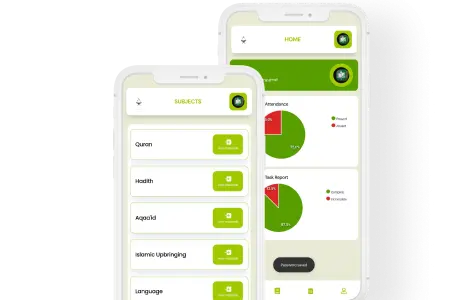
Purpose-built maktab management software — including Ilmify — can auto-generate progress reports from existing attendance and Quran tracking data, eliminating most of the manual preparation time.
Frequently Asked Questions
Q: Should progress reports include negative feedback?
Reports should be honest but constructive. Specific concerns — Tajweed errors, attendance problems, behaviour issues — should be noted with actionable guidance rather than vague criticism. If there is a serious issue, it should have been raised with the parent directly before appearing in a written report — a written report should not be the first time a parent hears about a significant problem.
Q: What if a student has made very little progress this term?
Acknowledge the reality honestly but focus on what is needed next rather than dwelling on what didn’t happen. “Zaid has found this term challenging — his attendance was lower than ideal and we have focused on consolidating what was already learned rather than advancing. With regular attendance next term, I am confident we will see good progress.” This is honest, forward-looking, and respectful.
Q: How do we write a report for a student whose parents do not read English?
Use the Urdu template provided above, or prepare reports in the parent’s language. For parents who do not read any language, a verbal report with the student or a family member translating is appropriate — the effort to communicate in the parent’s language is itself a powerful statement about the maktab’s values.
Q: Do we need a separate report for Hifz and Nazra students?
The template above covers both — Section 1 has specific fields for each type. Use the relevant rows and leave the others blank, or prepare a simplified single-section report for Nazra students if the full template feels overly complex.
Q: Is a WhatsApp message sufficient instead of a formal report?
For routine monthly updates, yes. For the formal termly or annual report, a structured document carries more weight — it signals that the maktab takes its accountability to parents seriously and has invested thought in each child’s progress.
Conclusion
A well-written maktab progress report is one of the most effective tools a maktab has for building parent trust, improving student outcomes, and demonstrating institutional seriousness. It does not require expensive software or hours of preparation — the template above can be completed in 10–15 minutes per student by a teacher who is already tracking progress carefully. Multiply that by 30 students and you have 5–7 hours per term invested in parent communication that pays dividends in engagement, attendance, and community trust for the entire year.
Ilmify auto-generates maktab progress reports from the attendance and Quran tracking data you are already entering — pulling Sabak position, Dhor quality notes, attendance rate, and level progress into a formatted report in seconds. Explore Ilmify →




 Arabic
  English
  Malay
Malay  Urdu
Urdu