

Introduction
Starting a maktab from scratch is one of the most impactful things a mosque can do for its community. Starting one with MESBA’s curriculum, training, and quality framework from day one is significantly better than starting independently and trying to retrofit structure later.
This guide is for the mosque education committee that is ready to move from “we should start a maktab” to “here is how we do it” — specifically using MESBA’s framework rather than building from scratch. It covers every step from initial contact with MESBA through to your first quality assessment at the end of year one.
Why Start with MESBA Rather Than Independently?
The alternative to starting with MESBA is starting independently — building your own curriculum, hiring and training teachers without a structured framework, and assessing quality through parental feedback and committee intuition.
Independent maktabs can be excellent. Some of America’s best maktabs are independent. But independent maktabs typically take 3–5 years to develop the curriculum, teacher quality, and administrative systems that MESBA-affiliated maktabs start with from day one.
| Factor | MESBA from Day 1 | Independent |
| Curriculum | Ready — 8-area, levelled | Build from scratch or adapt |
| Teacher training | Structured pathway available immediately | Ad-hoc; find your own resources |
| Quality standards | Defined externally | Self-defined, often vague |
| Assessment | External validation from year 1 | No external feedback mechanism |
| Network | 40+ maktab community | Isolated |
| Time to quality | 6–12 months | 3–5 years |
Starting with MESBA is not mandatory. But it compresses the time-to-quality significantly — and the children who join in year one deserve the same quality as children who will join in year five.
Prerequisites: Is Your Mosque Ready?
Before contacting MESBA, ensure your mosque has addressed these foundational questions:
Community demand confirmed:
Have you surveyed mosque families to confirm there are enough children (minimum 15–20) who will actually enrol? A beautiful curriculum and trained teachers cannot save a maktab that nobody attends.
Space secured:
Do you have classroom space available for the maktab sessions? At minimum: one room per class group of 10–15 students, available on the scheduled maktab days.
Committee committed:
Is the mosque education committee — or a dedicated maktab committee — genuinely committed to the maktab as a sustained institutional project? Not just enthusiastic for launch, but committed to the 3–5 year journey of building a quality programme?
Basic budget confirmed:
Have you confirmed that the fee income (or mosque subsidy) will cover teacher stipends, curriculum materials, and basic administration costs? A maktab that runs out of funds after two months harms the community it set out to serve.
If yes to all four: you are ready to contact MESBA.
Step 1: Initial Contact with MESBA
How to contact: Visit mesba.org and use the contact details to reach MESBA’s team. Introduce your mosque, describe your community (size, demographic background, existing Islamic education provision), and state your interest in starting a MESBA-affiliated maktab.
What MESBA will want to know:
- Mosque location and name
- Current Islamic education offering (existing Sunday school? No maktab at all?)
- Estimated number of children for the new maktab
- Proposed schedule (weekday evenings? Weekend? Both?)
- Current teacher availability
- Timeline for launch
What MESBA will provide:
- An initial consultation call or meeting with a MESBA representative
- Overview of the affiliation framework and what it involves
- Guidance on realistic timelines
- Information on curriculum materials and teacher training costs
This initial contact is exploratory — there is no commitment on either side at this stage. The goal is mutual understanding: MESBA assesses whether your mosque has the foundations for a quality maktab; you assess whether MESBA’s framework fits your community’s needs.
Step 2: Needs Assessment and Planning
Following the initial consultation, MESBA will help you conduct a needs assessment specific to your maktab’s context:
Student population analysis:
- How many students by age group?
- What is their current Quran level? (Complete beginners? Some Qaidah? Some Nazra?)
- What languages do families speak at home?
- What days and times work for the community?
Teacher availability:
- How many teachers are available?
- What is their Islamic knowledge level?
- Do any have prior maktab teaching experience?
- What training would they need before the maktab opens?
Curriculum entry point:
Based on the student population analysis, MESBA helps you determine which curriculum levels to begin with and how many class groups to form.
Schedule design:
Working from community availability and student numbers, MESBA helps design a workable session schedule — not just “Monday to Thursday evenings” but specific class groupings, time allocations for Quran vs Islamic Studies, and teacher-to-student ratios.
Step 3: Curriculum Adoption
MESBA provides affiliated maktabs with its curriculum materials — level-by-level content plans, teacher guides, and student materials for all 8 curriculum areas.
Curriculum adoption involves:
Receiving materials: MESBA provides physical or digital curriculum materials. Review these before the maktab opens — not on the first session day.
Mapping students to levels: Use MESBA’s placement guidance to assess each enrolled student’s current knowledge level and assign them to the correct curriculum level. Placing a student too high or too low undermines their experience.
Setting up the timetable: Structure your session timetable to ensure all 8 curriculum areas are covered across the week’s sessions. MESBA provides guidance on how to allocate time across areas in different session lengths.
Quran materials: MESBA’s Quran component works alongside published Qaidah materials (Noorani Qaidah is most common) and requires a clear system for tracking each student’s current Quran position.
Step 4: Teacher Recruitment and Training
Teacher training should ideally happen before the maktab opens — not after. Every teacher who will be in a classroom on day one should have completed MESBA Level 1 training at minimum.
Recruitment timeline:
Recruit teachers at least 6–8 weeks before launch — allowing time for background checks, MESBA Level 1 training, and any curriculum orientation.
MESBA Level 1 training for new teachers:
MESBA schedules Level 1 training workshops. Identify the next available workshop (in-person in Farmingdale or online) and register your teachers. If multiple teachers need training simultaneously, MESBA can discuss whether an on-site workshop for your maktab is feasible.
Background checks:
All teachers must complete a criminal background check before working with children. Budget 2–3 weeks for processing.
Curriculum orientation:
Before the first session, walk through the curriculum materials with your teachers. Ensure every teacher knows which curriculum level they are teaching, what the session timetable looks like, and how to use the Quran progress tracking system.
Step 5: Setting Up Administration
Before the maktab opens, put the administrative systems in place that will allow it to run professionally from day one.
Student registration:
Set up an enrolment form (paper or digital) that collects: student name, date of birth, current Quran level, parent/guardian contacts, health information (allergies, medical needs), and emergency contacts. MESBA can provide a template.
Quran progress system:
Establish how you will track each student’s Quran position. This can be a paper record card per student or a digital platform. The record must be accessible to every teacher who works with that student — not kept in a single teacher’s personal notebook.
Fee collection:
Set up your fee collection method before enrolment — ideally online payment to minimise cash handling and non-payment. Communicate the fee structure, payment dates, and scholarship/waiver policy to all families before the first session.
Parent communication:
Establish your parent communication channel — WhatsApp group, email newsletter, or dedicated platform. Introduce yourself and the maktab to families before the first session: who the teachers are, what will be taught, what parents should do at home to support learning.
Attendance system:
Prepare attendance registers for every class group. The teacher marks attendance at the start of each session; the coordinator reviews registers weekly to identify students with excessive absences.
Step 6: Launch and First Term
The first term of a new MESBA-affiliated maktab is a period of establishment — getting routines right, adjusting class groupings, and managing the inevitable surprises that come with any new programme.
Typical first-term challenges:
- More students than expected (or fewer) — requiring class group adjustments
- Teachers who took Level 1 training needing on-the-job support in their first sessions
- Parents who expected faster Quran progression than the first weeks demonstrate
- Fee collection problems emerging earlier than expected
MESBA support in the first term:
MESBA coordinators are available for consultation during the first term. Use this support proactively — contact MESBA when challenges arise rather than waiting for the first formal assessment.
First-term priorities:
- Establish the session routine — consistent start time, Quran first, smooth transitions
- Ensure every student’s Quran level is accurately recorded after the first 2–3 sessions
- Begin parent communication — a brief progress update to all parents at the 4-week mark
Step 7: First MESBA Assessment
MESBA conducts an initial assessment of newly affiliated maktabs typically 3–6 months after launch — once the maktab has had time to establish its routines but while there is still ample time to adjust based on feedback.
What the first assessment focuses on:
- Are foundational systems in place? (Registration, attendance, Quran records)
- Is the curriculum being delivered as planned?
- Is teacher quality at an acceptable foundation level post-Level 1?
- Are there any immediate concerns that need urgent attention?
The first assessment is explicitly developmental — most newly launched maktabs have areas for improvement, and the assessment is designed to identify and prioritise those improvements while the maktab is still in its formative period.
Using the first assessment report:
Share the report with your full education committee. Prioritise the top 3 recommendations. Set a 3-month action plan. The improvements made between the first and second assessment are typically the most significant in the maktab’s history.
What to Expect in Year One
A realistic picture of year one in a MESBA-affiliated maktab:
| Month | What Is Happening |
| 1–2 | Enrolment, teacher training, admin setup |
| 3 | Launch; establishing routines; first Quran records |
| 4–6 | Settling in; first parental concerns; some class grouping adjustments |
| 6 | First MESBA assessment; feedback received |
| 7–9 | Implementing assessment recommendations; teacher Level 2 training |
| 10–12 | Reviewing year one; planning year two enhancements |
By end of year one, a well-managed MESBA-affiliated maktab typically has:
- A stable enrolment of 20–50 students
- Clear Quran progress records for every student
- Teachers with Level 1 certification; some beginning Level 2
- A functioning fee collection and parent communication system
- A first assessment report providing a roadmap for year two
Conclusion
Starting a maktab with MESBA is starting with a foundation that most independent maktabs take years to build. The curriculum is ready. The teacher training is structured. The assessment framework exists. The network of 40+ affiliated maktabs provides community and precedent.
What MESBA cannot provide is the mosque committee’s commitment, the teachers’ dedication, and the community’s sustained investment in their children’s Islamic education. Those ingredients must come from within. But given those ingredients, MESBA’s framework gives them the best possible structure to work with.
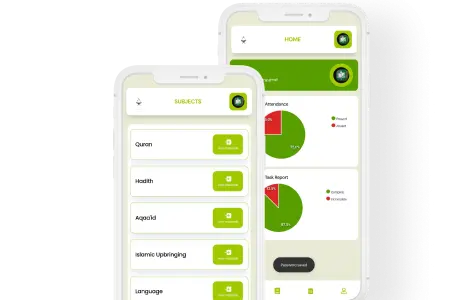
Ready to start your MESBA-affiliated maktab? ilmify.app is the administration platform that makes your maktab’s student management, Quran tracking, attendance, and parent communication professional from day one — designed for the way MESBA-affiliated maktabs actually work.




 Arabic
  English
  Malay
Malay  Urdu
Urdu