
Introduction
Running a maktab in South Africa in 2026 is one of the most rewarding forms of service a Muslim community can undertake — and one of the most demanding. The Ustaaz or Apa at the front of the classroom carries a responsibility that goes far beyond transmitting a syllabus. As the Jamiatul Ulama KZN writes with emphasis, the teacher’s duty is not only to teach knowledge but to ensure that the child has Islamic Ethos and character. That is the weight of the role.
This guide is written for those who carry that weight: the principal, the Ustaaz, the Apa, the committee member, the parent who has stepped up to ensure the local maktab keeps running. It covers the full range of what managing a maktab actually requires in 2026 — governance, curriculum, teacher management, student administration, fee collection, parent communication, and the specific administrative practices that separate a well-run maktab from one that is perpetually in crisis.
Understanding the Institutional Framework
Before anything else, a maktab operating in South Africa in 2026 benefits enormously from understanding the institutional ecosystem that exists to support it. You are not alone.
Wifaqul Ulama SA (Wifaqul Makaatib SA) offers comprehensive maktab support under their dedicated maktab department. They offer supervision, support, and a maktab syllabus. Institutions seeking affiliation or guidance can contact them directly at admin@wifaq.org.za. Wifaqul Ulama also publishes the At-Tadhkeer Maktab Newsletter, a resource aimed specifically at helping teachers with the Tarbiyyah dimension of their work — the formation of character in students that goes beyond mere instruction.
Ta’limi Board KZN is the educational arm of the Jamiatul Ulama KZN, based at Madrasah Taaleemuddeen in Isipingo Beach, KwaZulu-Natal. They operate under the guidance of Hadhrat Mufti Ebrahim Salejee Saahib. Their mandate is to establish and assist makaatib in any part of the world. Their activities include providing complete syllabus materials, books, worksheets, past exam papers, and audio teaching aids — all available through their website at talimiboardkzn.org. They also operate teacher training centres and Imaam-Khateeb courses, and they publish the Al-Maktab Newsletter which is a vital resource for anyone running a maktab in KZN or beyond.
Jamiatul Ulama KZN provides the broader religious and community leadership framework within which the maktab operates. They offer fatwas, publications, and community guidance that help Ustaads and principals navigate the religious questions that arise in institutional management.
Affiliating with or at minimum regularly consulting these bodies is not optional — it is one of the most important decisions you can make for the health of your maktab.
Governance: Setting Up a Proper Structure
A maktab that runs on informal arrangements and personal relationships alone is a maktab that is one resignation away from crisis. The institution needs a governance structure that is clearly defined, documented, and known to all stakeholders.
The Committee: Every maktab should have a properly constituted management committee. The committee is responsible for the overall direction of the maktab — setting fees, approving the budget, hiring and overseeing teachers, resolving complaints, and ensuring the institution is run in accordance with Islamic principles. The committee should include at minimum a Chairperson, a Secretary, a Treasurer, and where possible a representative from the teaching staff. Minutes of all committee meetings should be kept.
Separation of Roles: The most common governance failure in community Islamic institutions is the complete absence of any separation between the roles of teacher, director, and financial controller — all three functions resting on the shoulders of the Ustaaz who founded the maktab. While deep personal dedication is admirable and often the source of an institution’s strength, this concentration of all authority in one person creates dangerous fragility. When that person leaves, falls ill, or passes away, the institution has no independent existence. Documents, records, and institutional knowledge leave with the founder. A committee structure prevents this fragility.
Constitution: Consider establishing a basic constitution for the maktab — a document that sets out the institution’s purpose, the composition and powers of the committee, the process for teacher appointments, the fee policy, and the complaints procedure. This does not need to be a complex legal document. A simple, clear two-page constitution agreed to and signed by committee members creates the institutional memory and procedural consistency that protects the maktab over the long term.
Curriculum: What the Ta’limi Board Syllabus Covers
The curriculum of the South African maktab is organised according to the five core objectives described by the Ta’limi Board KZN: correct Aqeedah, Quranic recitation with Tajweed, practical acts of worship, good character (Akhlaaq and Tarbiyyah), and love of Allah and His Messenger ﷺ.
The Ta’limi Board KZN provides a complete syllabus breakdown updated annually — the 2026 version is available for download from their website. The syllabus is structured by year level and covers the following subject areas across the maktab years:
Quranic Studies: This is the centrepiece of the maktab curriculum. Students begin with the Qa’ida — learning the Arabic alphabet, vowel marks (harakat), and basic reading rules. They then progress to Nazirah — reading the Quran from the Mushaf with correct Tajweed. Students who show aptitude and inclination may begin basic Hifz (memorisation) of selected Juz, beginning typically with the 30th Juz (Juz Amma). The Ta’limi Board provides audio teaching aids for Surahs to support both teachers and students.
Fiqh (Islamic Jurisprudence): Students learn the practical rules of Islamic worship in detail — the method and conditions of Wudhu, Ghusl, Tayammum, and Salaah. They learn the obligatory (Fardh), necessary (Waajib), Sunnah, and desirable (Mustahab) elements of each act of worship, and the things that invalidate them. This is the area where the maktab provides the foundation for a lifetime of correct Islamic practice.
Aqeedah (Islamic Beliefs): Students study the fundamental beliefs of Islam — belief in Allah, His angels, His Books, His Prophets, the Last Day, and divine decree (Qadr). The Jamiatul Ulama KZN emphasises that when Islamic education is in order, a person’s Aqeedah will also be in order. The maktab is the institution that makes this possible.
Seerah (Prophetic Biography) and Islamic History: Students learn about the life of the Prophet Muhammad ﷺ, the stories of the Sahabah (companions), and key moments in Islamic history. This knowledge creates the emotional and historical connection to Islam that the purely doctrinal subjects cannot achieve alone.
Hadith and Islamic Ethics: Selected Ahadith (traditions of the Prophet ﷺ) relevant to the student’s age are taught, along with practical guidance on Islamic manners (Adab) and ethical behaviour. The Ta’limi Board provides Hadeeth teaching aids in audio format specifically designed for use in the maktab.
Imaani Muzaakarah: The Ta’limi Board’s distinctive Imaani Muzaakarah programme is a structured programme of belief reinforcement — specific lines of Tawakkul (trust in Allah) and Imaan that are repeated and internalised through repetition. The Ta’limi Board notes that repetition is the key: “The need is to keep on repeating. Repetition will Insha-Allah bring conviction.” The Imaani Muzaakarah is designed to build that deep, unshakeable conviction in the heart of the child that the world cannot give and the world cannot take away.
The Teaching Staff: Hiring, Training, and Retaining
The quality of your teaching staff is the single most important variable in the quality of your maktab. Everything else — the syllabus, the facilities, the management systems — is secondary to the quality of the human being who stands at the front of the classroom.
Qualifications: An Ustaaz teaching Quranic recitation must himself be able to recite correctly with Tajweed, and ideally should have completed his Nazirah under qualified guidance. A teacher conducting Hifz classes must be a Hafiz — a person who has memorised the Quran completely. This is non-negotiable. A teacher of Islamic studies subjects should have completed at least a basic course at a recognised Darul Uloom or Islamic seminary. The Ta’limi Board KZN trains teachers specifically for the maktab context and offers teacher training centres and Imaam-Khateeb courses for those who wish to be properly equipped for this work.
The Teacher as Role Model: The Jamiatul Ulama KZN is clear that the Ustaaz’s responsibility extends far beyond the transmission of knowledge. The teacher must show concern for whether the child is performing Salaah outside the classroom, whether the child is dressed appropriately, whether the child is developing Islamic character. A teacher who imparts only knowledge without this pastoral concern is, in the words of the Jamiatul Ulama KZN, “failing in his duty.” This is a demanding standard — but it is the standard the maktab system has always held itself to.
Remuneration: Teachers must be paid fairly and on time. Community institutions sometimes operate as though the teacher’s dedication to the Deen exempts the institution from its financial obligations — this is both unjust and counterproductive. A teacher who is not paid fairly, or who is paid irregularly, will eventually leave. Losing a teacher mid-year is deeply disruptive for students, especially students who are in the middle of a Quran stage. Treat your maktab teachers as professionals who deserve professional remuneration and professional respect.
Teacher Support: The Ta’limi Board KZN maintains a WhatsApp Broadcast List specifically for Maktab Teachers, through which they share resources, Naseehah (spiritual advice) audio recordings, updates, and support. They also hold regular Muzaakarah Workshops — professional development gatherings where teachers can learn, discuss challenges, and be spiritually recharged. Every maktab teacher should be connected to these resources.
Student Administration: The Records You Must Keep
Student administration is the area where many makaatib are most vulnerable. The institutional knowledge that should belong to the maktab as an institution often lives only in the memory of one person — and when that person is unavailable, the institution is in difficulty.
Student Register: Every enrolled student should have a formal record containing their full name, date of birth, contact details for both parents or guardians, home address, the date of enrolment, and the class level at enrolment. This register must belong to the maktab — not to a teacher’s personal notebook, not to someone’s personal phone, not to a WhatsApp chat. When a teacher leaves, the register stays.
Quranic Progression Records: This is the heart of the maktab’s academic record-keeping, and it is the area most commonly neglected. The traditional system — the Ustaaz keeping each student’s Quranic position in his memory — is admirable in its intimacy but catastrophically fragile as an institutional practice. When the Ustaaz is absent, sick, or leaves, years of carefully tracked progression disappear overnight. Parents have no way to independently verify where their child is in the Quran. There is no continuity when a student moves between teachers.
The minimum that every maktab should record for each student’s Quranic journey is the current Sabak position (the new lesson — which Surah and verse the student is currently memorising or learning to read), the Sabaq Para quality (how well the recently covered portions have been consolidated), and the state of Dhor (how the older, previously completed portions are holding up through regular revision). Recording these three streams after every session gives a complete and honest picture of where every student actually is — not just where they are on paper, but whether their Quran is genuinely consolidated or quietly deteriorating.
Attendance Records: Attendance should be taken at every session and preserved. This serves three purposes: child protection (knowing who is and is not present), parent communication (being able to tell a parent accurately how many sessions their child has missed), and academic assessment (understanding the correlation between absences and learning difficulties).
Fee Management: Creating Financial Transparency
Financial mismanagement is one of the most common causes of conflict in community Islamic institutions, and the maktab is no exception. In the absence of proper financial records, disputes over whether fees were paid become irresolvable. Families who are in genuine difficulty cannot be identified and assisted fairly. The committee cannot make proper budget decisions without knowing the actual financial position of the institution.
Set Fees Based on Actual Costs: Your maktab’s fee structure should reflect what it actually costs to run the institution. Add up your teacher salaries, rent or mosque contribution, teaching materials, and any other recurring costs. Add a modest reserve margin. Divide by the number of enrolled students. This is your baseline. Charging less than this means the institution is running at a deficit — which is only sustainable as long as someone is personally making up the shortfall.
Issue Receipts Without Exception: Every fee payment — cash, EFT, or mobile payment — must be receipted. A numbered, dated receipt protects both the parent and the institution. Without receipts, every dispute about whether fees were paid becomes the parent’s word against the institution’s word. With receipts, the record speaks for itself.
Have a Written Exemption Policy: Every maktab in South Africa will have families who cannot afford the fees. This is a reality that should be anticipated and managed with compassion and transparency. A written policy that defines the criteria for full or partial exemption, requires a simple written application, and is decided by the committee (not unilaterally by the Ustaaz) protects the dignity of families in difficulty and protects the institution from accusations of favouritism. The maktab should never turn away a child because of fees — but the process for managing hardship cases should be clear and consistent.
Monthly Financial Report: The Treasurer should produce a one-page monthly financial summary for the committee: total fees billed, total fees collected, outstanding balances, total expenditure, and closing balance. This does not need to be complex accounting. It needs to exist. A committee making decisions without this information is flying blind.
Parent Communication: Beyond the WhatsApp Group
The WhatsApp group is now a universal feature of South African maktab life. Every maktab has one, or several. They are useful for general announcements — a session cancelled due to load shedding, a reminder about the upcoming khatm, a notice about term holidays. But they are deeply inadequate and increasingly problematic as the primary channel for individual student communication.
When a parent asks in the general group how their child is progressing in Quran, every other parent in the group sees the question and the answer. When a fee reminder is posted without careful wording, it can publicly identify which families are in arrears. When a student has a behavioural concern or a learning difficulty, a WhatsApp message visible to 80 parents is not an appropriate place to discuss it. The Ustaaz’s personal phone number is known to every family in the maktab, making it impossible to separate professional communications from personal life.
The maktab of 2026 needs individual, confidential, structured parent communication. Each parent should be able to know how their child is progressing in Quran without having to ask in a public forum. Fee reminders should go privately to the family concerned, not to the group. Absence notifications should reach the right parent promptly, not be left for the parent to notice when they happen to check the group.
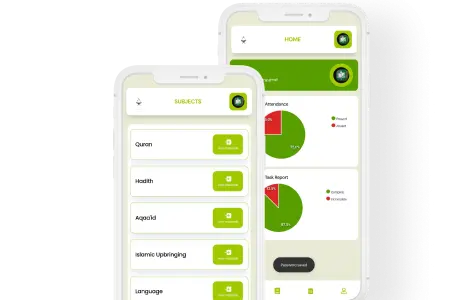
This is not an aspirational standard — it is a professional standard that the importance of the maktab’s work demands. Platforms like Ilmify are built to provide exactly this: individual parent portals through which each family can see their child’s Quranic progression, attendance, and fee status; automatic absence notifications sent directly to the right parent; and fee reminders that are private, timely, and documented.
Managing Load Shedding and Digital Infrastructure
South Africa’s electricity supply challenges — load shedding — are a practical reality for every institution in the country, including makaatib. Any digital management system used by a maktab must be functional during load shedding. A system that requires continuous internet connectivity will fail precisely during the sessions when the power is out, creating gaps in the attendance and progression records that undermine the entire purpose of the system.
The non-negotiable requirement for any maktab management platform in South Africa is offline-first operation: the ability to record attendance, Quranic progression, and fees without an active internet connection, with automatic synchronisation to the cloud when connectivity is restored. Ilmify is built with this requirement at its architectural core — not as an afterthought, but as a foundational design principle that reflects the reality of running Islamic institutions in South Africa.
The Spiritual Dimension of Maktab Administration
It would be a mistake to read a management guide about the maktab and leave with the impression that it is primarily an administrative challenge. The scholars of South Africa are emphatic: the maktab is above all a spiritual institution, and its administration must be infused with that understanding.
The child who sits in your maktab is not a student to be processed through a curriculum. They are an Amanah — a trust — from Allah Ta’ala and from their parents. The Quran they learn to read, the Salaah they learn to make, the beliefs they internalise in your classroom — these are the tools that will determine whether they leave this world with Imaan. This is what Mufti Ebrahim Salejee Saahib of the Ta’limi Board means when he speaks of Tarbiyyah — the maktab’s work is formation of a human being, not merely instruction of a student.
Good administration serves this mission. When records are properly kept, the Ustaaz is free to focus on teaching rather than answering administrative queries. When fees are managed transparently, the committee’s energy goes into improving the maktab rather than resolving disputes. When parent communication is structured and individual, the relationship between the maktab and the family is strengthened rather than strained. Every administrative improvement is, in the end, an act of service to the child and to the Deen.
Summary: The Well-Run Maktab in 2026
A well-run maktab in South Africa in 2026 is affiliated with Wifaqul Ulama or the Ta’limi Board KZN, has a properly constituted management committee, follows the Ta’limi Board syllabus, employs qualified and supported teachers, maintains complete student and financial records, communicates individually with parents rather than exclusively through WhatsApp groups, functions through load shedding, and treats its administrative infrastructure as a tool in service of its spiritual mission.
This is achievable. It is what the South African maktab system has always aspired to. The tools to support it — training, curriculum resources, oversight bodies, and management platforms — are all available. What is needed is the commitment to use them.




 Arabic
  English
  Malay
Malay  Urdu
Urdu