

Introduction
Ask any maktab principal what their biggest operational challenge is, and teacher recruitment and retention will be in the top two. The other challenge — money — is usually connected to it. Institutions that cannot afford to pay teachers properly cannot attract qualified teachers. Institutions that cannot attract qualified teachers produce a lower-quality educational experience. Lower quality leads to lower enrolment. Lower enrolment leads to less money. The cycle is familiar and it is vicious.
Breaking it requires understanding both sides: what makes a good madrasa teacher, and what makes a madrasa worth staying at. This guide covers both — the hiring process, the compensation framework, the working conditions, and the professional environment that determines whether your best teachers leave after one year or stay for ten.
What Makes a Good Madrasa Teacher
The qualifications for a madrasa teacher are not the same as those for a mainstream school teacher. A PGCE is not relevant. What is relevant is a specific combination of Islamic knowledge, pedagogical skill, and character.
For Hifz Teachers (Non-Negotiable)
Must be a Hafiz. There is no acceptable alternative. A teacher who has not memorised the Quran cannot reliably identify errors in a student’s recitation, cannot model the standard the student is working toward, and cannot demonstrate from lived experience what the Hifz journey requires. This is the absolute minimum qualification.
Strong Tajweed knowledge. Not just knowing Tajweed rules — being able to apply them fluently in listening to and correcting students’ recitation. A Hafiz with weak Tajweed will pass that weakness to their students.
Experience teaching Hifz, not just completing it. Having memorised the Quran is necessary but not sufficient. Teaching Hifz requires specific pedagogical skills — understanding how to pace a student’s Sabak, how to manage the Sabaq Para and Dhor cycles, how to motivate a student who is struggling, how to deliver correction without discouraging. These skills are developed through teaching experience, not through personal memorisation.
For Quran/Nazirah Teachers
Strong Tajweed knowledge — as above
Ability to teach Tajweed rules — not just apply them, but explain them clearly to children at different levels
Familiarity with a structured Qaida system (Noorani Qaida or equivalent)
Patience with beginners — a teacher who is impatient with slow readers will cause students to fear Quran recitation
For Islamic Studies Teachers
Appropriate Islamic educational qualification — ideally Alimiyyah level (Darul Uloom graduate) or equivalent
Ability to teach in plain English (for UK contexts) — many qualified Islamic scholars struggle to translate their knowledge into accessible, age-appropriate English
Understanding of the UK Muslim community context — curriculum must be relevant to students who are British Muslims, not transplanted from a South Asian or Arab educational tradition
Character Qualities (All Teachers)
- Patience as a genuine disposition, not just a claimed quality
- Warmth toward children — genuine care for their wellbeing
- Reliability — showing up on time, every time, as agreed
- Humility — willingness to receive feedback and keep learning
- Islamic character that matches the values they are teaching
The Teacher Supply Problem in the UK
The UK Islamic education sector faces a genuine teacher supply constraint. The number of institutions has grown significantly over the past decade; the number of qualified teachers has not kept pace.
The core problem: the traditional path to becoming a Hifz or Islamic Studies teacher (completing a Darul Uloom programme in the UK or South Asia, then returning to teach in a community institution) produces a relatively small number of graduates each year. Many of these graduates pursue roles as imams, scholars, or full-time madrasa teachers at larger, better-funded institutions. The small community maktab, paying sessional rates below minimum wage, competes at the bottom of this talent market.
The result is that many UK maktabs are chronically understaffed, heavily reliant on volunteer teachers of variable qualification, and in constant anxiety about what happens if their one reliable Hifz teacher decides to take a different role.
Understanding this context matters for two reasons: it explains why the problem is hard, and it explains why the solution — paying fairly, creating good working conditions, and building institutional loyalty — requires deliberate investment, not just hope.
Where to Find Qualified Islamic Teachers
Network-Based Recruitment (Most Effective)
The Islamic education teacher market in the UK is almost entirely network-driven. Qualified teachers find roles through personal connections — their Darul Uloom contacts, their mosque community, their teachers and peers.
Practical implications:
- Tell your own network you are hiring — word travels quickly
- Contact the Darul Ulooms and Islamic colleges in your region directly and ask whether they have recent graduates seeking teaching roles
- Ask your existing teachers to recommend qualified colleagues
- Engage with local imam networks and Islamic education associations
Online Platforms
Several UK platforms list Islamic education jobs:
- Muslim job boards (IslamicJobs.co.uk, Muslim.jobs)
- Local Facebook groups for the Muslim community in your city
- LinkedIn (for more formally qualified candidates)
- Association of Muslim Schools UK membership network
Internal Development
The most sustainable teacher pipeline is the one you build yourself. Students from your own institution who complete a Darul Uloom or Hifz programme and return to teach in their home community are often the most committed and culturally aligned teachers you will ever hire.
Build relationships with the strongest students (and their families) from early on. Mentoring a 16-year-old who is about to begin an Alimiyyah programme — and maintaining that relationship through their studies — often produces a returning teacher 6–8 years later who is deeply committed to the institution’s mission.
The Hiring Process: What to Look For
Stage 1: Application
Collect:
- CV / teaching background
- Qualifications (copy of certificate or name of institution)
- Two references (one Islamic scholar, one previous employer or community leader)
Stage 2: Islamic Knowledge Assessment
For Hifz teachers: ask them to listen to a short recitation and identify the Tajweed errors. This takes 10 minutes and tells you more than an interview.
For Islamic Studies teachers: ask them to explain a basic Fiqh concept (e.g., the conditions of Salah) in a way they would use with a 10-year-old. Can they translate complex knowledge into accessible language?
For Nazirah/Quran teachers: observe them teaching a short lesson with a student of the relevant level — ideally a student from your institution. How do they handle mistakes? How do they encourage? Is the student comfortable?
Stage 3: Interview
Key interview questions:
- “Why do you want to teach at a community maktab?” (Listen for intrinsic motivation vs purely financial)
- “Tell me about a student you found difficult to teach. What did you do?” (Reveals patience and problem-solving)
- “How do you pace a student’s Hifz if they are falling behind?” (Tests pedagogical knowledge)
- “How do you handle a parent who is unhappy with their child’s progress?” (Tests communication and composure)
Stage 4: Reference Check
Contact both references. Ask:
- “How long have you known this person?”
- “Have you seen them teach or work with children?”
- “Is there anything that would give you concern about this person working with children?”
- “Would you employ them again?”
Listen carefully. What is not said is often as important as what is said.
Legal Requirements Before a Teacher Can Start
Before any teacher — paid or voluntary — has unsupervised contact with children:
Enhanced DBS check: Must be processed and cleared. Do not allow a teacher to start before clearance arrives — even for one session.
Safeguarding induction: Every teacher must receive your institution’s safeguarding induction — covering your policy, how to recognise signs of abuse, how to report concerns, and what to do if a student makes a disclosure.
Employment documentation: For paid staff — a written contract specifying hours, rate of pay, notice period, and the institution’s policies. For sessional staff — a written sessional agreement covering the same essentials.
Right to work check: Every employee (and paid sessional worker) must have their right to work in the UK verified before starting. Passport or other specified documents must be checked and copied.
Compensation: What to Pay and How
The Minimum: Legal Compliance
All paid staff — including sessional teachers — must be paid at least the National Living Wage: £11.44/hour for workers aged 21+ (2024 rate). “Honorarium” arrangements that pay less than this to regular workers are not legally defensible.
Market Rates for UK Islamic Teachers
In 2025–2026, competitive sessional rates for qualified Islamic teachers in the UK range from:
| Role | Competitive Rate |
| Qaida/Nazirah teacher (community maktab) | £12–15/hour |
| Hifz teacher (strong, experienced) | £15–20/hour |
| Islamic Studies teacher (qualified) | £14–18/hour |
| Senior Hifz teacher / Principal | £20–30/hour |
Rates vary significantly by location — London and South East command a premium. Institutions paying below these ranges will lose teachers to better-paying alternatives.
Sessional vs Salary
Most UK maktabs pay sessionally — per hour or per session. This is appropriate for part-time teachers who teach alongside other employment. However, the most committed and reliable teachers often prefer — and deserve — a more structured employment arrangement with predictable income, especially as their role grows.
Consider offering:
- A guaranteed minimum hours commitment (e.g., “minimum 10 hours per week across the term”)
- A term-time contract rather than week-by-week
- Holiday pay entitlement (workers are entitled to 5.6 weeks’ holiday pay even on sessional arrangements)
Onboarding: The First Month Matters
The first month determines whether a new teacher stays for one year or ten. Poor onboarding produces teachers who feel unsupported, unclear on expectations, and disconnected from the institution’s mission.
First Month Onboarding Checklist
Before day one:
First session:
End of first month:
The quality of the onboarding experience is the single most powerful predictor of teacher retention in the first year.
Why Good Teachers Leave — and How to Stop It
The reasons good madrasa teachers leave are consistent and predictable:
1. They are paid late or inconsistently. Nothing damages a teacher’s trust faster than uncertain or delayed payment. Pay on time, every time, without being chased.
2. They feel unsupported. Teachers who have no curriculum guidance, no principal support when dealing with difficult students or parents, and no professional community feel isolated.
3. They are asked to do admin as well as teaching. A teacher hired to teach Hifz who also ends up managing fee spreadsheets, answering parent WhatsApp messages, and setting up the room is a teacher who burns out. Use management software to reduce administrative burden on teachers.
4. They are not recognised. A teacher who gives three years of excellent service and receives no formal recognition — no salary review, no thank-you at the annual event, no mention in the parent newsletter — will eventually go somewhere they are valued.
5. The working environment is poor. Rooms that are cold, noisy, or poorly resourced. No staffroom. No preparation time. Being expected to manage 20 students alone with no support.
Retention Practices That Work
- Pay reviews: Annual review of sessional rates, even if increases are small
- Recognition: Annual institutional recognition event where teachers are formally thanked
- Professional development budget: Even £200/year per teacher for a course or qualification upgrade signals genuine investment
- Reduced administrative burden: A management system that handles attendance notifications, fee tracking, and parent progress updates frees teachers to teach
- Principal relationship: Regular check-ins, genuine interest in how teachers are finding their role, and quick response to problems teachers raise
Professional Development for Madrasa Teachers
Most Islamic teachers in the UK receive no structured professional development after their initial Darul Uloom or Hifz qualification. This is a missed opportunity — and a retention problem.
Affordable Professional Development Options
Tajweed refresher courses: Many Islamic colleges offer short courses (1–3 days) in Tajweed teaching methodology. Particularly valuable for Hifz teachers who completed their own Hifz years ago.
Child safeguarding training: Free from most local authorities. Every teacher should attend every 2–3 years.
Hifz pedagogy workshops: Where available — run by experienced Hifz teachers sharing approaches to revision scheduling, student motivation, and Dhor management.
Islamic Studies curriculum workshops: Particularly valuable for Islamic Studies teachers who struggle to pitch content at the right level for UK-born children.
Cross-institution observation: Arranging for teachers to visit and observe sessions at another reputable institution. Seeing how others do it is one of the fastest ways to develop.
How Ilmify Supports Teacher Management
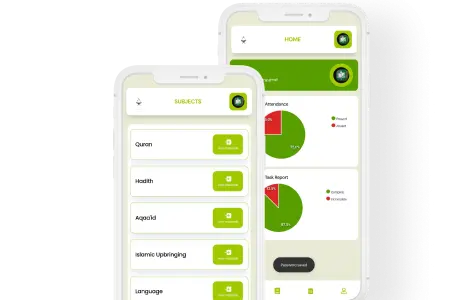
Ilmify’s teacher management features are designed to reduce administrative burden on teachers while giving principals the oversight they need.
Class assignment: Each teacher has a clearly defined class or student list in Ilmify. They see only their own students — not the entire institution’s data.
Session recording: Teachers record attendance and Hifz progress in under 2 minutes per session through the mobile app. No paper registers, no end-of-day collation.
Progress visibility: Teachers can see each student’s full Hifz history — Sabak position, Sabaq Para quality trend, Dhor cycle status — at any time. This is particularly valuable when a teacher takes over from a departing colleague.
Parent communication through the system: Teachers can send messages to individual parents through Ilmify — keeping all school communication in one place and out of personal WhatsApp.
DBS tracking: Staff records include DBS reference numbers and renewal dates, with automatic alerts when a renewal is approaching.
Principal oversight: The principal can see which teachers have recorded their sessions, which classes have gaps in recording, and the aggregate Hifz progress across all classes — without asking individual teachers for updates.
💡 Give your teachers tools that respect their timeIlmify reduces admin burden on teachers while giving principals the oversight they need.See Ilmify’s Teacher Management Features →
Conclusion
Hiring and retaining good madrasa teachers is the single most important factor in the quality of your institution. The curriculum, the premises, the management systems — all of these are important, but they are multipliers of teacher quality, not substitutes for it. Invest in finding the right people, pay them fairly, support them well, and build a working environment that makes your institution the place good teachers want to stay.
Ilmify supports this by reducing administrative burden on teachers, giving principals the oversight they need, and maintaining the institutional records that survive individual teacher departures.
See how Ilmify supports your teaching team →
Related articles in this series:




 Arabic
  English
  Malay
Malay  Urdu
Urdu