

Introduction
Every Hifz teacher has experienced it. A student who was progressing steadily starts arriving late. Then missing sessions. Then sending a message through their parent: “We’ve decided to take a break from Hifz for now.” Sometimes the break becomes permanent. A student who had memorised 10 Juz’ of the Quran quietly disengages, and months later is no longer enrolled.
Hifz dropout is not rare — it is one of the most significant challenges facing Islamic schools globally. Estimates from experienced teachers suggest that between 30% and 60% of students who begin Hifz programmes do not complete them. Some of this is natural — circumstances change, families move, children discover that Hifz requires more than they initially understood. But a significant portion of dropout is preventable — caused by institutional failures that good systems and alert teachers can identify and address before a student is lost.
This article examines the real causes of Hifz dropout, provides a practical prevention framework, and guides administrators through recovery when a student is already disengaging.
The Scale of the Problem
Precise data on Hifz dropout rates is difficult to find — few Islamic schools publish this information — but the anecdotal evidence from teachers and administrators is consistent: the majority of students who begin Hifz do not complete it. This is not primarily a reflection on the students. It is a reflection on how Hifz programmes are designed, how they respond to early warning signs, and how they support students through the inevitable difficult periods.
The dropout risk is not evenly distributed across the Hifz journey. Experience consistently points to three high-risk periods:
| Risk Period | Why It’s High Risk |
| Juz’ 2–4 | The initial novelty has worn off; the permanence of the commitment becomes real; families reconsider |
| Juz’ 10–15 | The halfway point crisis — memorisation is slowing, forgetting is accelerating, the end feels impossibly far |
| Juz’ 20–25 | The home stretch — paradoxically high risk because students are tired, Dhor load is heaviest, and examinations are imminent |
Teachers who understand these three windows can prepare specifically for them — intensifying support and monitoring during these phases rather than assuming that advanced students are safe.
Why Hifz Dropout Matters
A student who leaves Hifz mid-programme faces a specific challenge that other educational dropouts do not: the material they have memorised will decay without systematic revision. A student who leaves at Juz’ 15 and does not maintain revision will, over months and years, lose much of what they worked to memorise — sometimes in as little as six months without practice.
This means that Hifz dropout is not just an institutional problem — it has a direct cost to the student in terms of the years of effort they invested. Schools that prevent dropout protect both their institutional reputation and their students’ personal investment in the Quran.
The Seven Root Causes of Hifz Dropout
Understanding why students drop out is prerequisite to preventing it. The causes are generally not mysterious — they are predictable, observable, and in most cases addressable.
Cause 1: Unrealistic Expectations at Enrolment
The most common single cause of Hifz dropout is a mismatch between what families expected and what Hifz actually requires. Parents who enrol their child believing Hifz is like any other after-school activity — something that happens three times a week with occasional homework — are unprepared for the reality of daily revision, the slowdown of progress in the middle Juz’, and the intensifying demands as the programme progresses.
Fix: Set expectations explicitly at enrolment — in writing, not just verbally. Include: daily revision requirement, typical duration (3–7 years), the three-tier revision structure, and what happens when students fall behind.
Cause 2: Inadequate Muraja’ah — Accumulating Gaps
A student who advances in Sabak while neglecting Sabqi and Dhor builds a Hifz on an unstable foundation. When the accumulated gaps become large enough — typically around Juz’ 10–15 — the student (and teacher) realise that earlier material has been lost. The psychological impact of this realisation is severe: the student feels they have been working for nothing, the task of recovery seems overwhelming, and disengagement follows.
Fix: Track all three tiers of revision — not just Sabak — from day one. Hifz that advances without revision is Hifz that will require recovery, which is demoralising and dropout-inducing.
Cause 3: Teacher Relationship Problems
A student who does not trust or respect their teacher will not engage fully with the programme. A teacher who is consistently harsh, dismissive, impatient with errors, or impersonal in their approach drives sensitive students — particularly girls and younger children — toward disengagement.
Fix: Teacher selection and ongoing supervision. Pastoral skills matter as much as Tajweed mastery. Teachers who identify students at risk and proactively engage them are the school’s most valuable dropout-prevention resource.
Cause 4: Academic Pressure from Mainstream School
As students advance in mainstream education — particularly during GCSE years (ages 14–16 in the UK) or board examination years in South Asia — Hifz competes with a significant academic workload. Many students (and parents) make the rational calculation that examination performance takes priority.
Fix: Proactive scheduling flexibility during examination periods. Offer reduced session frequency (rather than suspension) during peak examination seasons. A student who reduces to twice-weekly sessions during GCSEs but continues is far more likely to complete than one who “takes a break” and loses momentum.
Cause 5: No Visible Progress Markers
Hifz is a long journey with few natural celebrations. Students can advance for months without any formal acknowledgement of what they have achieved. This is particularly demoralising in the middle Juz’, where the pace slows and the end is still far away.
Fix: Create internal progress celebrations. Mark Juz’ completions with acknowledgement in front of parents and the school community. Quarterly progress reports that show cumulative progress (total pages memorised, revision consistency) give students tangible evidence of their achievement.
Cause 6: Peer Disengagement
Hifz students who see peers of the same age completing or excelling may become demoralised if their own progress feels slow. Conversely, a student who is the only one in their social circle attending Hifz school — particularly among teenagers — faces social pressure to reduce their Islamic commitments to fit in.
Fix: Build a Hifz community culture within the school. Peer relationships among Hifz students are protective against dropout — students who have friends at the maktab have a social reason to attend. Encourage cohort identity; celebrate collective achievements.
Cause 7: Institutional Failure to Respond to Absences
The most preventable cause of dropout is an institution that fails to respond to early absence. A student who misses three sessions in a row has not dropped out — they have given the school three opportunities to intervene. When no one follows up, the student learns that the school’s commitment to their Hifz is weaker than their own ambivalence, and dropping out becomes the easier choice.
Fix: Absence response protocol — covered in the prevention framework below.
Early Warning Signs — Spotting Dropout Before It Happens
| Warning Sign | What It May Indicate |
| Increasing late arrivals | Scheduling conflict; decreasing motivation; family ambivalence |
| Declining Sabak quality without explanation | Stress at home; reduced home revision; distraction |
| Sabqi and Dhor consistently weak | Revision has stopped at home; student struggling silently |
| Parents becoming harder to reach | Family reconsidering commitment; embarrassment about fees |
| Student seems distracted or unhappy in sessions | Emotional issue; teacher relationship problem; peer issue |
| 2+ absences in a 3-week period | Active disengagement beginning |
| Requesting session reductions | First formal signal of withdrawal intention |
Any two of these signs occurring simultaneously should trigger a proactive conversation — not a warning, but a supportive check-in.
The Prevention Framework: Three Levels of Intervention
Level 1 — Universal (All students, always):
- Weekly parent progress report via digital system
- Session records showing all three revision tiers
- Monthly acknowledgement of progress milestones
- Clear expectation-setting at enrolment
Level 2 — Targeted (Students showing early warning signs):
- Teacher check-in conversation with student: “How are you feeling about your Hifz?”
- Principal or admin follow-up call/message to parent within 48 hours of second missed session
- Offered: timetable adjustment, session frequency reduction, or temporary schedule change
- Review of Sabqi and Dhor to identify and address accumulated gaps
Level 3 — Intensive (Students actively disengaging):
- Face-to-face meeting with parent and student
- Honest assessment: what has been memorised, what is at risk of being lost, what support can the school offer
- Negotiate continuation on modified terms rather than all-or-nothing
- Connect student with a Hifz mentor or a slightly older student who has been through a similar difficult period
How to Have the Retention Conversation with Parents
The retention conversation — between a principal or teacher and a parent whose child is disengaging — is one of the most important and most frequently mishandled interactions in Islamic school management.
What goes wrong in most retention conversations:
- The school sounds desperate rather than caring
- The conversation happens too late — after the decision has already been made
- The focus is on what the school needs (student numbers, fee income) rather than what the student needs
- The tone is guilt-inducing rather than supportive
What a good retention conversation sounds like:
“Assalamu Alaikum, [parent name]. I wanted to speak with you about [student name] — I’ve noticed a change in their engagement over the last few weeks and wanted to check in personally. Can you tell me how things are from your side? I want to make sure we’re supporting them in the best way possible. They’ve memorised [X pages / Juz’] — that’s a significant achievement that I want to make sure we protect together.”
Key principles:
- Lead with the student’s achievement — what would be lost, not what the school needs
- Ask, don’t tell — find out what is behind the disengagement before proposing solutions
- Offer flexibility concretely: “Would it help if we reduced sessions to twice a week during exam season?”
- Never make a parent feel judged for considering withdrawal — they will withdraw immediately if they feel shamed
When a Student Has Already Mentally Left
Sometimes a student has already decided to stop before the school has identified the problem. The session register shows absences; messages to parents go unreturned; the student’s body language when they do attend communicates that they are not present.
At this stage, the goal is not to reverse the decision through persuasion — it is to preserve the relationship and leave the door open.
Practical steps:
- Meet personally with the student and parent — not via message
- Acknowledge the difficulty of Hifz honestly: “We know it is hard. We respect what [name] has achieved.”
- If withdrawal proceeds, create a formal record of their Hifz position — what they have memorised, their current Dhor state — so they have this information for any future attempt
- Provide guidance on maintaining what has been memorised: minimum revision routine to prevent significant loss
- Explicitly invite return: “The door is always open. If [name] wants to return at any point, we will welcome them back.”
Schools that handle withdrawal gracefully are the ones that students return to. Schools that make families feel guilty rarely see returning students.
Recovery — Returning Students Who Dropped Out
A student who returns after a break faces a specific challenge: some of their earlier Hifz will have decayed. The recovery process must be honest about this.
Recovery assessment:
Before resuming new Sabak, assess all previously memorised material to identify what is solid, what is partially intact, and what has been lost. This assessment should be compassionate — not a test — and framed as “let’s see what we have to build on.”
Recovery phases:
| Phase | Focus | Duration |
| Assessment | Identify solid vs weak portions | 1–2 sessions |
| Consolidation | Revise and reinforce existing material before advancing | 4–8 weeks |
| Reconnection | Rebuild Muraja’ah habits; re-establish Sabqi and Dhor routine | Ongoing |
| Resumption | New Sabak begins once existing material is consolidated | When ready |
Do not rush a returning student back to new Sabak. A returning student who advances too quickly before consolidating existing material will face the same crisis that caused their original dropout.
Institutional Practices That Reduce Dropout Systemically
Beyond individual interventions, some institutional practices create an environment where dropout is structurally less likely:
| Practice | Impact |
| Tracking all three revision tiers digitally | Gaps become visible before they become crises |
| Automated absence alerts | Teacher or admin notified immediately when a student misses sessions |
| Regular parent reporting | Parents feel informed and engaged; disengagement is visible early |
| Juz’ completion celebrations | Progress is acknowledged; student motivation maintained |
| Peer mentoring programme | Advanced students support newer ones; community built |
| Flexible scheduling for exam seasons | Mainstream school pressure accommodated; suspension avoided |
| Clear re-enrolment pathway | Students who leave know they can return; shame barrier reduced |
How Ilmify Supports Dropout Prevention
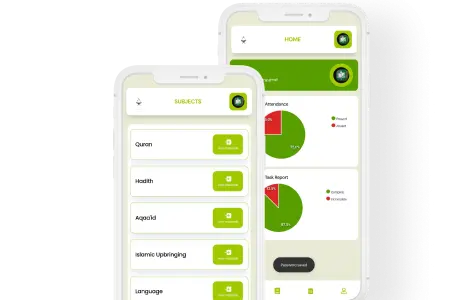
The most powerful dropout prevention tool is data visibility — knowing early that something is wrong, rather than discovering it when a family has already decided to leave. Ilmify’s tracking system surfaces exactly the patterns that precede dropout: declining Sabak quality, gaps in Sabqi coverage, unexplained absences, and Dhor portions that haven’t been covered in weeks.
When teachers log sessions consistently in Ilmify, administrators can see each student’s trajectory — not just today’s position but the trend over the last month. A student whose revision quality has declined for six consecutive sessions is visible in the dashboard before the family makes the withdrawal call.
👉 The best time to prevent Hifz dropout is before the family calls. Ilmify gives you the data to act early.Explore Ilmify → ilmify.app
Conclusion
Hifz dropout is not a sign that a student was not meant to be a Hafiz. More often, it is a sign that a system failed to support them at the right moment. The framework above — root cause understanding, early warning identification, tiered intervention, and graceful recovery — gives Islamic schools the tools to reduce dropout substantially. Every student who completes Hifz under your school’s guidance is a link in the chain of Quranic transmission. Every student who drops out preventably is a link that was lost — not because the student was insufficient, but because the support was.
👉 See every student’s full picture — Sabak, Sabqi, Dhor, and attendance — before they reach the dropout threshold. Explore Ilmify → ilmify.app
Related Articles:
- 📖 What Is Muraja’ah? The Islamic Science of Quran Revision
- 📋 How to Run End-of-Year Hifz Assessments: Maqbul, Mardud, and the Dawr System
- 📬 How to Communicate Quran Progress to Parents Effectively
- 👨👩👧 What Happens If My Child Falls Behind in Hifz? An Honest Parent’s Guide
- 📊 How to Set Up a Digital Hifz Tracking System from Scratch
- 🏫 How to Start a Maktab: A Step-by-Step Guide for Mosque Committees




 Arabic
  English
  Malay
Malay  Urdu
Urdu