
Introduction
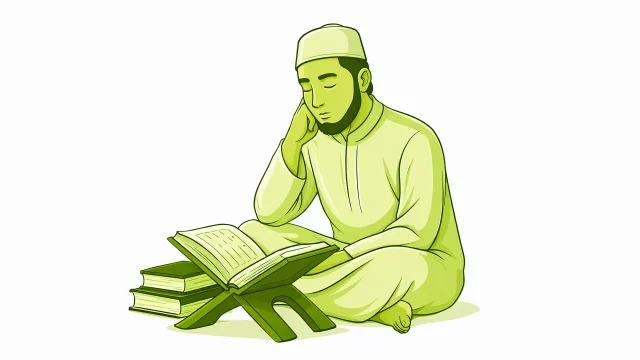
The memorisation of the complete Quran — Hifz — is one of the most honoured achievements in the Islamic tradition. A Hafiz (male) or Hafiza (female) who has committed all 30 Juz, 114 Surahs, and 6,236 ayat to memory is held in the highest esteem in Muslim communities worldwide. The Prophet Muhammad ﷺ described the Hafiz’s parents receiving crowns of light on the Day of Judgment — a tradition that motivates millions of Muslim families to pursue Hifz for their children.
In America, the pursuit of Hifz presents distinctive challenges. American Muslim children attend regular school full-time, have homework, extracurricular activities, and social lives. Unlike South Asian or Middle Eastern contexts where full-time residential Hifz schools (madrasas) are the norm, most American Hifz students pursue memorisation part-time alongside everything else.
This guide explains how Hifz works in America — the structures available, the realistic commitments involved, and how families and institutions can support Hifz students effectively.
What Is Hifz and Why Does It Matter?
Hifz (حفظ) means memorisation. In Islamic usage, it refers specifically to the memorisation of the complete Quran — all 604 pages, in the standard Hafs ‘an ‘Asim recitation. A person who has completed this memorisation is a Hafiz (male) or Hafiza (female).
The scale of the achievement:
- The Quran contains approximately 77,430 words
- Full memorisation to the standard of Hifz requires not just recitation from memory but accurate recitation with proper Tajweed
- Most part-time students take 5–12 years to complete; full-time students take 2–4 years
Why families pursue Hifz:
- Deep spiritual significance in Islamic tradition
- The Hafiz intercedes for family members on the Day of Judgment (referenced in hadith)
- A lifelong connection to the Quran in the heart, not dependent on a physical copy
- Community honour and respect
- Spiritual formation and discipline
Hifz in the American Muslim Context
The American Muslim community’s relationship with Hifz has evolved significantly over the past two decades. In the early years of American Muslim immigration (1970s–1990s), Hifz was rare — the primary focus was establishing basic Islamic education, and the infrastructure for Hifz barely existed.
By the 2000s, as the American Muslim community matured and achieved economic stability, aspirations for Hifz grew. A generation of American Muslims who had grown up with limited Islamic education decided they wanted their children to achieve what they had not. The Hifz movement in American Muslim communities reflects this generational shift.
By 2026, most major American mosques have some form of Hifz programme or circle — from a single teacher with five students meeting Saturday mornings to dedicated Hifz academies operating at full-time Islamic schools.
Full-Time vs Part-Time Hifz: The American Reality
There are two fundamental models for Hifz in America:
| Feature | Full-Time Hifz School | Part-Time Hifz (alongside regular school) |
| Daily memorisation time | 6–8 hours | 1–2 hours |
| Regular school attendance | No (or limited) | Yes, full-time |
| Completion timeline | 2–4 years | 5–12 years |
| Availability in USA | Very few boarding schools | Widely available at mosques |
| Age typically started | 8–14 | 8–18 |
| Parental sacrifice required | Very high (residential separation) | High (daily time commitment) |
| Most common in USA | Rare | The dominant model |
Full-time Hifz schools in America are few — a small number of boarding institutions exist primarily in the northeastern USA and a few other states. These schools require students to leave regular schooling or dramatically reduce it while pursuing Hifz intensively. The residential model is common in the UK and South Asia but has limited uptake in America, where Muslim families generally prefer keeping children at home and in regular schooling.
Part-time Hifz — pursued alongside regular school, with daily memorisation sessions before school, after school, or in the evening — is by far the dominant American model. Most Hifz students in America are public or Islamic school students who dedicate 1–2 hours daily to memorisation with a local teacher.
How Part-Time Hifz Works Alongside Regular School
A typical American part-time Hifz student’s weekly schedule during the academic year might look like this:
| Time Slot | Activity |
| Before school (6:30–7:30 am) | New memorisation (sabak) — ½–1 page of new Quran |
| After school (4:30–5:30 pm) | Recent revision (sabqi) — review last 5–7 days |
| Evening Hifz session (5:30–7:00 pm) | Teacher session — recite new memorisation + revision |
| Weekend (Saturday morning) | Older revision (dhor) — review older memorised portions; longer session with teacher |
This schedule is demanding. A child pursuing Hifz alongside regular school is spending 2–3 hours daily on Quran memorisation in addition to homework, regular extracurriculars, and normal family life. The decision to pursue Hifz part-time is a family decision, not just a child’s — it requires parental commitment to the morning routine, transportation to sessions, and consistent home environment support.
The families who succeed with part-time Hifz in America are typically those who:
- Begin at a young age (8–10) while the child is still willing to be directed by parents
- Establish a non-negotiable daily routine before distractions compound
- Have a highly qualified, motivating Hifz teacher who builds the student’s love of the Quran
- Maintain consistency through the difficult middle years (years 3–5) when progress slows and motivation dips
Hifz Progress Terminology
American Hifz students and teachers use the same progress terminology used across the South Asian Islamic education tradition:
| Term | Meaning |
| Sabak | New daily memorisation — the fresh portion learned today |
| Sabqi / Sabak Para | Recent revision — reviewing the last few days or weeks of memorisation |
| Dhor | Older revision — reviewing the portions memorised months or years ago |
| Manzil | A large scheduled revision block — typically 1–2 Juz reviewed in a session |
| Nazra | Quran reading fluency (prerequisite for Hifz) |
| Juz / Para | One of the 30 sections of the Quran |
| Khatam | Completing the full Quran — used for the Hifz completion ceremony |
Understanding these terms is important for Hifz programme administrators: progress tracking must use this vocabulary to be meaningful to both teachers and parents.
Finding a Qualified Hifz Teacher in America
The availability of qualified Hifz teachers is the single biggest constraint on Hifz programme quality in America. A qualified Hifz teacher should:
- Be a Hafiz themselves (completed memorisation)
- Ideally hold an Ijazah — a certified chain of Quran transmission through a qualified teacher
- Have experience teaching children, not just adults
- Have Tajweed knowledge sufficient to correct student errors
- Be reliable and able to commit to consistent scheduling
Finding a teacher with all of these qualities, willing to work for maktab stipend rates, in the specific city where a family lives — is genuinely difficult. Many American mosques settle for teachers who are Huffaz but lack Ijazah, or who have Ijazah but limited teaching experience.
Where to find Hifz teachers:
- Local Islamic schools (full-time schools sometimes have Hifz staff who take private students)
- ISNA connections (Islamic scholars and teachers in the ISNA network)
- Community referrals — the best source; word-of-mouth among Muslim families
- Online Hifz teachers (Zoom-based; growing rapidly; quality varies)
Online Hifz has grown significantly since COVID-19. While in-person recitation with a physically present teacher remains the traditional preferred method (Talaqqi), many American families in areas with no local Hifz teacher have turned to online recitation sessions. The quality of online Hifz programmes varies significantly.
Hifz Completion: What Happens When a Student Finishes?
Completing Hifz — memorising the entire Quran with proper Tajweed — is one of the most celebrated moments in a Muslim family’s life. American Muslim communities have developed completion ceremonies (Khatam ceremonies or Hifz graduation events) that typically include:
- Public recitation of the final portion of the Quran by the new Hafiz
- Recognition by the community imam and teacher
- Du’a for the student and family
- Community celebration with food and gathering
Some teachers award completion certificates; those with Ijazah may extend the Ijazah chain to the student — giving the new Hafiz a certified link in the chain of Quran transmission back to the Prophet ﷺ.
The completion ceremony publicly recognises an achievement that has required years of daily discipline from both the student and the family. In well-run American Hifz programmes, it is one of the mosque community’s most attended and emotionally resonant events.
Hifz Programme Administration Challenges
Hifz programmes in America face specific administrative challenges that regular maktabs do not:
No standard progress tracking system: Each teacher tracks student progress differently — some use notebooks, some use memory, some use WhatsApp voice notes. There is no standard American Hifz progress record format.
Long timeline, many teachers: A student pursuing Hifz for 8 years may work with 2–3 different teachers as families move or teachers change. Without digital records, the new teacher has no reliable picture of what the student has memorised and to what standard.
Retention and dropout: Many students begin Hifz and do not complete it. The drop-off rate in American part-time Hifz programmes is significant — estimating 30–50% non-completion among those who begin. Tracking students who are struggling allows earlier intervention.
Parent communication: Hifz parents are intensely invested in their children’s progress. Weekly progress updates — how many pages memorised this week, which revision sessions were completed, what errors are being corrected — are essential. Without a structured reporting system, teacher-parent communication happens ad-hoc and is often inadequate.
ilmify.app for Hifz tracking: ilmify provides digital Quran progress tracking with Hifz-specific terminology — recording sabak, sabqi, dhor, and manzil progress, tracking revision sessions, flagging students behind pace, and enabling structured parent progress reports. It is the administrative infrastructure that Hifz programmes in America currently lack.
Conclusion
Hifz in America is challenging — but it is happening, in mosques and homes and online sessions across the country, as Muslim families commit to giving their children the most profound connection to the Quran possible. The students who complete are among the most celebrated members of their communities; the families who supported them carry a permanent honour.
For the institutions running Hifz programmes — managing students, teachers, progress tracking, and parent communication — the right administrative infrastructure matters. Tracking an 8-year journey in a notebook is a recipe for lost progress records and disengaged parents.
Running a Hifz programme at your mosque or school? Start free at ilmify.app — with Hifz progress tracking built for American Islamic education institutions.





 Arabic
  English
  Malay
Malay  Urdu
Urdu