
Introduction
Quran memorisation — Hifz — is the most central educational practice in Middle Eastern Islamic education. Across all seven countries of the GCC and Egypt, the Hafiz (one who has memorised the complete Quran) holds a position of deep social and religious honour. The infrastructure that supports this practice — from neighbourhood Kuttabs to university-level Kulliyyat al-Quran — represents one of the most sustained educational commitments in the world. Hifz and Tahfiz across the Middle East follow a broadly consistent methodology but vary significantly by country in governance, institutional structure, and the degree to which state resources are mobilised.
What Is Hifz and Why Does It Matter in the Middle East?
Hifz (حفظ) means to guard or protect — in Islamic educational usage, it refers specifically to the complete memorisation of the 6,236 verses of the Quran. A person who completes this is called a Hafiz (male) or Hafiza (female). Tahfiz (تحفيظ) refers to the structured process of enabling that memorisation — the teaching methodology, programme, institution, or department that facilitates Hifz.
The centrality of Hifz in the Middle East is rooted in several factors:
| Factor | Significance |
| Religious obligation | Preserving the Quran through memory is a collective duty (fard kifayah) on the Muslim community |
| Proximity to revelation | Saudi Arabia, home to Makkah and Madinah, amplifies the cultural weight of memorisation |
| State investment | GCC governments fund Dar al-Quran networks, prizes, and salaries for Huffaz |
| Social status | A Hafiz typically leads prayers, gains community respect, and is sought as a marriage partner |
| Quran competitions | National and international competitions (e.g., Dubai International Quran Award) raise the profile of Hifz achievement |
The Progression: Kuttab → Tahfiz School → Kulliyyah
In the Middle East, Hifz education follows a clear institutional ladder:
| Level | Institution | Age Range | Focus |
| Foundation | Kuttab / Halaqah | 4–8 | Nazra (recitation by sight), Qa’idah, basic Tajweed |
| Intermediate | Dar al-Quran / Tahfiz school | 7–18 | Full Hifz completion, Muraja’ah, Tajweed rules |
| Advanced | Ma’had Islami / Islamic institute | 15–22 | Hifz completion + Islamic sciences |
| University | Kulliyyat al-Quran / Kulliyyat al-Shari’ah | 18+ | Qira’at, Quran sciences, Ijazah chains |
| Certification | Ijazah with Sanad | Any age | Formal authorisation to teach with chain to Prophet ﷺ |
This pathway is not strictly sequential — many students complete Hifz in the Tahfiz school, then pursue an Ijazah independently or through a university programme. Some complete Hifz as adults after years of part-time Halaqah attendance.
Country-by-Country: How Hifz Is Structured
| Country | Primary Hifz Institution | Governance Body | Key Feature |
| Saudi Arabia | Dar al-Quran, mosque Tahfiz schools | Ministry of Education + Ministry of Islamic Affairs | Madinah Ijazah chains — shortest Sanads; Haramayn Tajweed standard |
| UAE | IACAD Maktoum Centres, Dar al-Quran | IACAD (Dubai) + Awqaf (Abu Dhabi) | Highly regulated; digital registration; large expatriate Hifz community |
| Qatar | Ministry of Awqaf Dar al-Quran network | Ministry of Awqaf and Islamic Affairs | Well-funded; national curriculum; Quran competition culture |
| Oman | Mosque-based Quran schools, Ministry of Awqaf | Ministry of Awqaf + Ministry of Education | Ibadi tradition; community-driven; less centralised than Gulf peers |
| Egypt | Al-Azhar Institutes, Dar al-Quran, Kuttab | Ministry of Awqaf + Al-Azhar | Highest global authority; Qira’at specialisation; large-scale Al-Azhar institute network |
| Bahrain | Ministry of Justice/Islamic Affairs centres | Ministry of Justice and Islamic Affairs | Small population; high per-capita Hifz investment |
| Kuwait | Ministry of Awqaf Tahfiz schools | Ministry of Awqaf and Islamic Affairs | State stipends for Huffaz; Quran competitions with cash prizes |
Institutional Types Compared Across the Region
Dar al-Quran (دار القرآن)
The most common dedicated Hifz institution across all seven countries. A Dar al-Quran typically offers:
- Full Hifz programme (3–5 years)
- Tajweed instruction under qualified Qurra’
- Muraja’ah sessions (daily and weekly revision)
- Some offer Islamic sciences alongside Hifz
Tahfiz School (مدرسة التحفيظ)
A school-format institution where Hifz is the primary curriculum — may include academic subjects (Maths, Arabic, Sciences) alongside Quran study. Common in Saudi Arabia, UAE, and Qatar.
Mosque Halaqah (حلقة)
An informal or semi-formal Quran study circle, typically conducted after Fajr or Asr prayer in mosques. The primary Hifz pathway for many adults and working students across the region.
Kuttab (كُتَّاب)
The traditional children’s Quran school — pre-Hifz level, focused on recitation, Qa’idah, and early Tajweed. Most prevalent in Egypt and Saudi Arabia; declining as formal schools absorb this function.
Kulliyyat al-Quran / Kulliyyat al-Shari’ah
University-level faculty where Hifz completion is typically a prerequisite for entry. Offers academic study of Quran sciences, Qira’at, Tafseer, and Ijazah pathways. Present in all seven countries.
The Role of Muraja’ah in Maintaining Hifz
Muraja’ah (مراجعة — revision) is as important as the initial memorisation itself. The Hifz tradition universally recognises that memorised verses fade without consistent review. Across the Middle East, Muraja’ah is structured as follows:
| Revision Type | Arabic | Frequency | Typical Volume |
| Daily Muraja’ah | المراجعة اليومية | Every day | 1–3 Juz |
| Weekly Muraja’ah | المراجعة الأسبوعية | Weekly | 5–10 Juz |
| Complete Muraja’ah | مراجعة الختم | Monthly or fortnightly | Full 30 Juz |
| Pre-Ijazah Muraja’ah | مراجعة الإجازة | Before certification | Full 30 Juz to the Sheikh |
Institutions track Muraja’ah with the same rigour as new memorisation — in well-run centres, every student’s revision schedule is logged and monitored by a teacher or supervisor.
Quran Competitions and Hifz Culture
Quran competitions are a defining feature of Middle Eastern Hifz culture — and a significant driver of student motivation. Major competitions include:
| Competition | Country | Prize | Notes |
| Dubai International Holy Quran Award | UAE | Up to AED 500,000 | Largest international competition; 100+ countries participate |
| King Abdul Aziz International Quran Competition | Saudi Arabia | Large cash prizes | Held in Makkah during Ramadan |
| Qatar International Holy Quran Competition | Qatar | Significant cash prizes | Ministry of Awqaf-organised |
| Kuwait International Holy Quran Competition | Kuwait | Substantial prizes | Annual; prestigious in GCC |
| Al-Azhar National Quran Competition | Egypt | Academic prizes + recognition | Competitive entry to Al-Azhar Kulliyyat al-Quran |
These competitions test both Hifz accuracy and Tajweed quality — and require precisely the kind of structured Muraja’ah and progress tracking that well-organised Tahfiz centres maintain.
The Ijazah as the Pinnacle of Hifz
In the Middle East, completing Hifz is honoured — but receiving an Ijazah is the highest recognition. An Ijazah (إجازة) is a formal authorisation granted by a qualified Sheikh to a student who has recited the complete Quran to the Sheikh’s satisfaction with full Tajweed accuracy.
The Ijazah comes with a Sanad — a chain of transmission linking the student to the Prophet ﷺ through every intervening teacher. This chain is the most carefully maintained tradition in Quran education:
- Saudi Arabia (especially Madinah) holds some of the world’s shortest Sanads
- Egypt (Al-Azhar) maintains the most diverse Qira’at Ijazah traditions
- UAE, Qatar, Bahrain, and Kuwait all have scholars qualified to grant Ijazah
Institutionally, the Ijazah pathway requires detailed documentation — the student’s recitation sessions, the teacher’s credentials, and the final certification. See Ijazah and Sanad: The Quranic Certification System Explained for full detail.
Women and Hifz in the Middle East
Women’s Hifz education is well-established across the region:
| Country | Women’s Hifz Provision |
| Saudi Arabia | Dedicated Dar al-Quran for women; female-only Halaqat; growing digital options |
| UAE | IACAD-registered women’s centres; female sections in major Maktoum Centres |
| Qatar | Ministry of Awqaf women’s Tahfiz departments |
| Egypt | Al-Azhar institutes for girls (millions enrolled); women’s Dar al-Quran widely available |
| Oman | Community mosque Halaqat for women; some dedicated centres |
| Bahrain | State-run women’s Islamic education centres |
| Kuwait | Ministry of Awqaf Huffaz programmes for women |
Female Huffazat are as honoured as male Huffaz — and in many families, a daughter who completes Hifz carries as much social distinction.
Key Statistics
| Metric | Figures |
| Estimated active Dar al-Quran/Tahfiz centres (7 countries) | 10,000+ |
| Annual participants, Dubai International Quran Award | 100+ countries |
| Al-Azhar Institutes enrolled students (Egypt) | ~2.5 million |
| UAE IACAD-registered Quran memorisation centres | 70+ (Dubai alone) |
| Saudi Ministry-affiliated Tahfiz schools | 1,000+ |
| Qatar Awqaf Dar al-Quran branches | 70+ |
Frequently asked questions
Q: How long does it take to complete Hifz in the Middle East?
Duration varies by intensity and individual aptitude. In dedicated full-time Tahfiz schools, most students complete memorisation in 2–4 years. Part-time mosque Halaqat students may take 5–10 years. The Haramayn tradition emphasises quality over speed — memorising fewer verses per day but with deep Tajweed precision.
Q: Is Hifz taught differently in Saudi Arabia compared to Egypt?
The core methodology is similar — Talaqqi, daily Sabak (new lesson), and Muraja’ah — but the emphasis differs. Saudi Arabia’s Haramayn tradition places exceptional weight on Hafs recitation and Tajweed precision. Egypt’s Al-Azhar tradition adds a multi-Qira’at dimension and formal academic study of Quran sciences alongside memorisation.
Q: Do Middle Eastern countries recognise Hifz certificates from other countries?
Hifz certificates carry weight based on the issuing institution’s reputation. An Ijazah from a Madinah Sheikh or Al-Azhar is recognised globally. National Hifz certificates (without Ijazah) are recognised within their own country but may need verification for employment or academic purposes elsewhere.
Q: What software features do Tahfiz centres in the Middle East need?
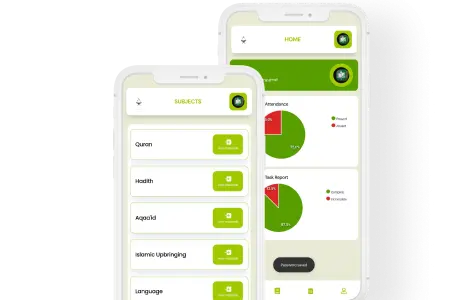
Middle Eastern Tahfiz centres require Hifz progress tracking (Juz and Surah level), Muraja’ah scheduling, Tajweed assessment tools, Ijazah eligibility records, and teacher credential logs. The Ijazah pathway documentation is particularly important — tracking which student has recited to which Sheikh, and what Sanad the Sheikh holds.
Q: Can an adult begin Hifz in the Middle East?
Yes — adult Hifz programmes are widely available through mosque Halaqat and evening Dar al-Quran classes across all seven countries. The UAE in particular, with its large expatriate Muslim population, has many adult Hifz programmes designed for working professionals.
Conclusion
Hifz and Tahfiz are the heartbeat of Islamic education across the Middle East. From the Kuttab where children first learn to recite, to the university Kulliyyah where scholars pursue Qira’at Ijazahs, the infrastructure for Quran memorisation in the GCC and Egypt is the most developed and richly resourced in the Muslim world. Managing this infrastructure effectively — tracking Hifz progress, scheduling Muraja’ah, documenting Ijazah pathways, and coordinating teachers across multiple centres — demands purpose-built tools.
Ilmify is built for Middle Eastern Quran education institutions — with Hifz tracking, Muraja’ah management, Ijazah pathway documentation, and Tajweed assessment tools designed for the standards of the GCC and Egypt. Explore Ilmify →




 Arabic
  English
  Malay
Malay  Urdu
Urdu