

Introduction
CISNA — the Council of Islamic Schools in North America — is the only global Islamic school accreditation agency in the world. Founded from an ISNA symposium in 1989, CISNA has spent three decades developing and refining an accreditation framework that defines what quality Islamic schooling looks like across governance, curriculum, teaching, and facilities.
For parents choosing between Islamic schools, CISNA accreditation is the clearest quality signal available. For school leaders preparing for accreditation, the process is a rigorous institutional review that produces genuine improvement. For the sector as a whole, CISNA’s existence demonstrates that Islamic schools are serious, professionally managed educational institutions — not informal community projects.
This guide explains CISNA completely: what it is, what the accreditation process looks like, and why it matters.
What Is CISNA?
CISNA — the Council of Islamic Schools in North America — is a non-profit organisation that provides three core services to Islamic schools:
- Accreditation — a rigorous quality review and certification process
- Professional development — training and development for Islamic school teachers and administrators
- Advocacy — representing Islamic schools in policy discussions and public discourse
CISNA accredits Islamic schools not just in North America but globally — making it unique as a genuinely international Islamic school quality body. An Islamic school in New York, Toronto, London, or Johannesburg can apply for CISNA accreditation.
Key facts:
- Founded: 1989 (from ISNA symposium)
- Headquarters: USA
- Type: Non-profit accreditation and support organisation
- Scope: Global — North America primary, international expanding
- Website: cisnausa.org
Why Islamic School Accreditation Matters
Accreditation is a voluntary process by which a school submits to external review against a defined standard, demonstrates it meets that standard, and is publicly recognised as meeting it. It is fundamentally a quality assurance mechanism.
For Islamic schools specifically, accreditation matters on three levels:
For parents: Accreditation is the clearest signal that an Islamic school has been reviewed by independent experts against defined standards — and has met them. In a sector where quality varies enormously and there is no public inspection regime (unlike public schools), CISNA accreditation tells parents: this school has been evaluated and found to be delivering genuine quality.
For the school itself: The accreditation process — including self-study, external review, and required improvements — generates institutional knowledge and drives genuine quality improvement. Schools consistently report that the process of preparing for accreditation reveals gaps they did not know existed and produces meaningful improvements in governance, curriculum, and operations.
For the sector: A critical mass of CISNA-accredited schools strengthens the public perception and credibility of Islamic education in America. Post-9/11 scrutiny of Islamic schools created pressure that accreditation helps address — accredited schools can point to independent review as evidence of their educational quality and professional management.
What CISNA Accreditation Covers
CISNA’s accreditation standards span the full range of school operations:
| Area | What Is Evaluated |
| Mission and Philosophy | Clarity of Islamic educational philosophy; alignment between stated mission and actual practice |
| Governance | Board structure; separation of roles; financial oversight; policy documentation |
| Curriculum | Academic curriculum alignment with state standards; Islamic Studies scope and sequence; Arabic programme |
| Teaching and Learning | Teacher qualifications; instructional quality; assessment practices; student progress tracking |
| Student Support | Student welfare policies; special needs accommodation; counselling resources |
| Community and Family Engagement | Parent communication; community relationships; involvement in school life |
| Financial Management | Budget process; financial accountability; sustainability planning |
| Facilities and Safety | Physical environment quality; safety procedures; emergency planning |
| Islamic Identity | Islamic environment embedded in school culture; halal food; prayer; Islamic calendar observed |
This breadth means CISNA accreditation is a genuine whole-school review — not a narrow curriculum audit. A school seeking accreditation must demonstrate quality across all these dimensions, not just in its academic programme.
The Accreditation Process: Step by Step
The CISNA accreditation process typically takes 1–3 years from initial application to accreditation award. The steps:
Step 1 — Application and Eligibility
The school contacts CISNA and submits an application. CISNA reviews whether the school is eligible for the process — typically requiring that the school has been operating for at least one year and has a minimum enrolment.
Step 2 — Self-Study
The school conducts a comprehensive self-study — systematically reviewing its operations against CISNA’s standards across all areas. This process, which typically takes 6–12 months, involves the school leadership, board, teachers, and sometimes parents. The self-study report is submitted to CISNA.
Step 3 — Visiting Team Review
A team of CISNA-trained reviewers visits the school for 2–3 days. The visiting team reviews documentation, observes classes, interviews teachers, administrators, and students, and evaluates the school against standards. The team produces a written report with findings and recommendations.
Step 4 — CISNA Commission Review
The visiting team’s report is reviewed by CISNA’s accreditation commission. The commission decides: accreditation awarded, accreditation with conditions (specific improvements required within a defined time), or deferred (school needs significant improvement before accreditation is possible).
Step 5 — Accreditation Award and Ongoing Maintenance
Accredited schools receive CISNA’s recognition, typically for a 3–5 year period. They are required to submit annual reports and undergo periodic re-accreditation to maintain their status. Continued accreditation requires continued quality maintenance.
Professional Development: CISNA’s Second Function
Beyond accreditation, CISNA provides professional development for Islamic school educators and administrators — typically through workshops, seminars, and conferences in partnership with ISNA.
CISNA’s professional development addresses the specific challenges of Islamic school teaching:
- Teaching state academic curriculum within an Islamic context
- Islamic Studies pedagogy
- Classroom management in an Islamic school environment
- Parent communication in multicultural Muslim communities
- Leadership for Islamic school principals and administrators
Professional development is available to schools regardless of accreditation status — CISNA recognises that the teacher quality challenge in Islamic schools requires ongoing investment across the sector.
Advocacy: CISNA’s Third Function
CISNA advocates for Islamic schools in policy discussions at the local, state, and national level. Key advocacy areas include:
Federal funding access: Working with organisations like ISA-NYS to expand Islamic school access to Title I and Title III federal education funds. These funds are technically available to qualifying private schools — but accessing them requires navigating bureaucratic processes that CISNA helps schools understand.
Public perception: Countering misconceptions about Islamic school curriculum and student outcomes. CISNA provides research and testimony demonstrating that accredited Islamic schools produce academically successful graduates who are contributing members of American society.
Regulatory environment: Engaging with state education departments on issues affecting private religious schools — curriculum requirements, teacher certification, building codes — and representing Islamic schools’ specific needs.
CISNA and ISNA: The Partnership
CISNA was born from ISNA (Islamic Society of North America) and maintains a close partnership. ISNA — the largest Muslim umbrella organisation in North America — provides CISNA with institutional credibility, access to its national network, and convening power for professional development.
The ISNA annual convention, held each year over Labour Day weekend, serves as one of CISNA’s primary platforms for professional development workshops, networking, and advocacy. For Islamic school administrators, the ISNA convention is one of the year’s most important professional development events.
This ISNA connection also means that CISNA is embedded in the mainstream Sunni Muslim institutional world — not affiliated with any particular school of thought, but recognisable and credible across the full spectrum of Sunni Muslim communities in North America.
CISNA vs Other Accreditation Bodies
| Body | Type | Scope | Islamic-specific | Notes |
| CISNA | Islamic school accreditation | Global | ✅ Yes | Only Islamic-specific accreditor |
| Cognia (AdvancED) | General school accreditation | USA/Global | ❌ No | General accreditor; some Islamic schools also pursue this |
| NEASC | Regional accreditation | Northeast USA | ❌ No | Regional; some private schools pursue |
| State approval | State registration | State-by-state | ❌ No | Required for operation; separate from quality accreditation |
Some Islamic schools pursue both CISNA accreditation and a regional or national general accreditation (Cognia/AdvancED). Everyday Ibaadah Academy (online) is Cognia-accredited, for example. Dual accreditation is a marker of the highest institutional quality but is not required.
For Islamic schools specifically, CISNA accreditation is the more meaningful signal to Muslim parents and community stakeholders who understand Islamic education — while Cognia accreditation may be more legible to non-Muslim audiences.
Conclusion
CISNA is the quality cornerstone of American Islamic education. For schools seeking accreditation, the process is demanding — but it produces genuine institutional improvement. For parents choosing an Islamic school, CISNA accreditation is the most credible signal of educational quality available. For the sector as a whole, CISNA’s existence demonstrates the professional seriousness of American Islamic schooling.
The schools that have done the hard work of CISNA accreditation are the ones most likely to still be serving their communities well a decade from now.
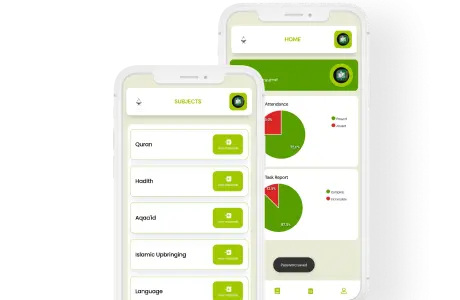
Running an Islamic school moving toward accreditation? ilmify.app provides the student management, attendance, progress tracking, and reporting infrastructure that CISNA’s documentation requirements demand.




 Arabic
 English
 Malay
 Urdu