

How to Run a TPQ/TPA Well: The 2026 Complete Management Guide
The TPQ (Taman Pendidikan Al-Quran) and TPA (Taman Pendidikan Qur’an) are the grassroots foundation of Quranic education in Indonesia. Found in virtually every neighbourhood with a mosque, every village with a mushola, and every community with a desire to preserve Quranic literacy in the next generation, the TPQ/TPA is the Islamic educational institution that reaches the most children with the least institutional infrastructure of any Islamic school type in the country.
This is both its greatest strength and its most pressing vulnerability. The TPQ reaches children who would never attend a formal pesantren or madrasah. It operates with minimal overhead, run by volunteers and community members motivated by sincere dedication. And it is, in the majority of cases, managed with essentially no administrative infrastructure whatsoever — no formal student register, no systematic progress tracking, no proper financial records, and no structured parent communication beyond the ustadz calling out to parents in the mosque courtyard.
This guide is for those who run, teach at, or serve on the committees of TPQ and TPA institutions — and who want to run them well.
What Is a TPQ/TPA?
The Taman Pendidikan Al-Quran (TPQ/TPA) is a community Islamic school for children, typically operating in the evening or on weekend mornings, whose primary purpose is teaching children to read the Quran. The standard curriculum uses the Iqra’ method — a six-volume graduated Quran reading programme developed in Indonesia — which takes children from complete Arabic illiteracy through to fluent Quran reading. Selected short Surahs, basic duas, and elementary Islamic practice (Wudhu, Salaah) are also taught.
TPQ/TPA institutions operate from mosques (masjid), small prayer houses (mushola or langgar), private homes, or community halls. They are typically open to children from approximately age 5 or 6 through early secondary school age (13–14). Sessions typically run for one to two hours, three to five evenings per week.
Unlike the formal madrasah system, TPQ/TPA institutions are not under the direct regulatory authority of Kementerian Agama for their day-to-day operations. They are community institutions — owned and operated by the local community, the mosque committee, or a community foundation (yayasan). This informality is both liberating and dangerous.
The Administrative Reality in Most TPQ/TPA Institutions
Ask the ustadz or ustadzah managing a typical Indonesian TPQ/TPA to describe their administrative systems, and the answer is nearly universal: they keep a handwritten attendance list in a notebook, they know each child’s Iqra’ level from memory, they collect infaq (donations/voluntary contributions) in a small box or envelope, and they communicate with parents primarily through WhatsApp or direct conversation.
This is not a failure of dedication — it is a function of the environment in which TPQ/TPA operates. Teachers are typically volunteers or receive minimal honor (compensation). The committee is composed of community volunteers with other full-time occupations. No one has been given — or has the time to create — proper administrative infrastructure. The institution runs on personal commitment and community trust.
The problem is that personal commitment and community trust, while essential, are fragile as institutional foundations. When the dedicated ustadz moves away, the records in their notebook go with them. When a parent disputes whether their child attended enough sessions to qualify for the year-end certificate, there is no attendance record to consult. When the committee treasurer changes and the previous treasurer’s informal accounts are lost, years of financial history disappear.
These are not hypothetical scenarios — they happen in Indonesian TPQ/TPA institutions constantly.
The Five Essential Systems Every TPQ/TPA Needs
A well-run TPQ/TPA does not need complex institutional infrastructure. It needs five simple, consistent systems:
System 1: Student Register
Every enrolled student should have a formal record containing their full name, date of birth, parent/guardian names, home address, and parent contact number (WhatsApp). This register is an institutional document — it belongs to the TPQ, not to the ustadz’s personal notebook. When an ustadz leaves, the register stays.
For TPQ using the Iqra’ method, the register should also record the child’s current Iqra’ level at enrolment. This becomes the baseline from which progress is measured.
What you need: A simple form (printed or digital) for each student. A file or folder for storing printed forms, or a digital system for storing digital records.
System 2: Iqra’ / Quran Progression Tracking
The educational heart of the TPQ is Quranic progress — moving each child through the Iqra’ volumes to the point where they can read the Quran fluently. The ustadz who hears each child read daily knows exactly where each child is — which Iqra’ volume, which lesson — but this knowledge exists only in the ustadz’s memory.
A simple progression record for each student — updated weekly or after each individual reading session — transforms this knowledge into institutional data. The minimum to record is the current Iqra’ volume and lesson number. The date of each transition between Iqra’ volumes should also be recorded — this creates a progress timeline that shows whether the child is advancing appropriately or stagnating.
For children who have completed Iqra’ and are reading the Quran, the same principle applies: which Juz and page the child is currently reading, updated regularly.
System 3: Attendance Records
Attendance should be taken at every session and preserved. At a minimum, this means a handwritten register with student names listed and a tick or cross for each session. The more useful version is a digital attendance record that makes it easy to calculate each student’s total attendance over a month or term.
Regular non-attendance is one of the earliest and most reliable indicators of a child falling behind in their Iqra’ progress. If attendance data exists, the ustadz can identify struggling students early and act. If it does not exist, the problem only becomes visible when the gap is large and the remediation required is significant.
System 4: Fee and Infaq Management
Most TPQ/TPA collect some form of monetary contribution — whether a formal monthly fee (SPP), a weekly voluntary contribution (infaq), or both. This money funds the ustadz’s honor, teaching materials, and the running costs of the facility.
Managing this money without records is not just administratively risky — it is a test of community trust. When the committee treasurer cannot account clearly for how much was collected and how it was spent, rumours arise. Community trust erodes. Sometimes dedicated volunteers who have served the institution for years find their integrity questioned because there was no record to show that they handled the money correctly.
The solution is simple: record every collection, issue a simple receipt or acknowledgment, and maintain a running record of income and expenditure. A basic ledger — handwritten or digital — that anyone in the committee can read and verify is sufficient. Monthly accounts shared with the mosque committee or yayasan demonstrate accountability and build trust.
System 5: Parent Communication
Parents entrust their children to the TPQ — children who are young, often in the early primary school years, walking or cycling to the mosque in the early evening. They deserve to know that their child arrived, that their child is progressing, and that any concerns are communicated promptly.
A general WhatsApp group for all parents is useful for general announcements — session cancellations, upcoming khatam ceremonies, term holiday dates. It is inadequate for individual student communication. Progress updates should be communicated individually to each family — ideally through a brief periodic report that tells the parent which Iqra’ volume their child is currently on, how their attendance has been, and whether there is anything the parent can do at home to support progress.
Digital Tools for TPQ/TPA Management
The good news for TPQ/TPA administrators is that going digital does not require expensive software or advanced technology skills. The bad news is that finding tools that actually fit the TPQ/TPA context — rather than being designed for large formal madrasah or corporate organisations — requires some searching.
What TPQ/TPA specifically needs from a digital management tool:
- Simple student registration (not a complex enterprise data entry form)
- Iqra’ level tracking per student — updated after each individual reading session
- Attendance recording — simple, fast, done by the ustadz on their smartphone during or immediately after the session
- Individual parent communication — progress reports and fee reminders that reach each family individually, not broadcast to the group
- Basic income/expenditure recording with simple output reports for the committee
- Works on Android smartphones (the dominant device among Indonesian ustadz and administrators)
- Works offline or with minimal internet (rural mushola settings often have poor connectivity)
- Affordable — TPQ/TPA budgets are minimal; a management platform must cost significantly less per month than the ustadz’s honor
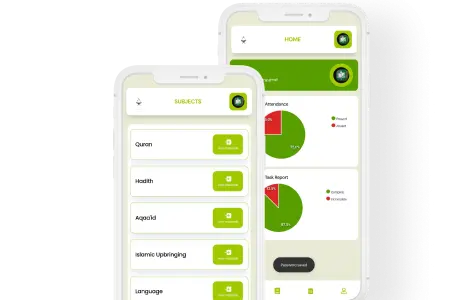
Ilmify meets these requirements in a single platform — simple enough for a volunteer TPQ administrator to learn in an afternoon, comprehensive enough to replace the notebook, the WhatsApp group management, and the manual fee ledger with a single integrated system. The Iqra’ progression tracking model is built for the TPQ context, not adapted from a generic “grade” tracking system.
Year-End Khatam Ceremony: Administration and Celebration
One of the most important annual events in the TPQ/TPA calendar is the Khatam — the ceremony celebrating students who have completed the Iqra’ programme and/or read the complete Quran. This ceremony is a significant community event — families attend, the mosque committee participates, and the children who have completed the milestone are recognised and celebrated.
Administering the Khatam requires knowing, with confidence, which students have genuinely completed the required milestone. This is only possible if progression records have been maintained throughout the year. An ustadz who has been tracking each student’s Iqra’ progress systematically can produce a confident, accurate list of Khatam-eligible students. An ustadz who has been tracking progress from memory may include students who have not genuinely completed the requirement or exclude students who have.
The Khatam is also a natural occasion for communicating with parents about their child’s progress and the next steps — for a child who has completed Iqra’ and is reading the Quran, the next stage of their Quranic education should be planned at this point. A student management system that records progress milestones automatically makes this planning conversation easy and data-driven.
Building Sustainability: Committee Structure for TPQ/TPA
The most common reason TPQ/TPA institutions collapse is not a lack of dedication — it is a lack of institutional structure. When the dedicated ustadz who founded and ran everything moves away, the institution has no independent existence — it was a person, not an institution.
Every TPQ/TPA, however small, needs a basic committee structure:
Ketua (Chair): Overall responsibility for the TPQ’s direction, community relationships, and major decisions.
Sekretaris (Secretary): Records decisions, maintains institutional documents, manages correspondence.
Bendahara (Treasurer): Manages financial records, collects fees and infaq, disburses payments, prepares monthly financial reports.
Ustadz/Ustadzah (Teachers): Responsible for teaching, attendance recording, and student progress tracking.
Each role should have a clear description of responsibilities. Decisions should be made by the committee as a group, not by one person alone. Minutes of committee meetings should be kept — even brief, informal minutes are better than none.
With this structure in place, the TPQ is an institution that can survive the departure of any individual member. When the ustadz leaves, the committee recruits a new one. The student records, the financial records, and the institutional history remain.




 Arabic
  English
  Malay
Malay  Urdu
Urdu