

Introduction
Australia’s Islamic educational landscape is shaped not by a single authority — as Singapore’s is by MUIS — but by a complex ecology of bodies with overlapping mandates, competing claims, and different relationships to the Muslim community. Understanding this ecology is essential for anyone seeking to understand, operate within, or improve Islamic education in Australia.
The three key bodies are AFIC (the peak representative organisation with a direct school-operating history), ANIC (the national imams council that holds the Grand Mufti position), and ISAA (the peak body specifically for full-time Islamic schools). Below them, state Islamic councils, individual mosque management committees, and independent school boards all make decisions that shape what Australian Muslim children learn and how.
AFIC: The Australian Federation of Islamic Councils
History and Structure
AFIC was founded in 1964 as the Australian Federation of Islamic Societies (AFIS), created as Muslim populations grew in Sydney, Brisbane, Melbourne, Adelaide, and Perth and associations were formed reflecting ethnic and regional identities. In 1976 it adopted a three-tier structure and its current name. It is a not-for-profit umbrella organisation representing Sunni Muslims, with State Islamic Councils as its second tier (New South Wales, Victoria, Queensland, South Australia, Western Australia, ACT, Tasmania) and individual mosques and Islamic societies as its third.
AFIC’s stated mission is to represent the Australian Muslim community as one Ummah to government and other bodies nationally and internationally, and to coordinate and provide resources for its member societies.
AFIC and Islamic Schools: A Complex Legacy
AFIC’s most significant contribution to Australian Islamic education has been through its school network. At its peak, AFIC was directly involved in governing six Islamic schools nationally — Malek Fahd (NSW), Islamic College of Melbourne (Vic), Islamic College of Brisbane (Qld), Islamic College of South Australia (SA), Langford Islamic College (WA), and the Islamic School of Canberra (ACT). These schools collectively received over $42 million in government funding in 2013, plus $21.5 million for capital works.
The governance difficulties that emerged between 2012 and 2016 — federal audits finding financial irregularities, funds transferred without documentation, rental payment concerns, non-compliance notices issued to six schools — reflected the fundamental challenge of a volunteer-led national body attempting to govern professionally operated educational institutions receiving significant public funding. The formal resolution saw individual schools establish independent governance separate from AFIC.
The lesson for Australian Islamic education is clear: community bodies can found schools and inspire their creation, but professional school governance requires professional board composition and transparent financial management independent of the founding community organisation.
AFIC’s Grand Mufti (2024)
On 9 March 2024, AFIC appointed Sheikh Riad El-Rifai as the new Grand Mufti of Australia. Sheikh Riad El-Rifai is one of Australia’s longest-serving imams. His appointment by AFIC is intended to provide a single national religious leadership voice for Australian Muslims — though it coexists with ANIC’s separate Grand Mufti appointment (see below).
AFIC in 2025
AFIC continues to engage on issues of importance to Australian Muslims. Recent AFIC statements (2025) include: condemning a neo-Nazi rally in Sydney (November 2025); applauding Victorian Parliament’s passage of treaty legislation with First Nations peoples (October 2025); welcoming the NSW Supreme Court ruling against anti-protest laws; and issuing strong statements on the conflict in Gaza. AFIC also noted the passing of the Grand Mufti of Saudi Arabia in 2025 with condolences.
ANIC: The Australian National Imams Council
History and the Grand Mufti Question
The Australian National Imams Council (ANIC) emerged to fill the religious leadership vacuum when AFIC retired the Grand Mufti position in 2007. ANIC has appointed Dr Ibrahim Abu Mohamad as Grand Mufti since 2011, with a brief interruption in 2018. Dr Ibrahim — a Lebanese-born scholar based at Sydney’s Lakemba Mosque — has been the most publicly visible face of Islamic religious authority in Australia through major events including the 2014 Sydney siege, national security debates about Australian Muslims, and various statements on community affairs.
The existence of two Grand Muftis — AFIC’s Sheikh Riad El-Rifai (from March 2024) and ANIC’s Dr Ibrahim Abu Mohamad — reflects a genuine community governance challenge rather than mere organisational rivalry. The position is largely ceremonial and advisory, but its public symbolism matters: governments and media look to the Grand Mufti as the voice of Australian Islam, and having two claimants creates confusion about who that voice is.
ANIC and Education
ANIC’s primary contribution to Australian Islamic education is through its influence on mosque imams — the people who actually run most of Australia’s part-time mosque Islamic education. ANIC’s members are Australia’s imams, and the quality of Islamic education in Australian mosques is directly shaped by the knowledge, commitment, and approach of those imams.
ANIC has no formal curriculum development or school governance role. Its educational influence is exercised through imam training, religious guidance, and the authority that comes from representing the scholarly tradition.
ISAA: The Islamic Schools Association of Australia
While AFIC and ANIC both claim broader community representation mandates, ISAA has a clearly defined and clearly delivered role: supporting and advocating for Australia’s full-time Islamic schools.
ISAA describes itself as “the peak body representing and advocating for Islamic schools in the country,” with member schools educating over 40,000 students at more than 40 locations. Its services to member schools cover:
Governance: ISAA provides governance support, helping Islamic school boards meet the professional standards required for institutions receiving government funding and managing staff, facilities, and budgets at scale. This includes guidance on board composition (the need for accountants, lawyers, and education professionals alongside community members), governance policies, and compliance frameworks.
Policy and Advocacy: ISAA represents Islamic schools’ interests with government departments, education bodies, and other entities at state and national level. In a significant recent development, ISAA was part of the historic collaboration that launched the Parliamentary Friends of Religious Schools and Faith Communities — a parliamentary group supporting faith-based schools across traditions. ISAA’s President Abdullah Khan has been a visible advocate for Islamic schools in public policy discussion.
Professional Learning: ISAA coordinates professional development for Islamic school staff — providing teachers and school leaders with the contemporary educational research and practice knowledge that their schools need to deliver quality education alongside strong Islamic formation.
School Improvement: Using school improvement methodologies, ISAA supports member schools in identifying weaknesses and implementing improvements systematically.
Staff Relations: Industrial relations guidance for Islamic schools managing the complexity of employment law in an educational context.
Curriculum and Resources: ISAA’s website includes a Curriculum and Textbooks section providing resources for Islamic Studies teachers across its member schools.
State Islamic Councils: The Middle Tier
Between the national bodies and individual mosques, Australia’s state Islamic councils — the Islamic Council of NSW, Islamic Council of Victoria, and equivalents in other states — play important roles in local Islamic education governance.
State councils are AFIC’s second tier. They coordinate between AFIC’s national direction and the local mosque communities within their state. For Islamic education, state councils often:
- Represent Muslim education interests with state government education departments
- Facilitate connections between mosques offering Islamic education
- Support community imam development and religious education teacher training at the state level
- Respond to community concerns about Islamic education quality
What This Means for Islamic School Administrators
For the principal or administrator of an Australian Islamic school or mosque madrasah, the institutional landscape described above has practical implications:
If you run a full-time Islamic school: ISAA membership provides access to governance support, professional development, advocacy representation, and a network of peer principals who understand your specific challenges. The governance lessons from AFIC’s 2012–2016 difficulties are not theoretical warnings — they are documented examples of what happens when professional governance is missing. Ensuring your board includes qualified accountants, lawyers, and education professionals alongside community representatives is not optional in 2026.
If you run a mosque maktab or weekend school: You are largely operating without national support infrastructure. Your responsibilities — to the students in your care, to the families trusting you with their children’s Islamic formation, to the Privacy Act’s personal data requirements — are no less real for the absence of a regulatory framework enforcing them. The question is whether you meet those responsibilities because they are imposed, or because they reflect your commitment to the amanah of Islamic education.
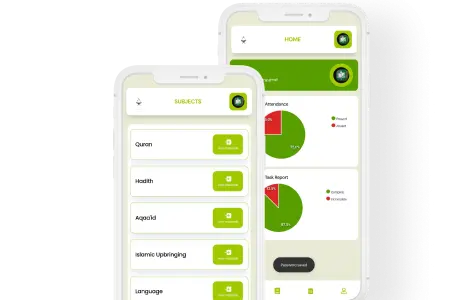
For both: The administrative gap between community aspiration and institutional capacity is the defining challenge of Australian Islamic education. A purpose-built management platform that handles student records, Quran progression tracking, attendance with parent notification, fee management with receipts, and individual parent portals closes that gap — making the community’s educational commitment visible in the institutional management that backs it up.




 Arabic
  English
  Malay
Malay  Urdu
Urdu