
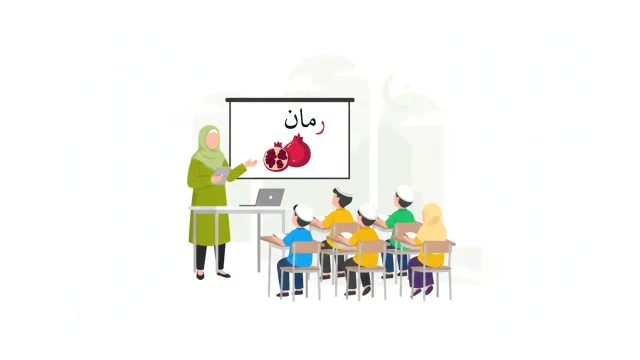
The Meaning of Maktab
The word maktab (مکتب) comes from the Arabic root k-t-b (to write) and literally means a place of writing or learning. In the Indian context, the term refers specifically to a part-time Islamic school — typically attached to a local mosque — where Muslim children receive foundational religious education alongside their regular government or private school attendance.
The maktab is not a new institution. For centuries, it was the primary means by which Muslim communities transmitted Quranic literacy, basic Islamic practice, and moral values from one generation to the next. Before formal government schooling existed, the maktab was often the only school a child attended. Today, with government education near-universal, the maktab has evolved into a supplementary institution — but its role in the religious and cultural life of India’s 200+ million Muslims remains as important as ever.
How a Maktab Differs from a Madrasa
The terms maktab and madrasa are often used interchangeably in casual conversation, but they refer to meaningfully different types of institutions:
| Feature | Maktab | Madrasa |
| Time commitment | Part-time (1–2 hrs/day) | Full-time (6–8 hrs/day) |
| Age range | Primarily children 5–14 | Children through adults |
| Curriculum depth | Basic — Quran, Duas, Fiqh essentials | Advanced — full Dars-e-Nizami or state board |
| Location | Mosque-attached | Separate campus |
| Qualification produced | Informal certificate (some boards) | Recognised madrasa certificates/degrees |
| Fee structure | Free or minimal | Variable |
| Staff | Local imam or volunteer teachers | Qualified Ulama, full-time faculty |
In simple terms: a maktab is where a child begins their Islamic education; a madrasa is where that education deepens into scholarship.
The Typical Maktab Day
A session at an Indian maktab typically lasts between one and two hours. While the exact structure varies by region, board, and teacher, a well-run maktab follows a recognisable rhythm:
Opening (5–10 minutes)
The session begins with collective Dua (supplication), Tasmiyah (Bismillah), and sometimes a brief recitation of Duas from memory. This ritual opening settles children into the learning mindset and reinforces memorised content simultaneously.
Individual Quran time (30–45 minutes)
Each student sits with the teacher individually — or in a small group — and presents their Sabak (new lesson for the day). The teacher listens, corrects Tajweed errors, and assigns the next day’s Sabak. Students who finish their individual session return to their place and practise their Sabak Para (recently memorised content) or Dhor (older revision) quietly or in pairs.
Group instruction (15–20 minutes)
The teacher addresses the whole class for the Islamic Studies portion: Duas, Hadith, basic Fiqh (the rules of Wudu, Salah, fasting), Aqeedah (beliefs), and stories from the Seerah. This varies by board — Deeniyat has a structured book for this; Samastha has its 140-book curriculum covering these systematically across 14 years.
Closing (5 minutes)
The session ends with a closing Dua. In well-organised maktabs, teachers note the day’s Sabak for each student in a register — the record that becomes the basis for parent communication and progress assessment.
What Children Learn in a Maktab
The maktab curriculum, regardless of which board it follows, covers five core areas:
1. Quranic Recitation (Nazra)
Children begin with a Qaida (primer teaching Arabic alphabet and pronunciation rules) before progressing to reading the Quran directly. Correct recitation with proper Tajweed is the foundational goal. Most children complete Nazra of the full 30-Juz Quran over three to five years.
2. Hifz (Memorisation)
Not all maktab students pursue Hifz, but many begin memorising Juz Amma (the 30th chapter, containing the shorter Surahs) and work towards memorising larger portions. Some maktabs have dedicated Hifz students who follow the full Sabak/Sabak Para/Dhor routine intensively.
3. Aqeedah (Islamic Beliefs)
Basic articles of faith — belief in Allah, His Angels, His Books, His Messengers, the Last Day, and Divine Decree — are taught age-appropriately, typically through story and memorised formulations.
4. Fiqh (Islamic Jurisprudence — Practical)
The practical rules of daily worship: how to perform Wudu (ritual purification), how to pray the five daily prayers correctly, the rules of fasting in Ramadan, and basic rulings on Halal and Haram. This is the content most urgently desired by parents.
5. Duas, Hadith, and Seerah
Memorised Duas for daily activities (eating, sleeping, leaving the house, entering the mosque) form a core part of early maktab education. Selected Hadith are memorised and studied. Stories from the life of the Prophet (Seerah) provide the moral and narrative framework.
How Quran Progress Is Tracked: Sabak, Sabak Para, Dhor
The three-tier daily tracking system is the operational core of every Hifz and Quran programme in an Indian maktab:
Sabak (سبق) — the new lesson presented to the teacher each day. For a Nazra student, this is the next passage to be read aloud. For a Hifz student, this is the new section being memorised — typically a quarter to half a page of the Quran.
Sabak Para (سبق پارہ) — literally “the Para of the lesson.” This refers to the recently memorised content — typically the last one to two weeks of Sabaks — that needs daily repetition before it solidifies into long-term memory. The risk of forgetting is highest in this window.
Dhor (دور) — the systematic revision of older memorised content, ensuring that what was learned months or years ago is not forgotten. A Hifz student who neglects Dhor may find that early Juz fade even as they advance to new material.
| Stage | What It Covers | Frequency |
| Sabak | New content | Daily |
| Sabak Para | Recent memorisation (last 1–2 weeks) | Daily |
| Dhor | All older memorised content | Daily / scheduled |
| Manzil | Large section revision | Weekly / fortnightly |
A teacher managing 20–40 students tracks all four dimensions — which is why a digital tool that logs each student’s daily Sabak, flags whose Sabak Para needs attention, and schedules Dhor automatically has genuine practical value.
Who Runs a Maktab?
Most Indian maktabs are run by one of four types of operators:
The mosque imam: The most common model. The local imam teaches children after Asr or Maghrib prayers. In smaller mosques, he may be the only teacher. In larger ones, he may supervise a small team.
A volunteer teacher: In urban areas with larger Muslim populations, dedicated volunteer teachers — often women teaching girls’ sections — run maktabs attached to mosques or in private homes.
A board-appointed teacher: Boards like DTB and Idara-e-Deeniyat deploy trained teachers to underserved areas where no qualified local teacher exists, often with a small stipend funded by the board or local mosque committee.
An independent madrasa teacher: Some maktabs are run by individuals with formal madrasa training who operate independently, setting their own curriculum and structure.
In terms of administration, most maktabs are overseen by the mosque committee — the same body that manages mosque finances, maintenance, and programming. This creates both an opportunity (community accountability) and a challenge (committee members rarely have educational management expertise).
Morning vs Evening Models
The two dominant scheduling models in India reflect different community contexts:
Evening/After-school model (most common in North India):
Children attend after their government school day, typically from 4:30–6:30pm or after Asr prayers. This works well for school-going children but creates fatigue — children arrive tired after a full school day.
Morning/Pre-school model (common in South India, especially Kerala):
In Kerala, many madrasas run from 6:00–8:00am, before children leave for school. This captures the peak learning window of the day and avoids after-school fatigue. Samastha’s model is predominantly morning-based.
Residential/boarding model (less common for maktabs, more for Hifz):
Children focused on Hifz sometimes board at the maktab full-time, following a structured day of Sabak, Sabak Para, and Dhor with no government school attendance.
Why the Maktab Matters
For millions of Indian Muslim families, the maktab is the primary — and sometimes only — Islamic education their children receive. It answers a question that government schools cannot: how to pass on religious identity, Quranic literacy, and Islamic values to the next generation in a secular education environment.
The maktab also plays a social role. It is where children from the same community meet, where neighbourhood bonds form, and where the imam’s guidance reaches the family through the child. Its informal, accessible, low-cost model has survived for centuries precisely because it meets a real need in a sustainable way.
Conclusion
The maktab is one of Islam’s oldest and most enduring educational institutions — and in India, it remains the bedrock of Islamic literacy for tens of millions of children. Whether it runs for 90 minutes after school in a North Indian mosque or two hours before school in a Kerala prayer hall, its core mission is the same: give every Muslim child the tools to pray correctly, recite the Quran, and live as a practising Muslim. Managing that mission well — tracking each child’s Quran progress, recording attendance, communicating with parents, collecting fees — is exactly what ilmify is built to support. See how ilmify works for Indian maktabs.
Related Articles:





 Arabic
  English
  Malay
Malay  Urdu
Urdu