

What Is a Maktab Board?
A maktab board is an organisation that provides a standardised Islamic curriculum, textbooks, teacher training, examinations, and administrative support to a network of affiliated maktabs — the part-time Islamic schools where Muslim children receive their foundational religious education.
India has more than 200 million Muslims, and the overwhelming majority of them received their first encounter with the Quran and Islamic practice not in a full-time madrasa, but in a neighbourhood maktab attached to a local mosque. These evening or early-morning schools — running for one to two hours daily — are the quiet backbone of Islamic religious transmission across the subcontinent.
What makes India distinctive is that no single authority oversees all maktabs. Unlike a country such as Malaysia, where JAKIM provides national oversight, India’s maktab ecosystem is organised through a patchwork of boards and networks, each affiliated with a particular theological tradition, each serving a different region, and each providing its own syllabus.
Understanding these boards is the first step for any maktab administrator who wants to run a structured, well-supported institution rather than an ad hoc one.
Why India Has So Many Different Boards
The diversity of maktab boards in India flows directly from the diversity within Indian Islam itself. Since the mid-19th century, India’s Muslim scholarly community has organised into several distinct theological movements, each with its own approach to education:
- Deobandi institutions trace their lineage to the Darul Uloom Deoband, founded in 1867 in Uttar Pradesh. They emphasise rigorous adherence to the Hanafi school of jurisprudence and the Dars-e-Nizami classical curriculum.
- Barelvi/Sunni Sufi institutions, prevalent in Kerala and parts of North India, emphasise love of the Prophet, Sufi traditions, and communal religious practice. Samastha Kerala is the largest organised expression of this tradition.
- Ahl-i-Hadith/Salafi institutions reject taqlid (following a legal school) and emphasise direct Quran and Hadith study. Wisdom Islamic Organisation in Kerala and Daar Ut Tarbiyah in Karnataka represent this tradition.
- Jamaat-e-Islami Hind (JIH) institutions follow the reformist-civic vision of Maulana Maududi, emphasising social transformation alongside religious education. The Markazi Taleemi Board (MTB) is JIH’s educational arm.
Each of these traditions has built its own maktab network, its own set of textbooks, and its own teacher training infrastructure — resulting in a rich but complex ecosystem for any administrator to navigate.
The Major Maktab Networks in India
Idara-e-Deeniyat (Deobandi)
Reach: ~1.6 million students | Countries: India + 25 countries globally | HQ: Mumbai
Idara-e-Deeniyat is India’s largest mosque-based maktab network. Founded in 2003, it provides a structured 7-level curriculum — from a Nursery course for young children to a Muallim programme for teacher training — all available free of charge. Its strength is the mosque model: any imam can start a Deeniyat maktab in his mosque using the free curriculum books and the step-by-step setup guidance available via the Deeniyat Plus app.
Deeniyat Kerala (Deobandi, Kerala affiliate)
Reach: 11,000+ students in Kerala | HQ: Kayamkulam
A Kerala-specific affiliate of Idara-e-Deeniyat, operating under the Kayamkulam Hasaniya Madrasa, providing local administrative support including online fee payment, downloadable templates, and a madrasa directory for Kerala-based institutions.
Samastha Kerala Sunni Vidyabhyasa Board — SKIMVB (Barelvi/Sunni Sufi)
Reach: 10,000+ madrasas, 1 million+ students | HQ: Kozhikode, Kerala
The largest single maktab board in India by student numbers. SKIMVB is ISO-certified and runs a 14-level curriculum with 140+ textbooks available in Arabic, Malayalam, Kannada, Tamil, Urdu, and Arabi-Malayalam. It conducts public exams at Classes 5, 7, 10, and 12, and releases annual results. Kerala’s Mappila Muslim community — predominantly Shafi’i in madhab and Sufi-oriented — is the core constituency.
Jamiat Deeni Talimi Board — DTB (Deobandi)
Reach: 268+ direct maktabs; state units in West Bengal, Assam, Punjab, UP | HQ: New Delhi
The educational wing of Jamiat Ulama-i-Hind, one of India’s oldest Muslim organisations (founded 1919). DTB’s stated goal is 100% basic religious literacy for Muslim children. It runs directly managed maktabs in underserved areas and supports state-level units through annual budgets and teacher training workshops. West Bengal alone has 500 affiliated maktabs.
Markazi Taleemi Board — MTB (Jamaat-e-Islami Hind)
Reach: National | HQ: New Delhi
The education board of Jamaat-e-Islami Hind, MTB has developed 90+ textbooks in Urdu, English, and Hindi covering both integrated school Islamic Studies (Nursery–Grade 2) and part-time maktab programmes. It has trained 96 Master Trainers who conduct workshops across India, and runs an online Nazirah Quran programme alongside its physical maktab curriculum.
Noorani Makatib (Deobandi/Tablighi)
Reach: Global Tablighi network | HQ: Bardoli, Gujarat
A Bardoli-based organisation providing completely free maktab books — including Bachcho Ka Tohfa, Emergency Program, Mahfuzaat, Panj Parah, and five volumes of Asaaneed — to any maktab anywhere in the world. Deeply connected to the Tablighi Jamaat network, its books and methodology have reached Zambia, Mozambique, Malawi, the UK, South Africa, and Panama.
Daar Ut Tarbiyah (Ahl-i-Hadith/Salafi — Madani tradition)
Reach: Bengaluru, Karnataka | HQ: AL-Amaanah Charitable Trust, Bengaluru (est. 2014)
A Bengaluru-based maktab programme under scholars trained at Madinah University (Shaykh Abdul Azeem Madani, Shaykh Hashim Madani, and others). It offers a 3-year curriculum with textbooks, student and teacher uniforms, a mobile admin app, professional teacher training, and PTM (Parent-Teacher Meeting) structure — a more structured model than most South Indian maktabs.
Karnataka Madarsaplus / Shaheen Group (Mixed/Pragmatic)
Reach: Karnataka + 14 states | HQ: Bidar, Karnataka
Part of the Shaheen Group of Institutions (est. 1989, Dr. Abdul Qadeer), this programme integrates Deeniyat Plus and Hifz Plus curricula with the NIOS bridge curriculum, helping madrasa students gain formal educational qualifications alongside their religious studies.
Wisdom Islamic Organisation — Wisdom Education Board (Ahl-i-Hadith)
Reach: Wayanad, Kerala and nationally | HQ: Wayanad
A multi-wing organisation running Jamia Alhind, Green Valley School, and the School of Quran alongside a dedicated Wisdom Education Board. Represents the Ahl-i-Hadith tradition in Kerala — theologically distinct from Samastha (Barelvi) and Deeniyat (Deobandi).
Wifaqul Makatib India (Deobandi federation)
Geography: Karnataka (Bengaluru-focused)
A maktab coordination federation modelled on the Wifaqul Makaatib structure familiar from South Africa and the UK, providing syllabus standardisation and teacher networking for affiliated Bengaluru maktabs.
North India vs South India: A Key Divide
One of the most important things to understand about India’s maktab landscape is the sharp divide between North and South.
North India (UP, Bihar, West Bengal, Assam, Delhi, Rajasthan) is dominated by the Deobandi tradition. Urdu is the primary medium of instruction. Most maktabs are mosque-attached, running in the late afternoon or evening. The Jamiat DTB and Idara-e-Deeniyat are the dominant networks. State madrasa boards provide a parallel formal education track for full-time madrasas.
South India (Kerala, Karnataka, Tamil Nadu, Andhra Pradesh) is far more diverse. Kerala alone has at least seven competing maktab boards — Samastha (SKIMVB and SKSVB), Wisdom, Deeniyat Kerala, and several others — each tied to a different theological orientation. Malayalam, Tamil, and Kannada are important alongside Arabic and Urdu. The Shafi’i madhab is prevalent in Kerala, contrasting with the Hanafi-dominant North. Karnataka presents its own ecosystem with Deobandi, Salafi, and pragmatic-integrated models operating simultaneously.
How to Choose the Right Board for Your Maktab
For a new maktab administrator, the choice of which board to affiliate with typically follows community lines — the board that serves your local theological tradition, your language community, and your geography. Key practical questions include:
| Question | Why It Matters |
| What theological tradition does your mosque follow? | Curriculum content, Fiqh rulings, and Aqeedah teaching will differ significantly |
| What is the primary language of your community? | Choose a board with textbooks in your language (Urdu, Malayalam, Tamil, Kannada, Hindi, English) |
| What level of institutional support do you need? | Deeniyat offers free books + app; Samastha offers exams + certificates; MTB offers teacher training |
| Do you want formal certification for students? | Samastha, DTB, and MTB all offer recognised certificates; informal maktabs may not |
| Do you serve a mixed or migrant community? | MTB’s multilingual (Urdu/English/Hindi) and Deeniyat’s WhatsApp outreach in 12 languages may be better suited |
What Every Board Has in Common
Despite theological and geographical differences, all maktab boards in India share the same core educational mission:
- Teaching Quranic recitation — Nazra (reading by sight) from Qaida through full Quran
- Facilitating Hifz (memorisation) for students who wish to pursue it
- Teaching basic Aqeedah (beliefs), Fiqh (jurisprudence — particularly Salah, Wudu, and Fasting), and Akhlaq (character)
- Providing a structured environment for daily tracking of Sabak, Sabak Para, and Dhor
- Enabling parent communication about student progress
The differences lie in theology, language, depth, and structure — not in these fundamental goals.
The Role of Digital Tools Across All Boards
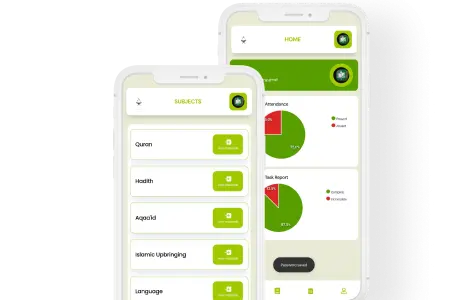
Almost every major maktab board in India has begun developing digital tools — Deeniyat has its app, Samastha has its online portal (madrasaalhind.com), MTB has online training sessions, and Karnataka Madarsaplus integrates NIOS digital platforms. Yet the gap between what these apps provide (curriculum content, syllabi, online registration) and what administrators actually need (daily attendance, Hifz progress tracking, fee management, parent communication, exam results) remains wide.
No existing board-level tool provides a complete maktab management solution. This is precisely the gap that a dedicated maktab management platform addresses — and why administrators affiliated with any board can benefit from supplementing their board tools with a purpose-built management system.
Conclusion
India’s maktab ecosystem is one of the largest and most diverse in the world — a mosaic of boards, traditions, languages, and regions, each serving the same fundamental goal of giving Muslim children access to their faith. Whether your maktab is affiliated with Deeniyat, Samastha, MTB, DTB, Noorani Makatib, Daar Ut Tarbiyah, or any other network, the operational challenges of daily management — tracking Quran progress, managing attendance, collecting fees, communicating with parents — are the same. ilmify is designed to work alongside any board’s curriculum, providing the management layer that no board app currently offers. Start your free trial today.
Related Articles:
- Types of Islamic Schools in India: Madrasa, Maktab, Darul Uloom, Jamia
- What Is a Maktab? Understanding India’s Evening Islamic Schools
- Deobandi, Barelvi, Salafi, and JIH Maktabs: What’s the Difference?
- What Is Idara-e-Deeniyat? India’s Largest Mosque-Based Maktab Network
- What Is Samastha Kerala? The Sunni Vidyabhyasa Board Explained




 Arabic
  English
  Malay
Malay  Urdu
Urdu