

Introduction
The Majlis Ugama Islam Singapura (MUIS) — the Islamic Religious Council of Singapore — is one of the most distinctive Islamic governance bodies in the world. In a small, secular city-state of five million people, home to approximately 15% Muslim population, MUIS occupies a position that has no real equivalent elsewhere: it is simultaneously a statutory government body, the official Islamic religious authority for Singapore’s Muslims, the regulator of Islamic education, the administrator of zakat and wakaf, the certifier of halal establishments, and the coordinator of Singapore’s haj operations.
Its role in Islamic education — across the full spectrum from preschool through adult learning — is the most extensive and systematically organised Islamic education governance anywhere in Southeast Asia.
This article explains how MUIS shapes every dimension of Islamic education in Singapore, what its programmes provide, and how the institutions it oversees are managed.
What Is MUIS?
MUIS was established under the Administration of Muslim Law Act (AMLA) of 1966 and has been the central Islamic authority for Singapore’s Muslim community ever since. Its governing council is appointed by the President of the Republic of Singapore. On 1 March 1990, MUIS gained control of the registration and management of madrasahs pursuant to Section 87 and 88 of AMLA.
MUIS is structured into six areas of responsibility:
- Administration of zakat, wakaf, pilgrimage affairs, halal certification and da’wah activities
- Construction and administration of mosques and their development and management
- Administration of Madrasah and Islamic education
- Religious guidance through the Office of the Mufti (fatwas, khutbah)
- Management of the Singapore Muslim community’s collective religious life
- Stakeholder engagement with government and civil society
Ranking first on the 2024 Blavatnik Index of Public Administration, Singapore presents a highly efficient case for service delivery — and MUIS reflects this national standard in how it manages Islamic education.
The Full Islamic Education Ecosystem: From 3 to Adult
MUIS oversees a complete continuum of Islamic education that covers every age from early childhood through adulthood:
For Ages 3–6: Mosque-Based Kindergartens (MBK)
MBK is a network of 15 preschools located within mosques across Singapore. These early childhood centres provide holistic education for children from 3 to 6 years old in an Islamic environment — integrating Islamic values, basic Quran exposure, and Islamic character formation into the early childhood curriculum. MBK is the first step on Singapore’s Islamic education pathway for children who will not be attending full-time madrasah.
For Ages 5–20: aLIVE Programme
aLIVE (Learning Islamic Values Everyday) is the central part-time Islamic education programme for Singapore’s national school students. Operating through 38+ mosque madrasahs across the island, aLIVE serves over 4,000 students annually with a MUIS-developed curriculum covering Quranic Literacy, Faith & Practices, Character & Life Skills, and Social & Civilisational Islam.
The aLIVE programme is structured across four age groups — Kids, Tweens, Teens, and Youth — with a thematic curriculum that spirals upward in complexity as students progress through the levels. All aLIVE teachers must hold ARS (Asatizah Recognition Scheme) or QTRS (Quranic Teachers Recognition Scheme) recognition.
For Ages 5–pre-university: Full-Time Madrasahs
Singapore’s six full-time madrasahs provide complete dual Islamic and secular education for students who opt for the madrasah pathway rather than the national school pathway. Students study both the national curriculum (leading to PSLE and GCE O-Levels) and a comprehensive Islamic studies programme. All madrasahs are required to meet minimum PSLE performance benchmarks set by MOE.
For Adults: ADIL Programme
ADIL (Adult Diploma in Islamic Learning) is MUIS’s Islamic learning programme specifically tailored for adult Muslim learners in Singapore. It provides structured Islamic education for adults who want to deepen their religious knowledge — covering Islamic studies subjects at an adult level, delivered in formats that suit working professionals and parents.
The Asatizah Recognition Scheme (ARS): Quality Assurance for Islamic Teachers
Perhaps MUIS’s most important contribution to the quality of Islamic education in Singapore is the Asatizah Recognition Scheme (ARS), launched in 2005. The ARS is a professional recognition framework that establishes minimum standards for Islamic religious teachers operating in Singapore.
Who Must Be ARS-Recognised: Any person who teaches Islamic subjects in a mosque, madrasah, or registered Islamic education centre in Singapore must hold ARS recognition. This applies to full-time asatizah in madrasahs and to part-time ustaz and ustazah running aLIVE and other mosque madrasah classes.
Quranic Teachers Recognition Scheme (QTRS): A parallel recognition scheme specifically for teachers of Quranic recitation — those who teach Iqra’, Nazirah (Quran reading), Tajweed, and Hifz. QTRS recognises teachers whose primary qualification is in Quranic education rather than broader Islamic scholarship.
Why ARS Matters: Before the ARS, there was no formal mechanism to ensure that anyone claiming to be an Islamic teacher in Singapore had genuine qualifications. The ARS creates a registered, publicly verifiable pool of recognised asatizah — parents can check whether their child’s teacher is ARS or QTRS recognised. Institutions can ensure they are not deploying unrecognised teachers. MUIS can maintain quality standards across the entire Islamic education system.
ARS Registration for Centre Administrators: Administrators of aLIVE centres and mosque madrasahs must maintain records demonstrating that all classes are taught by ARS or QTRS recognised asatizah. This is an institutional compliance requirement, not merely an individual teacher’s responsibility.
The Wakaf Ilmu: Sustainable Financing for Islamic Education
MUIS established the Wakaf Ilmu (Knowledge Endowment) in 2012 to provide sustainable long-term financing for Singapore’s madrasah education quality. The Wakaf Ilmu is a waqf (Islamic endowment fund) — funds contributed to it are permanently dedicated to the purpose of Islamic education quality improvement and cannot be withdrawn for other uses.
The Wakaf Ilmu receives contributions from:
- MUIS’s general Islamic endowment fund
- Corporate donations
- Donations and pledges from the public, including students
As of 2014, the Wakaf Ilmu fund had grown to S
6.3million—morethandoubleitsinitialS6.3 million — more than double its initial S6.3million—morethandoubleitsinitialS
3 million target.
Wakaf Ilmu disbursements directly support madrasah operations: infrastructure improvements, teacher development, curriculum resources, and financial assistance for students from lower-income families. For administrators of Singapore’s madrasahs, Wakaf Ilmu funding comes with accountability requirements — proper documentation of how funds are used and regular reporting to MUIS.
The Islamic Education Fund (IEF): Keeping aLIVE Affordable
The Islamic Education Fund (IEF) was introduced in 2004 specifically to ensure that no Singapore Muslim child is prevented from accessing aLIVE mosque madrasah education due to financial constraints.
IEF provides:
- Needy Student Grant: Up to S
520peryearforeligiblestudents(percapitahouseholdincomeS520 per year for eligible students (per capita household income S520peryearforeligiblestudents(percapitahouseholdincomeS0–S$1,000) - Family Support Rebate: Additional support for families above the Needy Student Grant threshold
- Centre Support Grants: Funding to aLIVE centres themselves to support quality improvement and outreach
- Training Grants: Funding for teacher training and professional development
More than 4,000 students, 800 teachers and 38 aLIVE centres benefit from the IEF every year. The IEF is one of the mechanisms that makes Singapore’s Islamic education system genuinely accessible across income levels — a deliberate policy choice reflecting the Islamic principle that religious education is a right, not a privilege.
MUIS in 2026: The Ramadan 2026/1447H Context
MUIS operates on a continuous Islamic calendar cycle — the current moment in February 2026 is Ramadan 1447H, and MUIS’s immediate public communications reflect this: complete guides to Ramadan including mosque programmes, prayer information, and resources for the holy month are prominently featured on the MUIS website.
The Office of the Mufti provides religious direction to the Muslim community through fatwas and the weekly khutbah (Friday sermon) distributed to all Singapore mosques. The mufti also announces the start and end of Ramadan, the Eid prayers, and other major Islamic dates — these announcements are authoritative for all of Singapore’s Muslim community.
For Islamic educational institutions, Ramadan presents both an opportunity and an administrative challenge: mosque madrasah attendance patterns change, the school calendar must accommodate tarawih prayers and increased religious observance, and the aLIVE curriculum may incorporate special Ramadan content. The well-managed institution anticipates these patterns and prepares accordingly.
What MUIS’s Model Means for Islamic Education Globally
Singapore’s MUIS represents something genuinely unusual in the global landscape of Islamic governance: an Islamic authority with sufficient state support and institutional capacity to develop and maintain a national Islamic education curriculum, enforce teacher quality standards across an entire system, fund education through sustainable endowments, and hold institutions accountable for both Islamic education outcomes and national academic standards.
The result is a Singapore Muslim community that is, by virtually any measure, among the most educated, the most professionally successful, and the most integrated into a modern pluralist society of any Muslim minority community in the world — while also maintaining a vibrant, actively practised Islamic identity.
For Islamic educational institutions elsewhere — in Malaysia, Indonesia, South Africa, the UK, or anywhere else — the MUIS model offers lessons about what structured institutional support, teacher recognition standards, curriculum development, and sustainable financing can achieve for the Islamic education of a Muslim minority community.
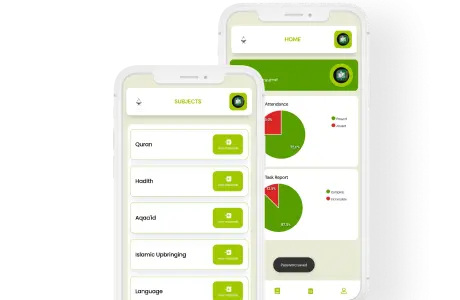
The administrative lesson is equally clear: institutions that are serious about their Islamic education mission need to be serious about their institutional management. MUIS has built a system that makes this seriousness systematic. The platform that supports the management of individual institutions within that system — tracking Quranic progression, managing IEF funds, communicating with parents, maintaining ARS-compliant teacher records — is the ground-level infrastructure that makes the system’s ambitions real.




 Arabic
 English
 Malay
 Urdu