
Introduction
When a Malaysian Muslim child completes primary school, their family faces one of the most consequential educational decisions they will make: which secondary school path to take? Among the options available, the Sekolah Menengah Agama (SMA), the Sekolah Menengah Kebangsaan Agama (SMKA), and the Maahad represent three distinct approaches to Islamic secondary education — each with different ownership, curriculum emphasis, regulatory status, and outcomes for students.
This guide explains all three clearly, compares them against each other and against the mainstream national secondary school option, and helps parents, educators, and administrators understand what each institution type offers and demands.
The Baseline: What Is a Sekolah Menengah Kebangsaan (SMK)?
To understand Islamic secondary schools, it helps to start with what they are contrasted against: the Sekolah Menengah Kebangsaan (SMK) — the national secondary school. Every Malaysian child is entitled to enroll in an SMK, which delivers the national academic curriculum leading to the PT3 (Form Three assessment) and SPM (Sijil Pelajaran Malaysia — the national school-leaving examination taken at Form Five). Islamic Education (Pendidikan Islam) is one subject among many in the SMK curriculum, taught for a small number of periods per week.
For Muslim students who graduate from an SMK, their Islamic education consists primarily of what was covered in KAFA during primary school (if they attended) and the Pendidikan Islam subject in secondary school. This is a thin foundation for a lifetime of Islamic practice and identity.
The Islamic secondary school options exist to address this limitation.
Option 1: Sekolah Menengah Agama (SMA)
What it is: The SMA — Religious Secondary School — is a secondary school operated by the State Islamic Religious Authority (Jabatan Agama Islam Negeri or Majlis Agama Islam Negeri) rather than by the Ministry of Education. It is state-funded and state-managed.
Curriculum: The SMA delivers both the national academic curriculum (leading to PT3 and SPM) and a substantially expanded Islamic studies curriculum. Students study the same academic subjects as their peers in national schools — Bahasa Malaysia, English, Mathematics, Sciences, Humanities — alongside a much more extensive programme of Islamic education: Fiqh, Tafseer, Hadith, Aqeedah, Sirah, Arabic Language, and Jawi.
Language: Islamic studies subjects in many SMAs are taught in Arabic or with significant Arabic language content, which means students in SMA typically develop a functional reading ability in Arabic — something that students in mainstream SMKs rarely achieve.
Examinations: SMA students sit the national SPM examination. They also typically sit the Sijil Tinggi Agama Malaysia (STAM) — the Malaysian Islamic Higher Certificate — which is the specialist Islamic studies qualification for post-secondary entry to Islamic universities and institutions.
Fees: SMAs are generally either free or low-cost, funded by the state religious authority.
Who is it for? Students who want a strong Islamic studies education alongside full national academic qualifications. Families who want their child to have both secular career options and solid Islamic credentials. Students who may be considering further study at an Islamic university or institute.
Option 2: Sekolah Menengah Kebangsaan Agama (SMKA)
What it is: The SMKA — Government National Islamic Secondary School — is a full national secondary school operated by the Ministry of Education Malaysia, but with a significantly enhanced Islamic studies component integrated into the national curriculum.
The key difference from SMA: The SMKA is a national school — Ministry of Education, not State Islamic Authority. This means it follows the national curriculum fully and its teachers are national schoolteachers under the Ministry of Education’s employment structure. The Islamic enhancement is integrated within the national school framework.
Curriculum: Like the SMA, the SMKA delivers the full national curriculum leading to SPM. Additionally, students receive substantially more Islamic studies than students in a regular SMK. Arabic language education is a compulsory subject. Islamic studies subjects such as Fiqh, Tafseer, and Hadith are taught.
Examinations: SMKA students sit the national SPM. Some SMKAs also prepare students for the STAM examination.
Fees: Free, as with all national secondary schools.
Selectivity: SMKA places are competitive in most states. Students are selected based on academic performance (UPSR results) and in some cases based on their UPKK (KAFA assessment) performance.
Who is it for? Students who want enhanced Islamic education within the national school framework. Families who value the national school qualification and teaching standards but want more Islam than the regular SMK offers. Students who are academically competitive.
Option 3: Maahad
What it is: The Maahad (Arabic: معهد) is an Islamic institute — typically a private institution, though some are operated by State Islamic Authorities or by established Islamic organisations — that prioritises Islamic education above the national academic curriculum. Some Maahads integrate the national curriculum; others do not.
Varieties: The term Maahad covers a wide spectrum:
Maahad Tahfiz Al-Quran — a Maahad whose primary focus is Quran memorisation. Students at a Maahad Tahfiz spend the majority of their day on Hifz, with secular subjects either integrated at a basic level or secondary to the Quran programme.
Maahad Aly — an advanced Islamic studies institute, typically post-secondary, training students in the Islamic sciences at a high level comparable to a Darul Uloom. Students who complete a Maahad Aly programme are equipped to serve as Islamic scholars, teachers, or community leaders.
General Maahad — private Islamic secondary schools that offer a curriculum weighted heavily towards Islamic subjects while also covering some national curriculum content. The degree to which the national curriculum is integrated varies widely between institutions.
Registration and Recognition: Maahads operate outside the national school system and are registered with the State Islamic Authority rather than the Ministry of Education. Qualifications from a Maahad are recognised within the Islamic education sector but may not carry the same weight as the national SPM in secular employment contexts.
Who is it for? Students whose families prioritise deep Islamic education over national academic credentials. Families considering careers in Islamic scholarship, teaching, or community leadership for their child. Students with the aptitude and motivation for intensive Islamic study.
Comparison: SMA vs. SMKA vs. Maahad
| SMA | SMKA | Maahad | |
| Operator | State Islamic Authority | Ministry of Education | Private/NGO/State Islamic Body |
| National Curriculum | Yes (full SPM) | Yes (full SPM) | Partial or none |
| Islamic Studies Depth | High | Medium-High | Very High (full focus) |
| Arabic Language | Yes | Yes | Yes (usually primary instruction language) |
| STAM Qualification | Common | Some | Varies |
| Fees | Low/Free | Free | Variable (some free, some fee-paying) |
| Residential | Some | Some | Many |
| National Recognition (Secular Employment) | High (SPM) | High (SPM) | Lower (no SPM typically) |
What About Integrated Islamic Schools?
A growing category in the Malaysian Islamic secondary school landscape is the Integrated Islamic School or Sekolah Islam Bersepadu — private institutions that aim to provide the best of both worlds: the full national academic curriculum leading to SPM, within an Islamic institutional environment, with substantially enhanced Islamic studies and Arabic.
These schools — often called International Islamic School, Islamic Academy, or Pusat Pendidikan Islam in their names — are private schools charging fees (often significant ones) and typically offering additional amenities, smaller class sizes, and more attentive pastoral care than government institutions. They appeal to families who can afford private education and who want both strong academic credentials and a genuinely Islamic school environment.
Administrative Challenges Across All Islamic Secondary Institution Types
Whether managing an SMA, SMKA, Maahad, or integrated Islamic school, administrators face a common set of challenges that are specific to the Islamic secondary education context:
Student Academic and Islamic Progress Tracking: Islamic secondary schools must track two parallel streams of student progress — the national academic curriculum stream (marks, grades, examination performance) and the Islamic studies stream (Quranic recitation, Hifz progress if applicable, Islamic studies grades, Arabic language development). Managing both streams coherently, and communicating both to parents, requires more sophisticated record-keeping than a single academic stream alone.
Parent Communication About Islamic Progress: In a mainstream school, parent communication is largely about academic marks. In an Islamic secondary school, parents also want to know about their child’s character development, their Quranic recitation progress, their Arabic language development, and their Islamic practice. These dimensions of progress are harder to quantify and communicate than exam scores, but they are the primary reason parents chose an Islamic secondary school.
Boarding Management (for Residential Institutions): Many SMAs, Maahads, and private Islamic schools are partially or fully residential. Residential management adds layers of complexity — attendance tracking that covers not just class sessions but also dormitory check-ins and prayer times, safeguarding, health management, and communication about residential welfare to parents who may be hundreds of kilometres away.
Fee Management: Islamic secondary schools often have more complex fee structures than primary schools — combining tuition fees, boarding fees, meal contributions, book fees, examination fees, and co-curricular charges. Managing these transparently and issuing accurate receipts for all payments is essential for maintaining parent trust and resolving disputes.
Teacher Retention: Teaching at an Islamic secondary school — particularly in a Maahad context where salaries may be lower than government-school teaching rates — requires teachers who are motivated by more than remuneration. Retaining qualified teachers in Islamic secondary schools is a persistent challenge. Administrative systems that reduce the burden of non-teaching administrative work free teachers to focus on their primary calling.
The Right Tools for the Right Institution
The management needs of an Islamic secondary school in Malaysia are more complex than those of a KAFA class or small Sekolah Agama. An SMA or SMKA managing several hundred students across multiple form levels, with parallel Islamic and national academic curriculum tracking, residential management, and complex fee structures, needs institutional-grade management infrastructure.
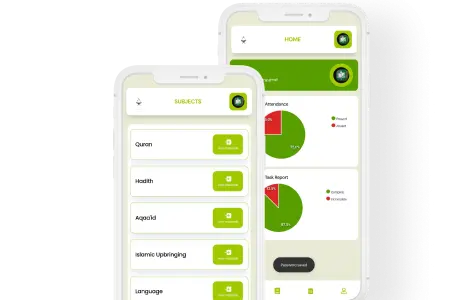
A platform like Ilmify, designed specifically for Islamic educational institutions, provides the core capabilities that matter most: student records with both academic and Islamic progress tracking, Hifz tracking for students in Tahfiz programmes, individual parent communication with private portals, and fee management with receipts — all in a Bahasa Malaysia and Arabic bilingual interface, accessible from the smartphones that teachers and administrators actually use.
The institution that gives its teachers and administrators the right tools does more than save time — it frees the people responsible for the Islamic education of hundreds of students to focus on the human work that no software can do: teaching, mentoring, and forming the next generation of Malaysian Muslims.