

Introduction
The number of Tahfiz schools in Malaysia has grown dramatically over the past two decades. What was once a relatively rare educational choice — sending a child to memorise the Quran in a dedicated institution — has become an increasingly mainstream path for Malaysian Muslim families seeking an education that places the Quran at the absolute centre of their child’s development.
Yet for all its growth, the Tahfiz school landscape in Malaysia is also one of the most varied and least understood sectors of Islamic education in the country. The term “Sekolah Tahfiz” covers institutions ranging from government-linked centres with formal recognition to private homes with a single teacher and five students. The standards, facilities, curriculum structures, and regulatory status of these institutions vary enormously.
This guide gives parents, administrators, and policymakers a complete picture of the Tahfiz school landscape in Malaysia in 2026 — what it is, how it is structured, what to look for, and how to manage it effectively.
What Is a Sekolah Tahfiz?
Sekolah Tahfiz (Tahfiz School) is an Islamic educational institution whose primary purpose is Hifz Al-Quran — the complete memorisation of the Quran. A student who successfully memorises the entire Quran (all 30 Juz, comprising 6,236 verses) is known as a Hafiz (male) or Hafizah (female). The process of memorisation, and the institution dedicated to it, is called Tahfiz.
In Malaysia, Tahfiz institutions operate under a range of names, all referring to broadly the same concept:
Sekolah Tahfiz — Religious school with Tahfiz as its primary focus (most common general term)
Maahad Tahfiz Al-Quran — Tahfiz institute (more formal Arabic-influenced term, often used by established private institutions)
Darul Quran — “House of the Quran” — the name used by JAKIM’s elite national Tahfiz centre, but also used by some private institutions
Tahfiz School — English-medium or bilingual institutions sometimes use this English-first name
The defining characteristic of all of these institutions is that the memorisation of the Quran is not one subject among many — it is the foundational purpose around which everything else is organised.
The Three Main Categories of Tahfiz Institution in Malaysia
Understanding the Malaysian Tahfiz landscape requires recognising three distinct categories of institution, each operating under different regulatory and quality frameworks:
1. Government-Linked Tahfiz Institutions
Darul Quran JAKIM is the flagship government Tahfiz institution in Malaysia, operating under JAKIM (Jabatan Kemajuan Islam Malaysia). Darul Quran offers a Diploma in Tahfiz Al-Quran and Al-Qiraat — a formal post-secondary qualification for students who have completed their Quran memorisation and wish to deepen their study of Quranic recitation sciences. Admission is competitive, and the programme is considered the gold standard of formal Tahfiz education in Malaysia.
Beyond Darul Quran JAKIM, several state governments operate their own Tahfiz centres under the auspices of their State Islamic Religious Departments (Jabatan Agama Islam Negeri). These state-run Tahfiz schools follow curriculum frameworks set at the state level and offer a more accessible pathway to Tahfiz education than the nationally competitive Darul Quran.
Sekolah Menengah Kebangsaan Agama (SMKA) — some government Islamic secondary schools now integrate Tahfiz tracks within their curriculum, allowing students to pursue both the national academic examinations (SPM) and Quran memorisation within the same institution.
2. Registered Private Tahfiz Institutions
A large and growing number of private Maahad Tahfiz operate across Malaysia. The better-established among these are registered with JAKIM and/or their State Islamic Religious Department, their data captured in SIMPENI (the Islamic Education Information System), and their curriculum and safety standards subject to periodic inspection.
These registered private Tahfiz institutions vary significantly in size, programme structure, and quality. Some are large, well-resourced boarding schools with hundreds of students and a complete curriculum integrating both Tahfiz and secular subjects. Others are smaller community institutions operating from surau (prayer halls) or converted shophouses.
3. Unregistered and Home-Based Tahfiz Centres
A significant number of Tahfiz centres — particularly smaller ones — operate without formal registration. Some are genuine community institutions offering quality Tahfiz education. Others are more informal — a Ustaz or Ustazah teaching a small group of children in their home. The safety and quality standards of these institutions are the most variable and the least subject to external oversight.
The fire tragedies that affected unregistered Tahfiz institutions in Malaysia in previous years led to significant government attention on the safety standards and regulatory status of informal Tahfiz centres. This remains an active area of government policy.
How the Tahfiz Programme Works
The structure of a Tahfiz programme in Malaysia typically follows this progression:
Stage 1: Qa’ida and Nazirah
Before memorisation can begin, a student must be able to read the Quran fluently with correct Tajweed. Students who come to a Tahfiz school without this foundation will spend time in the Qa’ida (Arabic literacy) and Nazirah (Quran reading) phase before beginning memorisation. Some Tahfiz schools require students to have completed Nazirah — reading the entire Quran at least once — before acceptance. Others teach Nazirah as part of the early programme.
Stage 2: Hifz (Memorisation)
The core work of the Tahfiz school. Students memorise the Quran in stages, typically working through the short Juz (sections) at the end of the Quran (Juz 30, 29, 28) before proceeding to the longer Juz in the earlier parts of the Quran. The traditional method involves:
- Sabak (new lesson): The student memorises a new portion daily — typically half a page to one page of the standard Rasm Uthmani mushaf. This is recited to the teacher the following morning.
- Sabaq Para (recent lesson revision): The portions memorised in the last week or so are recited in order, ensuring recent memorisation is consolidated before it fades.
- Dhor (older revision): The portions memorised in earlier weeks and months are regularly revised in rotation to ensure the older memorisation is not forgotten.
These three streams — new memorisation, recent revision, and older revision — must all be managed simultaneously. A student who is memorising rapidly but not revising adequately may appear to be progressing well while their earlier Juz are quietly deteriorating. The Dhor is the most commonly neglected element and the most common cause of students who appear to be Hafiz but whose memorisation is not stable.
Stage 3: Khatam and Certification
When a student has memorised the complete 30 Juz, they are certified as Hafiz or Hafizah. In a well-run Tahfiz school, the certification follows a formal examination in which the student demonstrates their memorisation of the complete Quran by reciting it in full or in selected portions before an examining panel.
Full-Time vs. Part-Time Tahfiz: What Are the Options?
Malaysian families choosing Tahfiz education face a fundamental question: should their child pursue Tahfiz on a full-time, residential basis, or through a part-time programme alongside regular school?
Full-Time Residential Tahfiz:
The traditional model — the child lives at the Tahfiz school full-time (or attends as a day student but prioritises Tahfiz over secular schooling). This maximises the time available for memorisation and immersion in the Quranic environment but involves the family sacrifice of the child living away from home and may affect the child’s progress in secular academic subjects.
Integrated Tahfiz and Academic Schools:
A growing number of Malaysian Tahfiz institutions — particularly the larger, more established private Maahad Tahfiz — now run full programmes integrating both Quran memorisation and the national academic curriculum. Students in these schools sit the same national examinations (UPSR, PT3, SPM) as their peers in national schools while simultaneously pursuing their Tahfiz programme. This is the fastest-growing model in Malaysia and represents the majority of new Tahfiz school openings.
Part-Time Evening or Weekend Tahfiz:
Some institutions offer part-time Tahfiz programmes for students who attend national school during the day. These programmes — typically running two to three hours in the evening on weekdays and/or on weekends — allow students to pursue Hifz without leaving the national school system. Progress is necessarily slower than in a full-time programme, but the model is popular among families who want their child to maintain academic competitiveness while pursuing Quran memorisation.
Managing a Sekolah Tahfiz: The Administrative Challenges
Running a Tahfiz school in Malaysia involves administrative demands that are significantly more complex than running a standard academic school. The Tahfiz school’s core educational function — tracking the Quranic progression of every student in all three streams simultaneously — requires record-keeping infrastructure that most schools have historically handled through paper registers or the teacher’s memory alone.
The problems this creates are predictable and serious:
Hifz Record Fragility: When a student’s Sabak position, Sabaq Para quality, and Dhor status exist only in the teacher’s memory or handwritten notebook, the loss of that teacher — through resignation, illness, or departure — means the loss of years of carefully tracked progression. The new teacher starts from scratch. Parents have no independent record of where their child is in the Quran.
Parent Communication: Parents whose children are in a residential Tahfiz school may go weeks without accurate information about their child’s progress. A WhatsApp message asking the teacher how their child is progressing interrupts teaching time and is typically answered with a general assurance rather than specific data. Parents who want to know whether their child’s Dhor is holding up, whether they are on track to complete a Juz by the end of term, or whether attendance is consistent have no reliable channel for this information.
Financial Management: Fee collection in Tahfiz schools — particularly residential ones — involves multiple payment streams: tuition fees, boarding fees, meal contributions, kitab fees, and co-curricular charges. Managing these without a proper receipting and reconciliation system creates fee disputes, financial opacity, and Treasurer burnout.
Regulatory Reporting: Registered Tahfiz schools must submit data to SIMPENI regularly. Schools that maintain their records manually face significant administrative overhead when SIMPENI submission deadlines arrive — cross-referencing paper registers with digital submission requirements is time-consuming and error-prone.
What a Good Tahfiz School Management System Needs
A purpose-built management platform for Malaysian Tahfiz schools must address three Tahfiz-specific requirements that generic school management systems cannot handle:
1. Three-Stream Hifz Tracking: The system must track Sabak (new lesson — Surah and verse), Sabaq Para quality, and Dhor status separately for every student after every session. A single “Quran position” field is not sufficient — it misrepresents the student’s actual memorisation health by ignoring whether recent and older portions are being maintained.
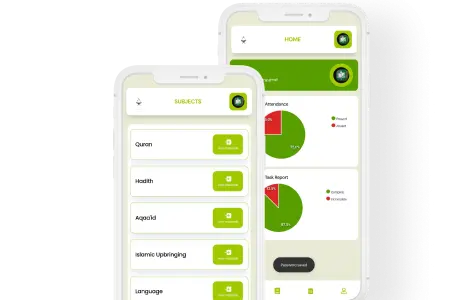
2. Parent Visibility Without Teacher Disruption: Parents should be able to see their child’s Hifz progression, attendance, and fee status through an individual portal — without needing to send a WhatsApp message to the teacher. When a child completes a Juz, the parent should receive an automatic notification. When a child is absent from a session, the parent should be notified automatically, not discover the absence days later.
3. Arabic Interface: Many Tahfiz teachers and students work primarily in Arabic. A management platform that is available in Arabic as a first-class interface (not just a translation overlay) will achieve adoption rates that English-only platforms cannot match in the Malaysian Tahfiz context.
Ilmify is designed to meet all three of these requirements — and to do so in a platform priced appropriately for community and private Tahfiz institutions in Malaysia, not just large international Islamic schools.
Choosing the Right Tahfiz School: A Parent’s Checklist
If you are a parent considering a Tahfiz school for your child in Malaysia, the following questions will help you assess the quality and suitability of any institution you are considering:
Teacher Qualifications: Are the Huffaz (Quran teachers) themselves certified Huffaz? Have they studied Tajweed under qualified teachers? Do they hold any certification from a recognised institution such as Darul Quran JAKIM?
Registration Status: Is the school registered with JAKIM and/or the State Islamic Religious Department? Is the school’s data in the SIMPENI system? Unregistered institutions are not necessarily inferior, but registration is a basic indicator of accountability.
Three-Stream Hifz Tracking: Does the school have a system for tracking each student’s Sabak, Sabaq Para, and Dhor? How is this communicated to parents? Can parents see their child’s current position and recent progress?
Integration of Secular Subjects: If academic examinations matter for your child’s future, does the school offer the national curriculum alongside Tahfiz? What are the school’s results in national examinations?
Safety and Facilities: Are the dormitories (if residential) properly licensed, safe, and maintained? Are fire safety requirements met? Is there adequate supervision at all hours for residential students?
Fees and Transparency: Are fee structures clearly stated in writing? Are receipts issued for all payments? Are there additional charges beyond the stated fees?
A Tahfiz school that answers all of these questions satisfactorily is one worth serious consideration. A school that is reluctant to answer any of them warrants caution.
Explore the 2026 guide to sekolah tahfiz Malaysia. Learn about maahad tahfiz, Darul Quran JAKIM, and how to choose the best hifz school for your child.




 Arabic
  English
  Malay
Malay  Urdu
Urdu